
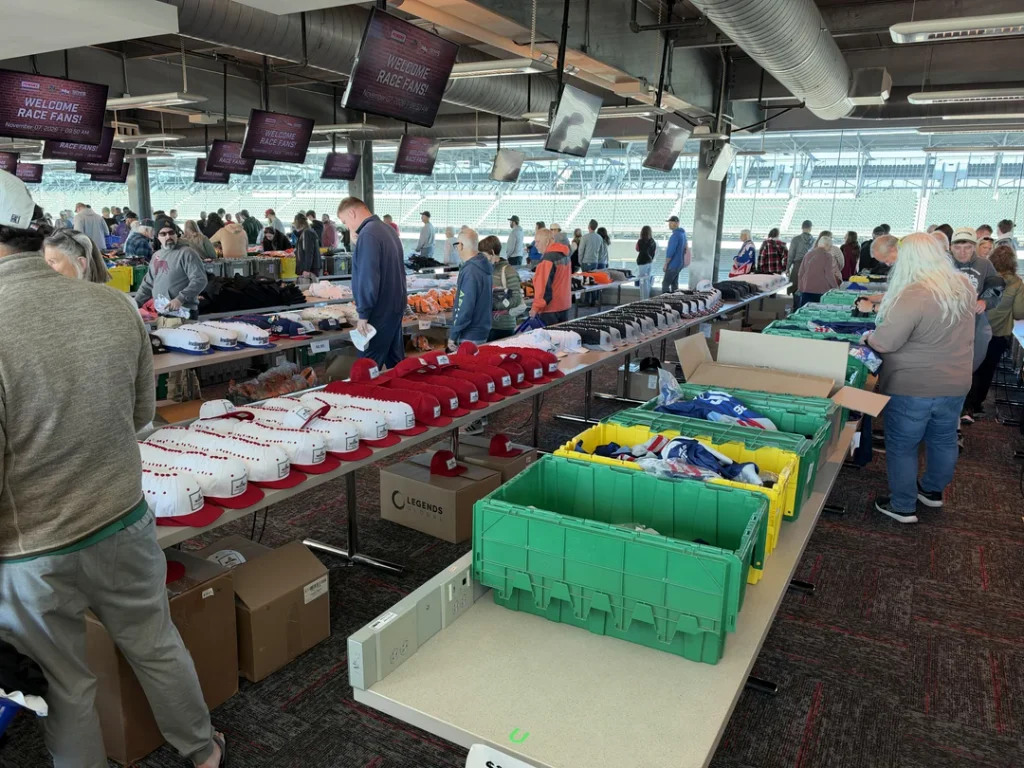
Two to three hours into the surplus sale at Indianapolis Motor Speedway, shoppers still had their pick of white Freedom 250 hats for $10. By then, the opening rush had passed, and the selection of driver and team caps was nearly gone.
It was one look at the tables in the IMS Pagoda media center. Without starting quantities or final sales figures, there’s no way to know how many hats of each kind sold. Still, anyone arriving after the rush faced an interesting choice. Ten dollars could buy a souvenir from a one-time IndyCar race in Washington, D.C. Finding something with a favorite driver’s name on it was getting harder.
What makes a race souvenir worth taking home?
A driver cap has a long useful life. Wear it to the next race and it still says who you pulled for. A Freedom 250 hat asks a little more of the buyer. If you went to the race, it can bring back a particular day. If you missed it, how much do you like the hat itself?
One purchase at the sale illustrates just how specific that calculation can be. A Nashville race shirt found a buyer at $3 because the cut and color were right. Even a slightly higher price would have been enough to leave it behind. The white Freedom 250 cap had its own practical drawbacks. White shows dirt after a day at the track, and the logo stitching drew criticism. At $10, it made sense as a spare hat for a sunny afternoon. As a keepsake, it had to clear a higher bar.
The sale offered a good example of what does make an item worth hunting for. At 9 a.m., the driver banners still available included Alexander Rossi, Ed Carpenter and David Malukas from his time at A.J. Foyt Racing. By the time another shopper reached the signage, nearly all of it was gone. A Malukas banner from his Foyt days captures one particular stretch of a driver’s career. For someone who followed him then, that detail is the appeal. The harder question, as one shopper discovered, was where to put it.
The politics of wearing the logo
For some IndyCar fans, the deciding factor came well before the price tag. They associated the Freedom 250 branding with Donald Trump. That association figured into decisions about making the trip to Washington, watching the race on television and, eventually, wearing its merchandise.
There’s a distinction here that matters for an event built around America’s 250th anniversary. Someone who grew up collecting state license plates with the 1976 Bicentennial logo could have spent decades looking forward to the next milestone and still pass on a Freedom 250 souvenir. The preference some expressed for something bearing the America 250 name shows how much the particular branding mattered, even among people who wanted to commemorate the anniversary.
Racing fans already know how easily a hat can send an unintended message. From across the street, the colors on a red Ferrari cap or a Tim Richmond/Folgers throwback register before anyone can read the lettering. The Freedom 250 cap was white, but the name itself created much the same hesitation. A discount does little for a buyer who expects to have to explain the hat every time they wear it.
What the $10 price can tell us
Estimates put the original race-day price in the $40 to $50 range, though the exact retail figure is unclear. The markdown invites an obvious question about what an official hat costs to produce. The blank cap and embroidery are only part of that calculation. Licensing and selling costs can also factor into the price, and the terms for the Freedom 250 merchandise are unknown. Once the hats have been made and the race is over, recovering $10 on a remaining cap can make sense even if the original sale price was several times higher.
There was plenty of interest in the sale itself. One estimate put the crowd at around 100 people while that shopper was there. An online sale also ran, though some of the better bargains appeared to be in the Pagoda. Even the checkout offered something for collectors, with free pins from pandemic-era races that never took place.
Those pins make a fitting counterpoint to the stacks of Freedom 250 caps. A souvenir can have a story worth keeping even when nobody attended the race. At IMS, a canceled-race pin, a $3 Nashville shirt and a banner from Malukas’ Foyt days each gave somebody a particular reason to take it home. For the white hats still on the table after the rush, the anniversary alone only went so far.