

Ferrari heads into the Brazilian Grand Prix facing a question that extends beyond who was right or wrong in Mexico: how does it allow two ambitious drivers to race each other without sacrificing the result both are employed to deliver?
Lewis Hamilton has continued to criticize Charles Leclerc’s approach to their battles, while a meeting between the drivers is planned for Friday in the Brazilian paddock. What began as an argument over first-lap racing has expanded into a dispute about team priorities, public accountability, and how Ferrari should prepare for a potential championship challenge. Elsewhere, Valtteri Bottas and Liam Lawson are confronting a different kind of uncertainty: whether their contributions will be enough to keep their seats. Max Verstappen, meanwhile, has offered a characteristically confident assessment of his own speed, and newly crowned champion Kimi Antonelli arrives in Brazil with a tribute to Ayrton Senna. Beyond the sporting arguments, the publication of emergency shelter guidance for Lusail raises a more consequential question about the conditions under which racing should proceed. Ferrari’s immediate task is to establish what Hamilton and Leclerc can reasonably expect from each other.
Hamilton has backed the suggestion that Leclerc races him harder than drivers from other teams. AutoRacer also quoted him extending that assessment to his teammate’s previous partnerships: “It was the same with Vettel and Sainz.”
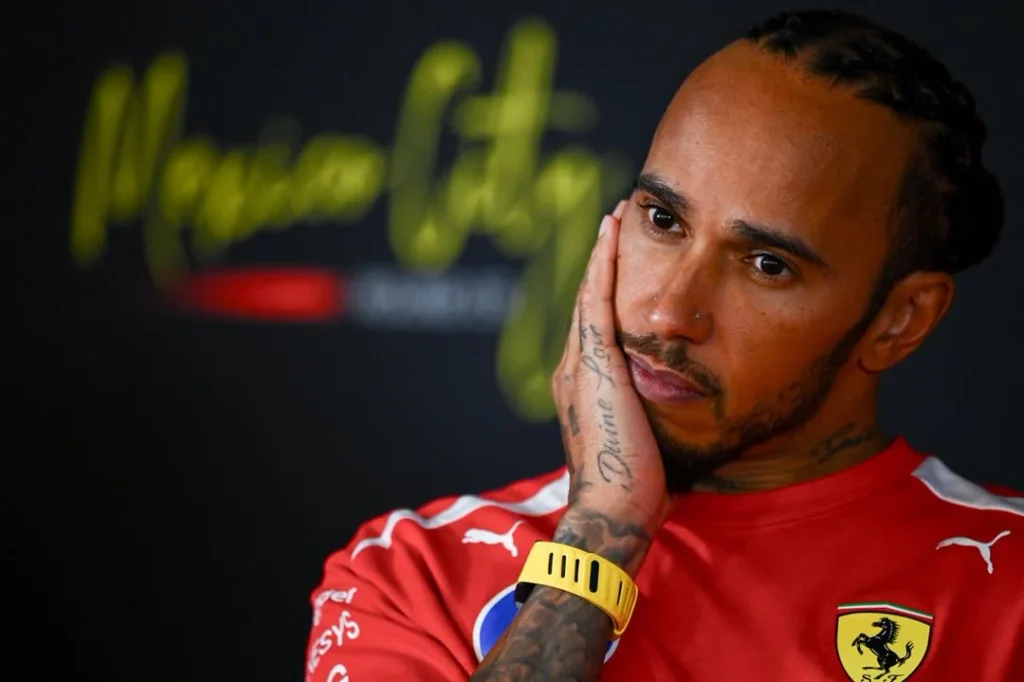
That turns a disagreement about recent incidents into a broader judgment of Leclerc’s racing mentality. It also makes the dispute harder to resolve with a simple instruction to move on. There is an obvious competitive reason for Leclerc to fight Hamilton hard. A teammate provides the closest available benchmark, and Hamilton’s record makes that comparison particularly significant. Beating a seven-time world champion carries weight; losing to him invites a different set of judgments. The reputational stakes are not identical. Hamilton’s standing among the sport’s greatest drivers is already established. Leclerc is still trying to convert his ability into the achievements that would define his own legacy. That imbalance can help explain the intensity without excusing every decision made on track.
But wanting to beat a teammate and protecting a team result are not mutually exclusive objectives. Ferrari needs its drivers to pursue both. The strongest version of Hamilton’s argument is that repeated battles have compromised opportunities the team should have converted. If both drivers lose ground while fighting each other, their freedom to race has come at a cost that Ferrari must address. The strongest response is that Leclerc should not be expected to abandon a legitimate attempt to take the lead simply because the other Ferrari belongs to Hamilton. A driver’s championship history cannot confer permanent priority over a teammate.
That is the distinction Friday’s meeting needs to clarify. Rules governing space, risk, and cooperation can apply equally to both cars. They do not have to amount to appointing a number one. Mexico also requires more care than a comparison of penalties alone allows. The distinction raised in the discussion is that the car on the inside also went off track, which mattered to the assessment of Leclerc’s incident. Treating it as automatically identical to Hamilton’s previous penalty overlooks that difference. Nor does the outcome establish that a Ferrari one-two was guaranteed. The useful question is whether their interaction reduced the team’s chances of securing its best available result, and what either driver could reasonably have done differently.
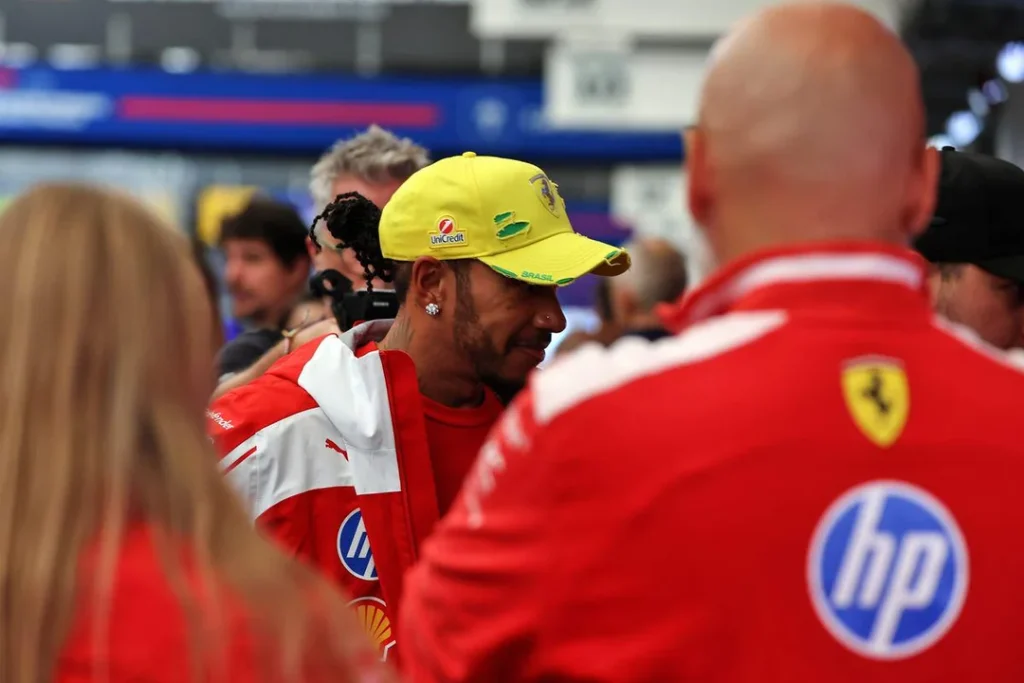
Hamilton’s wider criticism creates another complication. Invoking Vettel and Sainz encourages the current incident to become a retrospective verdict on Leclerc’s entire Ferrari career. That is difficult to reconcile with earlier criticism that Leclerc was too accommodating, particularly during his partnership with Sainz. A driver cannot reasonably be told that he lacks the aggression to become a champion and then be condemned simply for showing a willingness to challenge his teammate. There can still be criticism of a specific maneuver. But that criticism is stronger when it addresses the maneuver itself, rather than using it to prove an all-encompassing theory about the driver.
Hamilton’s own competitive decisions also belong in the discussion. His decision to remain out during the Singapore virtual safety car, pursuing an opportunity to finish ahead of Leclerc before losing a podium, complicates any account in which individual ambition operates on only one side of the garage. That does not invalidate his concerns about Mexico. It does mean Ferrari needs a standard both drivers can recognize as consistent. The public nature of the disagreement may now be as important as the original racing.
Hamilton’s declaration that “I’ll never be silenced” makes for a confrontational headline. The context supplied alongside it, however, concerns his willingness to speak in his own words rather than simply repeat what a press officer would prefer. It should not automatically be treated as evidence that Ferrari has attempted to impose a formal gag.
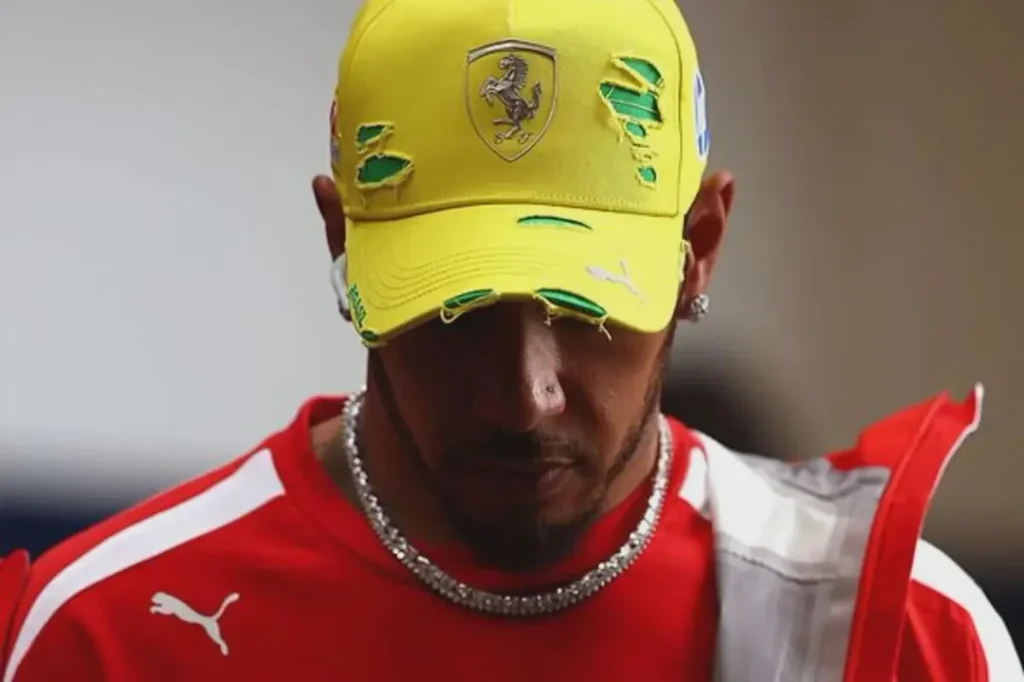
Even with that distinction, continuing to criticize a teammate publicly has consequences. It can put pressure on leadership to act, but it can also make the eventual conversation more defensive. There are two plausible interpretations of Hamilton’s approach. He may believe private discussions have failed to produce meaningful changes. Alternatively, the public campaign may be an attempt to strengthen his position within the team before next season. Neither motive can be established solely from the intensity of his comments. The timing has added sensitivity, with Leclerc becoming a father and not yet present for some of the discussion. That does not make sporting criticism impermissible, but it makes a one-sided public argument easier to interpret as unnecessarily personal.
Ferrari should also resist allowing this to become a referendum on which driver has the more devoted following. Hamilton’s history alongside Alonso, Button, Rosberg, Russell, and Leclerc makes the claim that he cannot tolerate a competitive teammate too simplistic. Equally, those past contests do not make his interpretation of every new incident correct. Leclerc’s lack of a world championship does not deprive him of equal standing on the track. Hamilton’s championships do not deprive him of the right to demand better coordination.
The team’s responsibility is to define the boundary between hard racing and avoidable damage—and enforce it consistently. If Ferrari hopes to fight for titles, resolving that boundary now would be more useful than carrying the same dispute into a season with greater stakes. Verstappen’s latest comments provide a related perspective on the self-belief behind these rivalries.
Told that George Russell had described him as looking quickest, Verstappen replied: “I’m always the quickest. It just depends if the car can show it or not. I’m always the quickest.”
It is a statement that can be read as confidence, humor, arrogance, or a combination of all three. The reaction often depends as much on the driver making it as the words themselves. Hamilton expressing similar confidence can provoke a different response from the same audience. That inconsistency is worth recognizing. Neither driver’s self-belief becomes inherently more acceptable because it comes from a preferred personality. Still, believing that success is possible is different from believing there is nothing left to improve.
A driver can regard himself as capable of becoming the best while acknowledging that a rival is currently doing something better. Lawson’s emphasis on not being able to replicate something Verstappen did “yet,” as recounted in the supplied discussion, captures that distinction. The word leaves room for both ambition and learning.
The same applies to the idea of measuring Hadjar’s progress through what he can learn alongside Verstappen. Recognizing a gap does not necessarily mean accepting it permanently. Debates over who could challenge Verstappen in the same car remain hypothetical. Hamilton, Leclerc, Norris, and Antonelli all feature in that conversation, but no confident prediction can substitute for the comparison actually happening. The environment would matter as well. Being Verstappen’s teammate at Red Bull and meeting him in a different team would not necessarily be identical tests.
Pérez’s experience also demonstrates how strongly a teammate comparison can shape a driver’s reputation. There is a meaningful difference between being hired as a capable, experienced race winner and being expected to defeat Verstappen across a season. Reducing that distinction to whether someone was merely intended to obey orders strips away too much of the sporting context. For Bottas, the immediate concern is less about proving he is the quickest driver in the world than understanding whether Cadillac still intends to pursue the project he joined.
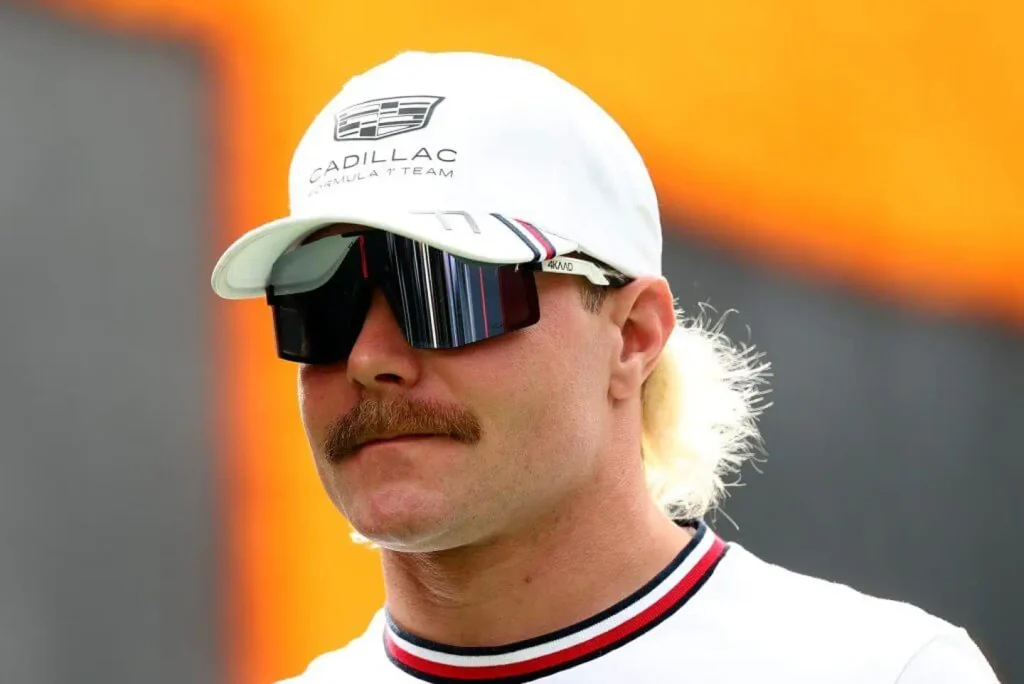
Luke Smith reported that Bottas signed up for a long-term undertaking but “didn’t sign up for fighting for a race seat” in his first year.
“It’s just extra distraction,” Bottas said of the speculation. “It doesn’t help anything. So it’s a bit of a shame in a way.”
His account of the contractual position was clear: “At the moment, nothing has changed. The team still seems to be happy with what I’m doing. I know what the target is, it’s long-term. I know what my terms are in the paper.”
Those remarks matter because discussion of a possible replacement can easily begin to sound like an announced decision. Bottas says he has a contract for next year and that nothing has changed. That remains distinct from speculation about Colton Herta. There is a substantial sporting argument for continuity. Bottas and Pérez bring experience of race-winning teams to an operation still developing its own methods. Their contribution includes feedback, preparation, debriefs, and an understanding of how a competitive weekend should function. A driver cannot engineer away a mechanical failure. That does not make his description of the car’s behavior before and after a problem irrelevant. Experience can help a team interpret what it is seeing, even when the immediate weakness lies elsewhere.
The Herta argument introduces a different priority: the appeal of an American driver in an American-branded team. That proposition should be assessed on its own terms. It does not require Herta to be more recognizable than Bottas today. It could instead be an attempt to attract people who do not currently follow either driver. But nationality alone does not guarantee a durable audience. Existing American F1 supporters do not all organize their loyalties around a driver’s passport, and attracting attention is different from retaining it through difficult results.
Bottas already has a distinctive public profile, while Herta offers a connection to American racing through his IndyCar background. Those are different commercial assets, and neither can be reduced to a simple assertion that one driver is marketable and the other is not. For Cadillac, the central question is whether changing its lineup would help the team progress enough to justify sacrificing continuity. For Herta, there is also the question of whether entering a developing operation would provide the right platform for his first full season. No replacement decision is established by the material supplied. Bottas’s frustration comes from having to address the possibility while maintaining that the long-term agreement remains intact. Lawson faces a more openly uncertain situation.
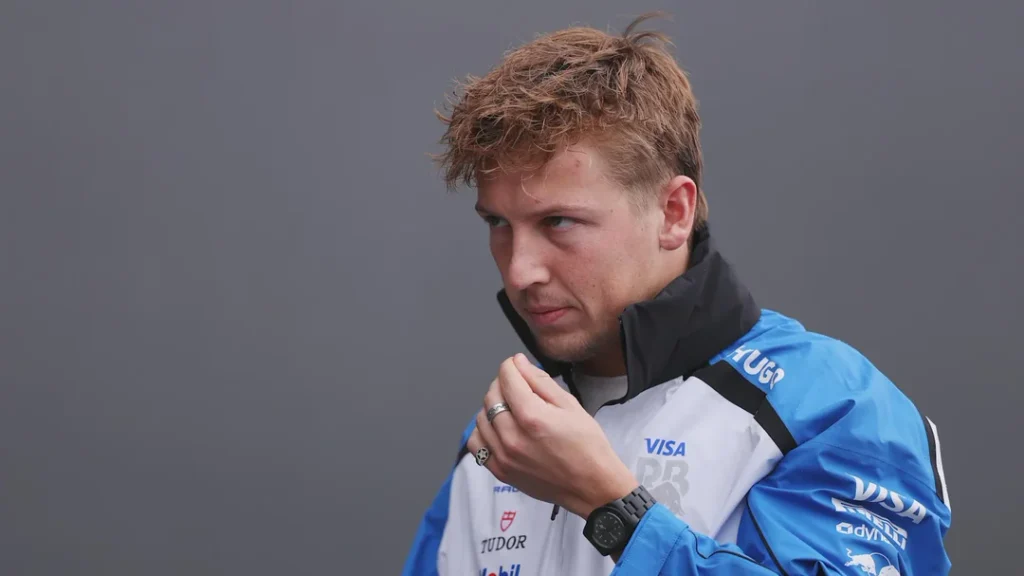
“I don’t know what else they want me to do” captures the difficulty of performing without knowing whether the decision is being made against current results or a projection of someone else’s potential.
His points advantage over Lindblad strengthens his case on immediate output. Lindblad’s age and rookie status, however, allow Red Bull to frame the comparison around development rather than the present standings. Both considerations can matter. What cannot be known with certainty is the eventual ceiling of either driver. A young driver’s potential is a forecast. A more experienced driver’s results are evidence. Replacing the latter with the former can be justified, but only if the team has a convincing reason to believe it is improving its future prospects.
Red Bull’s development structure exists partly to find exceptional drivers. That explains why simply being competent may not secure a lasting place. It does not make every rotation productive. If Lawson is performing well enough to contribute now, replacing him with another unproven prospect carries a cost as well as an opportunity. The pursuit of the next Verstappen or Vettel cannot, by itself, demonstrate that the next candidate will be better. The alternative market offers little obvious reassurance. Discussion of Haas, Cadillac, or a later return does not establish an available seat. Nor does the supplied material establish that Red Bull has prevented Lawson from negotiating elsewhere.
A gap in his career would not necessarily be permanent, but the possibility of a future comeback is limited comfort to a driver trying to secure his immediate place. Antonelli’s Brazil preparations offer a less confrontational story, even if the reaction has managed to turn that into an argument too. His special Senna tribute helmet raises a straightforward question: does a driver need to have watched someone compete live to consider him an inspiration?
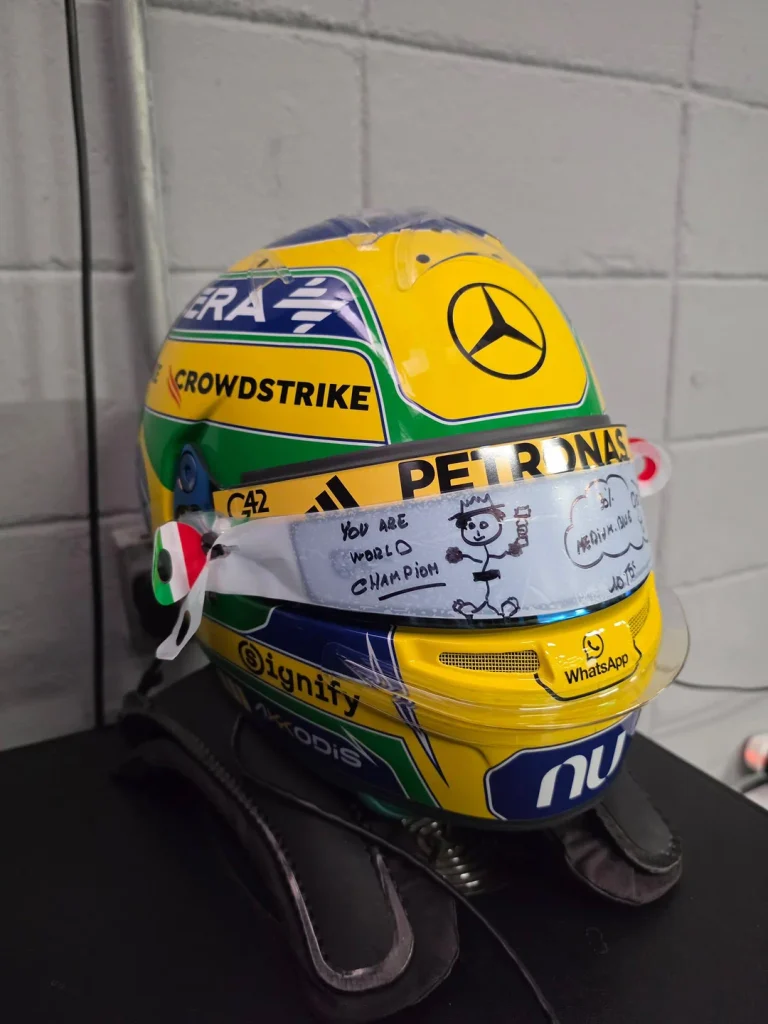
There is no persuasive reason why that should be a requirement. Archived races, family influence, and learning the sport’s history can all establish a meaningful connection. The account supplied describes Antonelli’s father showing him Senna’s races while he was growing up. That is a sufficient basis for understanding the tribute without inventing a commercial motive. Lindblad’s more qualified description of Senna illustrates that younger drivers can relate to the same figure differently. He described respecting Senna while finding it harder to appreciate him fully without having watched him compete at the time. That perspective does not invalidate Antonelli’s.
Nor does a helmet tribute require a final judgment on whether Senna was better than Prost, Schumacher, or anyone else. Admiration is not a statistical ranking exercise. Antonelli will develop his own identity as his career continues. Honoring a driver who influenced him does not prevent that. His championship has already traveled beyond the paddock. Comedian Jimmy Carr referenced the combination of an Italian champion and Mercedes in a joke built around Italian-German historical associations.
Whether the joke succeeds is a matter of taste. Its presence in a stand-up routine nevertheless offers a small illustration of Antonelli’s title entering a wider cultural conversation. The subsequent argument over Carr’s delivery says less about the championship than about how quickly almost any F1-related moment can become a dispute over personality. The Lusail news demands a different level of attention. Mat Oxley reported that the circuit had published emergency shelter locations and protocols for the Qatar MotoGP event, adding that the document also serves Formula 1. The guidance covers seeking shelter, avoiding exposed areas, accounting for personnel, and responding to an alert.
The existence of emergency planning does not, by itself, establish the likelihood of an attack. It does establish that this contingency is being explicitly addressed. That should prompt serious scrutiny of the decision to proceed, the information available to participants, and the options open to anyone who feels unable to attend. The discussion also raises Yamaha’s withdrawal and possible consequences for MotoGP participants who decline to race. The supplied material does not establish a confirmed punishment or an equivalent position for F1 teams, so those should not be presented as settled policy.
Calls to relocate or cancel reflect understandable concern, but naming another circuit does not demonstrate that a replacement event is operationally possible. Cancellation remains a separate question from whether a substitute can be arranged. What should remain clear is that commercial interests cannot settle a safety assessment. Shelter instructions address what people should do if an alert occurs; they do not, on their own, answer whether asking those people to attend is justified. Brazil arrives with plenty for Formula 1 to resolve: Ferrari’s internal boundaries, Cadillac’s commitment to continuity, Red Bull’s definition of a deserving driver, and the responsibilities attached to its calendar.
Antonelli’s championship may be decided. The decisions shaping the rest of the season—and the next one—are still very much in play.