

My second-day walk through SEMA took me from a McLaren transformed into a Mercedes-inspired dream car to a Toyota pickup built around a day at the beach. In between were supercharged classics, a serious F-450 conversion, and performance parts that Honda and Acura owners will soon be able to order through their dealerships.
That variety made November 4 interesting. Each stop offered a different reason to customize a vehicle, whether the goal was recreating a childhood obsession, adding extraordinary power, or making room for the things you want to do when the pavement ends.
“Game Over” brings CLK GTR inspiration to a McLaren
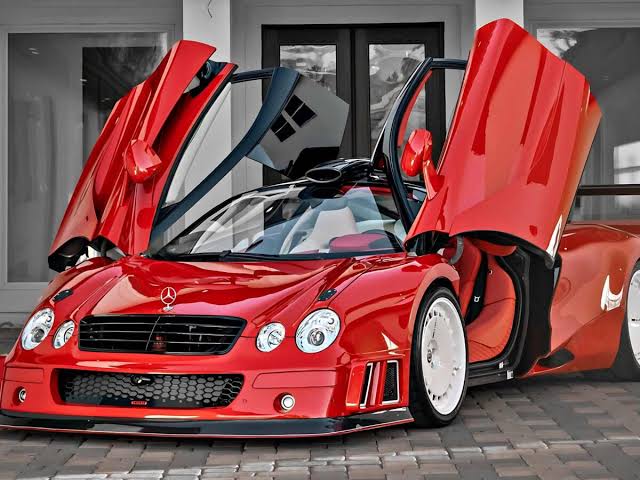
John Sarkisyan and S Klub LA’s “Game Over” was one of the strongest ideas in this group: take a modern McLaren 750S and transform its appearance around the Mercedes-Benz CLK GTR.
The project starts with a new McLaren, giving the build a contemporary supercar foundation beneath its reinterpretation of a recognizable motorsport shape. S Klub describes the CLK GTR as a childhood dream car, with Game Over bringing that inspiration into a red-bodied creation displayed at Toyo Tires Treadpass. What interests me is the challenge of making those two identities work together. The CLK GTR’s appeal is tied to its proportions and racing purpose. Translating that character onto another manufacturer’s platform requires more than borrowing a few styling details. The project also earned recognition in the competition: SEMA listed Sarkisyan’s 2024 McLaren/Mercedes 750S CLK-GTR among its Battle of the Builders Top 40.
It made an appropriate centerpiece for Treadpass, where the space between the Central and South Halls brings together builds with very different approaches to customization.
Classic Car Studio’s ’Cuda pairs champagne-brown paint with 1,200 horsepower
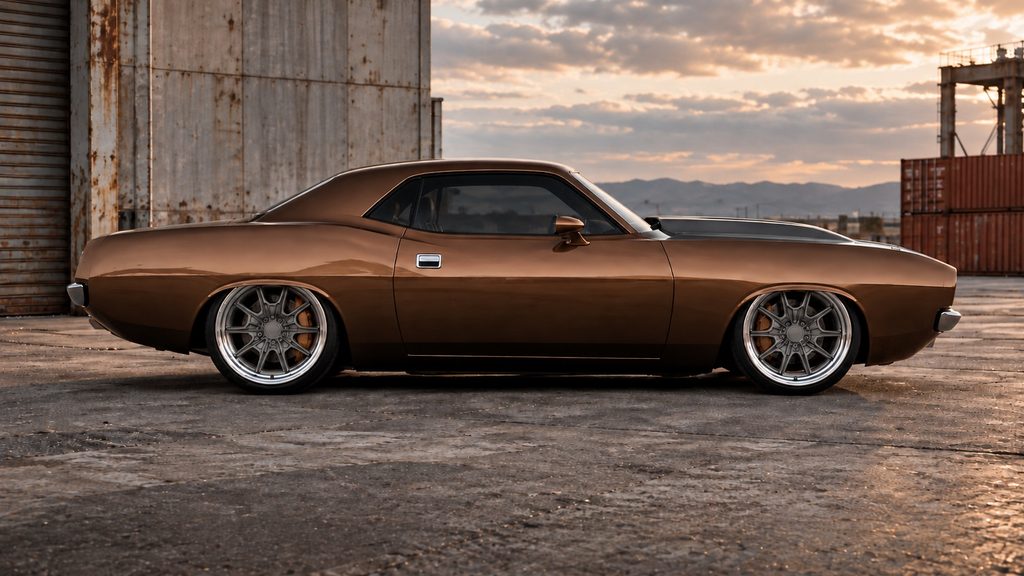
Classic Car Studio’s 1970 Plymouth ’Cuda offered a different combination of appearance and engineering.
The champagne-brown finish gives the car an elegant character. Beneath it is a 426-cubic-inch DSR HEMI with a 3.0-liter Whipple supercharger and a listed output of 1,200 horsepower. The supporting equipment is substantial: an eight-speed automatic, a Roadster Shop FAST TRACK chassis with independent rear suspension, six-piston Baer brakes, and HRE wheels. Classic Car Studio also handled the custom interior, sheet-metal fabrication, paint and bodywork, and exhaust fabrication. That broader package is what makes the build worth spending time with. The engine provides the headline, but the chassis, brakes, transmission, and interior explain how much of the car has been reconsidered.
For me, the finish is an especially good choice. It gives the familiar Plymouth shape a distinct personality while leaving the mechanical specification to deliver the surprise.
Graveyard Carz puts Redeye power behind a Daytona nose
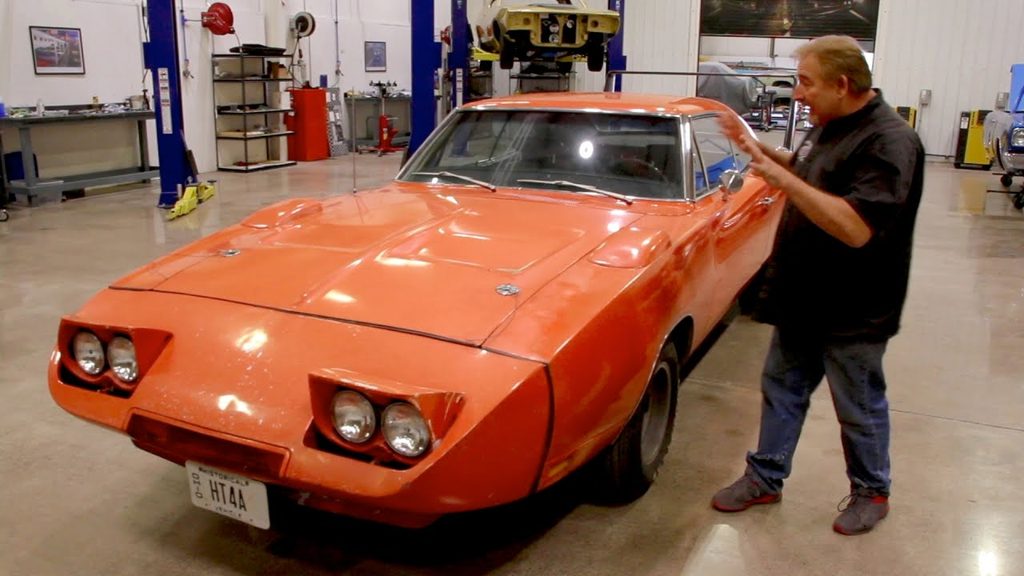
At Mopar, Graveyard Carz’s 1969 Dodge Charger Daytona tribute brought another modern HEMI into a classic body.
Mark Worman’s team used a Hellcrate Redeye 6.2-liter supercharged crate engine, a specification confirmed in Stellantis’ SEMA announcement. Mopar puts the build at more than 800 horsepower. T5 Copper paint, black bucket seats, and a vintage-styled digital instrument panel complete the combination described by Mopar. The nose cone and towering rear wing give the car its unmistakable Daytona-inspired profile. The tribute designation matters: this is a customized Charger interpreting the Daytona’s identity. That gives the project room to combine the shape with a much newer powertrain and updated instrumentation.
Together, the Charger and ’Cuda offered two compelling versions of modernized Mopar muscle. One paired a restrained color with a huge power figure; the other embraced one of the most dramatic silhouettes associated with the Charger name.
HRC brings racing development to dealership parts counters
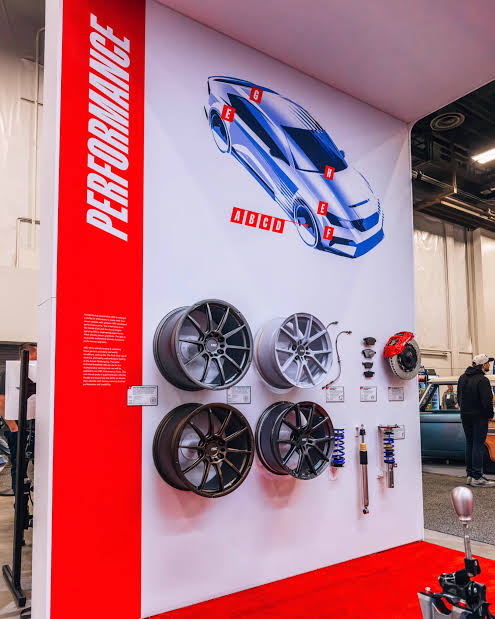
Honda Racing’s display shifted the focus from individual show cars to parts intended for customer vehicles.
HRC Performance Parts are scheduled to go on sale in March 2027 through Honda and Acura dealerships and Honda DreamShop. The confirmed products include 19-by-10-inch forged wheels for the Civic Type R and Integra Type S, developed with 2elle-engineering, which also supplies wheels for the Acura ARX-06 race car. Honda lists each wheel at 20.8 pounds. The available bronze finish references the RA272, Honda’s first Formula 1 race-winning car. The program extends to trucks and SUVs, too. HRC has developed 18-inch forged wheels with Titan 7 and a Borla cat-back exhaust for applicable Passport and Pilot models. Honda says the exhaust’s packaging improves ground clearance by up to 1.9 inches.
This was a useful stop for understanding how motorsport development can reach ordinary ownership. The connection becomes tangible when it produces a wheel, an exhaust, or another component that someone can buy for the car already in their driveway.
Yakima’s Toyota keeps the destination in mind
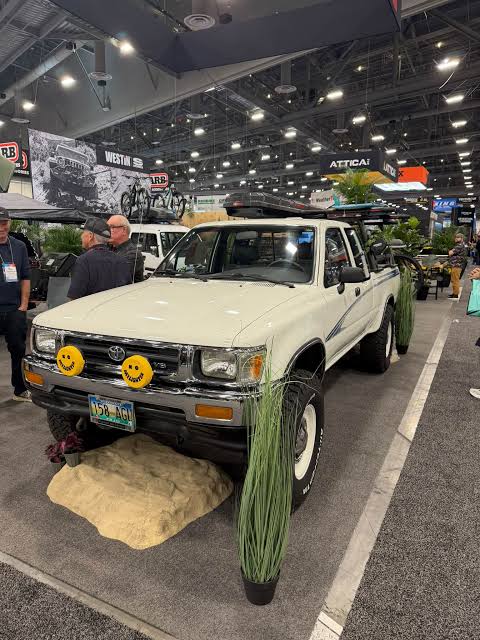
Yakima’s 1994 Toyota Pickup brought the conversation back to what a vehicle lets you do.
The company’s beach-build brief centers on surfing, fishing, and outdoor fun. That gives the truck a straightforward purpose and provides a welcome change of pace among the high-horsepower projects. I like the choice of an older compact pickup for that idea. It puts the emphasis on the activities around the truck and the usefulness of the platform. The appeal is easy to picture: load up, head toward the water, and make a day of it.
It also broadens the picture of SEMA customization. A build can be memorable because it makes a familiar weekend look more inviting.
DDE’s F-450 tackles the tow-rig side of the show
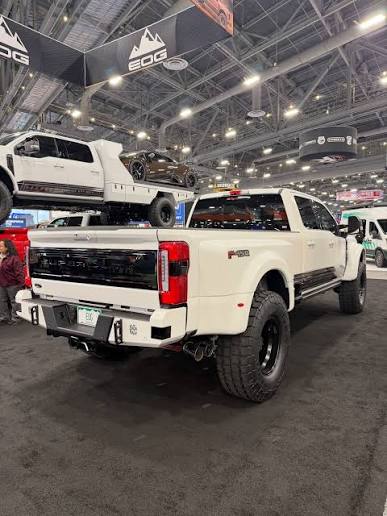
Dave Coulter’s Ford F-450, built with Elevation Off Grid and LiquidSpring, approached usefulness on a much larger scale.
The project starts with a 2026 F-450 Platinum Plus and converts the factory dual-rear-wheel arrangement to a super-single configuration. LiquidSpring suspension is another central part of the transformation. Elevation Off Grid’s Black Edition package combines that conversion with a two-inch suspension lift, wide color-matched fender flares, upgraded bumpers, and a Warn winch. Its design brings together the Super Duty’s factory interior amenities and a substantially revised exterior and suspension package. For a Daily Driven Exotics project, the tow-rig role gives the truck a clear connection to the cars around it. The vehicle doing the hauling becomes a build worth examining in its own right.
Coulter also announced a Friday, November 6 appearance at the Elevation Off Grid booth in West Hall at 2 p.m., with 500 DDE × EOG shirts available while supplies last.
A 1940 Indian earns its place among the finalists
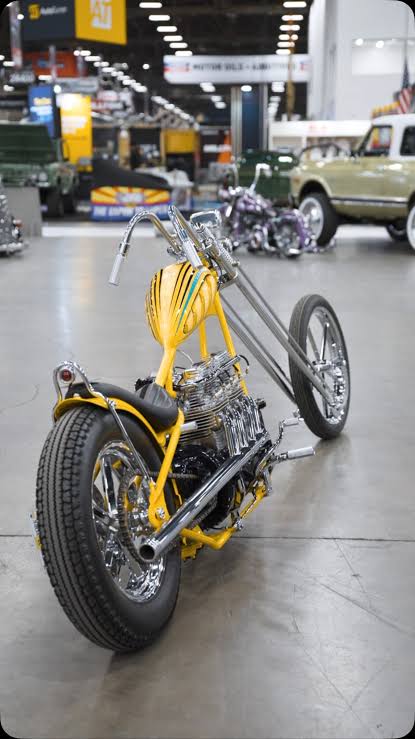
The Bike Builder Shootout provided another reason to step away from four wheels.
Robert Zeolla’s 1940 Indian Inline Four reached the inaugural competition’s Top 3, alongside James Crosby’s Harley-Davidson Pan Head and Steven Iacona’s Harley-Davidson Knucklehead. Its inclusion added another era and another type of craftsmanship to the day’s discoveries. After modern supercars, supercharged muscle, and heavy-duty trucks, an Indian from 1940 helped show just how much automotive history shares space at SEMA.
The contrast between those stops stayed with me. Game Over began with the dream of a particular car. The ’Cuda and Charger explored what modern power could bring to familiar classics. Yakima and Elevation Off Grid built around places to go and equipment to carry. Each offered its own reason to take another look—and made the next aisle worth exploring.