

Charles Leclerc is being questioned for taking too much risk. Lando Norris is being questioned for not taking enough. Liam Lawson has more than twice his teammate’s points and still has no assurance of a seat next season. Meanwhile, Toto Wolff’s message celebrating Kimi Antonelli’s championship contains a reminder that cuts across all three situations: drivers need to know what their teams expect from them, and teams need to stand behind the decisions they make.
As Formula 1 turns toward Brazil, Mexico’s aftermath continues to expose competing priorities. Drivers want to win, teams want the strongest combined result, and development programs want to find the next champion. Those objectives can coexist, but they do not automatically align.
Beyond those sporting arguments, Max Verstappen’s concerns about Qatar and Abu Dhabi raise a more consequential question: what assurances will be enough for the people expected to travel and race?
Leclerc’s Aggression Is Understandable. The Execution Still Matters.
The comparison between Leclerc and Verstappen is tempting. Both are prepared to make an opponent uncomfortable, fight for a position rather than concede it, and take opportunities that a more cautious driver might leave alone.
There is nothing inherently wrong with Leclerc wanting to beat Lewis Hamilton. A teammate is the most immediate competitive benchmark, and asking a driver to abandon a chance of victory simply because the other car belongs to the same team is a considerable demand. Leclerc should not have to accept a supporting role to demonstrate that he can work for Ferrari. Equally, aggression does not become good judgment merely because it resembles something a world champion might attempt. The useful question after Mexico is whether the risk produced enough benefit to justify the damage to Ferrari’s race.
Leclerc’s opening-lap attack, Hamilton’s defense, and the consequences for both cars deserve to be examined together. Hamilton’s involvement does not make every defensive decision beyond criticism. Leclerc’s ambition does not excuse every attacking decision. There is room to assess both without turning the incident into a referendum on which driver deserves to lead Ferrari. It is also too easy to judge the entire move backward from the finishing order. Had Ferrari emerged with a one-two, the same aggression would probably have been celebrated much more warmly. That does not mean the risk would have been different. It means successful outcomes tend to make questionable decisions easier to forgive. The reverse matters, too. Ferrari failing to win does not prove that every later consequence was inevitable from the moment its drivers fought on the opening lap. Strategy, interruptions, tire performance, and execution still mattered.
What Ferrari cannot dismiss is that its internal contest made an already complicated race harder to manage.
Ferrari Needs Rules Its Drivers Can Apply at Racing Speed
Fred Vasseur’s explanation of the position-return procedure highlights a problem that extends beyond the personalities involved.
“We had a discussion with the race control, but you have to act before Turn 11,” Vasseur said. “You have five seconds’ delay between the video and the reality. It means that you are already in Turn 11.”
He also explained that Ferrari had agreed before the race that the drivers needed to handle those situations themselves. That puts responsibility on the driver, but it also demands clarity from the team. If the pit wall cannot reliably review an incident and deliver an instruction before the deadline, the pre-race understanding needs to be clear enough to apply immediately. A driver asking whether to return a position, an engineer responding, and the team subsequently explaining why the decision window was difficult to manage do not suggest a process working smoothly under pressure.
Ferrari needs an approach that both drivers understand before they reach the braking zone. Otherwise, the team risks allowing a split-second contest to become a prolonged argument about intent, responsibility, and who should have intervened. The resurfaced footage of Sebastian Vettel and Leclerc colliding in Brazil in 2019 is a reminder of what Ferrari stands to lose when its drivers leave insufficient margin. Both retired after contact that looked slight compared with some of the impacts Formula 1 cars survive. The relevant lesson is how little contact can be required to destroy the team’s result. Drivers cannot count on a car absorbing a touch simply because they have seen another survive something far more dramatic.
Mexico did not need to end in a double retirement to justify a serious conversation about boundaries.
Ruthlessness Is Only Part of the Comparison With Verstappen
Comparing Leclerc’s mentality with Verstappen’s also risks overlooking the distinction between willingness and execution.
Being prepared to brake later is one thing. Knowing how late the car will allow is another. Leclerc’s major lockup and flat-spotted tire were costly because ambition exceeded what he successfully executed in that moment. There is no need to invent a psychological explanation involving an obsession with Hamilton. The mistake can be assessed on its own terms. It compromised Leclerc’s race and left him defending with damaged rubber. Nor does Hamilton’s own history of intense teammate battles prevent him from criticizing a current incident. Drivers can change their views, and different incidents require different judgments. Reaching back to Spain in 2016 does not settle what Ferrari should have done in Mexico. The standard should be consistent: challenging a teammate is legitimate; unnecessarily compromising both cars deserves scrutiny. A famous surname, a championship tally, or a reputation for being ruthless should not change that test.
Ferrari’s responsibility is to make sure its drivers can pursue individual success without repeatedly reducing the team’s chance of beating everyone else.
Russell’s “Just Send It” Misses Part of Norris’s Problem
Watching Norris attempt to pass Leclerc three laps from the end, George Russell delivered a blunt assessment.
“That was painful to watch,” he said. “Just **** send it.”
The frustration is understandable. Leclerc was nursing a badly flat-spotted tire, and Norris still could not complete the pass. From behind, it looked like an opportunity that should eventually yield a result. But a slower car is not necessarily an easy car to overtake. Leclerc could protect the inside, making Norris attempt a more difficult route around the outside. McLaren’s straight-line limitations and the lift-and-coast demands described during the battle further complicated the attack. Arriving close enough to threaten is different from arriving with enough advantage to finish the move.
That distinction matters when assessing apparent caution. An early lift or compromised approach can look like a driver declining an opportunity when the car’s operating demands are restricting how the opportunity can be used. It would still be too generous to assume every unsuccessful attempt was unavoidable. Norris’s execution can be questioned. There were moments that invited a more committed attack, particularly given Leclerc’s tire condition.
However, “just send it” skips the calculation Norris had to make: whether the available opening offered a realistic pass or an unnecessarily high chance of contact and lost points.
Russell’s own position behind Norris adds some irony, although it does not make the two situations identical. He was not attacking the same damaged Ferrari, and his own reported technical difficulties complicate the comparison.
The broader frustration is that this should have been a compelling late-race fight. Instead, it became another example of how a pace advantage can fail to translate into a usable passing opportunity.
Lawson’s Numbers Make His Uncertainty Difficult to Ignore

Lawson’s admission that he has received “no assurance” about keeping his Racing Bulls seat presents a different kind of conflict between individual performance and team objectives.
The supplied points comparison is stark: Lawson has 83, while Arvid Lindblad has 38. On current results, Lawson has a strong argument for another season. Yet Racing Bulls’ role in developing potential Red Bull drivers means the decision may extend beyond which driver is scoring more heavily today. That explains why Nikola Tsolov enters the picture. It does not automatically justify replacing Lawson.
Tsolov’s junior record deserves context. Moving into Formula 3 at 16 directly from Spanish Formula 4 was a substantial step, and judging his early seasons without considering his age and experience would be reductive. His six Formula 2 wins this season also provide a meaningful argument that his development has accelerated. The case against rushing him is equally reasonable. Lawson already has evidence at Formula 1 level, while Tsolov’s suitability remains a projection. Another development season could allow Racing Bulls to assess Lindblad’s progress and Lawson’s performance over a longer period before deciding which seat should change. There is no route that eliminates uncertainty. Promoting Tsolov would produce the Formula 1 data the organization currently lacks. Retaining Lawson would preserve a driver delivering substantial points. The concern is whether the search for another exceptional champion makes proven performance too easy to discard. A driver does not have to be the next Verstappen to offer considerable value.
Timing matters as well. The longer Lawson waits, the less freedom he may have to secure a worthwhile alternative if the decision goes against him. Even a development team should recognize the consequences of leaving a driver’s future unresolved.
Wolff’s Antonelli Message Offers a Different Model
Wolff’s email to Mercedes employees, shared by deputy team principal Bradley Lord, is striking because it spreads credit for Antonelli’s championship far beyond the person who approved his promotion.
He recognizes Antonelli’s parents, the people involved in his karting and junior career, Mercedes’ engineering and communications staff, the board, partners, and the workforce at Brackley and Brixworth. The specificity gives the message substance. Success is presented as the result of many people performing different jobs over many years. His clearest point concerns the difficult periods.
“You cannot ask a young driver to learn and then punish him for making mistakes,” Wolff wrote.
That is the most relevant line for a grid increasingly preoccupied with finding its next young champion. Hiring a prospect means accepting that development will include weekends that look uncomfortable in isolation. Mercedes’ commitment, as Wolff describes it, was to the driver Antonelli could become rather than a judgment repeatedly reset after each poor result. That does not mean every young driver deserves unlimited time. It means the tolerance for mistakes should be part of the decision to promote one, rather than something withdrawn as soon as the mistakes arrive. Wolff also makes an important acknowledgment about Russell.
“This wasn’t George’s year,” he wrote. “He and the car weren’t always the best of friends.”
He then credits Russell’s speed, experience, and leadership with giving Mercedes the confidence to take the risk on Antonelli, describing him as “a champion and a number one driver.”
That is Wolff’s assessment of Russell’s standing within the team, not a claim that Russell won this year’s title. Its significance is that the experienced driver’s contribution remains valuable even when the younger teammate delivers the championship.
In a season dominated by Antonelli’s achievement, it would have been easy to reduce Russell to the driver who lost the internal contest. Wolff instead explains why Mercedes needed him.
Ocon’s Exit Does Not Erase What He Achieved
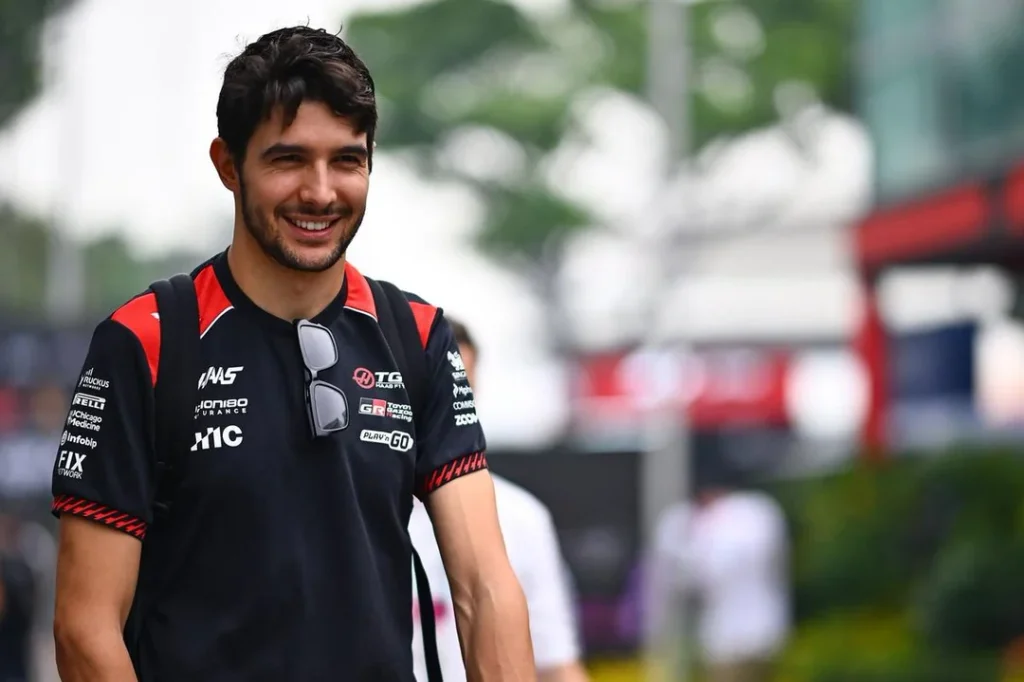
The same distinction between present circumstances and overall value belongs in the assessment of Esteban Ocon.
Being dropped invites a harsh final judgment, particularly when teams are weighing experienced drivers against younger prospects. But losing a seat does not turn a race-winning Formula 1 career into a failure. Ocon reached the sport’s highest level from a relatively modest background, with his family making major sacrifices to support his progress. He won a Grand Prix, reached the podium, and sustained a lengthy career in an exceptionally selective championship. Those achievements stand independently of whether he secured a top-team opportunity or developed into a regular championship contender.
His recent performance can still be criticized. An experienced driver being measured against a younger teammate has to provide a convincing reason to remain. Past success cannot guarantee a permanent place. But the end of an F1 seat and the end of a worthwhile racing career are very different things. IndyCar is an appealing possibility, as are endurance racing and Formula E. A reserve role could also keep him connected to Formula 1. None should be presented as an established next step. An IndyCar move, in particular, would need more than name recognition. Seat availability, funding, competitiveness, and Ocon’s own priorities would determine whether it made sense. Familiarity could attract some F1 viewers, but it would be excessive to assume his arrival alone would transform an event’s audience.
The strongest argument for another opportunity is his racing experience. There is still value in what he knows, even if his current Formula 1 chapter is closing.
Verstappen’s Safety Questions Need More Than Sporting Answers
Verstappen’s comments about Qatar and Abu Dhabi concern something more important than driver rankings or team politics.
“It mainly depends on what kind of guarantees they can give us and what happens over the coming weeks,” he said.
“You can say now that you’re happy to go there, but you don’t know what will happen next week, because the region is obviously still not entirely stable.”
His position is conditional. He has raised concerns and asked for assurances; that is not the same as announcing a boycott. Hamilton’s supplied comments express a different level of optimism, while also acknowledging incomplete information.
“I personally want to go. I love going to the Middle East,” Hamilton said. “From what I have read, things seem OK out there, but I don’t have all the information and I don’t know what the risk levels are.”
He added that he trusts Stefano Domenicali to make the right decision. Neither statement establishes the actual level of risk. What they reveal is that drivers are being asked to consider participation while recognizing that circumstances may change. Verstappen’s prominence gives his concerns weight. A collective position from drivers and teams would carry more influence still. But speculation about bans, contractual punishments, or an organized refusal goes beyond what has been established here.
The same caution applies to a possible November 10 decision and suggestions involving Imola or Portugal. Those remain unconfirmed possibilities in the supplied material. Our position is straightforward: the assessment must cover everyone required to make the races happen, including mechanics, logistics personnel, officials, and other staff. The drivers’ championship being settled does not eliminate the remaining sporting stakes. Constructors’ positions and financial consequences still matter. They also cannot substitute for an adequate safety assessment.
The responsibility for that decision should not fall on whichever driver is most willing to speak publicly.
A Different Milestone for Leclerc
Away from the arguments over Mexico, Charles and Alexandra Leclerc shared a much more personal announcement: Bianca, born November 3, 2026.
The date, written as “3.11.26,” offered a small moment of confusion for American readers accustomed to putting the month first. The announcement itself needs little embellishment.
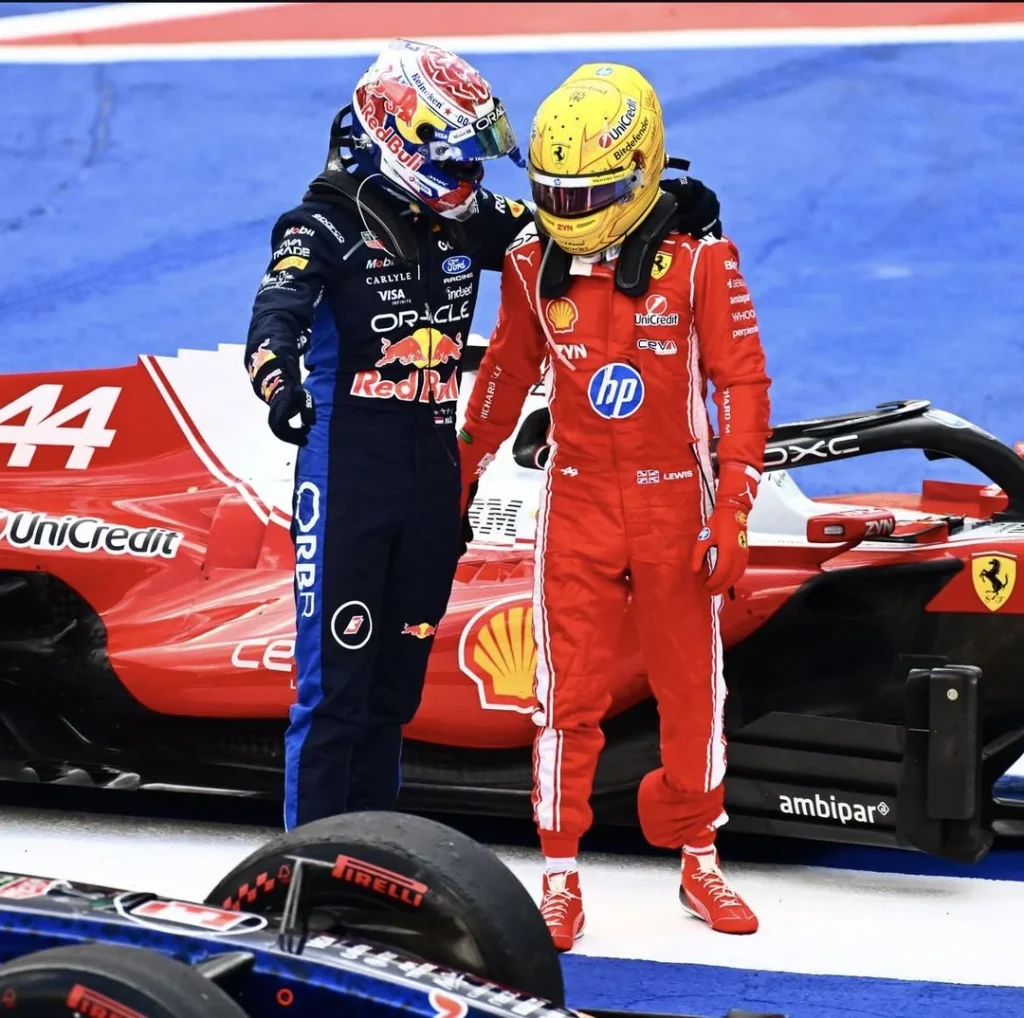
Any suggested connection between Bianca’s name and Jules Bianchi remains unconfirmed, and there is no need to assign meaning the family has not publicly explained in the supplied material. There was also a quieter reminder of the relationships behind the competition when Verstappen showed Hamilton the damage to his car after the race. Without an actual transcript, imagined dialogue remains just that. The moment is still worth appreciating on its own: two fierce competitors examining the machinery after another demanding afternoon. As the focus moves to Brazil, Formula 1 has plenty of unresolved questions. Ferrari needs a clearer understanding between its drivers. Racing Bulls owes Lawson a decision. Ocon faces a new career crossroads. And the championship’s organizers need to provide credible answers about the final races.
Wolff’s message offers a useful principle across those situations: leadership involves more than choosing people when the opportunity looks promising. It also involves giving them clarity, accepting responsibility, and supporting them when the difficult part arrives.