

Colton Herta remains one point short of the Super License he needs to race in Formula 1. Liam Lawson’s future has become the subject of sweeping speculation after a practice-session incident. Fernando Alonso and Alex Albon disagree over driving standards, while Lewis Hamilton is challenging assumptions about how long a driver can remain competitive.
Together, these stories expose how quickly F1 turns individual moments into broader judgments. A licensing error becomes a verdict on a driver’s ability. An on-track disagreement becomes a supposed dismissal notice. A confident statement becomes either championship mentality or arrogance, depending on who delivers it. There are legitimate questions underneath the noise: what qualifies a driver for an opportunity, how teams should balance experience against potential, and how much a car’s performance shapes perceptions of the person driving it. Answering them requires separating what has happened from what is merely being predicted. For Herta, the immediate position is now clear. Chris Medland reported confirmation from the FIA that the American had 39 Super License points after his Mexico City FP1 appearance, leaving him one short of the required 40.
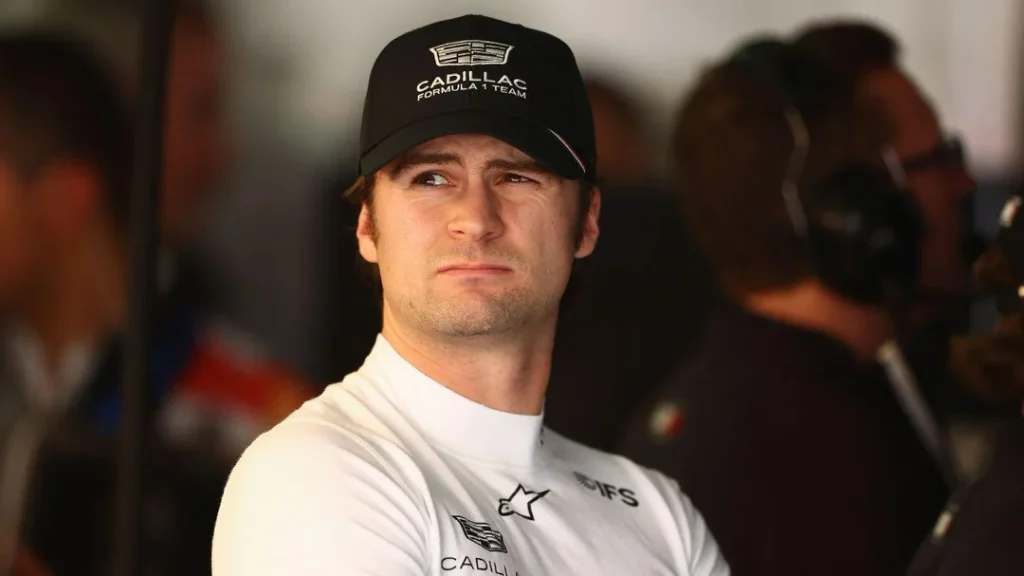
The Race reported that the confusion arose from an error on IndyCar’s website, which had listed Herta sixth in the 2025 championship when he actually finished seventh. According to its reporting, that error was corrected earlier this week. That makes this an eligibility setback rather than evidence that an F1 opportunity has disappeared. It also means that any suggestion Herta has already completed the requirement is premature. The administrative mistake is embarrassing because championship classifications should be among the most straightforward facts in motorsport. When a finishing position affects eligibility elsewhere, an incorrect listing can have consequences far beyond the original series.
However, the reporting supplied does not establish every step in the calculation or who checked which records. It would be a leap to turn the website error into a definitive account of the FIA’s internal procedures or Cadillac’s entire decision-making process. The remaining point is also separate from the much larger question of whether Herta should receive a race seat. His Formula 2 campaign has made that sporting argument difficult. The concern is understandable: a driver pursuing promotion to F1 should ideally be producing results that strengthen the case, rather than leaving observers to search for reasons those results might not represent his ability.
But junior-series performance is evidence, not a complete prediction of an F1 career. Success does not guarantee a successful promotion, and disappointing results do not allow anyone to know exactly how a driver would perform in different machinery. That distinction should not become an excuse to dismiss F2 whenever its results are inconvenient. If Cadillac believes Herta’s potential exceeds what his current campaign suggests, the justification needs to come from its assessment of his driving and development. As discussed in our earlier IndyCar article, Herta has said his F1 simulator and Testing of Previous Cars pace has been strong despite that performance not translating to F2. That offers a possible explanation for continued interest. It remains his account of the work, rather than publicly available proof that he would outperform an established F1 driver.
His IndyCar career also deserves more nuance than either extreme allows. A championship runner-up finish is meaningful. It does not establish that he is the best available F1 candidate, but it makes dismissing his entire record as insignificant difficult to defend. The commercial argument is similarly more complicated than simply putting an American flag beside Cadillac’s name. An American driver could give some prospective viewers an immediate reason to follow an American team. Existing enthusiasts who choose drivers regardless of nationality are not necessarily representative of people who have yet to develop an interest in the championship.
Herta also brings a connection to an existing racing audience through his IndyCar career. That gives his potential move a different starting point from promoting someone unfamiliar to most viewers outside the junior ladder. Still, recognition and nationality cannot guarantee sustained attention. A driver needs a story people want to follow, and competitive progress would make that story much easier to tell. Merely occupying a seat near the back would not automatically produce the audience growth imagined in the most optimistic arguments. Nor should marketing value make the second car’s sporting contribution disposable. A developing team needs useful feedback, consistent running, and drivers who can capitalize on opportunities. The idea that one driver can develop the car while the other simply sells merchandise understates how much both seats matter.
Our earlier article covered ESPN’s report that Herta was in line to replace Valtteri Bottas, conditional on securing the necessary points. Nothing in the latest licensing clarification turns that reported possibility into a confirmed appointment. Claims about Bottas’ contractual exit clauses or a guaranteed Herta promotion should remain speculation. There is a parallel caution in the conversation around Lawson, whose practice-session encounter with Max Verstappen has prompted predictions that his Racing Bulls career is effectively over. The material supplied does not establish such a decision.
An incident can be criticized without being treated as a career-ending event. Even if a team regards a driver’s conduct as unnecessary, that does not tell us how it weighs the incident against an entire season of performances. Verstappen’s importance to Red Bull is obvious. It does not follow that every disagreement involving him automatically determines another driver’s employment. The more substantial question is what Racing Bulls wants from its lineup. Developing potential Red Bull drivers and maximizing its own competitive results are related objectives, but they are not always identical. An experienced driver delivering useful performances can have value even when a senior-team promotion is uncertain.
The arrival of another prospect does not eliminate that value. It creates a decision about timing, readiness, and what the team would gain or lose by making a change. Tsolov’s first F1 FP1 appearance therefore belongs in the discussion as an opportunity to learn and demonstrate his ability, not as proof that Lawson has already been replaced. His new haircut and clean-shaven appearance supplied a lighter talking point around the debut, but the meaningful assessment concerns his work in the car. A practice appearance is one stage of evaluation. It should not be turned into a confirmed succession plan without evidence.

There is also no reliable way to infer Lawson’s private understanding of his future from how assertively he drove against Verstappen. The suggestion that he must already know he has lost his seat because he did not immediately yield assigns a motive that the available material cannot establish. His future can remain uncertain without being settled by one session. Alonso and Albon’s disagreement presents a different version of the same problem: the temptation to turn a specific incident into a universal judgment. Albon’s response, as supplied through Sportskeeda, was direct:
“I don’t agree [with Fernando Alonso], it is as simple as that. The level is strong up and down the grid. Hopefully we don’t cross paths in the race this weekend.”
Alonso’s reply was equally pointed:
“I think we all know which ones we talk about and which ones felt hit by that comment. So that tells you everything.”
The fuller Albon comments supplied from Motorsport Week add context that the shorter exchange loses.
“Firstly, I would say that I hugely respect Fernando. I think he’s a great driver. I’ve looked up to him a lot growing up as a kid.”
Albon also argued:
“I think we’re all in our own little fight at the back. I don’t think it’s the level of the drivers as much.”
That is the strongest part of his position. Running toward the back does not, by itself, demonstrate inferior driving. Competitive position reflects the package available as well as how effectively a driver uses it. Equally, a strong grid does not make every maneuver beyond criticism. Alonso can have a legitimate complaint about a particular incident without that complaint proving a broader deficiency among the drivers around him. Those propositions should be assessed separately. Was a move poorly judged? Does it support a sweeping statement about driving standards? The answer to the first does not automatically answer the second. Albon’s popularity should not decide the argument, just as Alonso’s achievements should not make his interpretation unquestionable. A likable driver can make a mistake. A champion can overstate a criticism.
The subsequent item presented as Fernando “confronting” Alex adds another reason for restraint. Without a transcript or a sufficiently detailed account of the interaction, neither a hostile confrontation nor an entirely friendly joke should be declared established fact.
Drivers can disagree publicly and remain capable of an ordinary conversation. They can also exchange sharp remarks without creating a lasting feud. Repeated questions and dramatic framing can make a disagreement appear more consuming than it is. Hamilton’s comments about racing into his mid-40s bring the debate back to the standards used to judge drivers themselves.
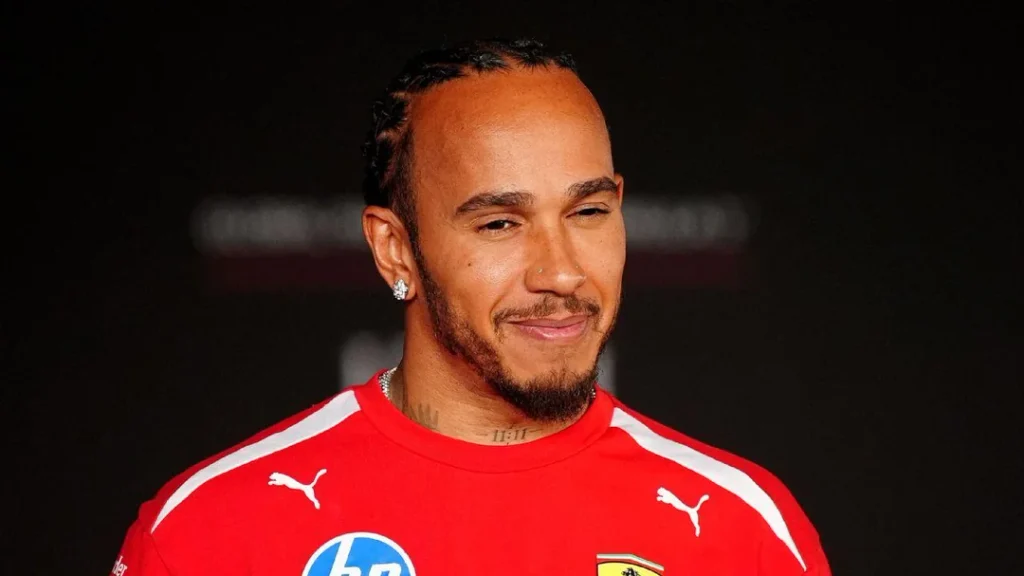
“Never had anyone like me in 70 years, I’m built differently.”
It is an emphatic statement of self-belief. It is not necessary to read it as a precise historical claim that no older driver has ever succeeded, or as a dismissal of everyone who came before him. The useful question is whether Hamilton continues to perform at a level that justifies his place. His age provides context, but it cannot answer that question on its own. The discussion supplied places him in a close championship contest and highlights his recovery from a difficult previous season. A tightly packed battle can change significantly over the remaining races, so a particular final position should not be assumed. The broader point is that his current performances deserve evaluation on their own terms.
It would be too absolute to claim that skill never diminishes with age. It would be equally simplistic to assume a birthday creates a fixed competitive expiration date. Preparation, adaptability, consistency, and results provide a better basis for judgment. Historical comparisons need similar care. Counting how often a driver has lost to a teammate without considering career length, the teammates involved, or the circumstances of those seasons can produce a striking statistic with limited explanatory value. There is also a distinction between confidence in oneself and criticism of others. Hamilton saying he is built differently, Verstappen celebrating his dominance, and Alonso questioning rivals’ standards are not identical statements merely because each comes from a champion. Verstappen’s reflection on 2023 leaves little doubt about his own preference:

“I always tell the team: ‘Give me a fast car, then we’ll all have a better life.’ I showed in 2023 that you can win the Constructors’ Championship with just one driver. Many found that boring, but I thought it was fantastic. I’d love to do that again!”
The numerical basis for his point is powerful: Verstappen scored 575 points that season, while Mercedes, the next-highest-scoring constructor, finished with 409. His individual total exceeding every rival team’s total illustrates the scale of the achievement. It should not be read as a literal claim that a driver can win without the engineers, mechanics, strategists, and wider organization responsible for the car. Nor does recognizing his contribution require pretending the machinery was irrelevant. A consistently competitive car creates the opportunity; exploiting it repeatedly still requires execution. The achievement came from that combination.
Whether it was enjoyable to watch is a different question. A season can be extraordinary in performance and frustrating in suspense. Admiring the consistency does not require wanting another championship with the same degree of predictability. Wanting a closer contest does not diminish what Verstappen accomplished. For the driver, repeatedly winning is understandably satisfying. For the audience, uncertainty is often part of the appeal. Neither reaction needs to invalidate the other.
The discussion of Isack Hadjar’s incident with a fan seeking a photograph shifts the focus from competitive judgment to personal boundaries. The supplied material does not provide a complete account of the encounter. A comment refers to a formal warning, but without the decision itself or separate reporting in these sets, that should not be presented as an established disciplinary outcome. The broader principle is clearer: access to the paddock does not amount to unrestricted access to a person.
Drivers’ salaries and promotional obligations do not remove their right to decline a photograph or object to unwanted physical contact. A paid appearance and an unsolicited encounter are not interchangeable. At the same time, respecting those boundaries does not make every possible response proportionate. The approach and the reaction can be assessed independently when the evidence is available. Neither the fan nor the driver needs to be automatically excused for the other’s behavior. F1’s access-driven marketing makes clarity especially important. If proximity to drivers is part of what an event offers, spectators should understand that proximity does not guarantee a selfie, a conversation, or physical contact.
Drivers also should not be generalized as either endlessly accommodating or contemptuous of fans. Their circumstances and behavior vary, and one encounter cannot establish an attitude shared across the grid. That same discipline belongs in the sporting debates. Herta’s missing point is a confirmed eligibility issue, not a complete verdict on his future. Lawson’s practice incident is not a dismissal announcement. Hamilton’s age is not a performance measurement, and Alonso’s criticism does not settle the quality of the midfield.
The next meaningful developments will come through official decisions and performances. Until then, strong opinions are fair territory—but they should remain distinguishable from facts.