

IndyCar’s emerging 2027 schedule is bringing a familiar question back into focus: how does the series turn better visibility into events that can sustain themselves?
Nashville Superspeedway is stepping aside as its promoter redirects attention toward a downtown return. Washington, D.C., is also reportedly absent from next year’s calendar, while a Barcelona announcement appears close. Meanwhile, discussions about bringing Texas Motor Speedway back as a Saturday-night race alongside NASCAR suggest that FOX could play an increasingly active role in shaping where—and when—IndyCar races.
Together, those developments point toward a series weighing television exposure, promoter investment, regional access, and the appeal of its racing. Adding a desirable venue is one challenge. Building a weekend that works for broadcasters, businesses, and paying spectators is another.
Scott Borchetta’s explanation for Nashville’s departure makes that distinction particularly clear.

“The original vision for the Grand Prix still stands—to become ‘The Monaco of the South,’” Borchetta said, as reported by Bruce Martin. “If we don’t put our complete focus and investment into returning downtown, it won’t happen.”
That gives Nashville’s decision a more specific meaning than simply abandoning an oval. Borchetta is identifying the downtown event as the project he wants to preserve, even if doing so means stepping away from the superspeedway.
The “Monaco of the South” description invites an obvious objection: Monaco is hardly the comparison to choose if the main selling point is overtaking. But Borchetta’s ambition is more readily understood through hospitality, nightlife, location, and the sense of occasion surrounding the race.
Downtown Nashville offered an identity that a race outside the city could struggle to reproduce. The original street event could be messy and frustrating to watch, yet its surroundings gave visitors reasons to build an entire trip around it. That matters commercially, even when the oval offers racing that some established fans would rather see. There is also a limit to treating a nearby venue as an interchangeable substitute. A Nashville Grand Prix and a race in Lebanon can occupy the same general market while offering very different experiences. That does not mean a downtown return automatically solves the problem. Street closures can disrupt businesses as well as benefit them, and access, parking, shuttle journeys, and circuit design all affect whether spectators want to come back. Bringing the race closer to restaurants and hotels creates opportunities; the event still has to function well for the people attending and living around it.
Borchetta’s statement does not disclose the superspeedway event’s finances. It would therefore go too far to present specific losses as established fact. What it does establish is that he sees a need to concentrate investment on returning downtown. The question now is whether Nashville’s absence becomes a temporary interruption or a longer departure while that ambition takes shape. Washington presents a different situation. Bob Pockrass’s assessment that a post indicated D.C. would not appear on the 2027 schedule was followed by the broader report that both Washington and Nashville Superspeedway were set to drop off the calendar.
D.C.’s anniversary setting always gave it a plausible one-off identity. Even so, a commemorative origin does not prevent an event from becoming recurring if the economics, organization, and public interest support it. The supplied discussion also points to Bud Denker raising the possibility of a return after the race, so another edition was not purely wishful thinking.
There are reasons to want a better-developed second attempt. The event offered an experience worth remembering, but its course layout and accessibility left room for improvement. More preparation could potentially produce a stronger race and a more convenient spectator experience.
For Mid-Atlantic fans, however, the immediate issue is simpler: losing Washington removes an accessible opportunity to watch IndyCar in person.
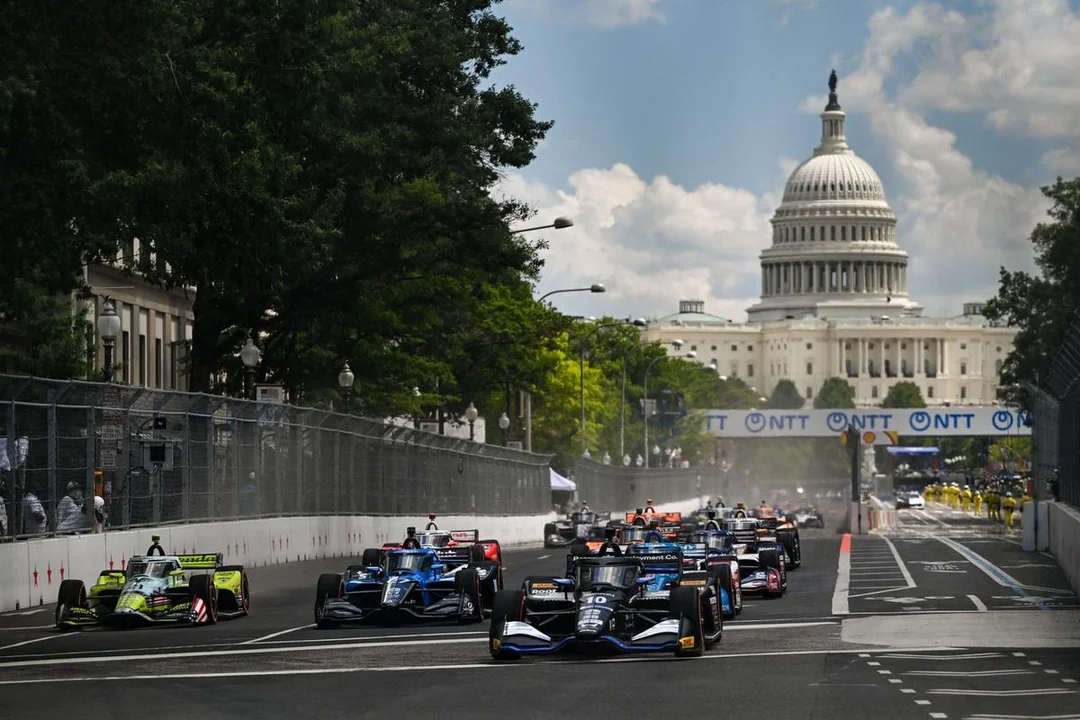
A calendar can look attractive nationally while remaining difficult for individual regions. For someone introducing a family member to the series, the difference between a manageable drive and a Friday flight followed by a hurried Sunday return can determine whether attending is realistic.
That is why Richmond keeps returning to the conversation. It offers the prospect of an oval race within reach of fans who otherwise face substantial travel. A shared NASCAR weekend could also provide a different commercial proposition from a standalone event. But Richmond is a proposal with obstacles, including the observation that its NASCAR date falls outside FOX’s portion of the season. The supplied discussion also contains conflicting accounts of its previously planned return, with poor advance sales and the impact of COVID both raised. Those accounts do not establish how a future event would perform. The demand for a closer race is understandable. Turning that demand into a viable weekend remains the difficult part.
Texas Motor Speedway may offer the clearest indication of how IndyCar and FOX want to approach that challenge. The reported discussions involve a return during NASCAR’s May weekend, with IndyCar taking a headline Saturday-night slot. FOX Sports leadership is reportedly pushing for that kind of oval showcase. Neither the return nor its final arrangements should be treated as announced. But the proposal fits several needs at once: another oval, a distinctive television window, and the opportunity to share an established race weekend.
Nashville’s departure makes those discussions look particularly relevant. Barcelona would add a different kind of event, but it would not replace an oval. Texas could help maintain that part of the schedule while offering a recognizable setting for a major broadcast. The appeal of Texas under the lights is clear. Delivering it would still require attention to the racing package and the practical demands of a crowded weekend. Close competition should not become an excuse to pursue pack racing without regard for its consequences. The desired outcome is a race in which drivers can compete and make meaningful decisions, supported by an appropriate aerodynamic package.
Questions about the surface treatment also remain. The supplied discussion suggests its effects may have diminished, but that is not enough to declare the issue resolved. Then there is the business of fitting IndyCar alongside NASCAR’s competing series. Garage space, hauler movements, practice time, and the order in which teams arrive and depart all need to work. Phoenix offers an example of multiple championships sharing a weekend, but it does not by itself establish that Texas would be straightforward. A shared event nevertheless has an advantage worth pursuing: access to spectators already planning to attend racing. Ticket arrangements that expose NASCAR customers to IndyCar could help fill seats and introduce the series to people who might not buy a separate weekend.
Texas would also sharpen the debate about geographic balance. With Arlington already serving the Dallas–Fort Worth area, another race there would give that market two distinct IndyCar experiences while other regions lose their nearest event. That is not automatically a reason to reject it. Wisconsin’s combination of Milwaukee and Road America illustrates why proximity alone cannot settle the question. Different venues can offer different products. Still, a successful Texas return would need to attract an audience rather than depend entirely on enthusiasm for its announcement. The reported 25% increase in Arlington ticket prices adds another consideration for fans deciding how many race weekends they can afford. Calendar size may provide some flexibility. The supplied account describes officials becoming less committed to 17 races than they had been previously. Milwaukee’s doubleheader also means that changing the number of races does not necessarily require removing another location.
Michigan, Richmond, Iowa, and Chicagoland all emerge as alternatives or future possibilities. Each has an appeal, but an attractive track is only part of the equation. A NASCAR weekend that already sells its available camping and tickets may have less commercial incentive to add IndyCar than a venue seeking additional demand.
That tension also runs through the television debate surrounding NASCAR’s reported Phoenix audience of 1.294 million viewers.
The number prompted an optimistic comparison with IndyCar, with almost half of its 2026 races reportedly exceeding that audience when Nashville’s Sunday figure is included. It is an encouraging reference point for a series prioritizing network exposure.
It is also a limited comparison. A NASCAR race on cable against NFL programming operates under different conditions from an IndyCar race on network television outside football season. One weak result does not establish that the two championships are approaching equivalent audiences, much less equivalent television value. NASCAR’s larger rights income and IndyCar’s emphasis on accessibility represent different tradeoffs. More television money can support events even when ticket sales disappoint. Greater exposure can help a smaller series build recognition and strengthen its appeal to sponsors and promoters.
Neither benefit guarantees long-term success. NASCAR’s fragmented viewing arrangements can make following the season more complicated. IndyCar’s FOX relationship concentrates its exposure with a partner whose priorities will remain important to its future. Avoiding the NFL is part of that calculation. A shorter season can frustrate fans who want more racing, but extending into football season would not necessarily produce a stronger audience.
The most useful measure of progress is therefore sustained growth across comparable conditions. Phoenix provides context; it does not provide a reliable forecast that IndyCar will be within 10% of NASCAR’s aggregate audience by 2031.
COTA’s “Welcome to America’s biggest sporting event” sign offers another example of how comparisons can become less informative than they first appear.
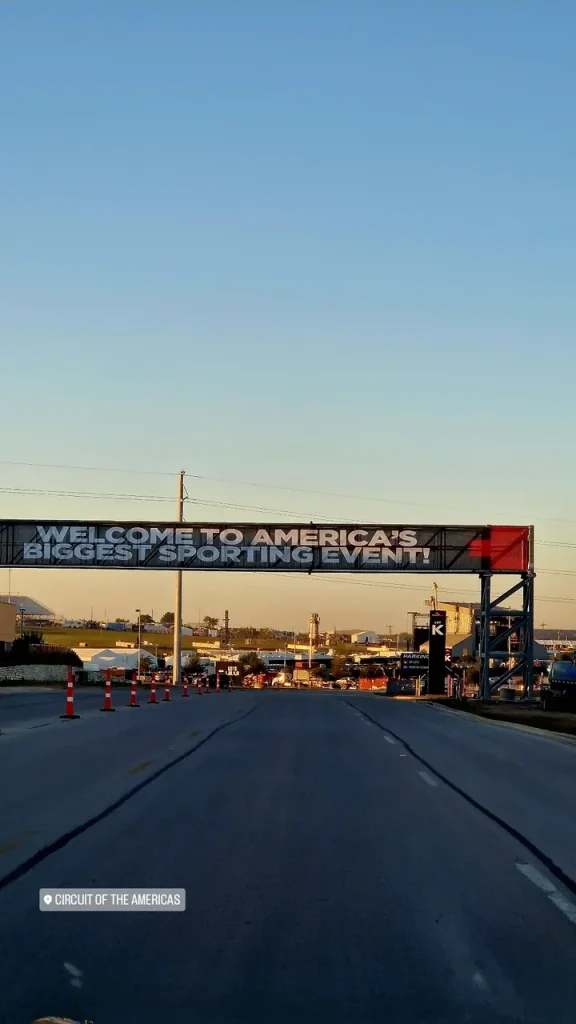
The claim raises immediate questions about what “biggest” means. Race-day attendance, cumulative weekend attendance, television reach, and cultural prominence are different measures. Counting people across several days also creates comparisons that depend heavily on which days other events are allowed to include.
The responsibility for the sign matters, too. The supplied material identifies it as COTA’s messaging. It should not automatically become evidence of a wider Formula 1 campaign.
Likewise, the account of earlier “greatest spectacle” language includes instances in which marketing was changed or a broadcaster was asked to stop using it. Those distinctions matter when assessing the dispute.
IndyCar also relies on sweeping promotional claims. Arguing over which championship can declare itself the greatest, fastest, or most prestigious ultimately offers less value than showing spectators why a particular race deserves their attention. There is a practical lesson available beneath the rivalry: presentation matters. IndyCar can offer compelling racing and substantial support action while still improving how it stages the rest of the weekend. Podium ceremonies are an obvious opportunity. Clear introductions, an orderly trophy presentation, and a celebration that treats the drivers as the central attraction would give the result a stronger finish.
The audience should leave with the sense that it has watched an important sporting occasion. That goal connects directly to Nashville’s downtown ambitions and FOX’s reported interest in a Saturday-night Texas showcase.
Conor Daly’s unexpected project with Red Bull Racing and McDonald’s provides a lighter example of reaching beyond the usual boundaries.
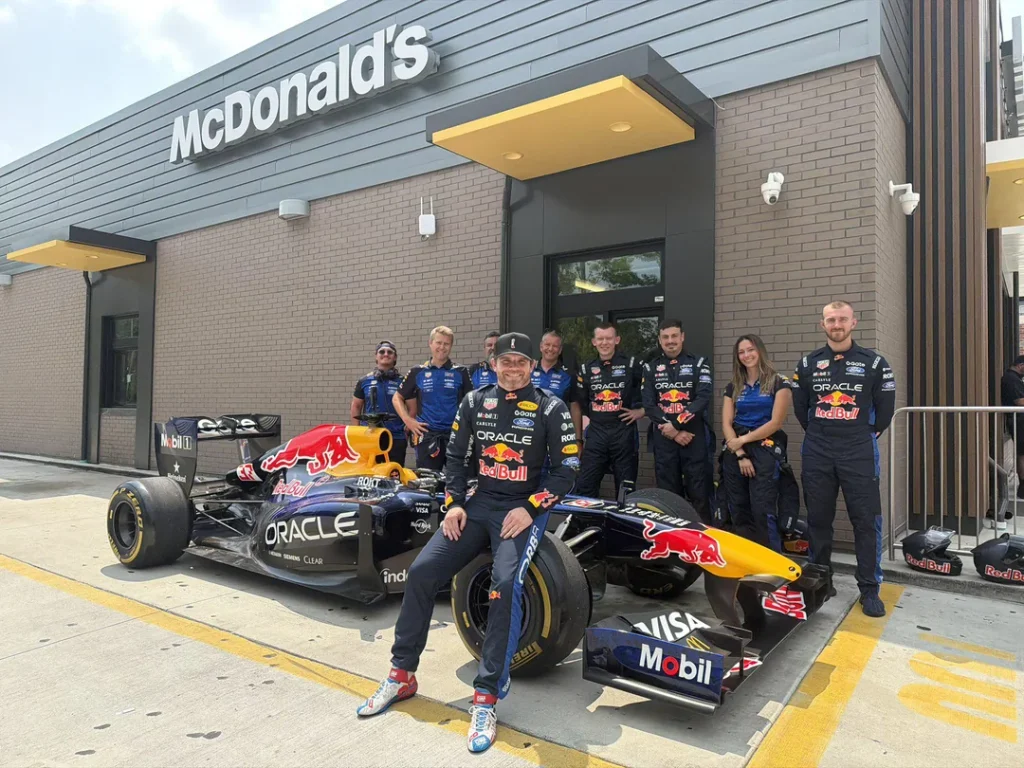
“I didn’t have this on my bingo card either,” Daly said. “Got a call to be a part of a really fun project with redbullracing and McDonalds!”
Daly praised the RB7’s appearance and sound, enjoyed working with Red Bull, and noted that he even received a McFlurry. The unexpected sight of him in Red Bull gear was enough to make the project memorable. It also demonstrates the appeal of a driver’s personality in a promotional setting beyond his usual racing environment. Nothing supplied establishes a permanent demonstration role, a Red Bull IndyCar program, or a new engine partnership. Those possibilities remain speculation rather than implications of the project.For IndyCar, the broader opportunity is concrete enough without adding those assumptions. A recognizable driver can help make a crossover project entertaining. A well-chosen broadcast window can make an oval race easier to discover. A downtown setting can turn a race into a destination weekend.
The emerging 2027 calendar will test how effectively the series can combine those advantages. Nashville is concentrating on its original vision, Washington’s departure leaves a regional gap, Barcelona appears close, and Texas remains a compelling possibility. The value of those decisions will become clear when the proposed events turn into races that people watch, attend, and return to.