

Together, those developments raise questions about how the series evaluates talent, how teams establish their competitiveness, and what IndyCar can offer a manufacturer being asked to invest.
Pierson’s approval provides the most immediate answer. He met the requirements placed in front of him. Whether that makes him a compelling choice for an IndyCar seat is a separate question—and one that a licensing test was never going to settle. According to Bob Pockrass, Pierson earned approval after testing for AJ Foyt Racing on the Indianapolis Motor Speedway road course Tuesday.
“Pierson was deemed to have satisfied performance requirements based on criteria such as car control, pace, consistency and communication,” IndyCar said.
That explanation matters because the approval was based on an evaluation in the car. Pierson’s NXT victory gave him the opportunity to take that test; passing it established that he satisfied the series’ performance requirements. It did not establish that he is the best available prospect. Nor did it guarantee that he will become a competitive IndyCar driver. The distinction is essential to assessing a licensing system that has quickly acquired the informal “Pierson rule” label. A minimum qualification standard determines whether a driver is eligible to compete. Teams still decide which eligible drivers receive opportunities, and those decisions inevitably involve more than results.
Pierson’s approval therefore does not, by itself, demonstrate that the rule has been circumvented. He reached the qualifying threshold and passed the subsequent evaluation. The more useful question is whether that threshold demands enough. His 2026 NXT season offers evidence for both optimism and caution. Pierson led a series-high 108 laps: 20 at Gateway, 53 at Milwaukee and 35 in the first Laguna Seca race. He also secured a victory. Those are tangible achievements, and dismissing them entirely would produce an assessment just as incomplete as treating them as proof that he belongs among the strongest prospects.
But raw laps led are particularly sensitive to the calendar. A lap at one circuit does not represent the same share of a race as a lap at another. Leading a substantial portion of an oval race can contribute more to the season total than controlling an entire shorter road-course event. Pierson accumulated 73 of his 108 laps led at Gateway and Milwaukee, making that distinction especially relevant. An alternative calculation that gives every race the equivalent of 100 laps changes the order considerably. In the supplied figures, Enzo Fittipaldi led with 327 equivalent laps, followed by Alessandro de Tullio with 314, Tymek Kucharczyk with 267 and Pierson with 186.
Pierson still ranks fourth by that measure. His ability to run at the front does not disappear when race lengths are equalized. What disappears is the suggestion that leading the most actual laps necessarily means he demonstrated the most sustained front-running performance. There is another complication in de Tullio’s numbers. His official total of 99 laps led excludes 18 from the second Road America race following a technical disqualification. Including those laps would put him at 117, ahead of Pierson, although they cannot simply be restored to his official record. The broader lesson is that one headline statistic cannot carry an entire driver evaluation. Results, qualifying pace, race execution, development over time and the strength of the opposition all matter.
Pierson’s lengthy NXT apprenticeship remains a reasonable concern. A late breakthrough can represent genuine progress, but it does not erase the seasons that preceded it. Equally, those earlier seasons should not make improvement impossible to acknowledge. The fairest position is that he has earned eligibility while leaving substantial questions about his readiness unanswered. That is also where the financial argument belongs. The frustration surrounding funded drivers is rarely explained adequately by resentment toward wealth alone. It comes from the opportunity cost: a finite number of seats means that backing one driver can leave another, potentially stronger candidate without a place.
A licensing system cannot resolve that imbalance unless its purpose is to rank candidates and allocate seats. IndyCar’s stated test criteria address whether a driver can meet the required standard in the car. They do not require a team to choose the most accomplished available applicant. For Foyt, the competitive consequences will be measured over a season. Predictions of inevitable crashes or dangerous driving go beyond what a successful licensing test and an uneven junior record can establish. There is enough evidence to question Pierson’s likely performance without treating the worst possible outcome as a certainty. Approval is the beginning of that assessment.
The remaining seat picture also requires care. Callum Ilott and Nikita Johnson feature in the supplied Coyne speculation, while Romain Grosjean’s possible return remains tied to questions about funding. Coyne’s stated preference for a veteran alongside a rookie gives those possibilities a logical framework, but it does not turn them into confirmed appointments. Palou’s forthcoming NXT test approaches the talent question from the opposite direction. Jenna Fryer reports that he will drive an Indy NXT car at IMS on Friday. The supplied report establishes the test, but does not confirm its detailed objectives. Establishing a baseline for Ganassi’s NXT operation is nevertheless an obvious potential benefit.
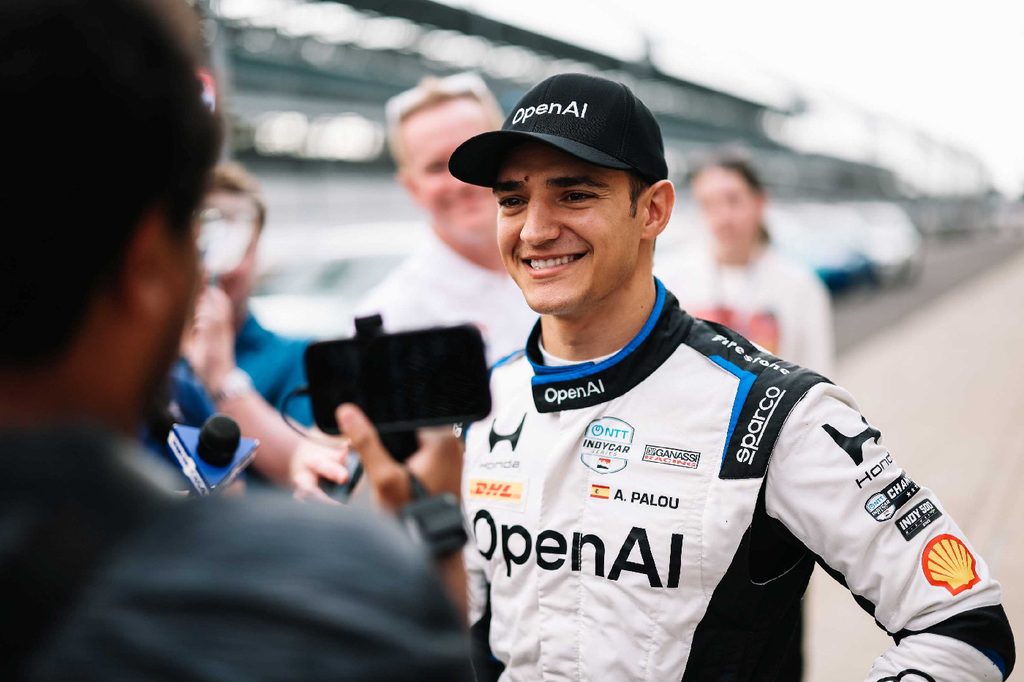
When a junior team struggles, separating the car’s limitations from the drivers’ limitations can be difficult. A proven reference driver can help identify where performance is being lost, assess the car’s behavior and give engineers another basis for interpreting existing feedback. That could be particularly valuable for Ganassi’s NXT effort after its disappointing 2026 results. Prospective drivers need confidence in the equipment they are considering, especially when bringing funding to a program. Understanding whether the operation needs better execution, a different setup direction or stronger driving is central to making it more competitive. Palou’s involvement would not automatically answer every question. Moving into a slower car requires adaptation, and experience at the highest level does not eliminate the need to understand different tires, responses and driving demands. An established driver’s first laps should not be treated as a universal benchmark.
Given sufficient time to become comfortable, however, his feedback could provide useful context that junior results alone cannot. That is the appealing part of the broader idea of using established IndyCar drivers to evaluate NXT equipment. Junior championships are relative competitions. A driver can look exceptional against one field and less convincing against another, making comparisons across seasons difficult. Dennis Hauger’s immediate NXT success after several seasons in Formula 2 already offers one reference point. It also reinforces why a junior championship result needs context rather than being treated as a complete answer about readiness for IndyCar.
Putting Palou into the car could provide a different kind of reference: an assessment of the machinery and its demands from someone already proven at the next level. There is a difference, though, between conducting a test and inserting established stars into junior races. Friday’s running is a test. It is not evidence of a planned race appearance or a change to NXT’s competitive structure. Ford’s decision leaves IndyCar confronting a different evaluation problem: how to make its manufacturer proposition attractive enough to secure a commitment.
The disappointment is understandable. A third manufacturer would represent an important expansion beyond Chevrolet and Honda. Another evaluation ending without a program leaves that ambition unresolved. But the useful starting point is Ford’s business case. Interest in motorsport does not mean every championship offers the same value. A manufacturer can justify racing through brand exposure, hospitality, commercial relationships, technical development or a connection to a product it sells. Different programs offer different combinations of those benefits. Ford’s participation elsewhere therefore does not establish that an IndyCar investment would make equivalent sense.
Engine development is central to the calculation. A dedicated program requires investment, and the return must justify that expense. Reusing technology or spreading development across multiple applications can improve the equation. A program with fewer opportunities to share costs needs a sufficiently strong return of its own. IndyCar must also balance competing objectives. Technical freedom can make a championship more interesting to manufacturers seeking engineering relevance, while restrictions can help control costs and maintain a manageable competitive structure. Neither approach guarantees new entrants. The challenge is finding terms that make participation worthwhile without creating an unsustainable burden for the existing field.
The supplied material does not establish exactly why Ford decided against proceeding, so claims about internal hostility, historical grievances or a specific technical objection would go beyond the available information. Toyota, Hyundai and Genesis likewise remain possibilities raised in the material, rather than established replacement candidates. What is clear is that evaluating a program and committing to one are very different stages. IndyCar needs those discussions to produce an actual entry before they can change its manufacturer outlook. That brings the three stories back to the same underlying issue: what a particular milestone proves. Pierson’s approval proves that he satisfied IndyCar’s licensing evaluation. His performances will determine how competitive he can become. Palou’s test offers a potential source of valuable feedback, with its significance depending on what the team learns. Ford’s evaluation demonstrated interest, but it ended without the commitment IndyCar wanted.
Each deserves to be judged on the evidence it produces. For Pierson, that evidence now has to come in IndyCar. For Ganassi’s NXT operation, Friday offers an opportunity to learn. For the series’ manufacturer ambitions, the search continues.