

With Kimi Antonelli closing in on the 2026 Formula 1 World Championship, the attention of the paddock is increasingly shifting toward what comes next. Red Bull has rediscovered its competitive edge, Mercedes faces questions about its development direction, Ferrari continues to struggle with strategy and communication, and the fight for second place in the Drivers’ Championship is far from settled.
Meanwhile, Christian Horner has opened up about his departure from Red Bull and what it would take to bring him back to Formula 1. The 2027 driver market remains unsettled, particularly within the Red Bull organization, and reports of a possible late-season calendar overhaul could dramatically change where the championship concludes. Beyond the championship contenders, Singapore has raised fresh questions about Cadillac’s development approach, the consistency of midfield drivers, and whether Formula 1’s television coverage gives enough attention to the racing outside the leading teams.
There is also a wider debate about the rules themselves, with fans looking toward Supercars, IndyCar, endurance racing and NASCAR for ideas that could improve Formula 1.
Verstappen’s Remarkable Turnaround Raises Questions About Red Bull’s True Potential
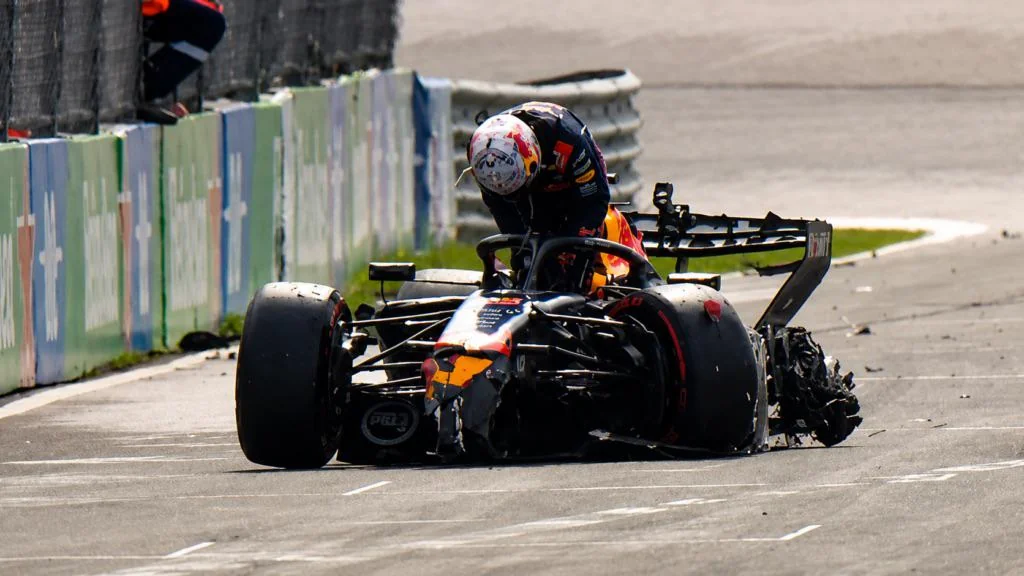
One of the more striking statistics circulating after the Singapore Grand Prix is Max Verstappen’s reported average finishing position of 1.8 since his crash at Zandvoort.
While that figure requires some context, particularly regarding how retirements are treated in the calculation, it reflects the dramatic change in Red Bull’s competitiveness during the latter stages of the season. Earlier in 2026, Red Bull appeared to be operating behind Mercedes and, at various points, struggling to match McLaren and Ferrari consistently. Now, the team is once again fighting at the front, with Verstappen taking full advantage of a car that appears considerably more competitive. The improvement has even prompted speculation that Verstappen’s Zandvoort accident inadvertently helped the team identify or resolve a previously unnoticed chassis issue.
It is an entertaining theory, but there is no evidence in the material available to establish that a chassis replacement caused the turnaround. The more straightforward explanation is that Red Bull’s development program has delivered substantial improvements. And those improvements have come at an interesting time. Red Bull’s recent performance has revived memories of its dominant periods, particularly 2023, when Verstappen and the team operated with an advantage that rivals struggled to overcome. There is no guarantee that 2027 will produce anything similar. However, the fact that Red Bull has recovered so much ground during the first season of the current regulations suggests that the team understands its development direction.
That could be particularly significant if the upgrades introduced late in 2026 provide a foundation for next year’s car.
Red Bull’s Strength Goes Beyond the Car
One of the recurring themes of the season has been Red Bull’s ability to execute races efficiently even when it does not necessarily have the fastest machinery.
Strategy, pit stops, communication and operational discipline have repeatedly helped Verstappen maximize his opportunities. That is an area where Ferrari has frequently struggled, while Mercedes has occasionally failed to convert its apparent technical advantage into the expected result. Nevertheless, comparisons between the operational abilities of Red Bull and Mercedes require perspective.
Mercedes won eight consecutive Constructors’ Championships between 2014 and 2021, alongside seven consecutive Drivers’ Championships. Its historical record demonstrates that the organization knows how to execute at the highest level. The question is whether Red Bull currently has the more effective combination of car development and race-day decision-making. Recent results make that a reasonable argument, although the competitive picture remains far from definitive.
Mercedes won in Baku by just one-tenth of a second over Verstappen, while Singapore presented a complicated picture of relative pace, tire strategies and track position. A few strong weekends do not automatically establish a permanent competitive hierarchy.
Still, Red Bull has accumulated momentum at precisely the point when teams are deciding how aggressively to pursue development for 2027.
Could Verstappen Versus Antonelli Define the 2027 Championship?
If Red Bull maintains its progress, the most compelling prospect for next season could be a direct championship fight between Verstappen and Antonelli.
Antonelli has emerged as the central figure in Mercedes’ 2026 campaign and is approaching the championship with an advantage that could allow him to secure the title before the final race. But Verstappen remains the benchmark against which other drivers are measured. A season-long battle between the two would test Antonelli in ways that Mercedes’ earlier advantage may not have required.
The young Italian has demonstrated the speed to compete at the front. Sustaining that performance against Verstappen across an entire season would be a different challenge, particularly if the cars were closely matched. George Russell could also become an important part of that equation. Mercedes would face difficult questions about how to manage two competitive drivers if Antonelli enters 2027 as the reigning champion while Russell remains capable of fighting for victories.
There is no reason to assume that Russell would automatically accept a supporting role. Equally, Antonelli’s championship position would strengthen his claim to equal treatment. A closely matched Mercedes pairing could create opportunities for Verstappen, especially if Red Bull is able to concentrate its championship efforts around one driver. Lewis Hamilton should not be discounted from the wider competitive picture either. Ferrari’s difficulties have often obscured the potential of its driver lineup, and a more competitive package could bring Hamilton and Charles Leclerc into the fight. The most exciting scenario would not necessarily be one team replacing Mercedes as the dominant force.
It would be Mercedes, Red Bull, Ferrari and McLaren all arriving in 2027 with cars capable of winning regularly.
Mercedes’ Development Direction Is Becoming a Major Question
Mercedes began the season with a substantial advantage, but the narrowing gap has increased scrutiny of its development program.
Recent upgrades have not always produced the expected improvement, raising questions about whether the team has encountered difficulties translating its development work into consistent on-track performance. The reported issues surrounding the Sepang package are particularly relevant. There has been speculation that Mercedes’ upgrades were intended not only to improve the current car but also to validate concepts for 2027.
If that is the case, any discrepancy between expected and actual performance could have consequences beyond the remaining races this year. However, identifying a correlation problem now is not necessarily a disadvantage. It could provide Mercedes with valuable time to understand and correct the issue before next season. Red Bull, meanwhile, appears to have achieved the opposite outcome with its recent upgrades, which have reportedly performed better than anticipated.
That contrast has encouraged predictions that Red Bull could begin 2027 in a stronger position.
ADUO Could Reshape the Competitive Order
Power unit development adds another layer of uncertainty.
The Additional Development and Upgrade Opportunities system, or ADUO, could allow manufacturers to address performance deficits and alter the competitive balance. Mercedes is expected by some observers to benefit from further power unit development, while Ferrari’s ability to close the gap could prove decisive in determining whether it can challenge for the championship. Red Bull’s situation is different.
If its power unit remains competitive while rivals are working through upgrades, the team could retain an important advantage early in the season. Conversely, successful improvements from Mercedes or Ferrari could quickly change the picture. There are also questions about the timing of upgrade eligibility and when revised specifications can be introduced. Those details matter because the competitive order at the opening race may not remain unchanged throughout the year.
The cost cap makes the situation more complicated than during Mercedes’ previous era of dominance. Teams cannot simply spend their way out of every unsuccessful development direction. A major upgrade that fails to deliver can consume resources that might otherwise have supported alternative concepts. That makes development efficiency increasingly important.
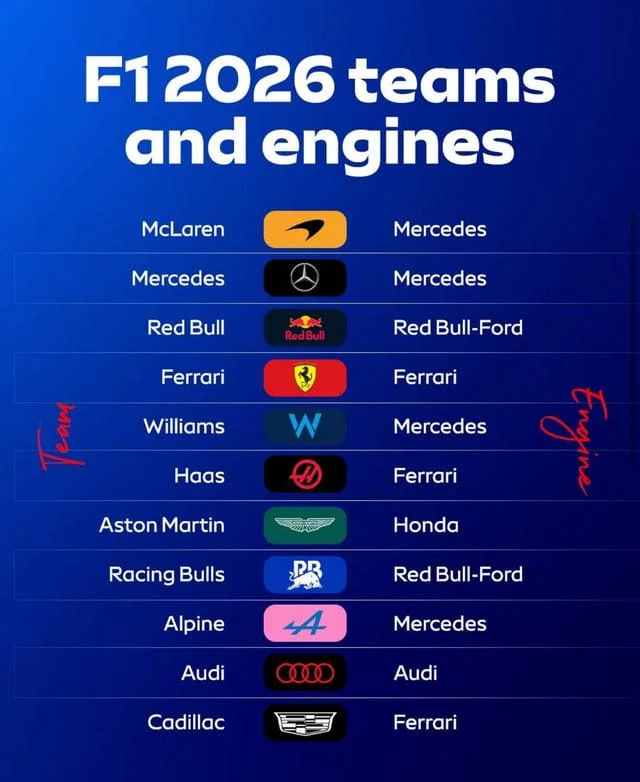
Mercedes remains a credible candidate to lead the field next year, but Red Bull’s resurgence has made the outcome considerably less predictable. Ferrari’s potential should not be dismissed, while McLaren could also benefit if the leading teams converge.
Even the prospect of Cadillac scoring points in its second season has entered the conversation, although expecting the new team to challenge the established frontrunners would be a very different proposition.
Ferrari’s Singapore Strategy Exposes a Deeper Problem With Trust
Ferrari’s Singapore Grand Prix has generated another round of questions about its strategy decisions, particularly those involving Hamilton.
The decision to start Hamilton on medium tires was a gamble that ultimately failed to deliver the desired advantage. However, it is important to distinguish between a strategy that fails and one that was unreasonable from the beginning. Splitting strategies between Hamilton and Leclerc offered Ferrari the possibility of attacking Verstappen in different ways.
One driver could potentially apply pressure while the other extended a stint and created alternative strategic opportunities. That approach made sense in principle. The problem was that the medium tires did not perform as Ferrari had hoped.
Once their limitations became apparent, Hamilton’s options narrowed considerably. Moving to the soft compound early created its own difficulties, but extending an ineffective medium stint could have made the situation worse. The central issue was therefore not necessarily the original tire selection.
It was how Ferrari responded as the race developed.
Hamilton’s Decision to Stay Out
The decisive controversy centered on Hamilton’s decision to remain on track rather than take advantage of a brief Virtual Safety Car opportunity.
The VSC reportedly lasted only one lap, leaving little time to make the call. Once Hamilton missed that opportunity, the potential benefit of a conventional two-stop strategy became significantly smaller. Continuing on his existing strategy offered the possibility of a better result if another interruption occurred, even though the gamble ultimately failed.
Hamilton accepted responsibility for the decision. That accountability deserves recognition, but it does not eliminate the wider questions about Ferrari’s decision-making process. A driver ultimately has responsibility for certain decisions made from the cockpit. The team, however, is supposed to provide the information necessary to make those decisions intelligently. If that relationship is functioning properly, the driver and pit wall should be working toward the same conclusion.
At Ferrari, the relationship increasingly appears strained.
The Communication Problem
Hamilton’s radio exchanges have repeatedly attracted attention because of the way information is communicated.
When a driver requests a specific lap time, a response describing another car’s pace as merely similar is not particularly useful. Precise information matters when the difference between two strategies could be measured in tenths of a second per lap. There is also a perception that Ferrari’s drivers are sometimes left to interpret strategy decisions rather than receiving clear explanations.
That creates a dangerous cycle. If a driver loses confidence in the pit wall, they become more inclined to question instructions or pursue their own strategy. When those independent decisions fail, the team can point toward the driver.
But the underlying breakdown in trust remains unresolved. This is not a problem unique to Hamilton. Ferrari has faced questions about its strategy organization across multiple driver lineups, including during Carlos Sainz’s time with the team.
The concern is not simply whether Ferrari makes occasional mistakes. Every team does. It is whether Ferrari has established a decision-making structure that consistently provides its drivers with timely, accurate and actionable information.
That is especially important when Red Bull continues to demonstrate how effectively a driver and race engineer can operate together.
Would Swapping Hamilton and Leclerc Have Helped?
Another criticism concerned Ferrari’s reluctance to swap its drivers when Hamilton appeared to have better pace.
However, the situation was more complicated than a simple comparison of lap times. Hamilton was running a faster tire compound, while Leclerc had fresher tires that could become more competitive once they reached their operating window. A position swap might have created a short-term benefit without producing a lasting advantage.
If Leclerc subsequently recovered his pace, Ferrari could have found itself reversing the decision and losing additional time. Without a sustained pace advantage, the argument for ordering an immediate swap is less convincing.
Ferrari’s strategic problems deserve scrutiny, but not every decision that disappoints one driver is automatically incorrect.
Ferrari’s Tire Degradation Is Becoming Another Concern
Beyond strategy, Singapore raised questions about Ferrari’s tire management.
The medium compound struggled more than expected, while the soft tires appeared capable of lasting surprisingly long stints. That apparent contradiction is not necessarily evidence of a problem with Pirelli’s tire selection. A harder compound can sometimes generate less grip, increasing wheelspin and sliding.
That additional movement creates heat and wear, potentially causing the theoretically more durable tire to degrade faster than a softer alternative. The result is that the softer tire can occasionally prove more effective over a longer distance. For Ferrari, however, the concern extends beyond one race.
The team appeared relatively competitive in tire degradation earlier in the season, but its recent performance has prompted questions about whether development changes have compromised that strength. One possibility is that aerodynamic adjustments intended to improve straight-line speed have affected tire management. That remains speculative, but it illustrates how improvements in one performance area can create problems elsewhere. Ferrari needs to understand whether Singapore was a circuit-specific issue or evidence of a broader weakness.
If the latter is true, better strategy alone will not be enough to restore its competitiveness.
The Fight for Second Place Could Be the Most Entertaining Part of the Championship
While Antonelli’s position at the top of the Drivers’ Championship appears increasingly secure, the battle behind him is far more uncertain.
Russell, Verstappen, Hamilton and Leclerc remain central to the fight for the leading positions behind the championship leader. Red Bull’s resurgence has transformed Verstappen’s prospects. After a difficult opening phase of the season, he now has a realistic opportunity to finish second in the championship.
The team’s recent results have demonstrated how quickly the standings can change when a competitive driver gains access to a consistently strong car. Russell, meanwhile, faces pressure to protect his position. Further reliability issues, penalties or difficult weekends could leave him vulnerable to the drivers behind.
Hamilton and Leclerc are also capable of capitalizing if Ferrari produces stronger performances over the remaining races. The championship battle may lack the uncertainty that usually surrounds the title itself, but the fight for the remaining positions provides a compelling reason to follow the final stretch. It could also influence the narrative entering 2027.
A strong finish from Verstappen would reinforce the idea that Red Bull is ready to challenge Mercedes from the opening race next season. For Ferrari, finishing strongly would offer evidence that its development program is moving in the right direction.
And for Russell, maintaining his position would help establish that he remains a major championship contender even as Antonelli receives increasing attention.
Cadillac’s Extraordinary Singapore Gap Raises More Questions Than Answers
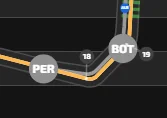
One of Singapore’s more unusual stories involved Cadillac teammates Sergio Pérez and Valtteri Bottas.
Pérez reportedly came close to lapping Bottas, creating an enormous gap between two experienced drivers who have both won multiple Formula 1 races. On the surface, that might suggest a dramatic difference in driver performance. However, Cadillac’s circumstances make that conclusion premature.
The team is operating in its first Formula 1 season, and its priorities are not necessarily identical to those of an established midfield competitor. With limited opportunities to test outside race weekends, Cadillac may be using races to evaluate different setups, power unit configurations and development directions. That could explain why its two drivers sometimes appear to be operating with very different levels of performance.
There has been speculation that Bottas has been used more extensively for experimental configurations while Pérez provides a conventional performance benchmark. Other observations suggest that both drivers have been involved in different development programs.
Neither interpretation has been conclusively established by the material available.
Technical Problems Complicate the Comparison
Reports circulating around Singapore also suggested that Bottas experienced braking difficulties, while Pérez may have encountered braking issues of his own.
If either driver was managing a significant technical limitation, their finishing gap would become much less useful as a measure of relative ability. There have also been claims about differences in the timing of Cadillac’s ADUO upgrades between the two cars at previous races. Those details remain unconfirmed and should not be treated as a definitive explanation.
What matters is that Cadillac is still learning how to operate and develop its first Formula 1 car. A single race featuring an unusually large teammate gap does not establish that one driver has suddenly become substantially better than the other. It is also worth considering how differently similar situations are sometimes interpreted.
When Pérez struggles, criticism often focuses immediately on his driving. When Bottas struggles, explanations tend to center on mechanical problems, setup experiments or unusual circumstances. Both drivers deserve to be evaluated using the same standards. For Cadillac, retaining experienced drivers while developing its technical operation may be more valuable than making an early change in pursuit of marginal short-term gains.
The team’s real objective is to build a foundation that can support competitive performances in future seasons.
Hülkenberg, Lawson and the Midfield Deserve More Attention
Singapore also highlighted a recurring frustration with Formula 1’s television coverage.
While the leading teams received extensive attention, several entertaining midfield battles were either relegated to smaller on-screen windows or barely shown. Oliver Bearman and Esteban Ocon produced a particularly competitive fight, while Franco Colapinto’s pass on Arvid Lindblad also attracted attention despite receiving limited broadcast exposure. That creates a distorted impression of the race. When viewers spend several laps watching a relatively static battle between leading cars while overtaking takes place elsewhere, the overall event can appear less exciting than it actually is.
The problem extends to recognition of individual performances.
Driver of the Day and the Visibility Problem
The Singapore Driver of the Day discussion reportedly placed Verstappen at 31%, with Leclerc and Russell each receiving 12%, followed by Antonelli and Hamilton at 8% apiece.
Yet some of the most impressive performances arguably came from drivers outside the leading four teams. Hülkenberg’s defensive driving was particularly notable, including his ability to make Russell work to complete an overtake. Liam Lawson also earned praise for another competitive weekend.
The issue is not that the leading drivers are undeserving of recognition. It is that television exposure heavily influences which performances viewers notice. A driver involved in an extended battle at the front will naturally receive more attention than someone delivering an equally impressive performance for eighth or ninth.
When midfield racing is largely absent from the main broadcast, viewers lose the opportunity to appreciate how much is happening throughout the field.
Hülkenberg’s Recent Consistency
Hülkenberg’s recent run of results has strengthened his reputation as one of the most dependable drivers in the midfield.
A sequence of finishes around the lower points positions and just outside the top ten demonstrates his ability to extract competitive results from the Audi. However, there is an important distinction between his recent form and his season as a whole. Reliability problems, team errors and difficult early races affected his results, so a favorable eight-race sample should not be mistaken for a complete assessment of his year.
Nevertheless, his recent performances have been impressive. His Singapore defense demonstrated the value of an experienced driver who understands positioning, tire management and how to make overtaking difficult without unnecessarily compromising his own race. It also raises an interesting historical question about how Hülkenberg might have performed in a more competitive car earlier in his career.
That question cannot be answered, but his current performances continue to demonstrate why experience remains valuable in Formula 1.
Is Liam Lawson Already Safe for 2027?
The 2027 driver market remains one of the more intriguing storylines, particularly within the Red Bull organization.
One emerging theory is that Racing Bulls is not actually deciding between Lawson and Nikola Tsolov. Instead, the decision could be between Tsolov and Lindblad, with Lawson already considered a secure part of the team’s plans. There has been no confirmation of that scenario, but the reasoning is worth examining.
Lawson provides a degree of continuity within an organization that has frequently moved its young drivers between seats. He has experience with both Red Bull teams and has demonstrated an ability to recover from difficult circumstances. His performances have also improved over the course of the season.
That makes him a potentially useful benchmark for whichever younger driver Red Bull chooses to develop.
Lawson Has Not Necessarily Reached His Ceiling
A central weakness in the argument for replacing Lawson is the assumption that his development potential is already known.
His Formula 1 career has been unusually fragmented. Across multiple seasons, he has moved between different cars and teams without enjoying the stability typically associated with a conventional full-season development program. That matters.
Drivers generally benefit from consistent relationships with engineers, familiarity with a car’s characteristics and the opportunity to build on lessons learned over an extended period. Lawson has repeatedly had to adapt to new circumstances. His improvement in 2026 therefore suggests that he may still have considerable room to develop. It would be difficult to argue that a driver who has only recently begun to enjoy more consistent opportunities has definitively reached his maximum potential.
His current performances also strengthen the case for retaining him on merit rather than simply because he provides experience.
Lindblad Versus Tsolov
Lindblad presents a different proposition.
As a teenager in his rookie Formula 1 season, he has shown flashes of substantial potential alongside the inconsistency expected from a young driver. Red Bull must decide whether another season in Formula 1 would allow him to develop further or whether a different approach would be more beneficial. Tsolov, meanwhile, has built a strong case through the junior categories.
The challenge is that Racing Bulls has only two seats. Red Bull cannot promote every promising driver immediately, and the organization must balance rewarding junior-category performances with protecting the development of drivers already in Formula 1. There is no need to diminish any of the three drivers to make a case for another.
Lawson’s experience and improvement, Lindblad’s potential and Tsolov’s junior-category achievements all provide legitimate arguments for consideration. A decision to retain Lawson and Lindblad while delaying Tsolov’s promotion would prioritize continuity. Promoting Tsolov at Lindblad’s expense would represent a more aggressive approach to managing the academy pipeline.
Replacing Lawson would create another opportunity for a young driver but sacrifice the stability and recent performance that he has provided. For now, the idea that Lawson is already secure remains speculation.
But it is a plausible alternative to the assumption that he must be the driver most at risk.
Horner Defends His Legacy and Sets Conditions for an F1 Return
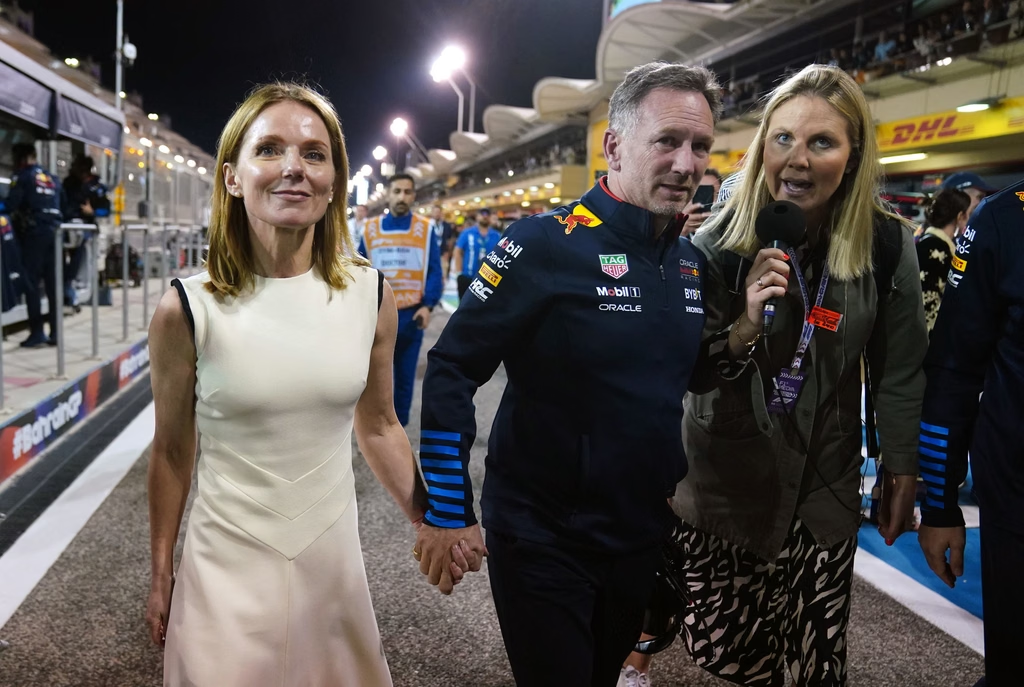
Christian Horner has returned to the spotlight with comments about his departure from Red Bull.
Reflecting on the circumstances of his exit, Horner suggested that not every Formula 1 team operates with the same degree of ruthlessness. His comments have reignited debate over his leadership, the internal politics that contributed to his departure and how his achievements should be evaluated. Horner’s record is substantial.
He oversaw Red Bull’s transformation into a championship-winning organization and led the team through two distinct periods of success. The first came during Sebastian Vettel’s championship years, while the second saw Verstappen and Red Bull end Mercedes’ period of dominance. He also played a central leadership role during the development of Red Bull’s own power unit operation.
Building an engine program capable of competing with established manufacturers represents a significant organizational achievement. That does not mean Horner personally designed the engine or that Red Bull lacked experienced motorsport personnel. The team recruited specialists and invested heavily in the necessary infrastructure.
Nevertheless, assembling and managing that operation was a major undertaking.
How Much Credit Does Horner Deserve for Red Bull’s Recovery?
Red Bull’s improvement since Horner’s departure has prompted some to credit Laurent Mekies with transforming the team.
That interpretation risks oversimplifying how Formula 1 development works. Major upgrades are conceived, designed, manufactured and tested over extended periods. Improvements introduced after a leadership change may have originated under the previous management structure.
Equally, a new team principal can improve communication, decision-making and the environment in which engineers operate. Both factors can contribute to performance. Red Bull’s recent success should therefore not automatically be interpreted as proof that Horner was holding the team back. Nor should the team’s previous championships establish that every aspect of his management was beyond criticism.
The most reasonable assessment recognizes that Horner helped build an exceptionally successful organization while also acknowledging the internal conflict that surrounded his final period at Red Bull.
The Power Struggle After Mateschitz
The death of Red Bull co-founder Dietrich Mateschitz created a different political environment within the organization.
Disagreements over authority, leadership and the direction of the racing operation became increasingly visible. Horner’s departure has frequently been interpreted through that internal power struggle. There are also competing assessments of his management style and the controversies surrounding his tenure.
Those matters should not be reduced to unsupported conclusions about personal motives or treated as settled simply because a particular interpretation has become popular. Verstappen has spoken positively about the reduction in internal conflict, but that should not automatically be interpreted as a direct accusation against Horner. The broader issue is that Red Bull’s leadership structure had become a source of tension.
Whatever the precise balance of responsibility, the organization now appears focused on moving forward under its current management.
Horner Wants Ownership, Not Just Another Job
Perhaps the most revealing part of Horner’s comments concerns his future.
He has indicated that returning to Formula 1 is not essential and that any opportunity would need to meet specific conditions. Most importantly, he wants an ownership stake. That changes the nature of the possibilities available to him.
Ferrari might appear to be an obvious destination given its prestige and continuing difficulties, but Horner has acknowledged that the team is unlikely to offer the ownership arrangement he wants. He also described Fred Vasseur as an experienced team principal and suggested that previous comments about Ferrari being a dream opportunity had been taken out of context. An ownership requirement makes a move to an established manufacturer-backed operation more complicated.
A smaller team, a potential sale or a new investment structure could provide a more realistic opportunity. Williams, Haas, Audi and Cadillac have all entered the discussion as possible destinations, but there is no basis in the supplied material to treat any of them as an active negotiation. Horner’s ambition appears to extend beyond simply returning to the pit wall. After spending two decades building Red Bull into a championship-winning organization, he wants his next role to provide a direct stake in the value he helps create.
That could make his return more difficult, but it also explains why he may be prepared to wait.
Could the 2026 Championship End at Imola Instead of Abu Dhabi?
A potentially significant development concerns the final two rounds of the 2026 championship.
A report circulated under the Motorsport name claims that escalating security concerns in the Middle East have prompted Formula 1 to examine alternatives to the Qatar and Abu Dhabi Grands Prix. The supplied report references alleged security incidents around Riyadh airport and suggests that the championship could activate a European contingency plan. According to the report, Imola has been considered as a possible replacement venue, with December 6 identified as a potential date for an Emilia-Romagna Grand Prix that would take the place of the Abu Dhabi finale.
It also claims that preparations have been taking place behind the scenes, including temporary grandstand work. These are reported claims, not a confirmed calendar announcement. The supplied material does not establish that Qatar or Abu Dhabi has been officially canceled, that Imola has been formally selected, or that the reported security incidents and preparations have been independently verified.
That distinction is particularly important given the scale of the proposed changes.
Why Imola Would Be a Controversial Finale
Imola is one of Formula 1’s historic circuits, but its suitability as a championship-deciding venue would generate debate.
Overtaking can be difficult, and a title fight decided largely through qualifying position and track strategy might disappoint viewers hoping for a dramatic finale. On the other hand, a challenging circuit does not necessarily produce an uninteresting championship conclusion. If the leading contenders are closely matched, qualifying, tire management and strategic execution could all become decisive.
The bigger question is whether Imola would be the most practical option at that time of year. Early December in Europe presents obvious concerns around weather and track conditions. Other venues have been suggested, including Barcelona, which could offer a different racing profile, and Brazil, which previously hosted memorable season finales. Indianapolis, Sebring and even Silverstone have also entered the discussion, although those suggestions raise substantial questions about climate, circuit suitability and the logistics of staging an F1 event on short notice.
Sebring’s famously punishing surface might be entertaining as a hypothetical, but it is hardly a straightforward substitute for a modern Formula 1 venue.
The Antonelli Factor
An Imola finale would introduce an extraordinary possibility: Antonelli could contest a championship-deciding race on home soil.
Depending on the standings, he might arrive having already secured the title or with the opportunity to clinch it in front of an Italian crowd. There is historical precedent for champions racing at home shortly after securing a title. Michael Schumacher, for example, clinched the 2002 championship in France before racing at the German Grand Prix.
But the prospect of a championship being decided at an Italian venue with an Italian driver leading the standings would create a distinctive atmosphere. For now, the sporting implications remain hypothetical.
Until Formula 1 confirms a calendar change, the scheduled Qatar and Abu Dhabi rounds remain the appropriate reference point for the end of the season.
Las Vegas Flooding Images Spark an Unnecessary Grand Prix Scare
Another story that attracted attention concerned images suggesting that the Las Vegas Grand Prix venue was approximately one meter underwater.
With the race approaching, the images naturally prompted questions about whether preparations could be completed in time. However, the central claim was misleading. The flooded area shown was reportedly near the LINQ parking garage, in a location designed to accommodate water during heavy rainfall. It was not evidence that the Formula 1 circuit itself had been submerged.
That distinction matters because Las Vegas is vulnerable to flash flooding despite its desert climate.
Why Las Vegas Can Flood So Quickly
The region’s dry conditions do not prevent severe flooding.
In fact, they can contribute to it. Heavy rain falling over a short period can overwhelm drainage infrastructure, especially where the ground cannot absorb water quickly enough. Las Vegas also has areas of caliche, a hardened layer of soil and mineral deposits that can significantly limit infiltration.
When intense storms arrive, water can move rapidly across roads and into drainage channels. The city’s extensive storm drainage system is designed to manage that runoff, but flash floods can still be dangerous. The consequences extend well beyond inconvenience to tourists or race organizers.
People sheltering in drainage tunnels can face serious risks when floodwaters arrive, making these events a significant public safety concern. For Formula 1, the immediate lesson is simpler.
A dramatic image of flooding somewhere near the Strip does not necessarily indicate a problem with the Grand Prix circuit.
Is Las Vegas Actually a Good F1 Track?
The discussion also revived a familiar debate about whether Formula 1 should race at Las Vegas or prioritize traditional American circuits.
Road America and Watkins Glen are frequently mentioned as alternatives. Both have substantial motorsport histories and distinctive characteristics. However, hosting modern Formula 1 would require meeting Grade 1 circuit requirements, potentially involving changes to infrastructure, safety systems and track configurations.
Those modifications could compromise some of the characteristics that make the venues popular. There is also a growing recognition that Las Vegas has produced competitive racing despite initial skepticism about the event. Its long straights and heavy braking zones can create overtaking opportunities, even if the surrounding spectacle is not to everyone’s taste. The question is not simply whether a historic circuit is more appealing than a street race.
It is whether the infrastructure changes required to host Formula 1 would preserve what makes that circuit special.
Should Formula 1 Borrow Bathurst’s Safety Car Rules?
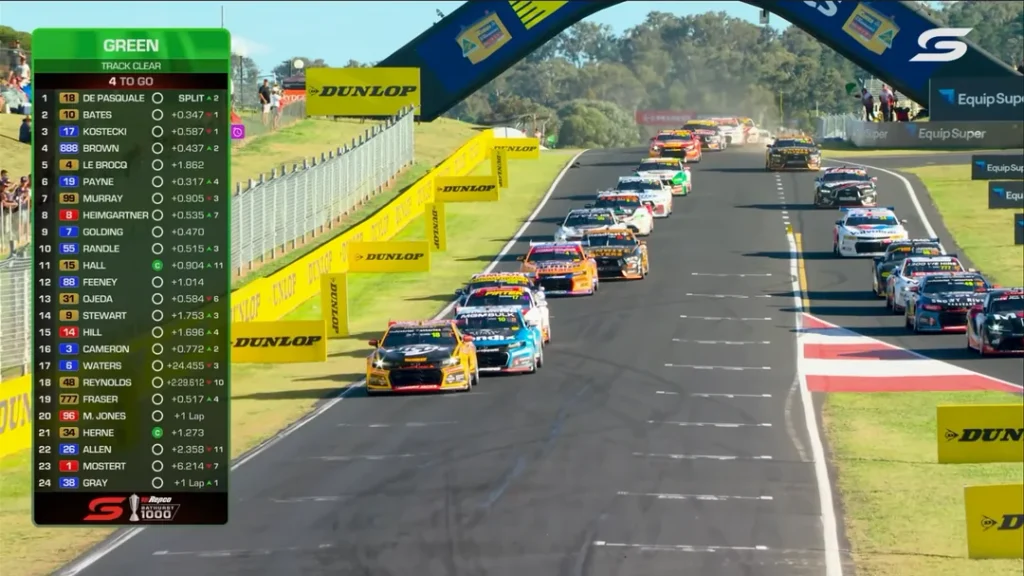
One of the most interesting regulatory discussions this week came from the Supercars Championship at Bathurst.
During a late-race safety car period, lapped cars were required to reposition themselves through the pit lane, clearing the way for a short shootout among the leading competitors. The procedure was initially described as a courtesy, but it was subsequently clarified that it is an actual regulation. Rule 10.2.13.1 provides for cars one or more laps behind the leader to reposition through the pit lane when a safety car period ends within eight laps of the scheduled finish or within ten minutes of a time-certain finish.
The result is a cleaner restart without waiting for lapped cars to complete an additional circuit. It raises an obvious question.
Could Formula 1 adopt something similar?
The Case for Faster Restarts
Formula 1’s current unlapping procedures can add significant time to safety car periods.
Once the track is safe, lapped cars may be permitted to overtake and circulate around the circuit before rejoining the rear of the field. That can require additional laps before racing resumes. A procedure that moves lapped cars directly to the back could shorten the delay.
Using the pit lane might also reduce the need for cars to circulate at higher speeds around areas where marshals have recently been working. At Bathurst, the configuration of the pit entry and exit makes the procedure particularly effective. The cars can be repositioned without creating unnecessary congestion at some of the circuit’s narrower sections.
But Formula 1 circuits have very different pit lane layouts, and a solution that works well at Bathurst would not necessarily translate perfectly to every venue.
The Sporting Fairness Problem
The most important complication is that repositioning a lapped car is not the same as allowing it to recover a lap.
Consider a situation in which the leader has just lapped the driver in 11th place while the driver in 10th remains on the lead lap. Before the safety car, those two drivers might have been separated by only a few seconds. If the lapped driver is moved to the back without regaining the lost lap, the fight for 10th effectively disappears.
The driver in 11th would suddenly be an entire lap behind the competitor they had been chasing. That is a substantial sporting consequence created by the safety car procedure itself. Allowing lapped cars to recover a lap avoids that particular problem, although it takes longer.
There are other considerations. A car that completes fewer racing laps may finish with more fuel or less tire wear than a competitor that completes the full distance. Those advantages are unlikely to transform a backmarker into a race winner, but they illustrate why apparently simple procedural changes can have unexpected consequences.
The question is ultimately one of priorities. Should Formula 1 accept a longer safety car period to preserve the competitive relationship between lapped cars and the drivers immediately ahead? Or should it prioritize restarting the race quickly, even if some midfield battles are affected?
There is no perfect answer.
What Else Could F1 Learn From Other Racing Series?
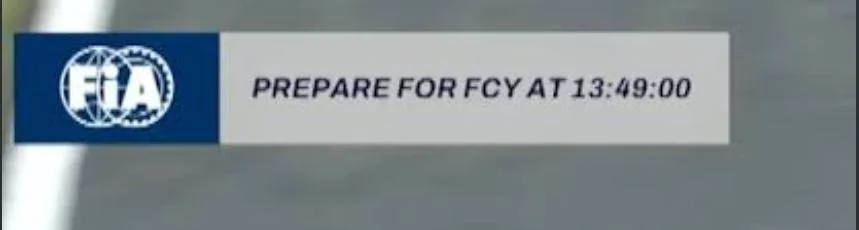
The Bathurst discussion expanded into a broader examination of regulations used elsewhere in motorsport.
Several ideas could potentially make Formula 1 more interesting, although each would introduce trade-offs.
A Countdown for Full Course Yellow and Virtual Safety Car Periods
The World Endurance Championship’s approach to communicating caution procedures has attracted interest.
A more predictable countdown could help drivers and teams understand when racing will resume. It could also reduce confusion around the transition from neutralized conditions to competitive running. However, any countdown would need to remain flexible enough to accommodate unexpected safety concerns.
The race director cannot be forced to resume racing simply because a predetermined interval has expired.
Removing Tire Warmers
DTM’s restrictions on preheating tires have also been suggested as a model.
Without tire warmers, drivers must bring their tires into the appropriate operating window after leaving the pits. That creates an additional challenge during out-laps and can make the period immediately after a pit stop more competitive. A driver on cold tires might struggle to defend against someone already operating at full temperature.
That could produce more overtaking and increase the importance of tire management. However, translating the concept from touring cars or GT machinery to Formula 1 requires caution. F1 cars operate at significantly higher speeds and generate different loads, particularly in high-speed corners.
Any change would need to be evaluated carefully from a safety perspective.
Closing the Pit Lane Under Safety Car
IndyCar’s approach to pit lane closures during caution periods offers another possible model.
Closing the pits until the field is collected can prevent teams from immediately exploiting a safety car to make a cheap stop. That could encourage more varied strategies before an interruption occurs. However, Formula 1 has previously used pit lane restrictions under safety car conditions, and they were controversial.
Drivers who had already stopped could gain a major advantage over competitors who had not. The current delta system also addresses the original concern about drivers rushing back to the pits when a safety car is deployed.
Reintroducing pit lane closures would therefore be a significant sporting change rather than an obvious safety improvement.
No Repairs During Red Flags
Another IndyCar-inspired proposal is to prohibit teams from making changes to their cars during red-flag stoppages.
The appeal is straightforward. A driver who damages a car or severely wears their tires before a red flag should not necessarily receive a free opportunity to repair the damage or replace components without losing track position. That could make red flags less influential in determining race results. On the other hand, restricting repairs could create safety complications if teams are unable to address damage before racing resumes.
Any regulation would need to distinguish between performance-related work and repairs required to make a car safe.
NASCAR-Style Overtime
NASCAR’s overtime procedures have inspired suggestions that Formula 1 races should never finish behind the safety car or under Virtual Safety Car conditions.
The attraction is obvious. A final green-flag shootout could provide a dramatic conclusion rather than an anticlimactic procession to the checkered flag. But extending a race introduces questions about fuel loads, tire life, distance limits and fairness.
Teams prepare their cars for a defined race distance. Requiring additional racing laps could fundamentally change the strategic assumptions under which the event began. It could also create further incidents as drivers fight aggressively during an artificially extended finish.
A dramatic ending is not automatically a fairer ending.
Blue Flags and Backmarker Racing
A more radical proposal would remove the obligation for lapped cars to yield to faster leaders.
That would require frontrunners to overtake backmarkers through conventional racing maneuvers. It could encourage the development of cars that are easier to race wheel to wheel. However, it would also introduce significant risks.
A driver fighting for victory could lose substantial time behind a slower car or become involved in an unnecessary collision. Backmarkers would also be placed in difficult situations when defending against cars with vastly different performance.
While the idea might create more overtaking, it could also allow drivers outside the lead battle to have a disproportionate influence on the outcome.
Qualifying Timing at Pit Entry
One of the more practical suggestions concerns where qualifying laps are officially completed.
Adopting an IndyCar-style system in which the relevant timing point is located before pit entry could allow drivers to finish their laps and return directly to the pits. That might reduce the number of slow-moving cars on track and improve session efficiency. In a tightly packed qualifying session, even small improvements to traffic management could be valuable. It could potentially create enough additional time for teams to attempt another run.
Among the various proposals, this is an example of a procedural adjustment that might improve the show without fundamentally altering the sporting principles of Formula 1.
The Rules Debate Reflects a Bigger Concern About F1’s Direction
Behind many of these suggestions is a broader frustration with how Formula 1 manages racing.
The 2026 regulations have introduced new strategic and technical considerations, but they have also generated criticism about complexity and the role of race control. Recent controversy involving the availability of Overtake Mode has added to those concerns. Some viewers worry that Formula 1 is becoming increasingly dependent on regulatory interventions and technical systems rather than straightforward competition between drivers and teams.
Others argue that similar controversies exist throughout motorsport, including endurance racing, and that Formula 1 simply receives greater scrutiny because of its global audience. There is merit in separating the underlying technical issues from the wider frustration. Modern racing series all require complex rules to manage safety, performance and competition.
The presence of complicated regulations does not automatically undermine sporting integrity. But transparency matters. When a system affects performance or race procedure, competitors and viewers need confidence that it operates consistently and that mistakes are acknowledged and addressed. The goal should not necessarily be to make Formula 1 resemble another championship.
It should be to identify which procedures genuinely improve safety, fairness and racing without introducing unnecessary complications.
The Final Races Could Define More Than the 2026 Championship
As Formula 1 approaches the end of 2026, several important questions remain unresolved.
Antonelli is approaching a championship milestone, but Mercedes’ technical advantage no longer appears as secure as it did earlier in the season. Red Bull has transformed its competitiveness, and Verstappen has reestablished himself as a serious threat whenever the car allows him to fight at the front. Ferrari continues to demonstrate potential while struggling to convert that potential into consistently effective race execution.
McLaren remains part of the competitive picture, while the midfield is producing performances that deserve greater recognition. The 2027 driver market could also reshape the grid, with Red Bull facing decisions about how to balance experienced drivers against its next generation of talent. Away from the circuit, Horner’s potential return could have significant consequences for whichever organization is prepared to offer him the ownership opportunity he wants.
And the possibility of a calendar change, if the reported contingency plans develop into official decisions, could alter the final chapter of the season itself. Perhaps the most important development is that the competitive order no longer feels inevitable. Mercedes may still be the strongest candidate to begin 2027 at the front, but Red Bull has demonstrated how rapidly the gap can close.
Ferrari has opportunities to improve, and McLaren cannot be ruled out. For Formula 1, the ideal outcome would be a championship in which success depends less on one team discovering an overwhelming technical advantage and more on drivers, engineers and strategists executing at the highest level. After a season in which Mercedes initially appeared to have the answer to the new regulations, the rest of the field is finally making the future look uncertain.
And that uncertainty could be the most encouraging development of all.