

Two developments involving American manufacturers could have significant implications for IndyCar’s future. Ford is reportedly evaluating a potential return to the series amid an aggressive expansion of its global motorsports activities, while Cadillac’s plans to give Formula 3 champion Ugo Ugochukwu rookie Formula 1 practice opportunities in 2027 have renewed questions about Colton Herta’s long-term future.
Both stories remain surrounded by uncertainty. Ford has not committed to becoming IndyCar’s third engine manufacturer, and Cadillac’s interest in another young American driver does not necessarily mean Herta’s Formula 1 ambitions are over.
Nevertheless, the developments raise intriguing questions about manufacturer investment, driver development, and how America’s two largest automakers could shape the future of open-wheel racing.
Ford Reportedly Evaluating IndyCar Return Amid Global Racing Expansion
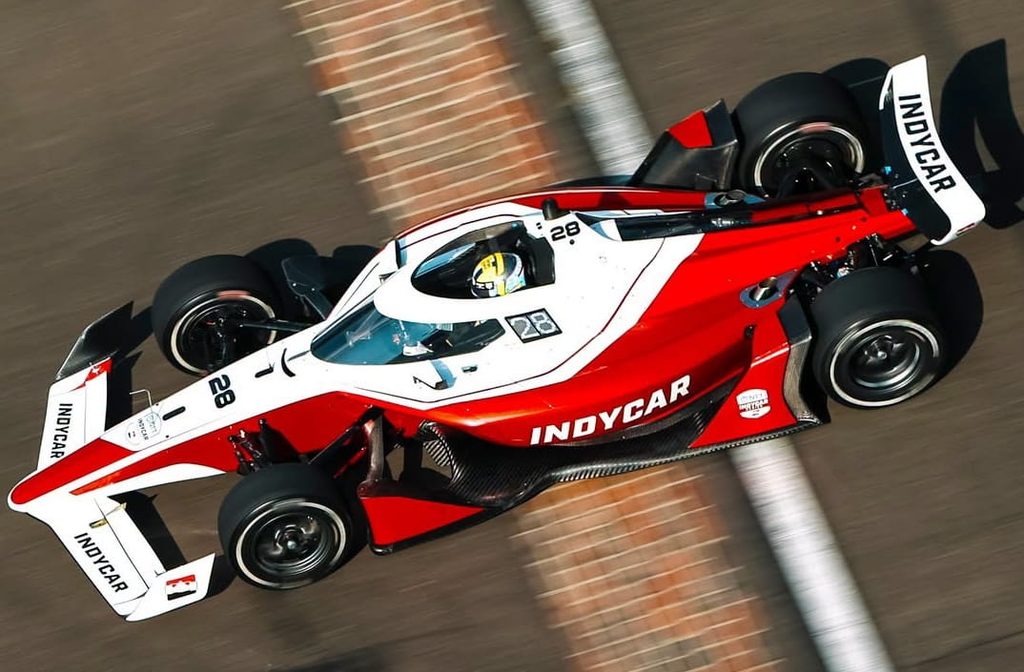
Ford is reportedly weighing a return to IndyCar as the manufacturer continues to expand its involvement across multiple motorsports disciplines.
The possibility comes at an interesting time for the American automaker, which has substantially increased its racing commitments in recent years. Ford’s motorsports portfolio now includes its Formula 1 partnership with Red Bull, Mustang GT3 and GT4 programs, factory-backed sports car racing efforts, an upcoming Hypercar program, rally competition, and desert racing initiatives. The company’s involvement in Formula 1 is particularly notable. Rather than establishing its own factory team, Ford partnered with Red Bull Powertrains, contributing technical expertise and development resources to the power unit program.
That arrangement illustrates how Ford can participate in a major racing championship without assuming the full financial burden of operating a team or independently manufacturing every component. Could a similar approach make an IndyCar return financially attractive?
That may be the most important question facing the manufacturer.
Why Ford’s IndyCar Absence Has Lasted So Long
Ford’s history in American open-wheel racing stretches back decades.
The manufacturer played a major role in the sport’s development, particularly through its association with Cosworth. Ford-backed engines became synonymous with success in CART, powering generations of championship-winning cars and Indianapolis 500 victories. The Ford-Cosworth relationship was so successful that its engines dominated American open-wheel racing for extended periods. However, Ford’s eventual departure from Champ Car followed years of political turmoil, escalating costs, and uncertainty surrounding the direction of American open-wheel racing.
The CART-Indy Racing League split created a fractured environment that manufacturers had to navigate. Ford’s frustration reportedly extended beyond the existence of two competing championships. Disputes involving technical regulations, engine policies, and unsuccessful reunification efforts contributed to an increasingly difficult relationship with the sport. One particularly contentious issue involved the early Indy Racing League’s engine direction. Ford had been involved in supporting the initial championship, only for the series to move toward a different engine formula.
The relationship was further complicated by the ownership changes surrounding Cosworth, which Ford sold in 2004. Ford ultimately departed Champ Car following the 2006 season, before the eventual reunification of American open-wheel racing in 2008. That distinction matters because Ford’s departure was not simply a reaction to the 2008 reunification. The manufacturer had already withdrawn.
Nearly two decades later, however, the circumstances are substantially different. IndyCar is operating under unified leadership, Roger Penske owns the championship and Indianapolis Motor Speedway, and a new generation of cars and engines is approaching. The political disputes that once complicated Ford’s involvement no longer define the series in the same way.
For a manufacturer reconsidering its position, that could create an opportunity to reassess a championship it once played a major role in shaping.
Jim Farley’s Racing Ambitions Could Be Important
Ford CEO Jim Farley has been a significant advocate for the company’s expanding motorsports activities.
That enthusiasm is important because manufacturer racing commitments are ultimately business decisions requiring support from senior leadership. Edsel Ford II has also historically been associated with the company’s racing interests, although questions remain about how much influence he currently exercises over new motorsports investments. His previous reluctance toward IndyCar has been suggested as one factor behind Ford’s long absence, but attributing the company’s position to any single executive would oversimplify the situation.
Ford’s racing strategy has evolved significantly, and its recent investments suggest that the company is willing to consider championships it might previously have dismissed. However, evaluating a racing series and committing to an expensive manufacturer program are two very different things. Automakers regularly assess potential opportunities across motorsports, including championships they ultimately never enter.
Until Ford announces a concrete program, its reported interest should be interpreted as exploratory rather than evidence that an IndyCar return is imminent.
The Biggest Obstacle: Building an IndyCar Engine
The strongest argument against Ford entering IndyCar is also the simplest: engine development is expensive.
Much of Ford’s current racing strategy benefits from technical platforms that can be used across multiple championships. The Mustang GT3 and GT4 programs, for example, allow Ford to promote recognizable road-car products while supporting customer racing operations. Its sports car and off-road racing programs similarly provide opportunities to connect motorsports participation with specific vehicles and technologies.
IndyCar presents a different proposition. A competitive IndyCar engine would require a highly specialized development program with limited opportunities to share its underlying architecture with Ford’s existing racing portfolio. That creates a potentially significant financial obstacle.
The manufacturer would need to justify the engineering investment, operational support, and ongoing development costs against the marketing exposure and commercial value generated by the championship. Unlike GT racing, where fans can identify a Mustang competing on track, IndyCar offers fewer direct visual connections to a manufacturer’s road-car lineup. The cars are not Ford-branded road vehicles. The manufacturer’s primary identity would come through its engine program, associated marketing, and team partnerships.
For a company focused on maximizing the value of its racing investments, that difference matters.
Could Ford Follow Chevrolet’s Model?
There is another possibility.
Ford would not necessarily need to develop and manufacture an IndyCar engine entirely in-house. Chevrolet’s IndyCar program already demonstrates how an automaker can compete through a partnership with a specialist engineering organization. Ilmor develops and builds Chevrolet’s IndyCar engines, allowing the manufacturer to maintain a major presence in the championship without relying exclusively on its own production facilities.
Ford could theoretically pursue a comparable arrangement with an established engine development company. Cosworth would be an obvious historical connection, although its current ownership and independence mean a renewed partnership could not simply be assumed. Other specialist engineering organizations could potentially offer similar opportunities.
This approach would not eliminate the expense of entering IndyCar, but it could make the investment more manageable than developing an entirely new operation from scratch. Ford’s Formula 1 partnership with Red Bull provides another example of the manufacturer working alongside an existing technical organization. The precise extent of Ford’s contribution to the Red Bull power unit program has generated debate, particularly concerning its involvement in internal combustion engine development, battery technology, electrical systems, and software. What matters for IndyCar is the broader principle: Ford has demonstrated a willingness to participate in major racing programs through technical partnerships rather than insisting on complete operational control.
That could provide a potential framework for an IndyCar entry.
Why 2028 Could Be Ford’s Opportunity
The timing of Ford’s reported interest is particularly interesting because IndyCar is preparing for a new technical era in 2028.
A new car and engine regulations could create a natural entry point for an additional manufacturer. Entering at the beginning of a new regulations cycle would allow Ford to develop its program around the next generation of machinery rather than investing heavily in a platform approaching replacement. It could also provide opportunities to establish technical partnerships before the competitive hierarchy of the new era becomes established.
For IndyCar, attracting a third manufacturer would be a significant development. The championship has relied on Chevrolet and Honda for years, and an additional manufacturer could provide greater commercial support, increased competition, and more opportunities for teams. It could also help address questions about the long-term sustainability of a two-manufacturer championship.
However, the introduction of new regulations does not automatically make an engine program financially attractive. Ford would still need to determine whether the potential audience, marketing exposure, and commercial returns justify the investment. The Indianapolis 500 would undoubtedly be central to that calculation.
As IndyCar’s signature event, the race offers a level of recognition and promotional value that the championship’s other rounds cannot consistently match. But the critical question is whether the Indianapolis 500, combined with the rest of the season, provides sufficient value to support a long-term manufacturer commitment. Ford already competes in championships with significant international audiences, including Formula 1 and the World Endurance Championship. IndyCar’s strongest commercial appeal is concentrated in the United States, making its value proposition different from those global programs.
That does not necessarily make IndyCar less attractive. It simply means Ford would need a clear reason to prioritize American open-wheel racing within an increasingly crowded motorsports portfolio.
Which IndyCar Team Could Partner With Ford?
Even if Ford decides to enter IndyCar, identifying a competitive team partner would present another challenge.
Several established organizations already have significant relationships with Chevrolet or Honda. A new manufacturer would need teams capable of helping develop its engine while also providing the competitive credibility necessary to justify the investment.
Several possibilities stand out, although none should be interpreted as a confirmed negotiation.
Team Penske: The Obvious Connection With a Major Complication
Team Penske would initially appear to be a natural Ford partner.
Penske already has a substantial relationship with Ford through NASCAR, making the two organizations familiar with one another. However, the situation becomes considerably more complicated in IndyCar. Penske is closely associated with Chevrolet and has an ownership interest in Ilmor, the company responsible for developing Chevrolet’s IndyCar engines.
That relationship creates a significant obstacle to any potential switch. Moving Penske’s IndyCar operation to Ford would involve more than changing the manufacturer badge on its cars. It could affect established technical and commercial relationships. Penske has previously maintained relationships with different manufacturers across racing disciplines, so competing with Ford in NASCAR and Chevrolet in IndyCar is not inherently contradictory. The more important question is whether Ford could offer enough value to justify disrupting Penske’s existing IndyCar arrangements.
For that reason, Penske might be an obvious name to mention but not necessarily the most realistic initial partner.
Rahal Letterman Lanigan: A Historical Connection
Rahal Letterman Lanigan Racing could represent another possibility.
Bobby Rahal has a history with Ford dating back to his driving career, and his organization maintained a relationship with the manufacturer during the final years of Ford’s Champ Car involvement. That history provides a recognizable connection. However, switching to an entirely new engine manufacturer would carry considerable competitive risk.
Rahal Letterman Lanigan has already faced questions about its competitive direction and the structure of its IndyCar operation. After investing in a larger program, the team has been associated with a return to a two-car structure. Taking on an unproven engine supplier while simultaneously working to stabilize its own performance could introduce additional challenges. On the other hand, becoming a manufacturer’s leading development partner could provide resources and attention that might otherwise be difficult to obtain.
The appeal would depend heavily on Ford’s proposed level of investment and technical support.
Arrow McLaren: An Opportunity to Become the Lead Team
Arrow McLaren presents an intriguing possibility for a different reason.
The team currently competes with Chevrolet engines but operates in an environment where Penske remains a major Chevrolet partner. Switching to Ford could theoretically allow McLaren to establish itself as the primary team associated with a new manufacturer. That could provide greater influence over development priorities and create a stronger manufacturer identity around the organization.
However, McLaren’s existing Chevrolet relationship would complicate any such move. The team would also need to determine whether becoming the leading partner of an unproven engine supplier is more valuable than continuing with an established, competitive manufacturer. There is a potentially appealing commercial story in McLaren partnering with Ford, particularly given the manufacturer’s broader Formula 1 activities.
But a compelling marketing narrative alone would not guarantee a competitive engine program.
Andretti, Foyt, and Dale Coyne Racing
Andretti Global could also attract interest, although its connections to TWG Motorsports introduce another layer of complexity.
There has been speculation about Andretti potentially switching to Chevrolet to align more closely with other TWG racing activities. If that direction materializes, it would make a Ford partnership less straightforward. There have also been discussions about the possibility of a manufacturer-related charter arrangement in 2028, although the details remain speculative.
IndyCar’s charter structure could become an important consideration for any new manufacturer seeking to establish a stable group of teams. A.J. Foyt Racing represents another potential candidate, particularly given the Foyt family’s historical connections to Ford dealerships. Dale Coyne Racing could also be interested in the additional manufacturer support that a new engine supplier might provide.
For smaller organizations, the opportunity to become a preferred manufacturer partner could be attractive. However, the financial and competitive risks would remain substantial. A new engine program could provide additional resources, but it could also require years of development before reaching the performance and reliability levels of Chevrolet and Honda. The experience of Lotus in 2012 remains a cautionary example of how difficult entering IndyCar as a new engine supplier can be.
A third manufacturer would be welcome, but its success would depend on far more than securing a recognizable brand name.
Ford’s Return Would Be Significant, but the Business Case Must Work
There is a tendency to view Ford’s potential return primarily through nostalgia.
The manufacturer’s history with Cosworth, CART, and the Indianapolis 500 provides a compelling narrative. But the Ford of today is evaluating motorsports through a different commercial and technical environment. Its recent investments have demonstrated a willingness to expand, but many of those programs offer opportunities to promote specific vehicles, share technology, or reach international audiences.
IndyCar would need to offer a similarly convincing return. There is an argument that IndyCar could provide stronger American visibility than some of Ford’s sports car programs, particularly through the Indianapolis 500. There is also a counterargument that championships such as WEC provide broader international reach and more direct opportunities to market recognizable Ford vehicles.
Neither comparison is straightforward. Audience size, television exposure, manufacturer visibility, activation opportunities, and engineering costs all influence the value of a racing program. Ultimately, Ford’s reported interest is encouraging for IndyCar, but it is not yet evidence of a third manufacturer agreement. The next meaningful development would be a formal commitment involving an engine program, technical partner, or team arrangement.
Until then, the possibility remains just that.
Cadillac’s Ugochukwu Plans Raise Questions About Colton Herta
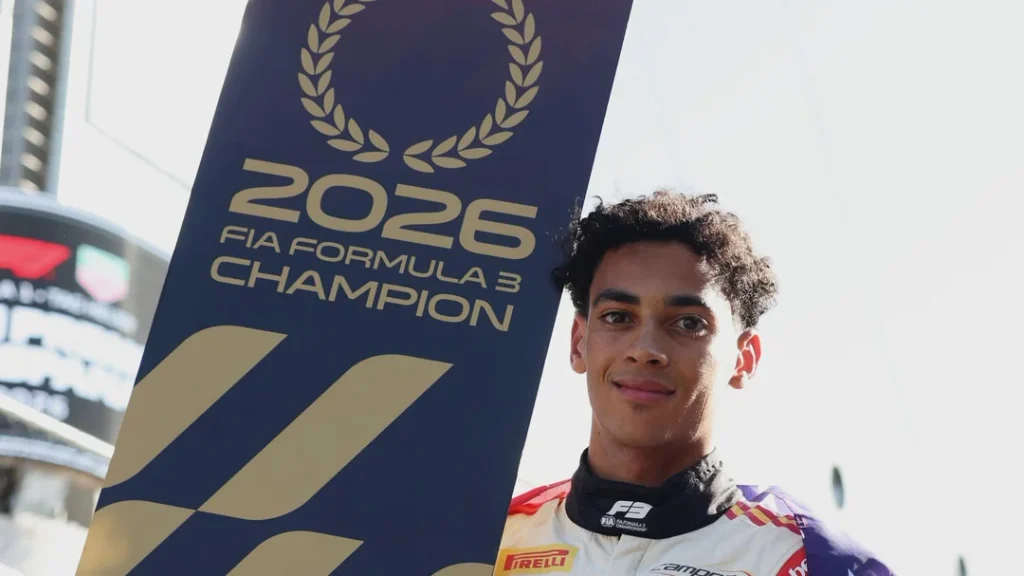
While Ford considers a possible return to IndyCar, another American manufacturer is creating uncertainty around the future of one of the championship’s most recognizable recent drivers.
According to an October 12 report from AutoRacer, Cadillac intends to give reigning Formula 3 champion Ugo Ugochukwu rookie FP1 opportunities during the 2027 Formula 1 season. The development is significant because Cadillac has already invested heavily in Colton Herta’s transition from IndyCar to the Formula 1 development ladder. Herta left IndyCar to compete in Formula 2 during 2026, pursuing the FIA Superlicense points required to become eligible for a Formula 1 race seat.
Cadillac also established a free practice program to help him accumulate additional points and gain experience with contemporary Formula 1 machinery. However, the team’s reported decision to involve Ugochukwu in its 2027 rookie sessions introduces another American prospect into the equation. That does not necessarily mean Cadillac is abandoning Herta.
The two drivers have different backgrounds, development needs, and career trajectories. But with Cadillac’s Formula 1 race seats occupied by Sergio Pérez and Valtteri Bottas, the question is becoming increasingly difficult to avoid.
Where exactly does Herta fit into Cadillac’s long-term plans?
Ugochukwu Arrives With an Impressive Junior Racing Record
Ugochukwu, born in New York in 2007, has established himself as one of America’s leading young single-seater prospects.
After joining McLaren’s driver development program early in his career, he progressed through Formula 4 and Formula Regional before moving into Formula 3. He won the prestigious Macau Grand Prix in 2024. His first Formula 3 season with Prema in 2025 proved challenging, although he secured two podium finishes.
A move to Campos Racing for 2026 produced a significant improvement. Ugochukwu ultimately won the FIA Formula 3 championship, completing a comeback against Freddie Slater at the final round in Madrid. He finished the season with 159 points, becoming the first American driver to win the FIA Formula 3 championship.
That success has strengthened his credentials as a potential future Formula 1 driver. He has also already experienced Formula 1 machinery. In June, Ugochukwu participated in a test at Monza driving Alpine’s A524 as part of the Testing of Previous Cars program.
The session ended early following an off-track excursion at Variante Ascari, but it nevertheless provided an opportunity to experience the technical and operational demands of a Formula 1 car. Cadillac’s reported 2027 FP1 program would represent another important step. Unlike private testing, official Grand Prix practice sessions place young drivers in the competitive environment of a Formula 1 weekend. They must work within the team’s operational procedures while delivering useful feedback and adapting quickly to limited track time.
For Cadillac, the opportunity would provide a more direct assessment of Ugochukwu’s readiness for future responsibilities.
Is Ugochukwu Already Better Positioned Than Herta?
One of the most striking differences between Ugochukwu and Herta is their respective routes toward Formula 1 eligibility.
Despite spending years competing at the highest level of American open-wheel racing, Herta has faced significant challenges accumulating the FIA Superlicense points necessary to enter Formula 1. Ugochukwu, by contrast, has reportedly accumulated 65 Superlicense points since his 2024 Macau Grand Prix success. The contrast highlights a longstanding criticism of the FIA’s Superlicense system.
Drivers who succeed in established international junior championships can accumulate the necessary points relatively quickly, while experienced IndyCar competitors may face a more difficult route despite racing professionally at a high level. Ugochukwu’s Formula 3 championship provides a strong foundation for his Formula 1 ambitions. He also has experience with Pirelli tires and the European junior racing environment, both of which are relevant to adapting to Formula 1.
Herta’s background is different. His experience comes primarily from IndyCar, where the cars, tires, racing formats, and technical demands differ considerably from Formula 1. His Formula 2 campaign was intended to help bridge that gap.
The challenge is that Herta’s move also carried considerable risk. Rather than remaining in IndyCar, where he had already established himself as a competitive race winner, he committed to a development pathway without a guaranteed Formula 1 seat at the end.
Ugochukwu’s emergence makes that uncertainty more apparent.
The Superlicense Points Debate
There is also disagreement about exactly how many Superlicense points Herta currently possesses.
Some calculations place him at 36 or 37 points, while another account attributed to journalist Chris Medland suggested Cadillac sources had indicated a total of 38. The discrepancy appears to involve interpretations of the regulations and the number of eligible rookie practice sessions. One particular point of contention concerns Herta’s appearance at Monza.
There have been suggestions that he did not complete the minimum distance required for the session to count toward his Superlicense total. However, the available accounts do not establish a definitive points calculation. The AutoRacer report indicates that Herta is expected to complete another rookie FP1 session, potentially at the United States Grand Prix in Austin.
There has also been speculation about an additional appearance in Mexico City. Crucially, the reported Ugochukwu sessions concern 2027, not the remaining races of 2026. That distinction has been lost in some reactions.
Ugochukwu’s reported appointment does not mean he has replaced Herta in a scheduled 2026 session. It also does not automatically prevent Herta from completing his current Superlicense program. The more important question concerns what happens afterward.
Even if Herta secures the required 40 points, eligibility alone does not guarantee a Formula 1 race seat.
Does Cadillac Actually Have a Seat for Herta?
Cadillac entered Formula 1 with an experienced lineup of Sergio Pérez and Valtteri Bottas.
That approach provided the new American team with two established Grand Prix drivers capable of contributing to its initial development. However, it also created an obvious obstacle for Herta. Cadillac’s 2027 lineup is already set, leaving no immediate race seat available for the American.
That raises the possibility of Herta spending another season in Formula 2, remaining involved in simulator and development work, or pursuing opportunities elsewhere. None of those outcomes would necessarily represent the Formula 1 career he envisioned when leaving IndyCar. There has been speculation that Bottas would be the more vulnerable driver if Cadillac eventually decided to promote Herta.
That theory is based partly on Pérez’s commercial backing and the perceived relative value of the two experienced drivers. However, no confirmed decision has been presented suggesting either driver is being replaced. Looking further ahead, Ugochukwu could become another candidate for Cadillac’s 2028 lineup.
His age, junior racing accomplishments, and American nationality make him an attractive long-term prospect. Cadillac could theoretically build its future around young American drivers rather than maintaining its original veteran pairing indefinitely. Other young prospects, including drivers such as Sebastian Wheldon and Nikita Johnson’s fellow junior competitor Max Garcia Egozi, have also entered broader discussions about potential future American representation in Formula 1.
But projecting a future Cadillac lineup remains highly speculative. The team must first establish itself competitively, and its decisions will depend on driver development, performance, commercial considerations, and the availability of race seats. For Herta, the concern is not simply that Ugochukwu has been offered an FP1 opportunity.
It is that Cadillac now has multiple possible development paths while Herta still lacks a clear route into the race lineup.
Could Herta Return to IndyCar?
The obvious alternative would be a return to IndyCar.
Herta already has extensive experience in the championship and would bring proven race-winning ability to any team willing to accommodate him. However, his contractual situation may make a return more complicated than it initially appears. There have been suggestions that Herta was offered the opportunity to drive Chip Ganassi Racing’s No. 9 car but declined.
That interpretation has been disputed. An alternative explanation is that Herta was not actually a free agent, having already committed to Cadillac and the broader TWG organization. If that is the case, describing the situation as Herta simply rejecting a Ganassi opportunity would be misleading.
It would instead suggest that contractual obligations prevented him from seriously pursuing the seat. The distinction matters because the Ganassi No. 9 is one of IndyCar’s most recognizable opportunities. Walking away from that seat voluntarily would represent a very different career decision from being unable to accept it because of an existing agreement.
Without clarity on the contractual details, it is impossible to determine which interpretation is accurate.
Could Penske Become an Option in 2028?
There has also been speculation about a potential Team Penske opportunity if its driver lineup changes for 2028.
Josef Newgarden and Scott McLaughlin have both been mentioned in hypothetical discussions about possible future vacancies. However, there is no confirmed indication that either driver is leaving or that Penske is actively pursuing Herta. A return to IndyCar would also depend on whether Cadillac and TWG would release him from his existing commitments.
That could prove more significant than the availability of a competitive seat. Herta’s situation therefore cannot be reduced to a simple choice between Formula 1 and IndyCar. He has already invested a season in his Formula 1 ambitions, and the contractual consequences of changing direction remain unclear.
If a race seat does not materialize, he could find himself facing a difficult decision between continuing as a development driver and attempting to rebuild his IndyCar career.
Ugochukwu Faces an Unusual Formula 1 Challenge: His Height
Although Ugochukwu’s talent has attracted considerable attention, another aspect of his potential Formula 1 future has generated discussion.
His height. The American is exceptionally tall for a single-seater racing driver, with estimates ranging from approximately 6 feet 4 inches to as much as 6 feet 8 inches. Those figures vary considerably, and his exact current height has not been established in the information available.
Nevertheless, even the lower estimates would place him among the tallest drivers associated with modern Formula 1. For comparison, Oliver Bearman is approximately 6 feet 2 inches, while Esteban Ocon and Nico Hülkenberg are also among the taller drivers on the grid.
Ugochukwu’s dimensions could therefore present an unusual engineering challenge.
Why Driver Height Matters in Formula 1
Formula 1 cars are designed around extremely tight packaging requirements.
Teams attempt to minimize aerodynamic drag, optimize weight distribution, and position components within the smallest practical space. The cockpit is an important part of that process. A taller driver may require additional legroom, a different seating position, and modifications to accommodate the position of the head and shoulders.
Those changes can affect more than driver comfort. The location of the driver’s feet influences the dimensions of the front of the chassis, while cockpit packaging can affect structural design and the placement of other components. Changes to the chassis can have consequences for suspension geometry, aerodynamic packaging, and overall vehicle balance.
The roll hoop is another consideration, although it is not necessarily the biggest obstacle. A driver’s helmet must remain within the applicable safety requirements, and teams may be able to adjust the seating position to reduce how high the driver’s head sits. However, lowering the seat does not automatically solve the problem of fitting longer legs into a tightly packaged chassis. Historical examples involving drivers such as Mark Webber and Robert Kubica illustrate the challenges teams can encounter when accommodating unusually tall drivers.
A larger cockpit is technically possible, but it can require compromises elsewhere in the car.
Cadillac’s Driver Lineup Makes the Challenge More Interesting
Cadillac’s current race drivers are considerably shorter than Ugochukwu.
Pérez and Bottas are both approximately 173 centimeters tall, creating a substantial difference compared with the young American. A chassis optimized around two drivers of similar stature may not naturally accommodate someone significantly taller. That creates an interesting question about Cadillac’s reported FP1 plans.
If the team intends to put Ugochukwu into its 2027 car during an official Grand Prix weekend, it presumably believes the necessary adjustments are achievable. A rookie practice appearance is not an opportunity to fundamentally redesign the car between sessions. The team must be able to accommodate the driver while preserving the vehicle’s safety and competitive requirements. That suggests Cadillac is at least willing to investigate the practical engineering challenges rather than dismissing Ugochukwu because of his size.
The potential complications should not be underestimated, but neither should they automatically disqualify him from Formula 1 consideration.
Should Formula 1 Accommodate Taller Drivers?
The discussion has also raised a broader question about whether Formula 1 regulations should do more to accommodate drivers of different body types.
The championship already uses minimum driver weight provisions intended to prevent lighter drivers from receiving an excessive competitive advantage and to discourage unhealthy weight reduction. A similar principle could theoretically be applied to cockpit dimensions. Requiring every team to accommodate a wider range of driver heights could reduce the risk of talented competitors being excluded because their physical dimensions are difficult to package.
It could also provide additional flexibility for seat padding and driver comfort. However, such a requirement would introduce its own challenges. Teams would need to design larger cockpits even when neither race driver required the additional space.
That could affect aerodynamic efficiency, structural packaging, and weight distribution. There is also the question of where the regulations should draw the line. A minimum cockpit size large enough for most drivers would not necessarily accommodate every unusually tall competitor.
Nevertheless, Ugochukwu’s situation demonstrates how physical dimensions can influence career opportunities in a sport where talent is supposed to be the primary consideration. His potential importance as another Black driver in Formula 1 adds a further dimension to the conversation about access and representation, although the technical questions would exist regardless of his background.
Ultimately, the sport must balance engineering freedom with reasonable opportunities for drivers of different physical builds.
Could Ugochukwu’s Height Actually Help Determine His Future?
An interesting aspect of Cadillac’s decision is that the team already knows Ugochukwu is exceptionally tall.
His height is not a surprise that engineers will discover when he arrives for a seat fitting. If Cadillac is preparing to give him official practice opportunities, it suggests the organization believes there is a practical path toward accommodating him. That does not mean there will be no compromises.
It also does not guarantee that a future Formula 1 race car could be optimized around his dimensions without sacrificing performance. But it indicates that his height has not prevented Cadillac from considering him. There is a significant difference between a driver being physically difficult to accommodate and being impossible to accommodate.
For a prospect with Ugochukwu’s junior racing record, teams may be willing to accept some additional engineering complexity. The more compelling question is whether those compromises would become significant enough to affect his competitiveness against similarly talented drivers.
That is something only further testing and development can establish.
Two American Manufacturers, Two Different Questions About IndyCar’s Future
Ford’s potential return and Cadillac’s expanding Formula 1 development program may initially appear unrelated.
However, both reflect the increasingly complicated relationship between American motorsports and global racing. Ford is evaluating where IndyCar might fit within a motorsports portfolio that already includes major international championships. Cadillac, meanwhile, is developing American drivers for Formula 1 while potentially leaving one of IndyCar’s established talents without an immediate route to a Grand Prix race seat.
Both situations ultimately come down to opportunity. For Ford, the opportunity is commercial and technical. Can IndyCar provide enough value to justify the expense of becoming a third engine manufacturer?
For Herta, the opportunity is professional. Can he turn his Formula 2 campaign and Cadillac development work into a Formula 1 race seat before another prospect becomes the organization’s preferred long-term option? Ugochukwu’s emergence does not settle that question, just as Ford’s reported interest does not guarantee an IndyCar engine program.
But both developments are worth watching. A Ford commitment could strengthen IndyCar’s manufacturer landscape ahead of the 2028 regulations. A Cadillac decision to prioritize Ugochukwu could reshape Herta’s options and potentially revive speculation about a return to American open-wheel racing.
There is even an intriguing overlap in the longer term. If Ford eventually enters IndyCar, additional manufacturer support could create new opportunities for teams and drivers. If Herta eventually returns, he would be doing so at a time when the championship could be entering a substantially different technical and commercial era. Neither outcome is guaranteed. For now, Ford has a business decision to make, Cadillac has multiple American prospects to evaluate, and Herta remains in the difficult position of pursuing a Formula 1 future without a confirmed race seat.
The next few years could determine whether IndyCar gains another major American manufacturer, regains one of its established stars, or potentially both.