

American motorsports could be getting two very different opportunities for expansion, although neither comes without significant questions.
In Missouri, Jackson County has floated the possibility of building a Formula 1-style racetrack as part of an ambitious redevelopment of the sports complex currently home to Arrowhead Stadium and Kauffman Stadium. While the prospect of Formula 1 racing in Kansas City has generated plenty of skepticism, the proposal has raised another intriguing possibility: Could IndyCar eventually find a new home in the Midwest? Meanwhile, the FIA World Rally Championship is preparing to return to the United States for the first time in 39 years, with an event scheduled for August 26–29, 2027. Tennessee and Kentucky have emerged as potential locations, but the dates could create an interesting conflict with IndyCar’s Milwaukee weekend.
Both developments highlight the growing ambition to bring more international motorsports events to American audiences. They also raise questions about whether there is enough demand, infrastructure, and financial support to make those ambitions sustainable.
Kansas City Wants an F1 Racetrack, but Would IndyCar Be a More Realistic Target?
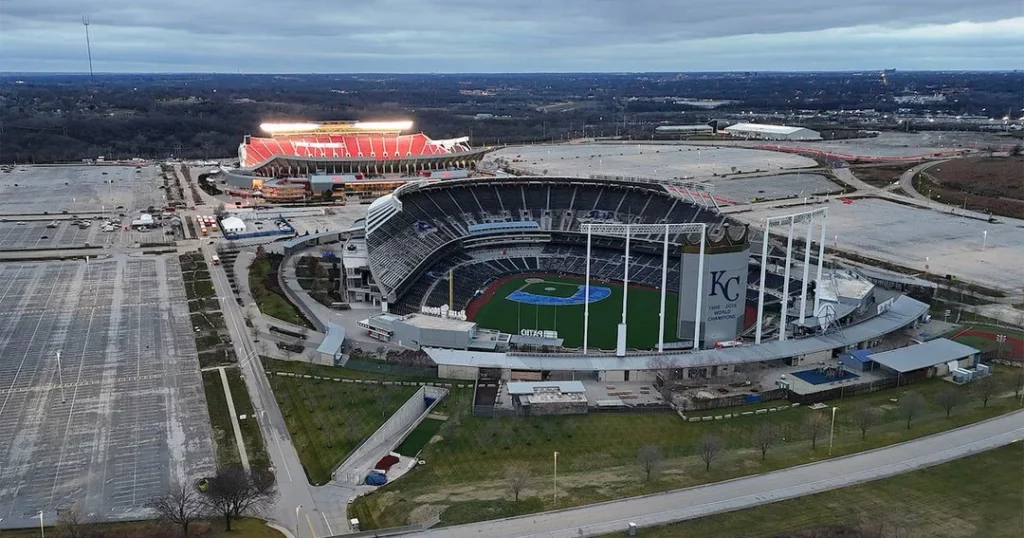
Jackson County’s redevelopment proposal calls for retaining Arrowhead Stadium, demolishing Kauffman Stadium, and potentially constructing a racetrack as part of a broader transformation of the surrounding property.
However, the concept remains far from a confirmed construction project. Jackson County Executive Phil LeVota has emphasized that the concepts are not final redevelopment plans and that the county intends to seek substantial private investment. That distinction matters, particularly when the most attention-grabbing element of the proposal is a facility being described as an F1 racetrack.
The immediate question is whether Kansas City could realistically attract Formula 1. With three existing American races in Austin, Miami, and Las Vegas, another United States Grand Prix would face considerable competition for space on the calendar. Formula 1 has increasingly emphasized major destination markets, commercial partnerships, and the broader entertainment value of its events. Kansas City does not necessarily fit the same profile as Miami or Las Vegas. That does not mean the city lacks motorsports fans or the potential to support a major event. Rather, the economics of attracting Formula 1 would be particularly challenging, especially if a purpose-built circuit were required.
There is also the question of whether the term “F1 racetrack” is being used as a serious statement of intent or simply as an attractive way to market a potential road course.
Formula 1 carries international recognition far beyond traditional racing audiences. For local officials seeking investment, describing a facility as capable of hosting F1 is arguably more compelling than proposing a road course for regional racing, club events, and occasional national championships. But building a circuit capable of meeting FIA Grade 1 requirements is a very different proposition from constructing a conventional permanent road course. Grade 1 facilities require substantial investment, and the ongoing maintenance costs can be difficult to justify without major international events generating revenue. IndyCar, by comparison, does not require a Grade 1 circuit to compete.
That could make the American open-wheel championship a more realistic potential tenant if the development ever advances beyond its conceptual stage.
Could Kansas City Become IndyCar’s Next Road Course?
From IndyCar’s perspective, the possibility of another permanent road course in the Midwest is worth examining.
The series already has a presence in the broader region through its race near St. Louis, but Kansas City would represent a different market. There is precedent for IndyCar racing in the area, although the previous event at Kansas Speedway ultimately disappeared from the calendar. That history raises an important question: Would a permanent road course generate more interest than the oval did?
Road and street circuits can offer different experiences for casual spectators, particularly when organizers create an event around entertainment, hospitality, and activities beyond the racing itself. However, a permanent circuit outside a major urban center does not automatically provide the atmosphere of a downtown street race. Recent IndyCar developments have increasingly highlighted the value of large-scale events connected to major sports and entertainment properties.
Nashville and Arlington have both featured prominently in discussions about the potential for races tied to NFL infrastructure and surrounding entertainment districts. The idea of integrating motorsports into an established sports complex therefore has some conceptual appeal. But Kansas City’s circumstances are complicated.
One of the strongest criticisms of the Jackson County proposal is that the surrounding area has struggled to attract significant entertainment development even while both the Chiefs and Royals occupied the complex. If that investment did not materialize with two major professional sports teams bringing spectators to the site, what would suddenly make the location attractive after the baseball stadium is demolished? The proposed redevelopment would need to answer that question before the racing component could be taken seriously.
There is also the issue of competing development opportunities. Investors interested in restaurants, hotels, entertainment venues, and other commercial properties might prefer locations closer to existing tourism infrastructure or newer stadium developments. A racetrack could theoretically become an anchor attraction, but it would also need a viable business model outside one major racing weekend. IndyCar alone would be unlikely to justify the expense of constructing and maintaining an ambitious new facility.
A more sustainable approach could involve multiple championships, including IMSA, MotoAmerica, GT World Challenge America, and regional or club racing. Such a facility could serve a broader motorsports community throughout the year rather than depending on a single annual event. Even then, attracting those championships would require appropriate infrastructure, financial agreements, and sufficient local demand.
There is a substantial difference between a circuit that could host IndyCar and one that IndyCar would actually want to add to its schedule.
Is the Formula 1 Label Becoming a Development Buzzword?
Perhaps the most interesting aspect of the Kansas City proposal is how frequently Formula 1 is invoked when discussing new racetrack developments.
The championship’s international visibility makes it a powerful marketing tool, even when there is little indication that an actual Grand Prix is being pursued. A facility described as an F1 circuit immediately suggests world-class infrastructure, major tourism opportunities, luxury hospitality, and international attention. But that branding can also create unrealistic expectations.
The United States already hosts three Formula 1 races, and there is considerable debate over whether the market needs another. Some fans believe the championship has become too focused on commercially attractive destinations at the expense of traditional circuits. Spa-Francorchamps and Barcelona are frequently cited in those discussions, although opinions about their racing quality differ considerably.
Barcelona, in particular, has received renewed appreciation following the removal of its final chicane. Others argue that newer venues such as Miami and Las Vegas have consistently produced entertaining races, regardless of how traditionalists feel about their layouts. The broader disagreement is not simply about whether permanent circuits are inherently better than street tracks. It is about whether Formula 1’s commercial priorities are increasingly determining where the championship races.
Kansas City would inevitably face that scrutiny. There is also a financial concern. Formula 1 hosting fees, circuit construction, maintenance, and event operations can create an enormous burden for organizers. If private investment fails to materialize, the question becomes whether local taxpayers would be expected to support the project.
That is especially sensitive in a redevelopment already involving major professional sports facilities. For IndyCar, the economics would be different, but not necessarily easy. The series has experience with events dependent on substantial commercial backing. Its race near St. Louis, for example, has benefited from the support of Bommarito. A Kansas City event would similarly need committed partners willing to support the financial requirements of hosting a national racing championship.
Without that backing, the existence of a suitable circuit would not guarantee a race.
A Kansas City Street Circuit Could Be More Interesting Than a Traditional Road Course
Another possibility raised by the proposal is whether the eventual development could incorporate existing sports infrastructure rather than constructing an entirely separate permanent circuit.
One imaginative concept involves using the area around a Chiefs stadium and nearby Kansas Speedway, combining parking-lot sections with part of the oval to create a hybrid circuit. It is an entertaining idea, but the comparison with established facilities such as Road America illustrates the challenge. Road America is approximately four miles long, but its popularity comes from much more than its length. It is a purpose-built circuit with an established identity, challenging corners, and a long motorsports history.
A temporary layout through stadium parking lots would not automatically replicate that experience. Still, the underlying concept of connecting motorsports with existing sports venues is worth considering. IndyCar has increasingly demonstrated an interest in turning races into major entertainment events rather than simply bringing cars to a track.
A well-designed stadium-area street circuit could potentially create a different kind of event from a traditional permanent road course. The difficulty is that nothing in the Jackson County proposal establishes that such a layout is actually being considered. For now, the idea remains speculative.
And there is a more fundamental obstacle: The county has not demonstrated that it can attract the private investment needed to execute the wider redevelopment. Local skepticism is particularly significant because residents are familiar with the area’s development history. A flashy conceptual rendering may generate headlines, but turning it into a functioning entertainment district, let alone an internationally recognized racetrack, requires much more than an ambitious presentation.
For IndyCar fans hoping for another Midwest event, Kansas City is therefore best viewed as a potential opportunity to monitor rather than a serious candidate for the calendar.
WRC’s Return Gives American Motorsports a More Concrete Expansion Story
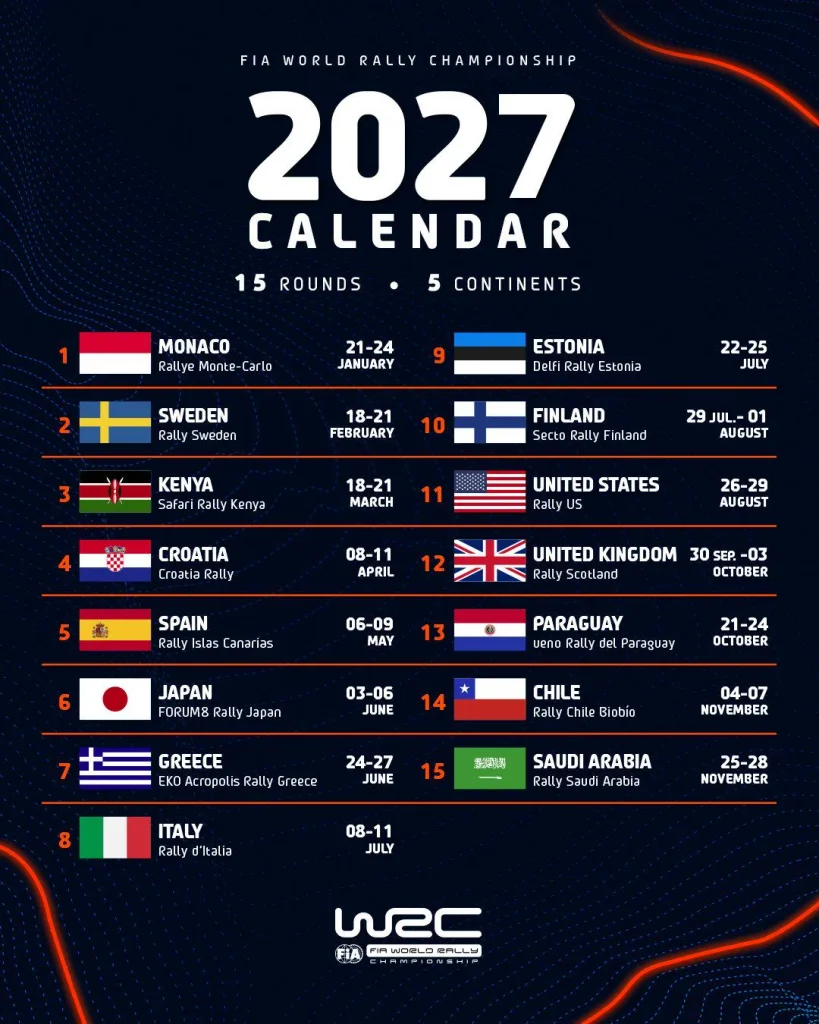
While Kansas City’s racing ambitions remain conceptual, the World Rally Championship’s return to the United States represents a more immediate development.
The championship is scheduled to race in America from August 26–29, 2027, ending a 39-year absence. The precise location remains uncertain, but Tennessee and Kentucky have emerged as the leading possibilities. Recent rally activity in the region has fueled speculation that the event could be based around Knoxville, with competitive stages potentially extending into Kentucky.
There has already been testing activity around Chattanooga and the Cherokee National Forest, while the broader region offers the kind of challenging roads and terrain associated with rally competition. The Overmountain Rally in Tennessee has also attracted attention in discussions about the proposed WRC event. Reports from the rally community indicate that FIA officials attended the Southern Ohio Forest Rally in June to observe how the American Rally Association conducts its events.
Officials reportedly surveyed potential stages and infrastructure in Tennessee and Kentucky the following week. Those details suggest that the American rally community could play an important role in making the international event possible. However, the extent of the American Rally Association’s involvement in the eventual WRC weekend remains unclear.
There is a distinction between experienced American rally personnel helping organize the event and an ARA national or regional competition being officially incorporated into the weekend. An immediate combined event should not be assumed. Some within the rally community believe that any formal integration of domestic championship competition might need to wait until the WRC event has established a successful operational foundation.
That would be a reasonable approach for an event returning after nearly four decades. Organizing a WRC round involves extensive logistical demands, particularly when competitive stages take place on public or forest roads rather than within a permanent racing facility. Safety, access, infrastructure, transportation, and coordination with local authorities all become central considerations.
Tennessee and Kentucky offer intriguing possibilities, but the eventual route will matter just as much as the location of the event headquarters.
Could the American WRC Event Conflict With IndyCar at Milwaukee?
The proposed August 26–29 dates introduce an unexpected scheduling question for IndyCar.
Based on the 2026 calendar, the WRC weekend could overlap with IndyCar’s Milwaukee event if the series maintains a similar schedule in 2027. No direct conflict should be considered confirmed until the relevant dates are finalized. Nevertheless, the potential overlap has already generated discussion among fans who follow multiple racing disciplines.
At first glance, the idea of a rally event in Tennessee or Kentucky competing with an IndyCar oval race in Wisconsin might seem insignificant. The two championships offer completely different forms of racing, and their primary audiences are not necessarily identical. Milwaukee attracts spectators interested in traditional American open-wheel competition, while the WRC would offer an opportunity to experience an international rally championship that has been absent from the United States for decades.
Geographically, the events would also be separated by hundreds of miles. But motorsports audiences are not always divided neatly by championship. Enthusiasts frequently follow IndyCar, Formula 1, NASCAR, IMSA, rallying, and other disciplines.
For fans willing to travel to major events, the choice could become more complicated. The WRC’s return carries a novelty factor that Milwaukee cannot easily replicate. An American IndyCar fan who has attended Milwaukee before might reasonably prioritize a WRC event simply because the opportunity has not existed domestically for 39 years.
Some fans have already indicated that they would abandon tentative Milwaukee plans if the events overlap. Others have pointed out that the number of spectators genuinely choosing between the two weekends is probably relatively small. Both perspectives have merit.
There is unlikely to be a massive overlap between the casual audiences of the two championships, but the most dedicated motorsports travelers may be precisely the group interested in attending both. For those fans, scheduling matters. There is also an argument that Milwaukee faces more significant local attendance competition from established Wisconsin sports attractions, including the Milwaukee Brewers.
A conflicting baseball home weekend could potentially affect the local audience more directly than a rally event several states away. Still, the WRC situation illustrates a broader challenge as the American motorsports calendar becomes increasingly crowded.
Every new international event creates another potential scheduling conflict, particularly during the late summer when multiple major championships are active.
American Rallying Has an Opportunity to Reach a Much Larger Audience
Beyond the scheduling debate, the WRC’s return could provide an important platform for rallying in the United States.
American rally competition already exists through the American Rally Association, with events taking place across different regions of the country. Yet awareness of the sport remains relatively limited compared with NASCAR, IndyCar, and Formula 1. Some American motorsports fans are unfamiliar with the domestic rally scene altogether.
That is an opportunity. The return of the WRC could introduce new spectators to rally competition while also directing attention toward existing American events. The American Rally Association already has recognizable competitors and connections to other forms of motorsports.
Travis Pastrana and Lia Block are among the names associated with the championship, demonstrating that the domestic scene has personalities capable of attracting interest beyond traditional rally audiences. Events such as the Southern Ohio Forest Rally and Lake Superior Rally also illustrate that competitive rallying already has an established American footprint. The challenge is expanding that audience.
Unlike a permanent circuit, where spectators can purchase tickets and watch racing from designated grandstands, rallying requires a different approach to event presentation and accessibility. Fans often travel between viewing areas, navigate rural locations, and plan around individual competitive stages. That experience can be incredibly rewarding, but it also creates barriers for newcomers.
A successful WRC event could help demonstrate how international rally competition can be presented to a broader American audience while maintaining the character that makes the discipline distinctive. The potential Tennessee and Kentucky location could be particularly appealing. The region offers challenging roads, dramatic landscapes, and access to motorsports fans across several southeastern states. Suggestions such as incorporating the famous Tail of the Dragon or creating a special stage near Neyland Stadium reflect the excitement surrounding the event, although neither should be mistaken for a confirmed part of the route.
The key will be balancing spectacle with the practical requirements of organizing a world championship rally.
Two Different Approaches to Growing Motorsports in America
The contrast between Kansas City’s proposed racetrack and the WRC’s planned return is revealing.
One is an ambitious redevelopment concept attempting to use the prestige of Formula 1 to attract investment and potentially establish a new motorsports facility. The other is an international championship planning a return to a country that already has an established domestic rally community and suitable terrain. Both involve opportunities for American motorsports, but they begin from very different positions.
Kansas City must first demonstrate that a racetrack makes financial sense, identify who would use it, and secure the investment necessary to build it. Only then would conversations about IndyCar, IMSA, or other championships become meaningful. The WRC, meanwhile, faces the more immediate challenge of successfully staging an event and building enough momentum to make its American return sustainable.
Neither opportunity should be evaluated solely through the lens of Formula 1. That is perhaps the most important takeaway. The United States does not need every new racing facility to host an F1 Grand Prix, nor does every major motorsports event need Formula 1’s international profile to be successful.
IndyCar has its own identity and audience. Rallying offers a completely different kind of competition. Sports car racing and motorcycle championships can provide additional opportunities for permanent facilities. A new circuit in Kansas City could potentially contribute to that ecosystem without ever hosting Formula 1. Likewise, the WRC could strengthen American motorsports without needing to compete directly with IndyCar for spectators.
But there is a difference between expanding the number of racing opportunities and creating events that can survive financially. Kansas City’s proposal will ultimately be judged by whether investors are willing to fund it and whether there is sufficient demand to sustain the development. The WRC’s American return will be judged by the quality of the event, the response from spectators, and whether the championship can establish a lasting presence.
For IndyCar, the immediate implications are relatively modest. Kansas City remains a hypothetical future venue, while the WRC’s return introduces a potential calendar conflict that may affect a small but enthusiastic group of motorsports fans. Yet together, these developments highlight something encouraging about the American racing landscape: Interest in bringing new motorsports experiences to different regions of the country extends well beyond Formula 1’s existing destinations. The challenge is turning that interest into viable, enduring events.
And for Kansas City in particular, the first step might be to stop asking whether Formula 1 would race there and start asking what kind of racetrack the region could realistically support.