

The Dutch Grand Prix weekend may ultimately be remembered as the point where the complexion of the 2026 Formula 1 season began to change.
Not because Mercedes suddenly stopped being the benchmark. Not because Ferrari finally delivered the breakthrough that has seemingly always been one upgrade away. And certainly not because the championship has suddenly become wide open. It is because McLaren — and particularly Lando Norris — now genuinely believes it can take the fight to Mercedes. George Russell believes it, too. After Zandvoort, Russell described McLaren as the team to beat, pointing toward precisely the conditions in which Norris has traditionally been strongest.
“I do believe that these high-degradation circuits really suit McLaren very well, and especially Lando. He’s always been a bit of a specialist in those conditions. We also saw it last year. Monza may be slightly different, but I think they are the team to beat right now.”
Norris, however, wasn’t particularly interested in accepting Mercedes’ attempt to install McLaren as the new favorite.
“They’re not going to say that they’re the team to beat if they just got beaten today,” Norris said. “I’m doing a better job than anyone.”
And then he went considerably further.
“If we can improve on the slow speed, I’m confident I can win every race this season.”
That is quite a statement.
The interesting part is that it doesn’t really sound ridiculous anymore.
Norris Sounds Like a World Champion Now
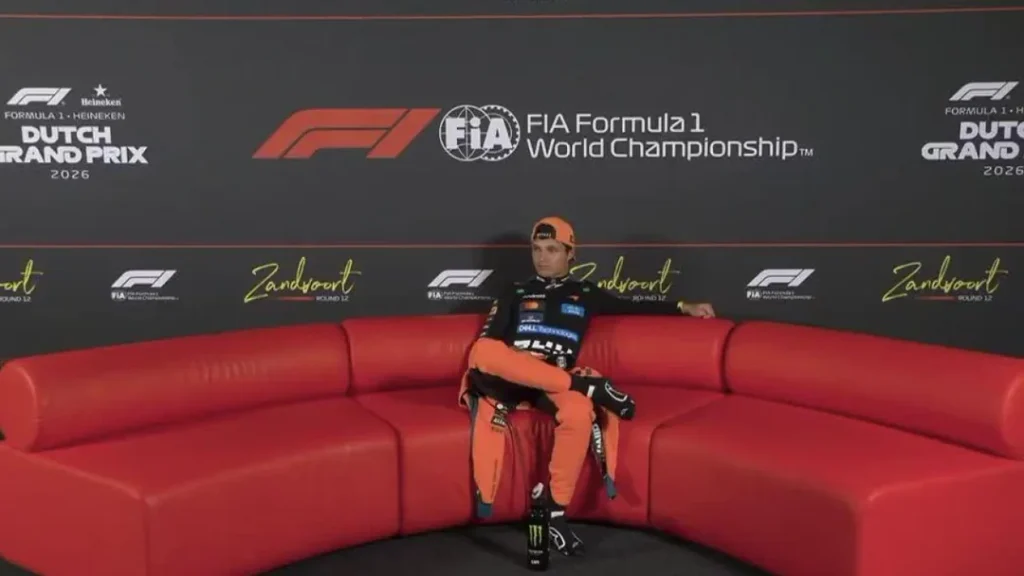
There has been a noticeable change in the way Norris’ comments are being received.
A year ago, a declaration that he could win every remaining race might have been immediately characterized as arrogance. Now, after winning the World Drivers’ Championship, it sounds much more like a driver who has finally acquired complete confidence in his own ability. Perhaps the championship hasn’t changed Norris as much as it has changed how everyone listens to him. Norris has always been unusually candid, including about his own shortcomings. That openness sometimes worked against him because every expression of doubt became evidence for people who already believed he lacked the mentality to become champion.
Now the exact same directness is producing very different headlines. When Norris says he’s doing a better job than anyone, he has a championship behind him. When he says he can win every race, we have recent evidence explaining why he thinks so. At Zandvoort, when the possibility of another Safety Car and another round of overtaking was discussed, Norris’ response was essentially that having to pass the cars again wasn’t a problem.
That confidence only works if the driver can subsequently deliver. He did. There is also a compelling argument that what we’re seeing now is the version of Norris that many of his peers always believed existed. He has been highly regarded within the paddock for years, even during periods when the wider discussion around him was considerably more skeptical. The championship didn’t suddenly make Norris fast.
It may simply have removed the final question he had to answer — both to himself and everyone else.
And Zandvoort Was Almost Perfect for Him
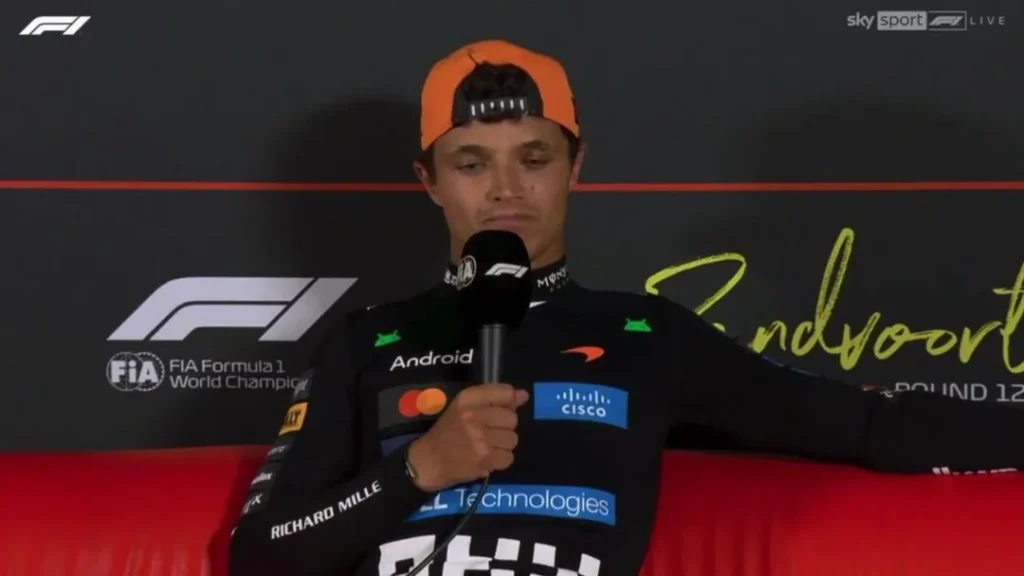
There is an important technical component to all of this.
Norris appears particularly dangerous when grip disappears and tire management becomes critical. Russell specifically highlighted high-degradation circuits, while Andrea Stella offered an even more direct assessment of Norris’ strength.
“No grip is when [Lando] expresses his best talent compared to other drivers,” Stella said. “The tires today were a little tricky, we saw with Antonelli, we saw with the second stint of Oscar […] but when Lando deals with slippery tires it’s his natural ground.”
That goes a long way toward explaining why Norris looked so formidable. It also helps explain why the McLaren threat can’t simply be extrapolated to every remaining circuit. Monza is the immediate test.
McLaren’s short gear ratios and straight-line limitations have been an ongoing concern, and Monza is hardly the place to hide either. The expectation should probably not be that Norris simply arrives in Italy and repeats what he did in the Netherlands. But he may not need to. Antonelli is expected to take a grid penalty after exceeding engine replacement components, meaning a podium and a finish ahead of the Mercedes championship leader could constitute an extremely successful damage-limitation weekend for Norris.
Then the picture could become considerably more interesting. McLaren is expected to have a new low-drag specification by Baku, which could potentially make tracks such as Baku and Las Vegas less damaging than they currently appear on paper. So when Russell says McLaren is the team to beat right now, he may simultaneously be correct and slightly overstating the situation.
McLaren appears capable of beating Mercedes. That doesn’t necessarily mean it can beat Mercedes everywhere.
And that distinction may decide the championship.
Mercedes Still Has the Best Position
The biggest problem for Norris is that Mercedes doesn’t need to panic.
Antonelli can afford races in which McLaren is faster because the Mercedes has so far been the more complete package across different circuit characteristics. If Ferrari can challenge at certain tracks and McLaren at others, Mercedes benefits enormously if neither can sustain that challenge. That is how championship leads become very difficult to erase. Even a poor weekend for Antonelli may still produce substantial points because of the enormous performance separation between the leading cars and much of the midfield.
Norris needs more than speed. He needs Mercedes to have problems. That could be reliability. It could be an incident. It could be a strategic mistake. But simply being a couple of tenths quicker at the tracks that suit McLaren may not be enough. The championship is not over, but Norris still needs some cooperation from circumstances outside his control.
What has changed is that Mercedes can no longer assume that cooperation won’t matter.
And Then There’s Ferrari
Ferrari remains the great unknown.
Once again, there is considerable optimism surrounding an upgrade, with attention now turning toward its expected Monza package and particularly the turbo. The theory is enticing: Ferrari already appears to possess an extremely capable chassis, and if its power-unit shortcomings can be addressed, the team could become considerably more dangerous. But we’ve heard variations of this before.
Ferrari has shown enough performance to remain part of the discussion, yet McLaren’s recent progress raises a different question: instead of wondering whether Ferrari can overhaul Mercedes, should Ferrari first be worried about whether it can consistently beat McLaren? The dream scenario for F1 is obvious. Mercedes, McLaren and Ferrari all operating at roughly equal performance would potentially create a four- or five-driver fight at the front. But Ferrari has to actually deliver the performance before we declare that reality. For now, McLaren’s improvement is tangible.
Ferrari’s next step remains a promise.
The Rain Teased Us — Then Did Exactly What F1 Rain Always Seems to Do
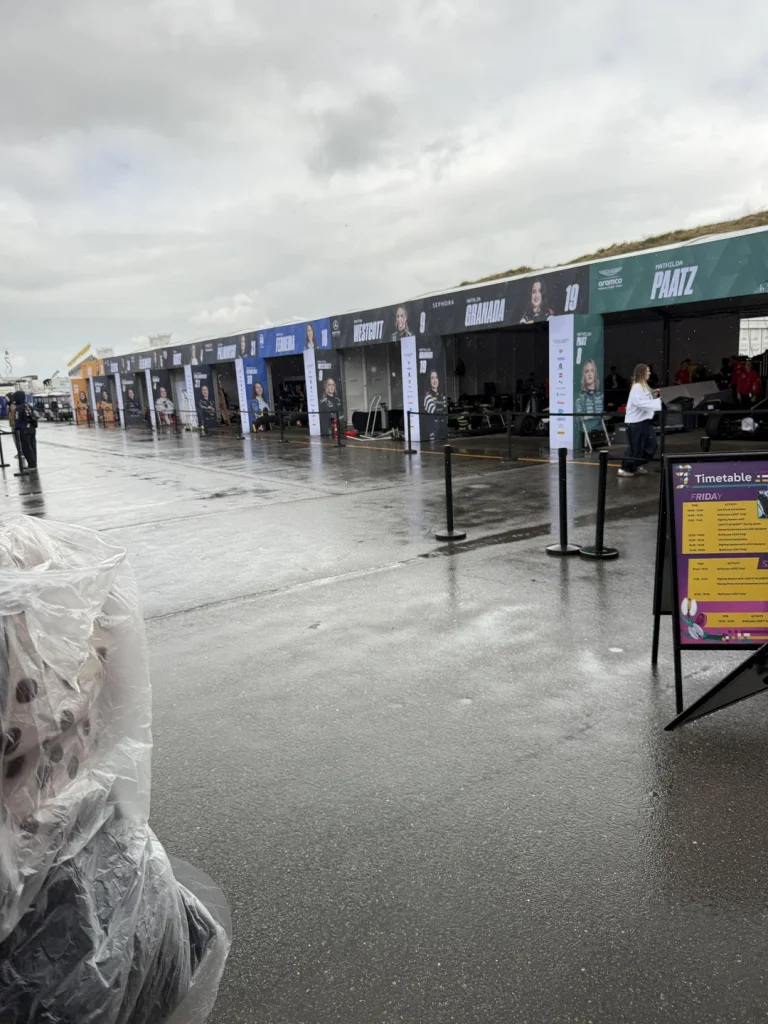
Before any of this happened, Zandvoort appeared ready to give us something even more chaotic.
It poured. Then it drizzled. Then it rained again.
Then it was dry. The minute-by-minute updates became almost comical as spectators watched the weather seemingly change every few minutes. There was genuine hope of changing conditions around the start and even dreams of something resembling the chaotic 2023 race. Naturally, the weather then largely failed to provide the wet-race spectacle everyone had started imagining.
It has become something of a running joke: rain arrives around an F1 weekend, everyone starts dreaming about a classic, and somehow the track is sufficiently dry by the time the racing actually matters. Perhaps that’s for the best given how apprehensive fans have become about wet starts anyway. The excitement of seeing rain is now mixed with the expectation of Safety Cars, delayed starts and waiting for conditions to improve.
Still, for a brief period before the race, Zandvoort’s weather was arguably the most entertaining live timing screen in Formula 1.
Sky’s Commentary Became Part of the Story
Unfortunately, the race itself produced another distraction: Sky’s commentary.
Harry Benjamin and Anthony Davidson had the unenviable task of filling the roles normally occupied by David Croft and Martin Brundle, and the reaction was not particularly kind. This wasn’t simply viewers complaining because their preferred commentators weren’t present. There were enough noticeable mistakes that the commentary itself became distracting. Charles Leclerc’s move on Oscar Piastri created one particularly strange sequence, with the commentary seemingly treating Piastri as though he had successfully defended while Leclerc was visibly driving away ahead.
There was confusion over pit-stop times, the number of laps remaining and even how much ground Liam Lawson could lose from his 10-second penalty despite having a huge advantage over the car behind. Piastri’s tire strategy was also incorrectly described, and the repeated reminders about Antonelli’s age became another irritation. The criticism of Benjamin is worth putting into context. Radio and television commentary require very different rhythms. Radio demands constant description because the listener can’t see what’s happening. On television, sometimes the commentator’s most important skill is knowing when the pictures can tell the story themselves.
Benjamin’s regular BBC radio role could help explain why he sometimes appears determined to inject energy into relatively routine moments. Croft makes mistakes too. Every live commentator does. But Croft and Brundle have developed a balance in which Croft provides the momentum while Brundle can bring technical context and calm things down. Zandvoort demonstrated how much that chemistry matters. Bernie Collins’ strategy contributions were arguably even more valuable than usual because the race featured different strategies and numerous stops that deserved considerably more explanation than they received.
Sometimes you don’t appreciate the regular commentary team until they’re gone.
Liam Lawson Did Exactly What Red Bull Needed
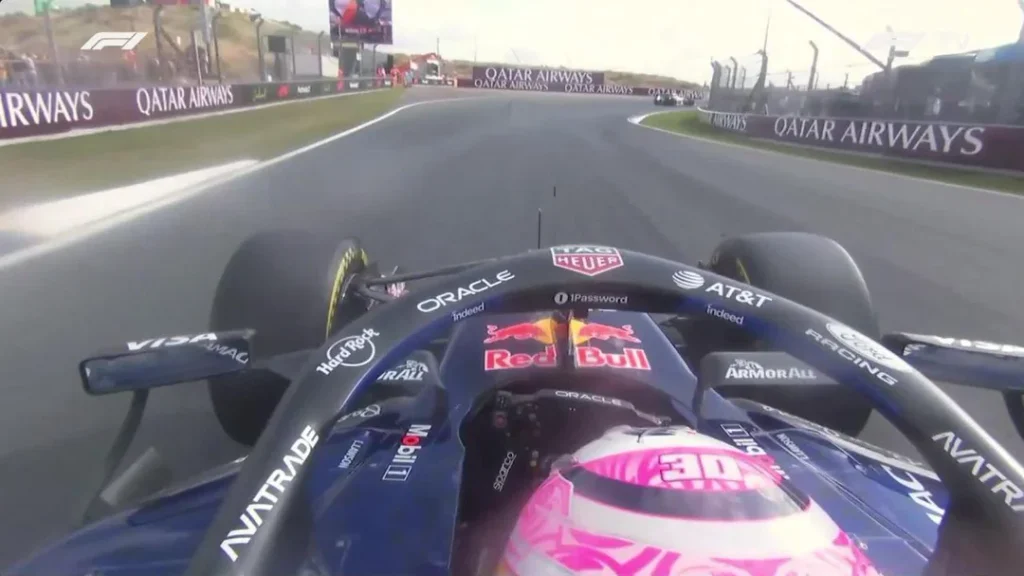
One of the more quietly impressive stories of the weekend came from Liam Lawson.
After Isack Hadjar’s wrist injury created the need for a substitute, Lawson returned to Red Bull and produced exactly the sort of weekend the team needed. His post-race message was simple:
“Thank you for the opportunity. It was good to drive this car.”
That feels like a fitting summary. Lawson wasn’t spectacular. He didn’t need to be. He brought the car home in seventh, stayed out of serious trouble and delivered a respectable result in circumstances where the six cars ahead appeared to occupy another performance tier.
The biggest unanswered question is how Lawson would have compared with Max Verstappen over a full race. Verstappen’s early crash removed the benchmark everyone naturally wanted. Lawson had qualified just behind him and was already around Verstappen during the opening stages, so seeing their respective race pace would have provided considerably more information about Lawson’s performance. Instead, we know only that Lawson finished the race while Verstappen did not.
For a substitute jumping into the car, that’s hardly a bad outcome. There was even a nice bit of attention to detail from Lawson’s engineer, who reminded him to use the Red Bull pit box when calling him in. It sounds trivial until you consider how deeply ingrained a driver’s normal routines become. Whether Lawson gets another opportunity at Monza depends on Hadjar’s recovery. And that recovery shouldn’t be rushed.
Wrist injuries are particularly concerning for racing drivers given the forces transmitted through the steering wheel. We’ve already seen how difficult returning quickly from such an injury can be. If Hadjar isn’t physically ready, another weekend for Lawson would make far more sense than forcing an accelerated comeback.
Sergio Pérez Is 23rd in a 22-Car Championship
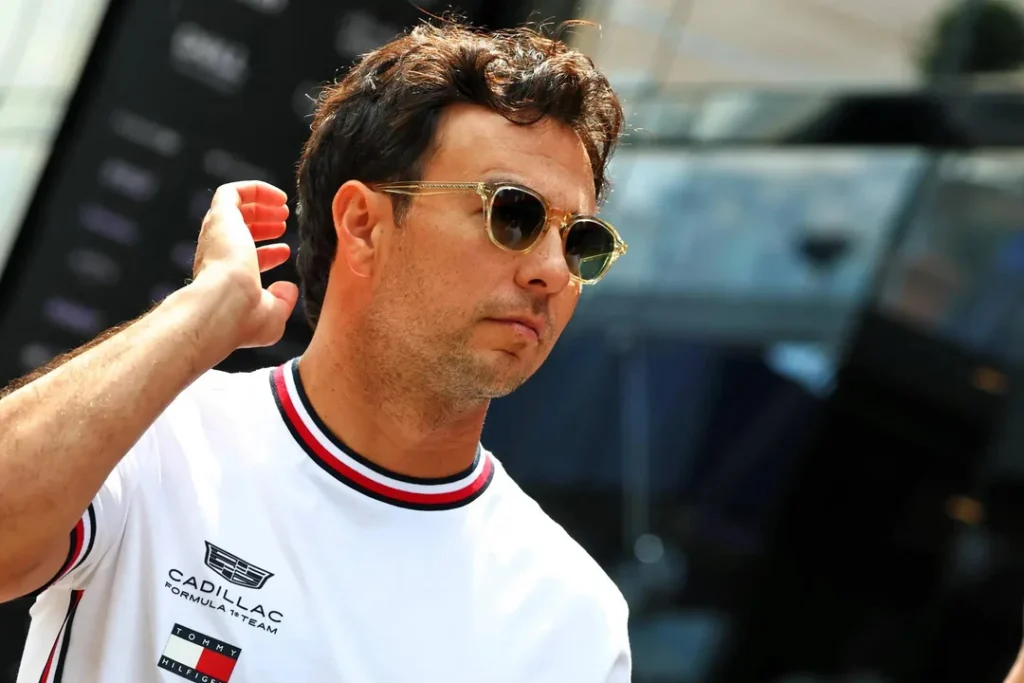
Meanwhile, Cadillac’s inaugural season has produced one of the stranger statistics of 2026.
Sergio Pérez currently sits 23rd in a championship featuring 22 cars. Congratulations to Checo on apparently leading Formula 2. The statistic is funny, but it also illustrates how difficult Cadillac’s first season has been.
Pérez’s best finishes have been P14 in Barcelona and Silverstone, while Valtteri Bottas’ P13 in China gives him the advantage when the standings are separated by countback. That doesn’t necessarily mean Bottas has been the better driver.
Quite the opposite argument can be made. Cadillac’s reliability has made meaningful comparisons extremely difficult. The team has had very few races in which both cars have simply functioned normally and reached the finish, making this season feel more like an extended development program than a conventional competition between teammates. Pérez also had an opportunity for points in Monaco severely compromised by penalties relating to the starting procedure. One incident was his own mistake; the other was attributed to a brake-related problem that allowed the car to creep.
That lost opportunity looked enormous at the time. Cadillac’s continuing struggles have made it somewhat less consequential. The broader point is that Pérez’s P23 is more embarrassing for Cadillac’s reliability than it is for Pérez himself. He hasn’t suddenly become the 23rd-best driver in a 22-car field. Although it is still an objectively hilarious line in the standings.
It also raises an interesting question about F1’s points structure. When teams at the back rarely score, championship positions can effectively be determined by one random P13 months earlier. A system awarding points deeper into the field would create meaningful season-long battles between teams and drivers who currently spend most Sundays racing for nothing tangible in the championship table.
Williams’ Happy Contract Extension Week Lasted About Five Minutes
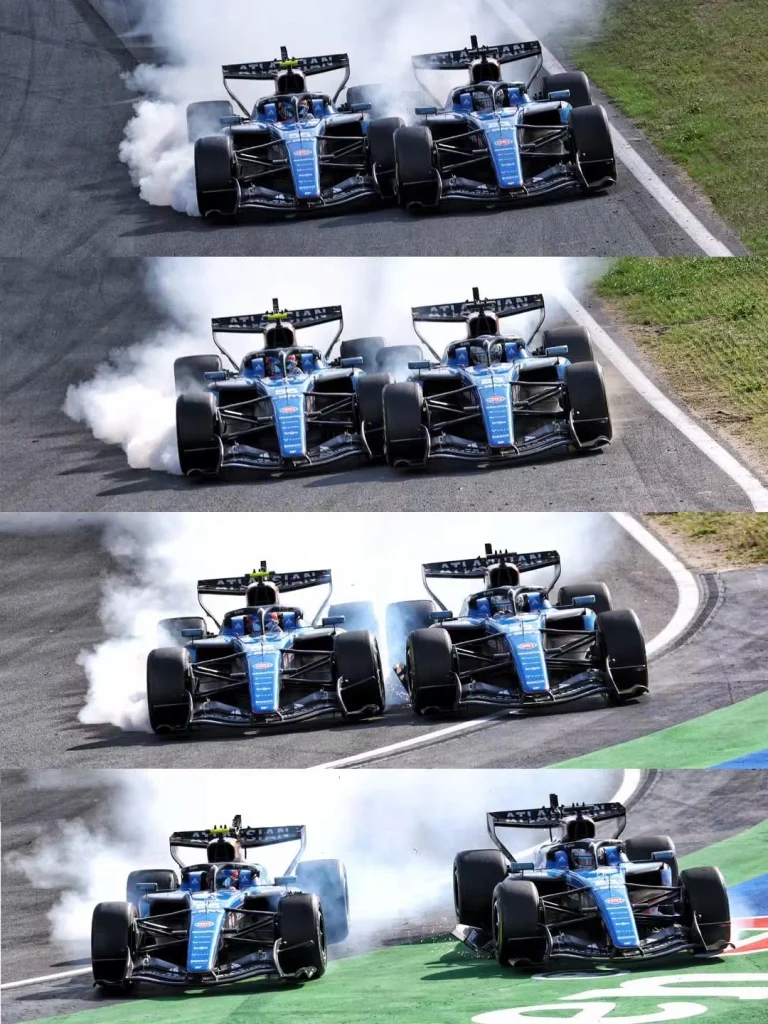
If Cadillac’s situation is unfortunate, Williams’ is self-inflicted.
Carlos Sainz and Alex Albon collided, leaving Albon with a DNF and Sainz with a 10-second penalty. Not exactly the celebration Williams presumably envisioned during contract-extension week. The incident itself was bad enough. The response from James Vowles created another conversation entirely.
Vowles’ communication with Sainz was remarkably reassuring, to the point where it sounded almost like Williams was apologizing to Sainz on a day when Sainz had just taken his teammate out of the race. There is a reasonable explanation for some of this. Berating a driver over the radio accomplishes very little. Once an incident has happened, the team’s immediate job is to get its driver mentally reset and extract whatever remains available from the race. But the optics were still extraordinary.
It fed an increasingly uncomfortable perception that Williams treats Sainz differently from Albon. And that’s particularly awkward because Albon has done an enormous amount for Williams during some very difficult seasons. Whatever value Sainz brings through his experience, profile, commercial appeal and podium finishes, Albon’s consistency and contribution to the team’s rebuilding process shouldn’t become background noise. Sainz has also had a rough couple of races, and this latest mistake only amplifies scrutiny around Williams’ commitment to him.
The funniest description of the apparent team dynamic may be the emergence of “Weeyums Wules” — the Williams equivalent of McLaren’s infamous Papaya Rules.
Williams probably won’t be putting that one on a T-shirt.
At Least the VIPs Were Eating Well… Sort Of
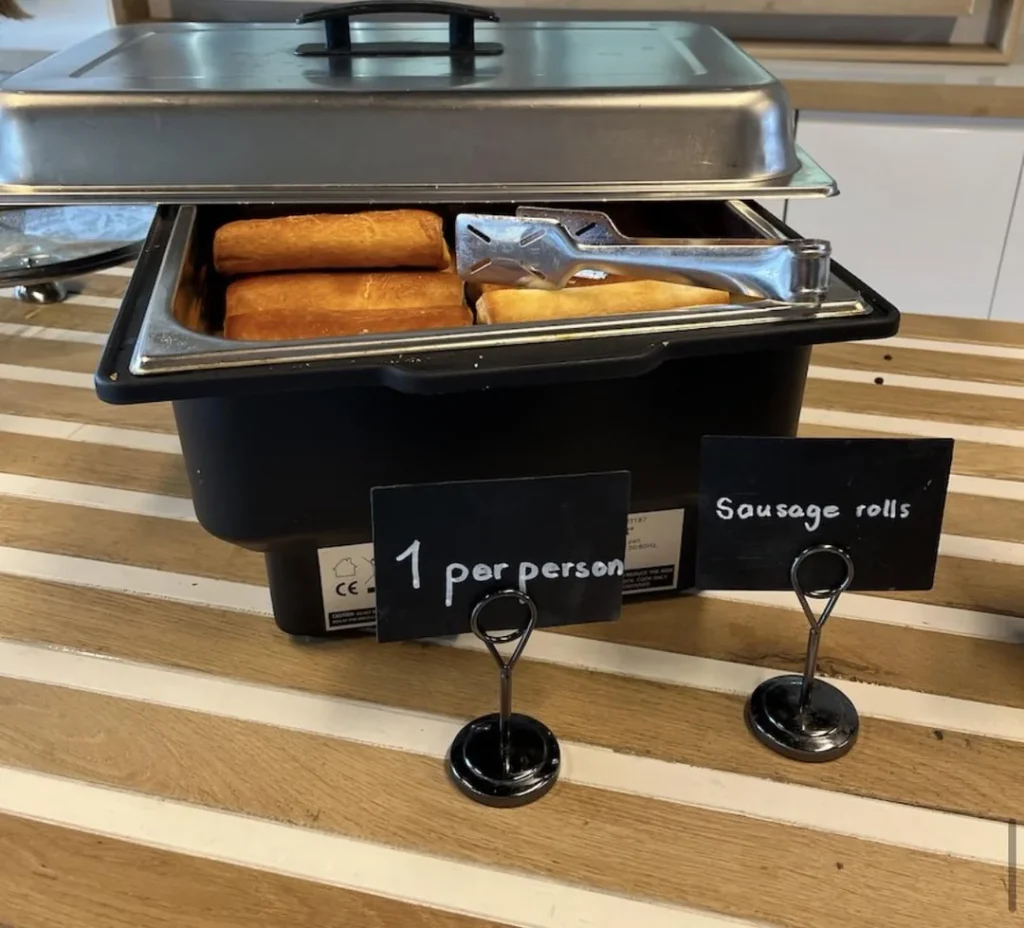
Away from the championship and team politics, Zandvoort also provided a glimpse into the glamorous world of F1 VIP hospitality.
Apparently that glamour can include a tray of sausage rolls with a one-per-person restriction. Nothing quite communicates exclusivity like spending an enormous amount of money to be told not to take a second sausage roll. The food itself prompted an entirely separate argument about Dutch cuisine, British cuisine, stroopwafels, bitterballen, pancakes and whether a Greggs sausage roll would have been preferable.
The fairest conclusion might be that mass-produced event catering is rarely the best ambassador for any country’s cuisine. But the one-per-person sign is magnificent. Formula 1 has perfected the art of making almost everything feel premium.
Sometimes, apparently, the second sausage roll is where they draw the line.
The Championship Suddenly Feels Less Comfortable
That brings us back to the biggest story coming out of Zandvoort.
Mercedes remains in control. Antonelli remains the driver everyone else has to catch. McLaren still has circuit-specific weaknesses. Ferrari remains capable of appearing terrifying on paper and much less terrifying when the race actually happens. But something has changed.
Norris isn’t talking like a driver hoping Mercedes comes back toward him. He’s talking like a driver who believes he can chase them down. Russell is openly calling McLaren the team to beat. Stella is describing low-grip conditions as Norris’ natural environment. McLaren’s development is beginning to unlock strengths that make its reigning champion increasingly dangerous.
Monza should provide a useful reality check. If McLaren struggles there, Zandvoort may simply have been a particularly favorable combination of car, circuit and driver. If Norris can minimize the damage at a track that should expose McLaren’s weaknesses — especially with Antonelli taking an engine-related grid penalty — the conversation changes again.
And if McLaren eventually solves its slow-speed weakness? Norris has already told us what he thinks happens next. He thinks he can win every race. A few months ago, that might have sounded absurd.
After Zandvoort, Mercedes would be wise to take him seriously.