

Will Power has been around American open-wheel racing long enough to know what a struggling series looks like.
That makes his assessment of IndyCar following the Freedom 250 Grand Prix of Washington, D.C. particularly significant.
“IndyCar is in the best shape it’s ever been since I’ve been in the series, and that’s 21 years,” Power said, according to Jeff Gluck.
Coming from Power, that isn’t the perspective of a driver who arrived during IndyCar’s current upswing. He was there for Champ Car. He has watched American open-wheel racing go through some genuinely bleak periods, through reunification and into the modern IndyCar era. And there is an argument that the Washington weekend provided a pretty good illustration of why Power feels the way he does.
The strange part is that one of the events that seemingly demonstrated IndyCar’s current potential may already be finished.
Doug Boles Says Washington Race Is Likely a One-Off
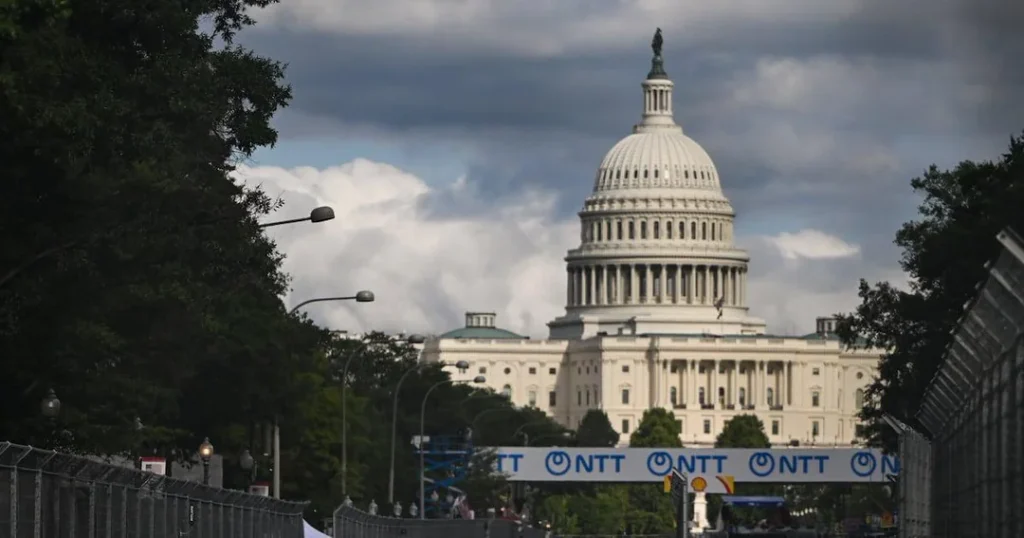
IndyCar president Doug Boles indicated that the Freedom 250 Grand Prix of Washington, D.C. is likely to be a one-off event.
That immediately raises an interesting question about exactly how literally “one-off” should be interpreted.
The Freedom 250 itself may have been built around a very specific moment, but that doesn’t necessarily answer whether Washington could eventually host IndyCar again under another name, on another course, or under a different arrangement. There are certainly reasons for IndyCar to explore the possibility. The weekend demonstrated that there is an audience for the series in and around the region. Fans at the event noticed a surprising number of people wearing legitimate IndyCar shirts and hats, with some believing the concentration of established fans was noticeably greater than what they remembered from Baltimore years ago.
Others traveled considerable distances to attend. Fans reported coming from the Midwest and East Coast, while one Boston-based attendee flew to Washington specifically for the race. More importantly, the event appears to have reached beyond people who were already committed IndyCar fans. One attendee who said they didn’t follow IndyCar but attended Saturday described the weekend as something special for a city that rarely gets racing. The curiosity in the crowd was noticeable, and despite acknowledging that the event wasn’t perfect, they came away hoping IndyCar would return.
Another fan attended with a group of people who had either never been to an IndyCar race or had barely watched the series on television. Eight people in the group bought flights and hotels to attend. Afterward, they wanted to go to Phoenix or Mid-Ohio next year. That is exactly the kind of conversion an ambitious showcase event is supposed to produce. There were even reports of substantial crowds gathering away from Washington to watch. One fan estimated roughly 500 people watched at Cosm in Atlanta, with plenty of IndyCar and Indianapolis 500 merchandise visible in the crowd. Another noted that the broadcast showed the crowd at Cosm Dallas.
A decade ago, the idea of hundreds of people gathering in an Atlanta venue to watch an IndyCar race in Washington might have seemed considerably harder to imagine.
Washington Exposed a Market IndyCar Still Needs to Serve
The debate over whether Washington qualifies as the Northeast or Mid-Atlantic isn’t especially important. The larger point is that IndyCar still has a significant part of the eastern United States without a nearby event.
Washington showed there are fans there. If Washington isn’t coming back, where does IndyCar go? New Hampshire Motor Speedway was repeatedly raised as an option, particularly with enthusiasm about what the current short-oval package could produce at Loudon. Pocono remains another obvious fan favorite, with some still viewing it as the eastern counterpart to Indianapolis. Richmond, Watkins Glen and Cleveland all entered the discussion as well.
There is history behind much of that frustration. Some fans still remember having tickets for the planned Boston street race that never happened. Others remembered the temporary return of Watkins Glen afterward and how much they enjoyed having it back on the calendar. Richmond carries its own lingering disappointment after its planned 2020 return was canceled. That leaves a considerable audience without an obvious home event.
Washington may not be the permanent answer, but it strengthened the argument that IndyCar should find one.
Washington Had Plenty That Would Need Fixing
A return also couldn’t simply mean recreating exactly what IndyCar just did.
The course itself received criticism, including from viewers who thought the race was relatively dull on television. The bumps were another prominent feature of the weekend. There is also room to improve the spectator experience. A revised layout could create more opportunities for grandstands and better viewing areas while ideally preserving the visual connection to Washington’s recognizable federal landmarks. Those concerns line up with what became apparent during the weekend itself. The event could look spectacular as a major showcase while still leaving room for significant improvement as a conventional race for paying spectators. Transportation, however, was one area where the location had an obvious advantage. Fans pointed to Washington’s Metro system and the accessibility of all six lines within roughly half a mile of the circuit as a reason a downtown race could function despite street closures.
Then there is the biggest obstacle: money.
Was the Freedom 250 Worth Its Cost?
The reported $35 million cost became a major part of the conversation surrounding the event.
That number naturally raises questions about whether spending that much on a single race is the best possible use of IndyCar’s resources. Even accepting that the Washington weekend was designed to accomplish something bigger than staging another ordinary round of the championship, $35 million could theoretically support multiple other events. The basic admission model also wasn’t designed around normal race economics. General admission tickets were distributed for free through a lottery. At the same time, there were indications of substantial commercial activity around the weekend. One figure attributed to Penske’s Bud Denker through Jeff Gluck said IndyCar sold $969,000 in merchandise on Saturday alone.
That doesn’t come remotely close to offsetting $35 million by itself, of course. But measuring the event purely through ticket and merchandise revenue may also miss its purpose. The more important question is what Washington produces afterward. Did potential sponsors see IndyCar differently? Did investors? Did prospective promoters? Did companies exposed to the hospitality operation decide there is more value in the series than they previously thought?
If Washington creates new commercial relationships and makes IndyCar more attractive to partners, its return could take forms that don’t appear on the event’s own balance sheet. There is also Fox’s growing role to consider. Fans increasingly see the partnership as part of a shift in how IndyCar presents and promotes itself. The network television deal, combined with a more ambitious approach toward certain events, is contributing to the sense that IndyCar is thinking less like a racing series simply filling dates and more like an entertainment property trying to create occasions people feel they need to see.
That may ultimately be Washington’s most valuable lesson.
Not Every Race Needs to Be the Indy 500 — But More Races Can Feel Important
For decades, IndyCar has possessed one event that exists on a completely different level from everything else it does.
Nothing is going to turn Long Beach, Arlington, Markham, St. Petersburg or Washington into the Indianapolis 500. That doesn’t mean the rest of the calendar should feel small. Washington demonstrated the potential value of investing enough into an event that even casual observers understand that something significant is happening. Arlington has offered another version of that concept that some fans see as more sustainable. Markham, St. Petersburg and Long Beach similarly help create a calendar where street races aren’t merely temporary circuits but destination events.
Detroit was singled out as one event that still has work to do compared with the spectacle being created elsewhere, although attendees defended the experience of actually being there and the added presence of IMSA. The broader lesson is that presentation matters. If Penske Entertainment can make races outside Indianapolis feel consequential, it potentially creates more entry points into the championship. Washington attracted people who weren’t already IndyCar fans. Some of them now want to attend another race.
That’s growth in its most useful form.
Consistency May Be Just as Important as Spectacle
Power’s optimism also comes at a time when fans see greater stability elsewhere.
The network television deal matters. So does demand for entries. So does having recognizable events return at generally predictable times of the year. The latter sounds mundane compared with staging an enormous race through Washington, but it could be just as important. IndyCar’s history is filled with events that struggled to build momentum while moving around the calendar. Auto Club’s return beginning in 2012 was cited as a prime example, with the race occurring in four different months over its four years back on the schedule.
Pocono faced similar concerns. Race weekends become traditions when people know when they’re happening. Families block off the weekend. Trips become annual routines. Fans don’t have to discover every winter that the event has moved into a part of the calendar where they already have longstanding commitments. Watkins Glen was raised as an example of the difficulty: Labor Day already carried deeply rooted plans for many people in the region. That makes the general consistency of the 2027 schedule encouraging. Aside from Barber moving from late April to early April, the beginning of the season largely maintains the timing fans have come to expect.
If IndyCar wants events to grow, giving them the opportunity to establish date equity may be one of the least glamorous but most important things it can do.
And Yes, Fans Still Want More Ovals
For all the enthusiasm surrounding Washington and IndyCar’s increasingly prominent street events, one request refuses to disappear: more ovals.
Pocono. New Hampshire. Richmond. Homestead. Michigan. The names change depending on who is making the argument, but the underlying point doesn’t. If IndyCar has demonstrated that it can successfully promote a major event in a city center, the next challenge is whether it can apply some of that promotional ambition to venues where its most dedicated fans already want to see the cars.
The problem is scale. An oval doesn’t need to attract Indianapolis numbers to succeed, but IndyCar needs enough overall audience growth that even a fraction of its fan base can produce a healthy crowd. A consistent date would help. So would making those races feel like genuine events rather than simply another television window.
Some fans would even prioritize another oval over international expansion.
How International Should IndyCar Become?
Power’s comments also reignited a familiar debate about what IndyCar ultimately wants to be.
There is enthusiasm for races in places such as Mexico, Brazil, Argentina, Australia and Japan. South America has particularly strong historical connections to American open-wheel racing through the drivers the continent has produced. But there is an equally strong argument that IndyCar doesn’t need to chase Formula 1’s identity. It is fundamentally a North American championship. Expanding internationally can be worthwhile when the demand and economics make sense, but there is little reason to stretch the series geographically simply for the sake of appearing global.
And before worrying about Brazil or Argentina, there is something slightly strange about having a huge population of fans on the eastern side of the United States asking where their race is. Washington just demonstrated that those people exist.
Solve that first.
Six Years Ago, IndyCar Looked Very Different
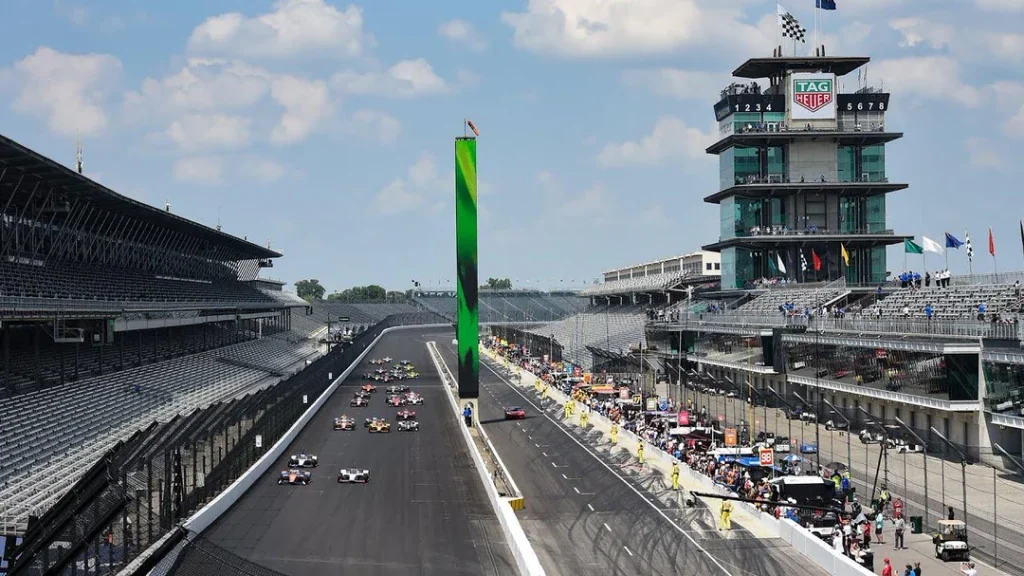
Perhaps the best context for Power’s statement came from another anniversary this week.
It has now been six years since the 2020 Indianapolis 500. That remains the only Indy 500 held outside the Month of May, an August race conducted without the enormous crowd that normally defines Indianapolis Motor Speedway. For some people, the memories are strangely fond despite the circumstances: televisions dragged into garages, small gatherings replacing the annual pilgrimage, and an incredibly unusual day of racing.
There is even a strange bit of folklore around the event. Fans still remember the person who arranged to have a platform built in a tree on property near the Speedway so he could see the race. The platform was reportedly temporary and removed afterward. There have also long been stories that he wasn’t alone in finding a way to see a supposedly spectator-free Indianapolis 500, with rumors that potentially dozens of people secretly made their way onto the grounds. The idea of eventually documenting the “secret history” of the 2020 Indy 500 remains fascinating precisely because so much about that day was unlike anything before or since.
On track, Takuma Sato earned his second Indianapolis 500 victory. In hindsight, there was something fortunate about a repeat winner taking that particular race. A first-time winner or enormous underdog capturing the 500 in front of empty grandstands would have been bittersweet. Had it instead been Hélio Castroneves earning his historic fourth victory that afternoon, the absence of spectators would have been even harder to reconcile with the significance of the moment. Scott Dixon came painfully close. Graham Rahal had a strong car and finished third. The race remains tangled up in memories of Spencer Pigot’s crash, although an AJ Foyt Racing engineer pushed back on the idea that the accident changed the outcome. For at least one fan, that bizarre 500 was actually the beginning of their IndyCar story. After returning to Formula 1 the previous year, they watched the virtual 500 during the motorsports shutdown because Lando Norris participated. That became their gateway into IndyCar.
Even in one of the strangest and most difficult periods American open-wheel racing has experienced, somebody new found the series.
From an Empty Indianapolis to a Packed Washington
The contrast six years later is remarkable.
In August 2020, IndyCar’s biggest race was taking place in an Indianapolis Motor Speedway without its defining crowd. In August 2026, people were flying across the country for a brand-new IndyCar race in Washington. Fans and newcomers packed the area around some of America’s most recognizable landmarks. Hundreds more gathered at viewing venues in cities far from the circuit. People who arrived having barely watched IndyCar left discussing which race they wanted to attend next. And a driver who has spent 21 years watching American open-wheel racing evolve says the series has never been healthier during his time in it.
That doesn’t mean IndyCar has solved everything. It still needs an answer for the East Coast. Fans still want more ovals. Washington’s economics are difficult to imagine repeating annually in their current form. The D.C. course and spectator experience could both be improved. There is debate over how aggressively the championship should pursue international races. And even an event that generated this much attention is apparently likely to disappear after a single running. But those are increasingly questions about how IndyCar should grow, rather than whether IndyCar can survive.
That distinction matters. There was a time when American open-wheel racing was defined by instability, fractured audiences, weak television exposure and uncertainty over what the championship was supposed to be. Power lived through enough of that history to understand the difference. The Freedom 250 may indeed have been a one-off. If so, its more important legacy could be showing IndyCar what is possible when the series treats a race outside Indianapolis like a genuinely major event.
The challenge now is figuring out how to do it again.