

IndyCar may be approaching the closing stages of the 2026 season, but there is no shortage of storylines developing away from the championship fight.
The first portion of the 2027 calendar has now been revealed, immediately creating questions about what still needs to be filled in. Scott Dixon, meanwhile, is running out of opportunities to preserve one of the most remarkable streaks in the series. Team Penske’s internal dynamic has once again become a subject of conversation, while Portland’s latest television audience has reopened the seemingly eternal debate over IndyCar scheduling.
And because no week in American motorsport would be complete without arguing over bathrooms, garages and concession stands, fans have also been debating which racing facility offers the roughest experience in the country.
IndyCar Reveals Phase One of Its 2027 Schedule
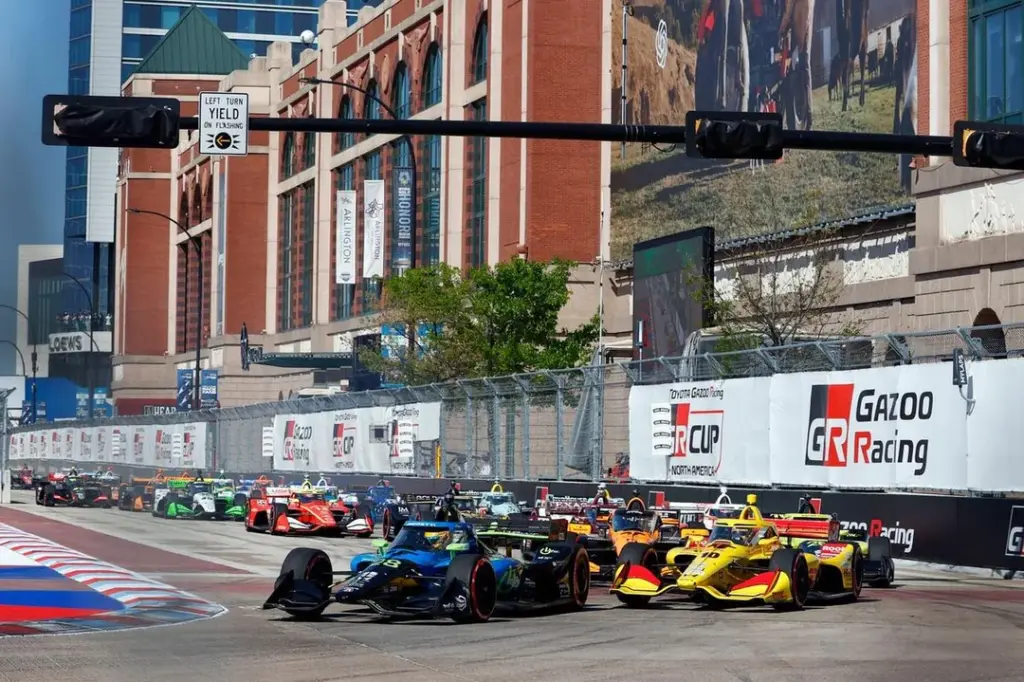
IndyCar has unveiled Phase One of its 2027 schedule, although the decision to release only part of the calendar immediately generated almost as much discussion as the races themselves.
There is something amusingly NASCAR-like about drip-feeding a schedule announcement rather than simply dropping the entire calendar at once. But there may be legitimate reasons why IndyCar is reluctant to commit to the remaining dates. One obvious factor is NASCAR. Avoiding direct clashes with NASCAR has become increasingly important, particularly when IndyCar television numbers appear vulnerable whenever the two series go head-to-head. If some of the remaining dates depend upon NASCAR’s own calendar, IndyCar may simply be waiting until it knows which weekends offer the best opportunity.
Washington D.C. could be another major piece of the puzzle. There appears to be considerable interest in seeing whether the D.C. event can become something more than a one-off, but it also makes sense that everyone involved would want to see how the first race actually goes before committing to another edition. If D.C. does not return, that does not necessarily mean another race in the region immediately takes its place. It could simply mean a shorter schedule.
Richmond inevitably entered the conversation as an alternative. The track had been scheduled to host IndyCar in 2020 before the pandemic disrupted the season, and the possibility of returning has remained an attractive idea for fans ever since. The obstacle is the same one that tends to follow nearly every potential IndyCar venue: financial viability. IndyCar is not operating in a world where willing, financially viable race promoters are routinely being turned away. Wanting another race and actually producing one that makes economic sense are very different things.
Still, Richmond in 2028 would solve multiple wishes at once for fans who want another oval and another event in that part of the country. Washington D.C. itself also creates some intriguing possibilities if it does become a recurring event. A race during cherry blossom season would provide an incredible visual backdrop, although anyone familiar with Washington’s cherry blossoms knows how unpredictable their peak bloom can be. A three-week swing in either direction makes scheduling an international sporting event around them considerably harder than simply picking a pretty weekend on the calendar. Unless, of course, IndyCar wants to borrow Augusta National’s groundskeeping team and start refrigerating cherry blossoms until race week.
We probably should not give them ideas.
The Early Schedule Looks Better — Except for That Gap
One of the biggest positives from the announced portion of the calendar is the prospect of three consecutive races to begin the season.
That is an enormous improvement over the stop-start rhythm IndyCar has often suffered through early in the year. Then comes the familiar problem. A month-long break.
It is remarkable that IndyCar has struggled with long early-season gaps for well over a decade and still seems unable to completely eliminate them. Momentum matters, especially for a championship trying to grow its audience. Asking casual viewers to remember that a series exists after disappearing for several weeks is rarely ideal. There are, however, competing priorities. The Indianapolis 500 deserves breathing room. Once May approaches, there is a strong argument for getting teams to Indianapolis early and allowing the biggest race on the calendar to dominate the conversation.
The reported May 4-5 Indianapolis open test complicates attempts to squeeze another race into the opening weekend of May as well. Texas Motor Speedway naturally emerged as one fantasy solution, with the idea of a Saturday-night IndyCar race before Sunday’s NASCAR Cup event sounding almost too perfect. Unfortunately, early May in North Texas also comes with the rather significant problem of storm season. Putting a major race there during that period creates a very real risk of weather disruption.
Kansas was mentioned as another possibility, while Brazil returning in a late-April slot would recreate a placement the race once held. There is also hope that the opening could eventually become useful for international expansion. Rather than locking in another domestic event immediately, leaving some flexibility could potentially allow IndyCar to insert an international race in 2028.
For now, however, the gap remains.
Phoenix, Milwaukee and the Rest of the Puzzle
Phoenix also generated excitement, particularly the possibility of another night race, although the realities of NASCAR’s schedule could again interfere.
If an Xfinity race occupies Saturday night, IndyCar would likely be pushed into an earlier window rather than becoming the evening attraction. Milwaukee’s placement has also inspired debate. Some would like to see the Mile moved to an early-June date. Others argue the current position closer to the State Fair makes considerably more sense because staffing, vendors and the broader event infrastructure are better positioned to support the race.
Moving Road America later into August or September might theoretically solve one scheduling issue, but IMSA and SRO already occupy significant space in that portion of the calendar. There is no obvious perfect answer. That may ultimately be the central theme of IndyCar scheduling. Fans can build incredible calendars on paper. Then television contracts, NASCAR weekends, track availability, promoter economics, weather, staffing and competing series enter the conversation.
Suddenly the perfect schedule becomes considerably less perfect. The good news is that the events already announced appear stable, and there is plenty to like about the opening portion of 2027.
The frustrating part is that IndyCar still has some familiar holes to fill.
Is Scott Dixon’s Winning Streak Finally About to End?
While IndyCar plans for 2027, Scott Dixon is confronting a much more immediate question.
Is this finally the year? Dixon has won at least one IndyCar race every season since 2005. That streak is now under serious threat.
The most alarming statistic may not even be the lack of victories. Dixon has finished outside the top ten in seven consecutive races. According to the historical comparison circulating around his season, it has been 12 years since Dixon even endured three consecutive races outside the top ten, and he has never previously gone more than five consecutive races outside the top ten during his IndyCar/CART career. That makes seven straight an extraordinary departure from what we normally expect.
Kyffin Simpson having more top-ten finishes than Dixon this season only makes the situation feel stranger. Simpson himself deserves some credit. Expectations for drivers perceived primarily through the lens of funding can be extremely low, but he has increasingly looked like someone capable of clearing that bar comfortably. A few seasons ago, the comparison might have been to the bottom of the grid. Now his performances are beginning to invite comparisons with considerably more established midfield drivers. For Dixon, however, pace is becoming difficult to ignore.
There is also speculation surrounding what his future could mean for his relationship with Chip Ganassi Racing and how much information might be shared if a move elsewhere is indeed approaching. Without direct confirmation, that remains speculation rather than something that should be treated as established fact. The results themselves require no speculation.
Seven races without a top ten is deeply unusual for Dixon.
But Betting Against Scott Dixon Is Still Dangerous
And yet.
This is Scott Dixon. If there were ever a driver capable of spending most of a season nowhere near victory and then somehow emerging from a bizarre strategy race holding the trophy, it would be him. That is practically the Scott Dixon experience.
He can spend 80 percent of a race sitting around 12th, quietly saving fuel while everyone forgets he exists, and then suddenly appear near the front like the motorsport version of Jason Voorhees. You thought you escaped. You did not.
Washington D.C. could provide exactly the type of race where Dixon’s particular collection of skills becomes dangerous. A long street race with significant opportunities for fuel and tire management sounds almost custom-built for the possibility of Dixon turning one fewer pit stop into something ridiculous. There are questions over how much simulator preparation could matter at a completely new venue, but if the race becomes strategic chaos, Dixon remains one of the last drivers anyone should confidently eliminate.
The current form says the streak ends. Two decades of Dixon history says betting against him remains a fool’s errand.
Both things can be true.
Something Has Clearly Changed at Team Penske
Dixon’s struggles are not the only driver-related storyline attracting attention.
The relationship between Scott McLaughlin and Josef Newgarden has once again become a topic of conversation following the Portland weekend. The two drivers were once publicly close enough to build the popular Bus Bros series around their friendship. That version of the relationship appears long gone.
At some point, Newgarden stopped participating in Bus Bros, deleted his social media presence and appeared to shift toward treating McLaughlin primarily as a teammate rather than a close friend. The precise reason remains unclear. And that distinction matters.
It is easy to build a neat narrative that one specific race, championship result or controversy destroyed their friendship. Reality is usually messier. There has been speculation that McLaughlin finishing ahead of Newgarden in the 2023 standings affected the relationship. There have also been suggestions that competitive incidents played a role. None of that establishes exactly what happened privately between them.
What is considerably easier to observe is that the dynamic has changed.
Newgarden Has Changed Too
Newgarden’s public personality has transformed over the past several seasons.
There was a period when IndyCar seemed positioned to make him one of its central personalities. He appeared in commercials, embraced fan-facing content and even had high-profile marketing opportunities connected with Tom Brady. The current Newgarden can feel almost like a different person. His media interactions have often become shorter and more transactional. When things go badly, there is a sense that he would rather complete his responsibilities and leave.
The push-to-pass controversy clearly sits somewhere in that timeline. McLaughlin and Will Power largely took an approach of acknowledging what happened and moving forward. Newgarden instead held a press conference explaining that he believed push-to-pass was permitted on restarts, an explanation that extended the controversy rather than containing it. That resulted in significantly more criticism.
Whether that experience actually changed Newgarden is impossible to know from the outside. But his increasingly insulated public persona has certainly made it easier for people to connect the two. There is also the human reality that Newgarden has a family, has accomplished enormous things in IndyCar and has little obligation to maintain the same public persona forever. A driver can become less interested in entertaining everyone without necessarily being unhappy or preparing to retire.
His injury may also have affected his demeanor during the most recent weekend. Observers in Portland noticed that he appeared to be limiting how much weight he placed on his foot and keeping interactions relatively short. But similar behavior existed before the injury. At Iowa last year, for example, the difference between Newgarden after a strong session and Newgarden after a disappointing result was striking. Pole position could produce a cheerful, extended interview. A second-place finish generated a far more abrupt response.
Another memorable moment came after the second Iowa race, when Newgarden finished tenth and continued walking through the parking lot even as Power attempted to speak with him. Again, none of that tells us what happens privately.
But it does help explain why the perception exists.
David Malukas Has Changed the Penske Dynamic
One of the most interesting aspects of the Portland weekend was McLaughlin speaking positively about having David Malukas as a teammate.
Malukas appears to have brought a noticeably different energy into the Penske environment. That has naturally been interpreted as a contrast with the previous dynamic surrounding McLaughlin, Newgarden and Power. Perhaps that is reading too much into it.
Power’s situation, for example, is very different. He has family responsibilities and his wife’s medical issues have understandably affected how much time and energy he might devote to hanging around teammates away from the track. Power and Newgarden have also continued to interact socially, including talking to one another during the Nashville rain delay. The larger question is whether Penske actually needs its drivers to be friends.
Probably not. Formula racing history is filled with teammates who barely tolerated one another and still produced championships. The problem becomes more interesting when neither side is dominating.
If sacrificing friendship for hyper-competitive professionalism led to Newgarden and McLaughlin fighting each other for championships every season, nobody would care. Instead, the relationship appears colder while Penske itself has struggled to consistently challenge at the very front. That is what makes the situation feel unusual.
The Bus Bros disappeared. The friendship seemingly disappeared.
The championships did not arrive in exchange.
Portland Draws 677,000 Viewers
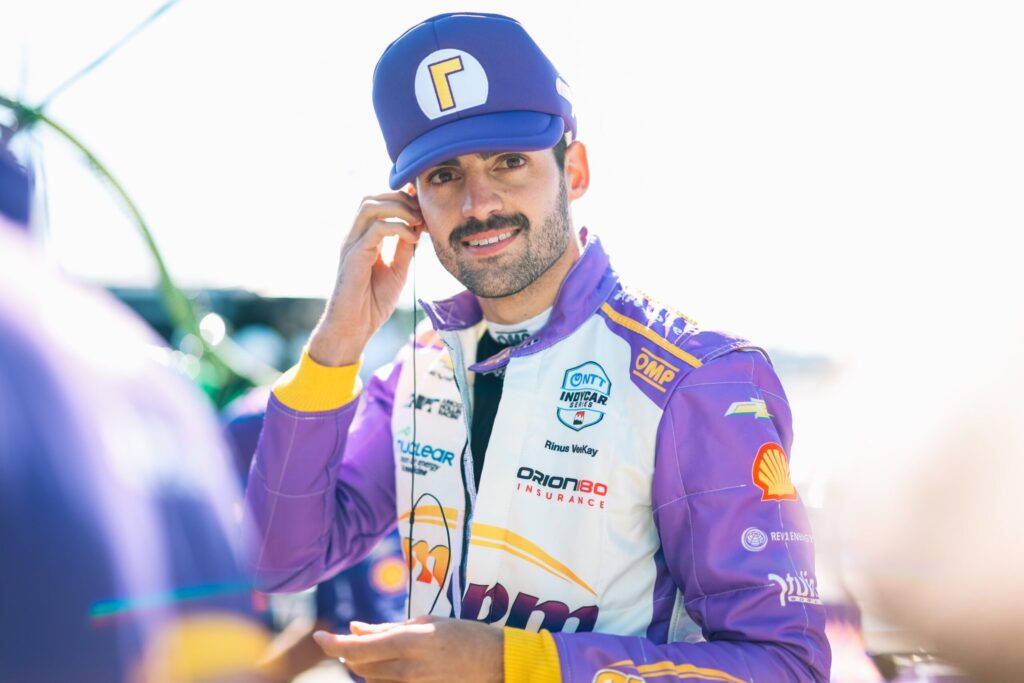
IndyCar’s OnlyBulls Grand Prix of Portland averaged 677,000 viewers on FOX, down four percent from last year’s race.
Cue the traditional declaration that IndyCar is dead. Again. It is not difficult to understand why the number disappointed people. Drawing 677,000 viewers on network television is hardly an obvious victory.
But the surrounding circumstances matter. Portland went directly against NASCAR Cup. That should immediately become one of the central lessons for IndyCar’s 2027 scheduling.
There is a finite pool of American motorsport viewers. IndyCar does not gain much by voluntarily asking them to choose between itself and NASCAR. The West Coast location seemingly offered another possibility. A 4 p.m. local start would have translated to 7 p.m. Eastern and avoided at least some of the NASCAR conflict. There are logistical reasons why an earlier race can be attractive. Teams needed to tear down and begin traveling toward Markham, and additional hours matter when moving an entire racing operation across the continent.
Television scheduling may have mattered even more. FOX’s Sunday-night entertainment inventory has value of its own, and those advertising slots are planned and sold long in advance. From the network’s perspective, keeping regular entertainment programming intact may have made more economic sense than pushing IndyCar into prime time simply to avoid NASCAR. If anything, an earlier Portland start might have provided another option by attempting to capture viewers before NASCAR began.
Whatever the solution, intentionally racing NASCAR head-to-head should probably be avoided whenever possible.
Lead-Ins Cannot Save IndyCar Forever
The race also followed LIV Golf, which became another target after the ratings were released.
A strong lead-in absolutely helps television audiences. But IndyCar cannot build its long-term strategy around hoping the preceding television program delivers hundreds of thousands of accidental viewers. Eventually, people have to turn on the race because they want to watch IndyCar.
That does not mean lead-ins are irrelevant. For a series attempting to rebuild and expand its audience, every advantage matters. But they are an accelerant, not the engine. Portland also entered the weekend with several additional problems.
There had been a three-week break, and for some viewers the gap felt even longer after Nashville’s Sunday race disruption. There was little championship drama. And the weekend itself did not exactly deliver a mystery.
Álex Palou’s dominance has been extraordinary, but domination has consequences for television storytelling. When one driver controls the season and the championship chase offers little suspense, it removes one of the easiest reasons for casual viewers to keep checking in. Portland therefore combined a NASCAR conflict, a weak lead-in, a lengthy break and limited championship suspense.
A four-percent year-over-year decline suddenly becomes considerably less mysterious.
Portland Is Becoming a Convenient Punching Bag
The ratings conversation quickly became another referendum on Portland itself.
That feels somewhat unfair. Road and street course racing has produced plenty of processional events in the current era. Portland is hardly uniquely responsible for that problem. Yet certain venues become easy targets.
Sparse-looking grandstands, limited television aesthetics and aging infrastructure can make Portland appear worse on screen than an equally uneventful race held against a more glamorous city backdrop. That does not mean there are no legitimate criticisms. In fact, Portland’s facilities came up again almost immediately in a completely separate debate.
And somehow that conversation was even less flattering.
So…Which American Racetrack Has the Worst Facilities?
Ask motorsport fans to name the worst racetrack facilities in America and one name appears with alarming regularity:
Mid-Ohio. The affection for the circuit itself is obvious. The facilities? Less so.
“Medieval” might be the best description.
Stories range from outdated garages and deteriorating structures to restroom facilities that seem preserved from another geological era. Until only a few years ago, fans were still regularly encountering trough-style bathrooms. One particularly unfortunate visitor reported finding a portable toilet completely filled. We will spare everyone the details.
“Poo Jenga” is probably already more description than anyone needed.
Mid-Ohio’s garages drew particular criticism. For a major American racing facility hosting a national championship in 2026, portions of the paddock infrastructure can look like something that would already have been considered old-fashioned in the 1990s. One fan even recalled finding a staircase leading toward a viewing deck with portions apparently rotted out. This is especially striking because Mid-Ohio remains beloved. Fans are not demanding that the track disappear.
They are asking for investment precisely because they want to continue attending.
Portland Somehow Makes Mid-Ohio Look Luxurious
Then there is Portland.
The recurring joke is that everything said about Mid-Ohio’s facilities also applies to Portland — except worse. At least Mid-Ohio has garages. Portland can respond:
You guys have garages? The venue’s limitations become particularly noticeable for fans who need food or amenities outside the main entrance area. Portland does have concessions and food trucks, but depending upon where someone is sitting, getting anything can mean walking a substantial portion of the front straight in August heat. There is an uncomfortable economic reality behind that situation.
Portland has other major sporting infrastructure competing for public and private investment, including the Moda Center. Spending large sums upgrading Portland International Raceway is difficult to justify if the expected return from racing audiences does not support it. That is not satisfying for fans.
But it is understandable.
Road America Shows What Investment Can Produce
The contrast with Road America could hardly be stronger.
Where Mid-Ohio and Portland generate complaints about deteriorating infrastructure, Road America is repeatedly praised for its facilities, staff and overall spectator experience. According to information shared in the discussion, Road America has invested approximately $35 million in capital improvements over the past decade. It shows.
The track has become the type of place where attending the event becomes part of the attraction rather than simply the price fans pay to watch the racing. There are good facilities. Friendly staff.
Walking trails through the woods. And apparently a double brat sandwich important enough to become its own subplot. At this point, the Road America food review may have generated more passion than half the championship.
Double brat. Corn on the cob from the Lions Club. Motorsport paradise.
Not everyone agreed on the brat quality, naturally. This is racing fandom. We cannot even achieve consensus over sausage. But the larger point remains.
Continuous investment matters.
How Did Some Tracks Fall So Far Behind?
There is also historical context behind why several classic American road courses have struggled to modernize.
Thirty years ago, the American motorsport landscape looked completely different. Open-wheel racing entered a split that lasted more than a decade. Sports car racing experienced its own prolonged fragmentation.
American superbike racing declined dramatically before MotoAmerica emerged as its replacement. For tracks dependent upon major national racing series to drive attendance, those years created enormous uncertainty. It is easy in retrospect to say every facility should simply have spent millions modernizing throughout the 2000s and 2010s.
It is harder when the championships supplying your major events are themselves unstable. If attendance is falling and nobody knows what the motorsport landscape will look like five years later, enormous capital expenditures become difficult to justify. That helps explain the history.
It does not necessarily excuse the present. Mid-Ohio has hosted IndyCar again for nearly two decades since reunification and continues to attract substantial crowds. The argument that there has simply never been an opportunity to improve the facilities becomes harder to defend with every passing year.
At some point, maintenance stops being optional.
Even Indianapolis Has Its Old-School Quirks
Of course, anyone criticizing Mid-Ohio’s troughs should remember that Indianapolis Motor Speedway has some of its own.
Fans who have attended the Indianapolis 500 for decades remember considerably rougher conditions, including a period when some infield restrooms had dirt floors. Graham Hill reportedly considered getting doors installed on the stalls one of his greatest IMS accomplishments. Even today, some sections maintain extremely old-school restroom arrangements.
Yet the trough has defenders. At an event the size of the Indianapolis 500, efficiency matters. Thousands of people being able to move quickly through restroom facilities without enormous lines is not a trivial advantage. There is apparently a philosophical divide in American motorsport.
Some demand privacy. Others want maximum throughput.
The Indianapolis 500 continues regardless.
The Truly Worst Tracks Are Probably Ones Nobody Knows
There is also an important technicality in any conversation about America’s “worst” racing facility.
The answer probably is not Mid-Ohio. It is probably not Portland. It is almost certainly some tiny dirt oval most people have never heard of.
Hilo Dirt Track in Hawaii was offered as one example, with its isolated geography naturally limiting car counts and development possibilities. Big B Speedway may be even closer to the literal interpretation of minimum facilities: essentially a small oval carved into the landscape with little surrounding infrastructure. Then there are rural dirt tracks with questionable bleachers, unpleasant bathrooms and minimal concessions. Ice racing takes minimalism even further.
At some winter events, the “facility” is effectively a frozen lake.
No grandstand. No scoreboard. No announcer.
Possibly no bathroom. Just people standing next to frozen water watching inexpensive cars slide around. But those tracks are operating in an entirely different universe than an IndyCar venue. When fans criticize Mid-Ohio or Portland, they are judging them against what should reasonably be expected from facilities hosting one of America’s premier racing championships.
By that standard, the complaints become much harder to dismiss.
IndyCar Has Plenty to Figure Out Before 2027
Taken together, this week’s conversations reveal a championship confronting several very different versions of the same problem.
IndyCar wants to grow. That requires a schedule capable of maintaining momentum. It requires television windows that do not unnecessarily surrender viewers to NASCAR.
It requires venues that fans actually enjoy attending. It requires compelling personalities and rivalries. And it requires enough competitive uncertainty that viewers feel like they need to watch the next race.
There are promising signs. Three consecutive races to start 2027 would be progress. Stable events are valuable.
Potential expansion opportunities remain. David Malukas has injected new energy into Penske. Kyffin Simpson is outperforming expectations.
And somewhere, somehow, Scott Dixon is probably saving enough fuel to ruin everybody’s prediction that his winning streak is finished. But there are also familiar challenges. That month-long hole remains.
Portland’s television audience was soft. Some of America’s most beloved circuits desperately need investment. And one of IndyCar’s most entertaining friendships has apparently been replaced by two coworkers who would rather get on with their respective jobs.
IndyCar is not dead. Despite what the internet announces approximately once every seven days. But as 2026 winds down and the first pieces of 2027 begin falling into place, the series has a genuine opportunity to solve some recurring problems rather than simply carrying them into another season.
And maybe somebody can buy Mid-Ohio a new bathroom while we’re at it.