

IndyCar may be between race weekends, but there has been no shortage of storylines.
Christian Lundgaard’s remarkable opening-lap charge has only added fuel to questions surrounding Arrow McLaren’s decision to move on from him. Will Power’s Portland race was compromised by an unfortunately timed radio transmission and an encounter with Sting Ray Robb. Scott McLaughlin is increasingly facing questions about whether his Team Penske seat could eventually come under pressure. Meanwhile, the upcoming Freedom 250 Grand Prix in Washington is apparently going to be disruptive enough that the FAA plans to temporarily halt operations at Reagan National Airport. And if all of that wasn’t unusual enough, you can now apparently wear part of Alex Palou’s 2025 Indianapolis 500-winning car on your wrist.
It has been a strange few days in IndyCar.
Washington’s IndyCar Race Will Temporarily Stop Flights at Reagan National
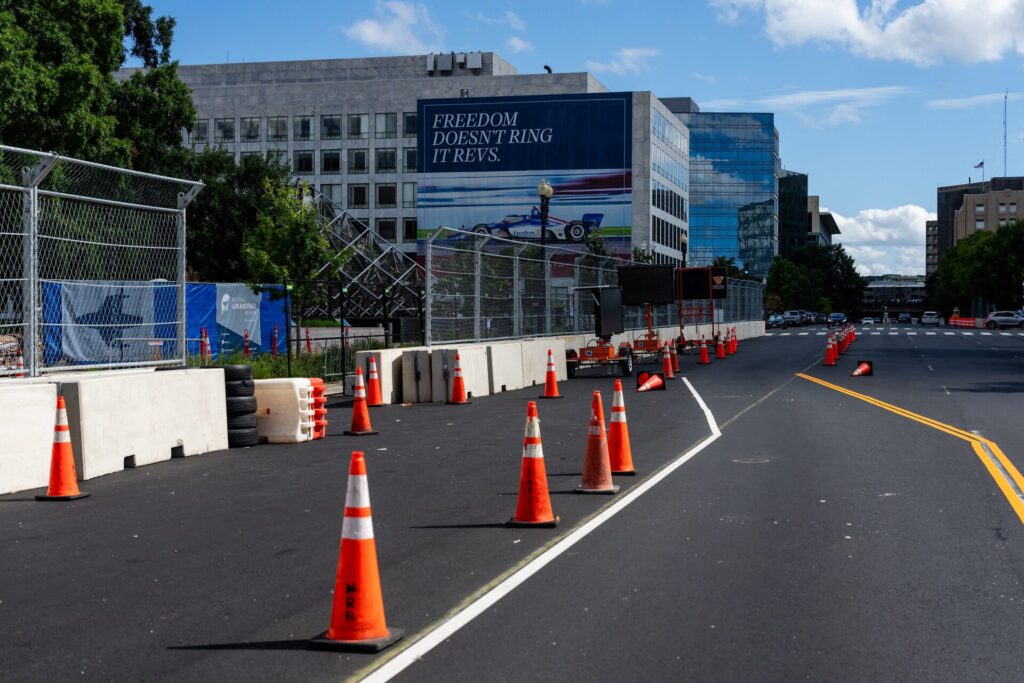
The upcoming Freedom 250 Grand Prix was already going to be one of the most unusual races IndyCar has staged.
Now it is affecting air travel. The U.S. Federal Aviation Administration expects to temporarily pause flight operations at Washington’s Reagan National Airport from 10:15 a.m. until 1:15 p.m. on August 23 in support of the Freedom 250 Grand Prix. That is a three-hour interruption at one of the airports serving the nation’s capital.
Perhaps even stranger is the timing. The race itself is scheduled to begin at 1:10 p.m., meaning most of the closure occurs before the green flag. The interruption instead overlaps IndyCar’s warm-up and pre-race activities. That immediately raises the obvious question: why does an automobile race require an airport to stop operating?
There are several possible logistical reasons surrounding a major motorsport event. Race broadcasts can involve helicopters and drones, communications can require airborne infrastructure, and medical operations need protected access to the surrounding airspace. But with the shutdown scheduled largely before the race, attention has naturally shifted toward whatever is planned for the pre-race show. Reports surrounding the event indicate multiple flyovers could be part of the festivities, with additional speculation surrounding other ceremonial activity before the race begins.
Whatever the exact reason, the disruption has created another layer of controversy around an event that was already going to be unlike anything else on the IndyCar calendar. For Washington-area travelers, the bigger issue is simply reliability. Reagan National is incredibly convenient for people traveling into Washington, but its location also places it inside extraordinarily complicated airspace. The Freedom 250 adds another temporary restriction to an airport that can already be affected by security requirements, weather and the broader complexities of operating so close to the center of government.
That has naturally revived the eternal Washington airport argument. Reagan National offers convenience. Dulles offers considerably more breathing room. BWI provides another alternative, although transportation into Washington is less straightforward than simply stepping onto the Metro system from Reagan or Dulles. For travelers departing Reagan on August 23, however, airport preference suddenly becomes much less theoretical.
A scheduled departure shortly before 10:15 a.m. could become an uncomfortable game of whether the aircraft reaches the runway before operations pause. Airlines will presumably account for the planned restriction, but a three-hour interruption in the middle of the day also creates the possibility of delays cascading well beyond the actual closure period. It is yet another reminder that the Freedom 250 is not merely going to put IndyCars on the streets of Washington.
For at least three hours, it is apparently going to reshape how people enter and leave the city as well.
Christian Lundgaard’s Portland Start Looked Like an Audition for the No. 9
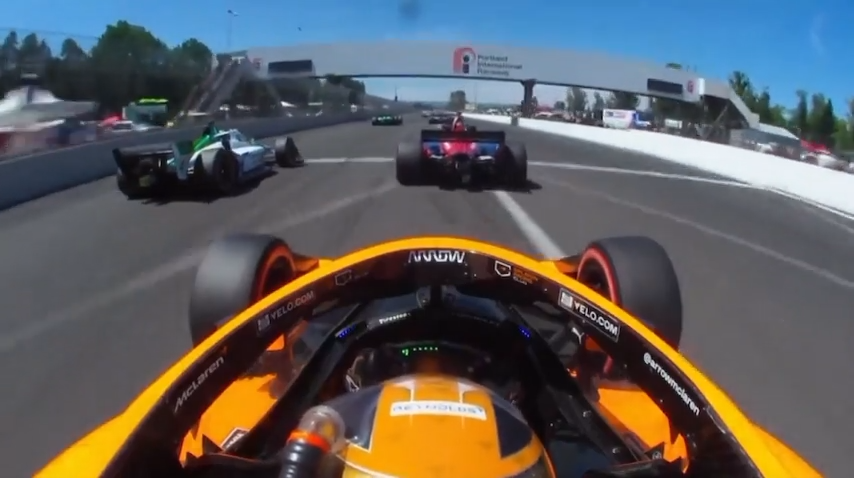
If Christian Lundgaard wanted to make the case that another top IndyCar team should immediately give him a seat, his opening stint at Portland certainly helped.
Full onboard footage from Lundgaard’s race showed him gaining ten positions at the start, repeatedly sending the McLaren deep under braking and finding openings that were far less obvious from the television broadcast. Some of the moves into Turn 1 were particularly aggressive. Lundgaard was simply out-braking people.
The alternate tires helped. Several of Lundgaard’s early passes came against competitors running the harder black tire, giving him a significant advantage while the reds were at their strongest. But tire advantage alone does not explain everything. Plenty of drivers have better tires without carving through traffic like that.
Lundgaard still had to identify the openings, position the car and commit to the moves. The onboard footage makes his progression look considerably more dramatic than it appeared during the broadcast. At one stage, chaos between Pato O’Ward and Nolan Siegel unfolded ahead of him and Lundgaard simply drove past both of his Arrow McLaren teammates. It almost looked symbolic.
Arrow McLaren has already decided that Lundgaard will not be part of its future, yet he spent Portland charging through the field and eventually finishing ahead of both of the drivers around whom the team is moving forward. That has only intensified speculation surrounding Chip Ganassi Racing’s No. 9 car. Lundgaard has increasingly been linked with the seat, and the possibility makes plenty of sense from a competitive standpoint. At 25 years old, he would give Ganassi another driver entering what should theoretically be the strongest portion of his career.
There is also the increasingly difficult question of who else deserves that opportunity. Rinus VeeKay continues to produce performances that suggest he deserves an opportunity in better equipment. His name has repeatedly entered conversations surrounding top seats precisely because he has spent so much of his IndyCar career extracting strong results from cars that are rarely considered among the series’ best. That creates an intriguing dilemma. If Ganassi is choosing between Lundgaard and another young driver who has consistently elevated lesser equipment, there may not be an obviously bad answer.
But Lundgaard is doing everything possible to make the decision easy.
The Oval Question Has Not Gone Away
There is still one obvious concern surrounding Lundgaard.
His road- and street-course ability has never really been the issue. His oval performance has. Yet even that deserves additional context.
Lundgaard spent part of his career racing RLL cars during a period in which the team struggled considerably on ovals. Arrow McLaren has also occasionally produced difficult oval cars. That makes it difficult to determine precisely how much of Lundgaard’s reputation is driver-related and how much has been equipment. There have been respectable oval results, and he has demonstrated that he can maximize strategy and fuel mileage even when raw pace is missing.
The bigger question is whether putting him into a Ganassi oval package changes the perception completely. That could be one of the most fascinating experiments of the 2027 season if the move happens. Because if Lundgaard suddenly becomes competitive on ovals while retaining this level of road-course racecraft, Ganassi may have found exactly the sort of driver capable of creating a much more serious championship challenge.
And that would make Arrow McLaren’s decision to let him leave considerably harder to explain.
Arrow McLaren’s Reaction Only Made the Lundgaard Story Stranger
Arrow McLaren’s own post-race assessment did little to quiet the conversation.
The team praised Lundgaard’s charge and the strategy on his car but also pointed out that he should not have been starting that far back in the first place, making it clear that simply gaining positions was not something the organization viewed as worthy of celebration. Technically, that is understandable. A team fighting near the front of IndyCar does not want to celebrate recovering from a poor qualifying position.
But timing matters. When a driver you have already decided to replace charges through the field and finishes ahead of his teammates, immediately reminding everyone that he should not have been back there can sound more dismissive than constructive. Especially when the onboard shows just how much work Lundgaard actually did.
His performance was not simply the result of competitors disappearing in front of him. He attacked. That also exposed another recurring frustration with IndyCar coverage.
Much of Lundgaard’s opening charge barely registered on the television broadcast. The onboard footage later revealed an entire miniature race happening inside the race: aggressive passes, near-contact, teammate drama and even moments involving Marcus Armstrong that appeared far more dramatic from Lundgaard’s perspective. For a series that routinely produces extraordinary wheel-to-wheel racing, there is still an uncomfortable amount of action viewers only discover afterward.
Portland offered another example.
Will Power Missed One Radio Call — And His Race Changed
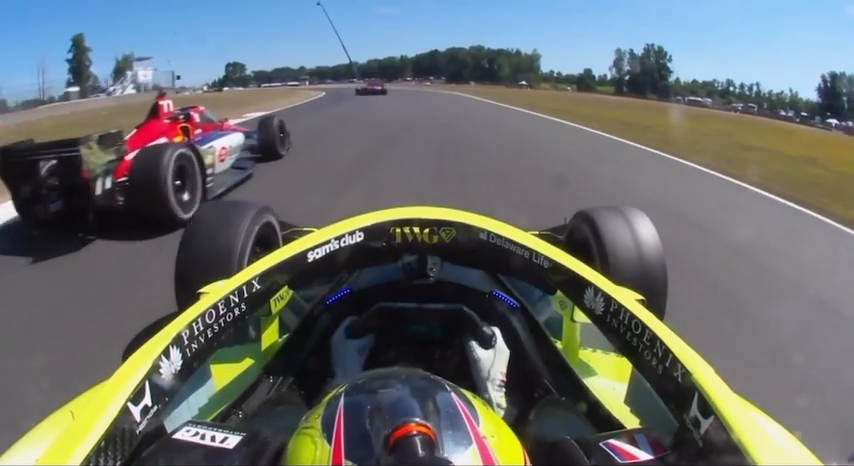
Will Power’s Portland onboard provided another example of how quickly a race can unravel.
Power was supposed to pit. Unfortunately, he pressed his radio button at almost exactly the same moment the instruction arrived. Because he was transmitting, he missed the call.
The crew prepared for Power to arrive. Power kept driving. It was a remarkably small communication failure with an enormous consequence.
The obvious technological question is whether a modern racing series should still allow that to happen. If a strategist needs to communicate something critical, should the pit wall not have some way of overriding the driver’s transmission? Could a visual indicator on the steering wheel confirm a pit call? Could particularly urgent instructions use a clearer repeated phrase? Motorsport teams obsess over eliminating tiny inefficiencies, yet an entire strategy can apparently still be compromised because two people pressed a radio button simultaneously.
That feels like an unusually avoidable failure. Unfortunately for Power, missing the pit entry was only the beginning.
He then found Sting Ray Robb.
Sting Ray Robb Was Just Trying to Run His Race — Which Was Exactly the Problem for Power
Few IndyCar experiences appear more universal than eventually finding yourself stuck behind Sting Ray Robb.
Power joined the club at Portland. Robb was struggling enough that he nearly lost control in Turn 5, giving Power a momentary opportunity to attack, but Power never quite got far enough alongside to complete the move. The frustration was understandable.
But blaming Robb entirely misses the bigger issue. Robb was still competing. He was not simply circulating several laps behind everyone with nothing at stake. Positions at the back still matter, points still matter and Leaders Circle considerations can matter considerably to smaller teams.
IndyCar also does not operate under Formula 1-style blue-flag expectations in which a lapped driver simply disappears from the racing line at the earliest opportunity. That difference is part of American open-wheel racing. A driver catching slower traffic still has to pass it.
Sometimes that creates opportunities for the cars behind. Sometimes it complicates strategy. Sometimes it forces leaders to demonstrate that they can navigate traffic rather than merely exploit clean air. And sometimes it absolutely destroys somebody’s afternoon. Power’s situation was ultimately created before Robb entered the picture.
The radio miscommunication caused him to miss the pit call. That placed him where he did not want to be. Robb was simply the obstacle waiting on the other side of the mistake. There was also little reason for Robb to massively compromise his own exit through a high-speed chicane simply because Power needed to pit immediately afterward. That said, Robb certainly did not spend Portland making life easy for faster cars.
Trackside observations indicated he had also raced Kyle Kirkwood aggressively despite being offset on strategy, while another encounter reportedly sent Marcus Ericsson through the escape road and helped Kirkwood make a pass. So while Robb may have been perfectly entitled to race the way he did, the pattern understandably made him a central character in several other drivers’ afternoons. Sting Ray Robb does not appear to discriminate.
Leader, midfield car or fellow backmarker — eventually, somebody is going to have to pass him.
Should IndyCar Change Its Blue-Flag Philosophy?
The Power incident also revived one of IndyCar’s recurring philosophical debates.
Should slower or lapped cars be required to move aside more aggressively? There is a strong argument for leaving the rule exactly as it is. Navigating traffic is part of racing.
If leaders are automatically gifted a clear circuit whenever they catch the back of the field, one of the sport’s natural variables disappears. Traffic can create overtaking opportunities, force strategic adjustments and punish drivers who cannot efficiently work through slower cars. There is also a fairness problem. Imagine forcing a driver to slow significantly and surrender the lead lap, only for a caution to appear moments later. Another competitor who happened to remain ahead of the leader could stay on the lead lap purely because of timing.
That would effectively turn the blue-flag rule into an external intervention determining the outcome of their race. The alternative would be introducing Formula 1-style procedures allowing cars to reclaim laps, which creates an entirely different collection of artificial circumstances. IndyCar’s current system can be frustrating.
But frustrating does not necessarily mean wrong. The entire point is that every competitor remains responsible for their own race. Power was faster than Robb.
Power still had to pass him.
When Does Scott McLaughlin’s Penske Seat Actually Become Vulnerable?
The more uncomfortable discussion this week surrounds Scott McLaughlin.
At what point does his Team Penske seat become genuinely vulnerable? McLaughlin is not performing disastrously. That distinction matters.
But expectations at Penske are not based on merely avoiding disaster. They are based on championships and Indianapolis 500 victories. McLaughlin entered this season with an opportunity to emerge as the team’s leading figure. Instead, David Malukas has become the standout Penske performer.
That makes McLaughlin’s situation increasingly difficult. He is now two years removed from his most recent victory and has not established himself as a consistent top-five championship threat over the past two seasons. He is also 33 years old. None of those factors individually puts a driver in immediate danger.
Together, they create a conversation.
Malukas Changed the Standard Inside Penske
The biggest problem for McLaughlin may simply be the driver sitting elsewhere inside the same organization.
Malukas has shown what the equipment can do. That makes underperformance elsewhere much easier to evaluate. There is some irony in the dynamic.
McLaughlin entered the year as an experienced figure who could help Malukas adapt to Penske. Instead, the student has outperformed the mentor. That does not necessarily mean McLaughlin suddenly forgot how to drive.
There have been meaningful structural changes around his program. Ben Bretzman moved into an engineering management position. McLaughlin is now working with Raul Prados, who came across from Porsche Penske, while Tim Cindric is serving as strategist. New relationships take time.
Engineering chemistry matters enormously, and one season of adjustment could easily explain some of the missing top-end performance. Team Penske itself has also not looked as consistently dominant since IndyCar introduced the hybrid system. Chevrolet’s relative performance compared with Honda has become another part of the discussion, particularly around power delivery, fuel mileage and reliability.
So this is not simply a case of looking at McLaughlin’s results and declaring the driver to be the problem. But Malukas again complicates that defense. He is racing the same broader Penske-Chevrolet package.
And he is producing.
2027 Could Become the Deciding Year
The more realistic pressure point may therefore be next season.
McLaughlin signed a multi-year agreement before this season, and there has been little suggestion that Penske is preparing an immediate change. But 2027 could determine what happens when the 2028 driver market begins moving. Josef Newgarden’s future could also become part of that equation, particularly if his contract situation creates additional flexibility.
And IndyCar itself will be approaching another major transition with a new car. That could make Penske unusually motivated to reassess its lineup. McLaughlin therefore does not necessarily need to worry about losing his seat tomorrow.
But he probably needs to re-establish why Penske should build part of its next era around him. A victory before the end of this season would help immensely. A strong 2027 would probably eliminate much of the discussion.
Another season in which Malukas clearly establishes himself as the team’s strongest driver would do the opposite.
The Bigger Question: Why Are Top IndyCar Teams So Reluctant to Gamble on Drivers?
McLaughlin’s situation also connects to a much larger question emerging across the grid.
How difficult should it be to lose a top IndyCar seat? Drivers such as VeeKay continue to outperform expectations in lesser equipment but struggle to break into the biggest organizations. Meanwhile, established drivers can sometimes survive several underwhelming seasons because teams know exactly what they are getting.
There is logic behind that conservatism. Changing drivers introduces risk. Sponsors care about personalities, existing relationships and continuity. Drivers can bring funding. Teams can value Indianapolis performance differently from road-course performance.
Not every decision can be reduced to championship points. But eventually teams have to ask themselves what they are trying to accomplish. If the objective is beating Alex Palou, recycling drivers who have already demonstrated that they cannot consistently beat Alex Palou is unlikely to solve the problem.
The irony is that Palou himself demonstrates what can happen when circumstances force a team into an unexpected driver decision. Sometimes the driver who transforms an organization is not the safe choice. He is simply the choice somebody finally gives an opportunity.
That is why the VeeKay discussion refuses to disappear. It is why Lundgaard potentially moving to Ganassi feels so significant. And it is why Penske eventually has to evaluate McLaughlin based not only on whether he remains good enough for IndyCar, but whether somebody outside the organization might give Penske a better chance of beating the No. 10.
Those are very different standards.
If You Can’t Beat Alex Palou, Apparently You Can Wear His Indy 500 Car
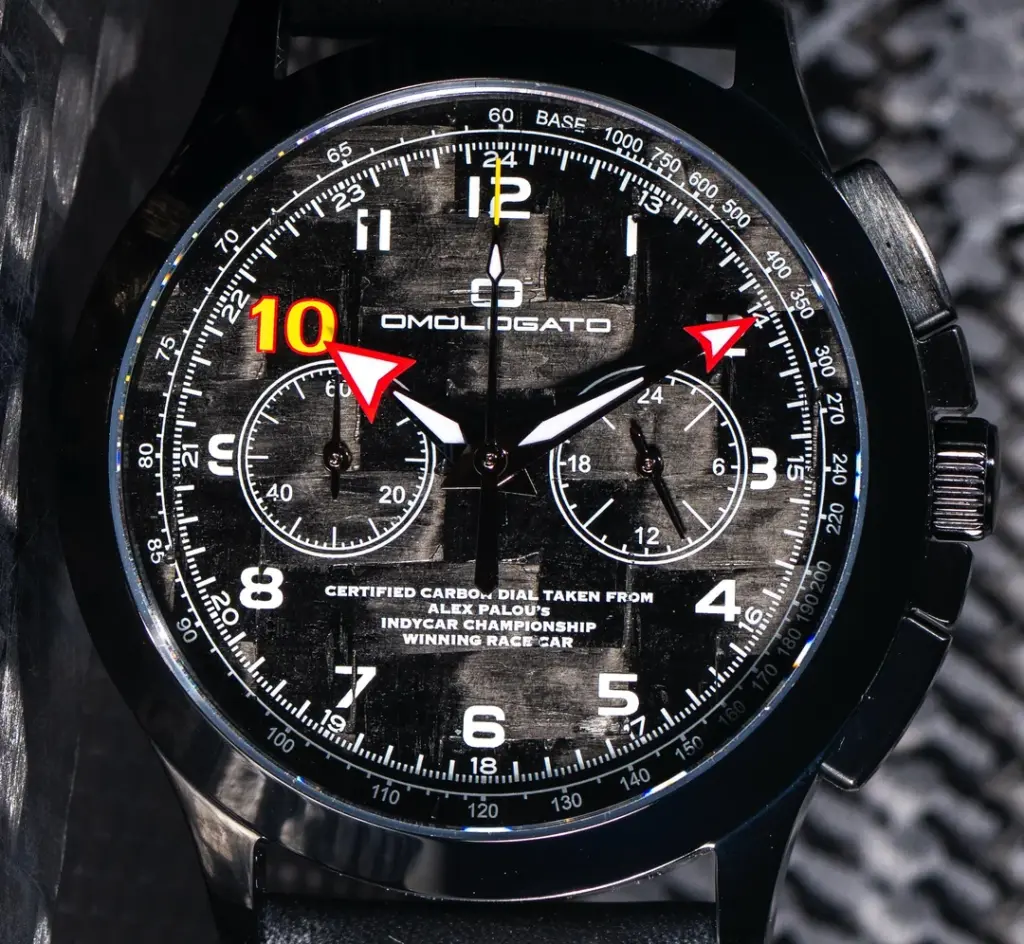
Which brings us to perhaps the strangest merchandise story of the week.
Omologato has produced a watch using carbon fiber taken from the rear diffuser of Alex Palou’s championship-winning race car. More specifically, the material still contains grit and markings from the 2025 Indianapolis 500. The watch costs $1,011.
And depending on how you feel about motorsport memorabilia, that price is either completely absurd or strangely reasonable. Mechanically, buyers are not paying four figures because the movement itself is extraordinarily exotic. The watch uses a Seiko chronograph movement, and watches using similar movements can be purchased for considerably less money. What buyers are actually purchasing is provenance.
This is not simply carbon fiber patterned to look vaguely motorsport-inspired. It is supposedly material that was physically attached to Palou’s car. That makes the product less like a normal watch and more like wearable memorabilia.
And motorsport memorabilia has always operated under slightly irrational economics. A piece of carbon fiber is inexpensive. A piece of carbon fiber from an IndyCar is not. A piece of carbon fiber from the car that won the Indianapolis 500 becomes something entirely different.
Whether that difference is worth roughly $1,000 depends almost entirely on the buyer.
The Concept Might Be Better Than the Dial
The bigger criticism is the design.
There is a lot happening on the face. The stylized No. 10 is a clever touch, connecting the watch directly to Palou without requiring explanation. But the explanatory writing on the dial arguably works against the very thing making the watch special.
If the attraction is genuine race-used carbon fiber, why cover so much of it? A cleaner approach could have allowed the material itself to become the centerpiece while moving the provenance information to an engraving on the caseback. Palou’s signature could also arguably communicate the association more elegantly than explanatory text.
That is ultimately personal preference. Some collectors will want the watch to announce exactly what it is. Others will prefer something subtle enough to function as an attractive watch first and a conversation piece second.
What cannot really be argued is that the concept itself is interesting. Motorsport teams produce enormous amounts of damaged and obsolete carbon components. Turning a genuinely historic piece into something collectors can wear gives material that might otherwise sit in storage an entirely different life. And apparently there is demand.
According to Omologato, more than 400 have already been purchased. The company also suggested another run would only happen if Palou wins the Indianapolis 500 again.
Considering the direction of his IndyCar career, perhaps nobody should assume this is the final opportunity.
IndyCar’s Silly Season Is Becoming Bigger Than Driver Contracts
Taken together, these stories reveal how strange the current moment in IndyCar has become.
Lundgaard is driving like somebody determined to make his current employer regret letting him go. VeeKay continues hovering around every conversation involving a potentially available competitive seat. Malukas has arrived at Penske and immediately changed how the team’s established drivers are being evaluated.
McLaughlin suddenly finds himself facing questions that would have seemed far less urgent not long ago. Power lost valuable time because of the exact moment two people pressed their radio buttons. Sting Ray Robb once again became an unwilling supporting character in somebody else’s race.
The Washington Grand Prix is apparently significant enough to temporarily stop operations at a major American airport. And Alex Palou is now so successful that pieces of his race car are becoming luxury collectibles. The championship may be decided on the track.
But right now, some of IndyCar’s most interesting stories are happening everywhere else.