

Formula 1 likes to present itself as a sport defined by speed.
In reality, it has always been about much more than that. It is politics. Money. Rivalries. Personalities. Family. Marketing. Driver perception. Manufactured rankings. Strange scheduling decisions. Petty competitiveness. Genuine emotion. And occasionally, a reminder that even the most accomplished drivers on the planet can behave exactly like someone who tells you they did not study before getting the highest grade in class. That combination has been particularly obvious over the past few days.
A decades-old Colin Chapman quote resurfaced and immediately sparked another argument over whether modern Formula 1 has lost its way. The FIA published a remaining-race schedule that somehow made telling time more difficult. Formula 1 attempted to celebrate old teammate pairings as if they had once lived in peaceful harmony. Max Verstappen spoke openly about how fatherhood is changing the way he experiences life away from home. The latest driver power rankings produced predictable outrage. And Lewis Hamilton apparently reminded everyone that elite athletes remain elite athletes even when the competition involves a video game. Put together, it is a useful snapshot of what Formula 1 really is. Not merely a racing championship.
A very expensive, very competitive ecosystem populated by people who want to win almost everything.
Colin Chapman Warned About Formula 1’s Politics — While Being Part of Them
One Colin Chapman quote has resurfaced because of how easily it could be applied to modern Formula 1.
“Throughout these years we have witnessed the changes which have taken place in Grand Prix racing and unfortunately seen what was fair competition between sportsmen degenerate into power struggles and political manoeuvrings between manipulators and money men attempting to take more out of the sport than they put into it.”
Read that without context and it sounds like a complaint about Formula 1 today. Owners protecting commercial interests. Teams lobbying for favorable regulations. Arguments over revenue. Political maneuvering. Threats to leave. Sponsors gaining influence. Decisions being judged as much by money as sporting merit. The problem is that Chapman was describing a sport that had already been doing these things for decades.
Formula 1 did not suddenly become political. It was born political. Ferrari boycotted the first Formula 1 Grand Prix over a financial dispute. Teams have repeatedly threatened to leave when regulations or commercial arrangements moved against their interests. The FISA-FOCA conflict turned the politics of the championship into an open institutional war.
Ferrari even constructed a CART car in 1986 as part of another dispute surrounding Formula 1’s direction and engine regulations, essentially demonstrating that its familiar threat to leave the championship was more than a press release. Whether Ferrari ever genuinely intended to follow through is almost beside the point.
Threatening to leave has itself become part of Formula 1’s political language.
Even Chapman Was Not Above Playing the Game
There is also an obvious irony in treating Chapman as an outside critic of Formula 1’s commercialization.
He was one of the people who helped accelerate it. Lotus became the first works Formula 1 team to embrace large-scale commercial sponsorship when Gold Leaf branding appeared on the Lotus 49B in 1968. The regulations had been relaxed and Chapman moved quickly to exploit the opportunity. There was nothing inherently wrong with that.
Modern Formula 1 could not survive without sponsorship. But it makes Chapman’s criticism much more interesting because he was not standing outside Formula 1’s commercial transformation looking in. He was actively helping shape it when doing so benefited Lotus. The same tension appeared in 1960.
Chapman and other British entrants boycotted the Italian Grand Prix at Monza, officially raising safety concerns involving the banking and the ability of their cars to withstand the circuit. There has long been another interpretation: that the real objection was competitive. The configuration heavily favored Ferrari.
That makes the episode remarkably familiar by modern standards. Teams arguing that a rule, circuit or regulation is dangerous, unfair or damaging to the sport while simultaneously knowing that it places them at a competitive disadvantage is hardly unusual. Sometimes the argument can be valid and self-interested at the same time.
Those motivations are not mutually exclusive.
F1 Politics Are Not New — But That Does Not Mean They Cannot Get Worse
Saying that Formula 1 has always operated this way should not become an excuse for everything that happens today.
There is a difference between identifying a historical pattern and claiming the scale never changes. Money has always influenced Formula 1. The amount of money involved now is considerably larger.
Teams have always protected themselves. The financial consequences of losing competitive position are considerably greater now. Promoters have always wanted prestigious races.
But as Formula 1 became increasingly commercialized, venues could also be selected because of what organizers were willing to pay rather than solely because the circuit produced exceptional racing. Bernie Ecclestone’s leadership remains the obvious example of Formula 1 benefiting and suffering from the same strategy. He helped transform the championship into a global commercial property.
He also became synonymous with divide-and-conquer negotiations, using the competing interests of teams to maintain control while bringing races to markets capable of paying the required fees. The teams deserve part of the responsibility too. Formula 1 organizations regularly argue for the health of the championship while simultaneously attempting to preserve whatever competitive or financial advantage they currently possess.
That is not hypocrisy unique to Formula 1. It is what happens when enormous financial rewards are attached to sporting results. The championship becomes a strange microcosm of almost every other power structure. People cooperate until cooperation threatens their interests.
Then suddenly everybody discovers a deeply held principle.
Maybe the Drama Is Part of Formula 1’s Appeal
There is another uncomfortable possibility.
Perhaps Formula 1 fans do not merely tolerate the politics. Maybe it is part of why the championship remains so compelling. Formula 1 has never been just about cars circulating a track.
It has always offered alliances, betrayals, technical disputes, regulatory warfare, teammate conflict, executive maneuvering, owner drama and personalities with too much ambition to remain peaceful for very long. The modern championship simply packages those traits differently. Drive to Survive did not invent Formula 1 drama.
It recognized that Formula 1 had been producing reality television without calling it reality television for decades. The rivalries are real because the incentives are real.
And nowhere are those incentives more intense than between teammates.
Formula 1 Tried to Celebrate Former Teammates Who Were Already Rivals
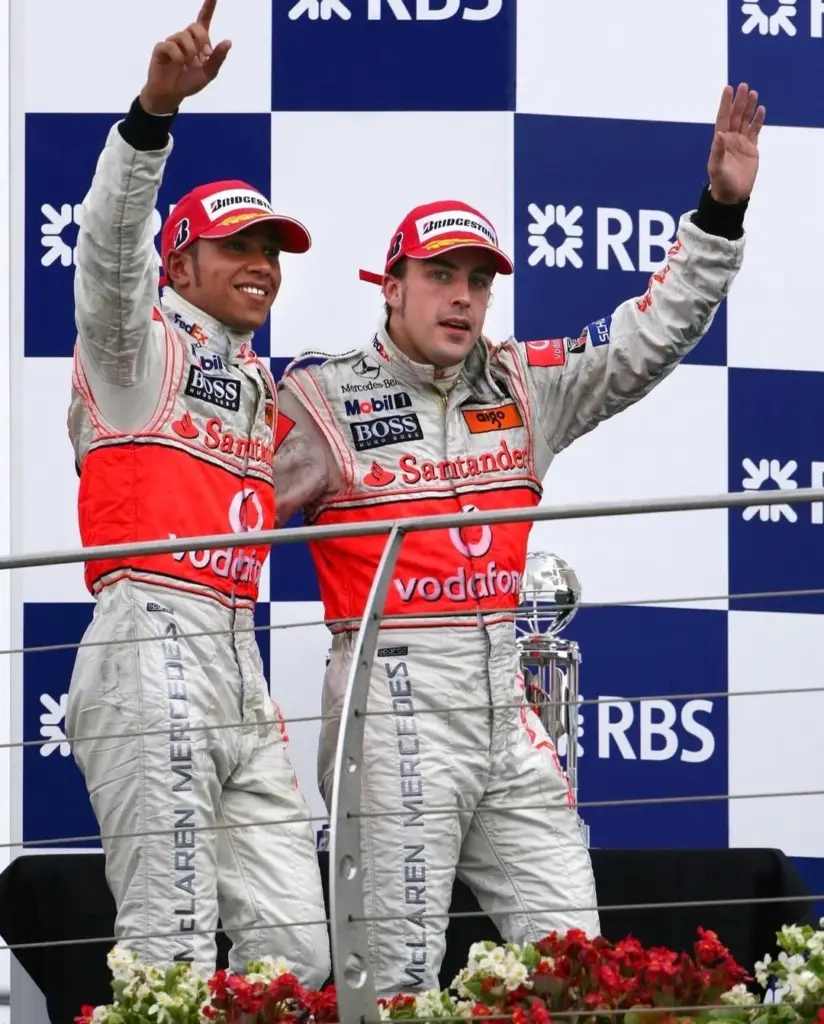
That made Formula 1’s recent social-media post particularly amusing.
The premise was essentially: “They may be rivals now, but there was a time…”
The images showed current drivers alongside former teammates. The obvious problem was that several of the people pictured were arguably bigger rivals when those photographs were taken. Lewis Hamilton and Fernando Alonso?
Those two do not exactly represent a forgotten era of uncomplicated friendship.
“They used to be rivals. They still are, but they used to be too” might be the more accurate caption.
The same problem applies to Pierre Gasly and Esteban Ocon. The pair had been friends during their karting years, but by the time they became Formula 1 teammates their relationship carried considerably more history. Their shared São Paulo podium in 2024 offered something of a temporary armistice. Both were understandably delighted by a result nobody expected, and for one afternoon the larger history became less important. But presenting former teammates as though teamwork somehow precedes rivalry misunderstands Formula 1.
Your teammate is usually your most important rival.
The Most Dangerous Comparison in Formula 1 Happens Inside the Garage
A driver in another car can always be explained away.
Different machinery. Different strategy. Different development direction. Your teammate cannot. That person has access to broadly the same opportunity you do.
Beat your teammate consistently and your reputation improves. Lose badly enough and your future may disappear. That is why teammate relationships can turn hostile even when the drivers personally like one another.
The rivalry exists structurally. Hamilton and Alonso were not competitors despite being teammates. They were competitors because they were teammates.
The same basic dynamic applies across the grid. When drivers later move apart and stop fighting for the same positions every weekend, the rivalry can actually become less intense. Competition requires proximity. If two former rivals spend years in machinery that rarely allows them to meaningfully battle, the emotional temperature naturally declines.
Which is why some of those old teammate photographs represent a more competitive period than the present.
Carlos Sainz Has Apparently Teamed Up With Everyone
The gallery also inadvertently highlighted one of the more amusing features of Carlos Sainz’s career.
He seems to appear everywhere. Put together enough historical teammate photographs and eventually Sainz becomes the Formula 1 equivalent of Pedro Pascal: somehow connected to everybody. That does not need a deeper analytical explanation.
Sometimes the best conclusion is simply that Carlos Sainz has had a lot of teammates.
The Remaining 2026 Schedule Is Here, Assuming You Can Decode It
The FIA also published the official start times for the remaining races of the 2026 season:
Netherlands — 15:00
Italy — 15:00
Spain — 15:00
Azerbaijan — 15:00
Bahrain at Malaysia — 15:00
Singapore — 20:00
United States — 15:00
Mexico City — 14:00
São Paulo — 14:00
Las Vegas — 20:00
Qatar — 19:00
Abu Dhabi — 17:00
Unfortunately, every time listed is local. Which makes the graphic simultaneously correct and strangely unhelpful. A schedule intended for a global audience becomes significantly easier to understand if it includes a common reference point.
UTC exists for exactly this purpose. Local time should still be shown because spectators attending the race obviously need it. But adding UTC underneath would allow everybody else to convert the schedule without first determining which time zone each race happens to occupy. Otherwise, the graphic is most useful to one very specific audience: people physically traveling to every Grand Prix.
Anyone coordinating a private jet probably already has assistants handling that.
“Bahrain at Malaysia” Creates Its Own Time-Zone Problem
The “Bahrain GP at Malaysia” entry makes the local-time approach even funnier.
Is the local time based on Bahrain because it is the race organizer? Or Malaysia because that is where the cars actually are? The answer, presumably, is Malaysia. But the fact that the question can even be asked illustrates why a universal reference time would make the schedule considerably cleaner.
Sometimes the simplest communication solution really is the universal one.
Qatar and Abu Dhabi Remain — Until They Do Not
The continued appearance of Qatar and Abu Dhabi on the schedule also raised questions.
For now, they remain part of the calendar because Formula 1 has not officially removed them. That does not necessarily mean they will happen. The situation remains uncertain enough that a decision is expected around September, with Formula 1 apparently intending to wait as long as practical before making a final call.
One discussed fallback involves replacing the two events with a single European race in the Abu Dhabi slot. That would produce an unusual season finale, particularly if Europe were racing in December. Logistically, however, it appears to be the contingency Formula 1 considers most practical.
Until anything is formally changed, Qatar and Abu Dhabi remain scheduled. That is the least dramatic interpretation of their appearance on the graphic. Sometimes a calendar is not secretly communicating anything.
It is simply displaying the calendar that currently exists.
Singapore’s Sprint Could Be Beautiful Chaos
One of the more intriguing remaining weekends is Singapore.
Hosting a sprint race there seems like either a fascinating experiment or an excellent way to create problems. Possibly both. The sprint format means there will be limited opportunity to gather representative practice information.
More importantly, the sprint itself is expected to take place during the daytime. Singapore is so closely associated with Formula 1 at night that daytime running almost feels unnatural. The heat is also a legitimate concern.
Conditions can remain punishing even late in the afternoon, making a daytime competitive session particularly demanding for drivers. From a sporting perspective, however, that uncertainty could make the sprint more interesting. Teams will have less opportunity to optimize.
Drivers will encounter conditions different from the main night race. Cars may be less perfectly prepared. That tends to create unpredictability.
Of course, Singapore is also capable of producing long periods where overtaking becomes difficult. So the alternate possibility is simply getting an F1 train twice.
At minimum, the weekend should look different.
Max Verstappen’s Greatest Prize Is Not a Championship
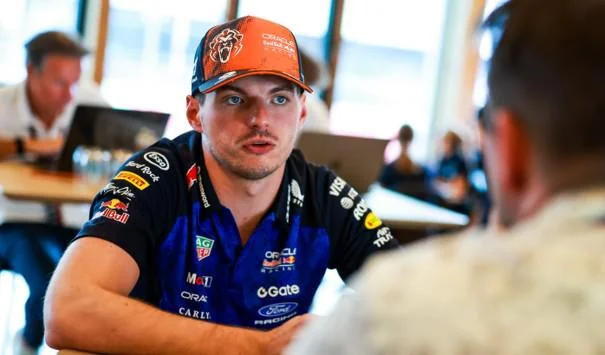
The most personal story of the week came from Max Verstappen.
Asked what he was most proud of — championships, victories or particular memories — Verstappen did not choose a race. He chose his daughter.
“Our daughter Lily is my greatest prize,” Verstappen said.
He also described how difficult leaving home has begun to feel. That morning, Lily had just woken up. Max took her out of bed, cuddled her and then had to leave. She stood near the elevator while he departed. Then the doors closed.
“That’s not a very nice feeling.”
It was an unusually vulnerable description from someone most fans primarily associate with relentless competitiveness. Verstappen also connected the experience to his own childhood. He remembered crying when his father had to leave and said Jos found those moments difficult too. Then, because this is still Max Verstappen, he immediately joked about the eventual teenage stage when Lily will probably tell him:
“Dad, please go away.”
The Dad Max Era Has Arrived
It is difficult not to see this as a meaningful change in Verstappen’s life.
That does not mean he is suddenly becoming a different person. He still loves racing. He has repeatedly chosen to spend time away from Formula 1 racing other machinery, including GT3 competition. But parenthood changes the emotional calculation.
Leaving home because you want to race is one thing. Leaving while your young daughter watches the elevator doors close is another. Those moments put even Formula 1 championships into perspective. Max essentially said so himself.
His greatest prize is at home.
Does This Mean Verstappen Is Going to Retire?
Naturally, the first response was immediate.
He is retiring. That conclusion is understandable. It is also much too early.
Plenty of Formula 1 drivers have children. Very few voluntarily leave while still clearly capable of competing at the highest level. Nico Rosberg remains the modern example everyone reaches for, but even his retirement cannot simply be explained through family.
His pursuit of the 2016 title demanded an extraordinary level of commitment. The picture described afterward was almost obsessive. Every tiny advantage mattered.
Physical preparation was adjusted to save weight. His helmet was stripped down to reduce grams. His entire life became focused around finally beating Lewis Hamilton.
He eventually succeeded. Then he left.
That was less “driver becomes a father and retires” than “driver spends everything psychologically available to achieve one defining goal and decides he does not want to repeat the process.”
Max’s situation is different.
Verstappen Has Less Left to Prove Than Almost Anyone
What does make Verstappen unusual is how much he has already achieved at his age.
He does not need another decade in Formula 1 to validate himself. If he eventually decides that GT racing, his own racing projects and family provide a better balance, there is no obvious competitive obligation keeping him here. That does not mean retirement is imminent.
His continued willingness to race during F1 off-weekends suggests the opposite. He still seems to genuinely love racing itself. The distinction may eventually become racing versus Formula 1.
Formula 1 requires enormous travel, media obligations, politics and a calendar that dictates much of a driver’s year. GT racing can allow someone like Verstappen to compete intensely without surrendering the same amount of family time or accepting the same level of paddock politics.
That could become increasingly attractive.
Please Do Not Make Max an F1 Team Principal
One possible future that seems significantly less likely is Max Verstappen becoming an F1 team principal.
He does not exactly radiate enthusiasm for press conferences, paddock diplomacy or political negotiation. Running an F1 team requires an enormous amount of precisely the work Verstappen appears to dislike. Expanding his own GT racing organization makes much more sense.
He could remain deeply involved in motorsport, develop drivers and build competitive programs without spending every weekend answering why Car A received an upgrade three races before Car B. A future Verstappen racing organization is easy to imagine.
Max standing in front of the media explaining a protest decision for 25 minutes is considerably harder.
The Most Interesting Part of Dad Max May Be the Contrast
Verstappen has always had a reputation for being dramatically different depending on whether he is wearing a helmet.
On track, he can be ruthless. Away from the car, people who have worked with him frequently describe someone considerably calmer. That contrast appears especially strong around children and younger drivers.
The material shared here includes examples of him being supportive at youth racing events, interacting warmly with younger competitors and showing obvious affection toward Penelope long before Lily was born. One story described him abandoning a sim-racing commitment because Penelope wanted him to play tea set with her. Whatever judgment someone makes about the circumstances of his own upbringing, the version of Max we see with his family appears very intentional.
The simple phrase “be the parent you wish you had” naturally comes to mind.
We cannot know exactly how Verstappen understands his childhood or how he will parent years from now.
But the moments available publicly suggest someone who places enormous value on being present.
Money Makes Parenting Easier — It Does Not Create Affection
There is a useful distinction worth making here.
Financial security absolutely changes the practical realities of parenthood. It can remove concerns about housing, food, childcare and career instability. It can allow parents to outsource chores and protect more of their available time.
A financially secure 23-year-old faces a very different practical decision when entering a relationship involving a young child than someone struggling to establish a career. That matters. But money cannot create emotional willingness.
It cannot force someone to enjoy being a parent. It cannot manufacture affection. Financial security may remove barriers to becoming part of a blended family. It does not explain why someone chooses to be emotionally invested once they are there.
Those are separate questions.
And While Max Is Thinking About Family, Alonso May Still Be Racing in 2045
The natural F1 response to any Verstappen retirement conversation is Fernando Alonso.
If Max decides family life eventually matters more than another Formula 1 season, Alonso may apparently just continue until he can race against somebody’s children. Possibly his own. The joke practically writes itself.
An Alonso son making his debut alongside Fernando. Fernando defending into 130R.
“What’s Dad going to do? End my career?”
At this point, predicting Alonso’s retirement feels considerably more dangerous than predicting his continued participation.
If Verstappen leaves while Alonso remains, nobody should be surprised.
The Power Rankings Have Arrived to Make Everyone Angry Again
The latest Aramco power rankings after 11 races produced:
Kimi — 8.9
Max — 8.0
Lewis — 8.0
Pierre — 7.6
Liam — 7.6
George — 7.6
Arvid — 7.5
Lando — 7.5
Charles — 7.4
Isack — 7.0
Franco — 7.0
And as always, the most reliable outcome of power rankings is anger. The most questionable placement here is Lando Norris. Putting him eighth on a list like this feels difficult to justify.
A more convincing top group from the information provided would probably include Kimi, Lewis, Max and Lando. Max and Lando could reasonably be interchangeable depending on what exactly the rankings are supposed to measure. George Russell also has an argument for sitting higher than his current position.
Isack Hadjar and Charles Leclerc appear closer in overall performance than the gap between their rankings suggests. But that leads into the real problem.
What exactly are these scores measuring?
Driver Rankings Pretend We Know the Car’s True Level
This is the fundamental weakness of almost every Formula 1 driver ranking.
A driver places a midfield car higher than expected and receives an enormous rating. Fair enough. But how do we know where that car actually belongs?
A driver dominating a weaker teammate can create the impression that the machinery is terrible and that they are performing miracles every weekend. Maybe they are. Or perhaps the car is better than assumed and the teammate is simply performing badly.
George Russell’s Williams years are a useful example of the broader problem. He developed the “Mr. Saturday” reputation through exceptional qualifying results relative to expectations. But Nicholas Latifi was one of the major comparison points.
Without a stronger teammate, accurately determining the true ceiling of the car becomes difficult. That does not invalidate Russell’s performances. It highlights how many assumptions are built into rankings that assign somebody a 7.6 instead of a 7.4. Those numbers look precise.
The evaluation underneath them often is not.
Power Rankings Are Basically Weekly Argument Generators
That may ultimately be their purpose.
Rankings generate disagreement. Disagreement generates discussion. Discussion generates engagement.
Put Lando slightly too low, put a midfield driver surprisingly high, and everybody spends two days explaining why the list is nonsense. The rankings win regardless.
Perhaps the only truly accurate power ranking is one that measures how angry each entry makes people.
Lewis Hamilton Apparently Did Not Practice
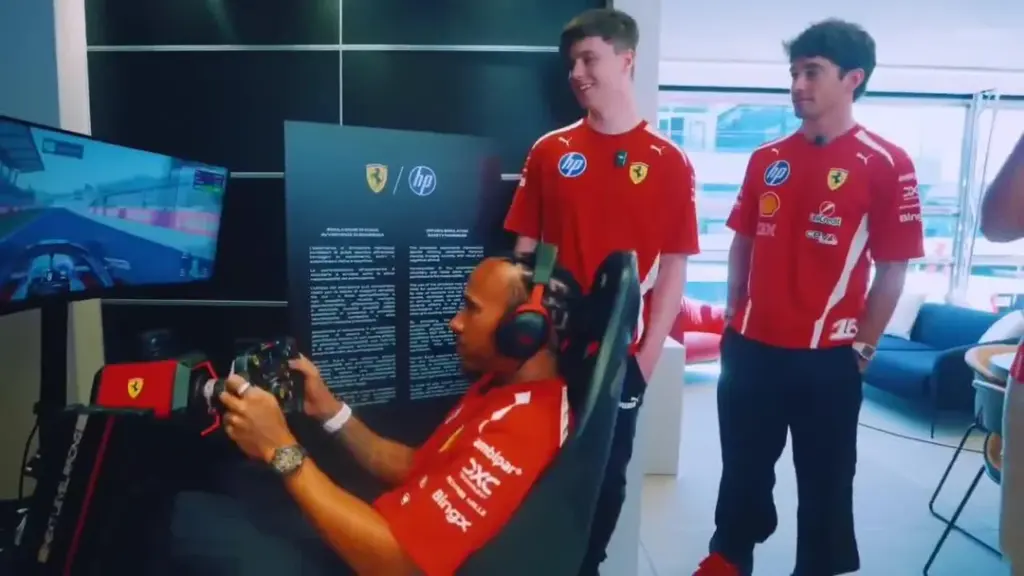
Then we reached perhaps the most important competition of the week.
Charles Leclerc and Lewis Hamilton were apparently competing in the F1 game. Charles immediately became suspicious.
“I’m fucked. Come on, no no no no, he’s been practicing! What the hell?”
Lewis responded:
“I can’t hear anything!”
Charles asked whether he had trained.
“No, not at all.”
Charles did not believe him.
“You have it at home, Lewis Hamilton.”
Anyone who attended school with a naturally gifted student immediately recognizes the archetype.
“No, I didn’t study.”
Highest grade in the class.
Every time.
Maybe Lewis Really Did Not Practice
The funniest part is that Hamilton apparently does not even need to be lying.
He has previously expressed limited enthusiasm for simulator work and has credited avoiding it with helping his recent performance. There was discussion that he does play Gran Turismo online, but that is very different from secretly grinding the newest Formula 1 game for hours every night. The simpler explanation might be significantly more annoying.
Lewis Hamilton is Lewis Hamilton. An elite racing driver can apparently sit down with unfamiliar software and immediately understand what the virtual car is trying to do.
That ability to rapidly adapt is one of the things separating professional drivers from people who become extremely good at one particular simulation.
The Sim Racers Had a Built-In Disadvantage
Normally, elite sim racers can produce remarkable lap times because they eliminate variables through repetition.
Same track. Same conditions. Same car.
Same setup. Again and again and again. They can gradually optimize every braking point, every steering input and every corner until the entire lap becomes almost automated.
This situation was different. The esports drivers reportedly did not have extended practice on this version of the game. They were also using default track setups rather than heavily optimized esports configurations.
That removes one of their greatest advantages. Meanwhile, Hamilton has spent his entire adult life adapting to changing cars, grip levels, tires and conditions in real time. So when everyone enters something relatively unfamiliar, the skill balance changes. The sim specialist loses some of the repetition advantage.
The real driver retains the adaptation advantage.
The New Game May Actually Have Made a Good Impression
The fact that the esports competitors were not immediately miles faster may actually reflect positively on this year’s game.
Hamilton reportedly said:
“It’s pretty good.”
The discussion suggested he may have been referring to how closely the model approximated the real car. He also repeatedly noted that the virtual car had considerably more grip than reality. But time trial mode helps explain some of that difference.
There is no tire degradation. Conditions are optimal. The car can run soft tires at ideal temperatures.
Fuel is minimized. Cars can also run equalized or maximum performance. In other words, this is Formula 1 without most of the irritating variables Formula 1 drivers spend their lives managing.
Which is probably why the Ferrari version feels suspiciously unrealistic.
A fully authentic Ferrari simulator would apparently require the wrong tires, standing water and an engineer reciting the alphabet while the driver asks increasingly urgent questions.
Real Drivers Still Have One Major Disadvantage: Consequences
There is one variable simulation cannot fully reproduce.
Fear. A sim racer can miss a braking point, destroy the virtual car and immediately restart. A Formula 1 driver does that at 300 kilometers per hour and there are significantly more consequences.
Even qualifying is not simply a sequence of perfect corners. Drivers must manage tire preparation. They must account for evolving grip.
They have limited attempts. They know one mistake can end the session. The virtual environment removes many of those pressures.
Which is why raw simulator pace and real-world pace should never be treated as interchangeable skills. They overlap.
They are not identical.
Lewis Was More Annoyed by Quitting Than Losing
Perhaps the most revealing moment was Hamilton’s reaction when one of the sim racers apparently rage-quit.
He sounded disappointed. That makes sense. Professional athletes tend to have an unusually intense relationship with competition.
Losing is acceptable. Not competing is not. From that perspective, quitting in the middle of a challenge when Lewis Hamilton is actively encouraging you probably feels incomprehensible.
Finish the lap. Take the loss. Learn something. Try again.
That mentality may be more important than the specific lap time.
Elite Athletes Are Weird About Everything
Formula 1 history is full of examples of drivers being absurdly competitive outside race cars.
Sebastian Vettel once reportedly lost at badminton to Kimi Räikkönen and then secretly hired a professional coach so he could win the next time. Vettel later acknowledged that when he was younger, almost everything could become a competition. Even going grocery shopping.
David Coulthard and Mika Häkkinen reportedly raced each other to meetings in their private planes. Nico Hülkenberg has been associated with the idea of struggling to let his own children win games. None of this should be surprising.
To reach Formula 1, normal competitiveness is probably insufficient. These drivers spend their formative years learning that another child finishing ahead of them can materially change the trajectory of their career. Eventually the brain stops differentiating between a championship battle and badminton.
Everything has a winner.
Charles Calling Him “LH” Might Be the Best Part
Amid all the competitive nonsense, there was also something strangely charming about Leclerc calling Hamilton “LH.”
Hamilton apparently calls Charles “CL” in return.
Lewis Hamilton is such a major figure within Formula 1 that most people simply call him Lewis or Hamilton.
“LH” feels strangely personal.
Like Charles has decided that his seven-time world champion teammate needs a nickname that sounds like a contact saved in his phone. It is a small detail.
But it may say more about their relationship than another heavily produced social-media post about teammates who “used to” get along.
Formula 1 Has Changed — and Somehow Remained Exactly the Same
That is probably the larger lesson running through everything this week.
Formula 1 has changed enormously. The money is larger. The audiences are larger.
The calendars are longer. The social-media operation is more polished. Drivers can now race professional esports competitors in licensed video games while millions of people discuss the clip online.
But underneath all of that, the sport still operates on familiar instincts. Teams protect themselves. Drivers compare themselves to teammates.
Champions hate losing. Fans argue about rankings. Organizers make confusing decisions.
Money influences the championship. Politics influences the money. And everyone involved insists their preferred outcome is also what happens to be best for Formula 1.
Colin Chapman recognized that decades ago. He also participated in it. Maybe that is the most Formula 1 thing imaginable. The sport is full of people criticizing the political games while simultaneously playing them.
And somehow, after all these years, that tension remains part of what makes Formula 1 impossible to ignore.