


IndyCar silly season was already unstable. Now it feels like someone hit the chaos button.
Scott Dixon is reportedly preparing to leave Chip Ganassi Racing after the 2026 season and move to Arrow McLaren, a move that would be one of the biggest driver transfers in modern IndyCar history. Dixon has been synonymous with Ganassi for decades, so the idea of him wearing papaya instead of the No. 9 is almost hard to process.
But the bigger shock might not even be Dixon leaving. It is what the move appears to say about McLaren.
Because if Dixon is coming in, Christian Lundgaard may be the one pushed out. And that is where this story goes from stunning to confusing.
Lundgaard is not a struggling project. He is one of the best drivers in the series right now. He has already won with McLaren this season, has been one of their strongest performers, and at 24 years old looks like exactly the kind of driver a serious championship program should be building around. His road and street course form has been excellent, and even the oval criticism feels overblown when his average oval finish has reportedly improved to around 13th this year.
That is not elite, but it is also not disastrous. Especially when his early oval development came in Rahal Letterman Lanigan equipment, where oval setup strength was not exactly the foundation of his reputation. There is a reasonable argument that Lundgaard was still trending upward, not plateauing.
McLaren, however, appears to be thinking differently.
The logic seems centered on the Indianapolis 500. Zak Brown has made no secret of how important the Indy 500 is to McLaren’s larger motorsport ambitions, and a lineup of Pato O’Ward, Felix Rosenqvist, and Scott Dixon would clearly be built with May in mind. Dixon brings experience, racecraft, and decades of knowledge. Rosenqvist just won the 500. O’Ward remains McLaren’s centerpiece and strongest oval threat.
If the goal is one race, the move has a logic.
If the goal is an IndyCar championship, it is much harder to defend.
That has become the central tension around McLaren’s IndyCar operation. Are they trying to build a championship team, or are they chasing one trophy so aggressively that they are willing to weaken the rest of the calendar?
Because the recent history is not flattering. McLaren has cycled through Oliver Askew, Felix Rosenqvist, David Malukas, Theo Pourchaire, Callum Ilott, Alexander Rossi, and now potentially Lundgaard. Some exits had context. Some were understandable. But collectively, the pattern looks messy.
Ilott, in particular, still feels like a missed opportunity. His Indy 500 performance for McLaren had promise despite early issues, and he looked like the kind of driver who could have developed into a serious 500 asset. Pourchaire’s short stint also became part of the broader perception that McLaren is willing to make abrupt, headline-grabbing changes without a clear long-term plan. Meanwhile, Nolan Siegel has become the lightning rod for criticism because of the perception that funding helped keep him in the picture while more proven or promising drivers were moved aside.
That is why the Lundgaard situation feels so damaging. Dropping a young race winner for a 45-year-old legend may generate attention, but it also risks handing a future title contender to a direct rival.
If Ganassi lands Lundgaard, the potential pairing of Alex Palou and Lundgaard would be terrifying for the rest of the field. Palou already looks like the benchmark. Add Lundgaard’s road and street course strength, put him in a Honda program with Ganassi strategy, pit work, and fuel-save execution, and suddenly McLaren may have created exactly the problem it was trying to solve.
There is also a timing issue. If part of the Dixon appeal is transferring Ganassi knowledge into McLaren, that window may be short. With a new car expected in 2028, McLaren may only be getting one season of truly relevant setup insight before the reset. Dixon’s experience still matters, but the idea that he can simply bring a Ganassi miracle with him may be wishful thinking.
That does not mean Dixon’s side is hard to understand.
In fact, from Dixon’s perspective, McLaren may offer plenty that Ganassi cannot. A larger financial package. A long-term brand ambassador role. A potential WEC or Le Mans pathway. A final chapter that lets him stay connected to elite motorsport beyond full-time IndyCar. A stronger tie to a global brand. A possible European lifestyle fit, especially with discussion around his family’s UK ties and the idea of him eventually basing himself there more permanently.
There is also the human side. After years of being the face of Ganassi, Dixon is now racing in the Palou era. That does not mean there is bad blood. This could still be amicable. But there is a difference between being the legend of the team and being the legend standing next to the new dominant force. A change of scenery, a fresh challenge, a major payday, and a pathway into McLaren’s wider motorsport world could be very appealing.
So for Dixon, the move makes sense.
For McLaren, it is the gamble that invites scrutiny.
The concern is not that Dixon cannot still contribute. He can. The concern is that McLaren may be prioritizing splash value and institutional knowledge over retaining one of the best young drivers in the series. A Pato/Rossi/Lundgaard type lineup would have looked balanced for both ovals and road courses. Pato/Lundgaard/Dixon could have made even more sense if Dixon were additive rather than replacing Lundgaard. But if Lundgaard is the casualty, McLaren may be trading future upside for short-term symbolism.
That is why the discussion around Tony Kanaan’s leadership is also getting louder. Many of these driver decisions have happened with Kanaan involved in the operation, and the results have not quieted the criticism. McLaren has money, profile, and ambition, but it still does not feel like a program with Ganassi-level or Penske-level week-to-week execution. The drivers often look like they are dragging the cars higher than the organization naturally belongs.
Pato O’Ward is part of that debate too. Some see him as a driver whose prime could be wasted if McLaren never fully gets its operation together. Others argue McLaren has built around Pato for years without turning that into a championship, and that the team needs more than raw speed from its leader. But finishing near the front while fighting the Palou machine is not failure. Sometimes timing matters. Palou is operating at an all-time level, and being stuck in his era can make very good drivers look less successful than they are.
Still, McLaren’s answer appears to be: bring in Dixon, bring back Rosenqvist, and go win Indianapolis.
It may work. But if it does not, the fallout could be brutal.
Because Lundgaard will not be short of interest. Any team with a long-term view should be looking at him. Ganassi would be the most explosive landing spot, but Meyer Shank Racing and other Honda-aligned options also make sense in the broader landscape.
That broader landscape is shifting quickly too.
Andretti Global is reportedly retaining Marcus Ericsson, while Dennis Hauger has been told he can look elsewhere. Hauger losing Andretti backing through Dale Coyne would mean he needs funding to continue, which puts one of the more intriguing young drivers in a vulnerable position. The fear is that Hauger could become another talented driver squeezed out by the economics of IndyCar.
That concern grows with Josh Pierson being mentioned as a possible IndyCar candidate because of a significant funding package. Pierson’s junior record has been heavily questioned, especially compared to the current crop of Indy NXT standouts. The frustration is obvious: a driver like Hauger may need to fight for survival, while funding can bend the grid around less convincing resumes.
That brings the Dale Coyne conversation back into focus.
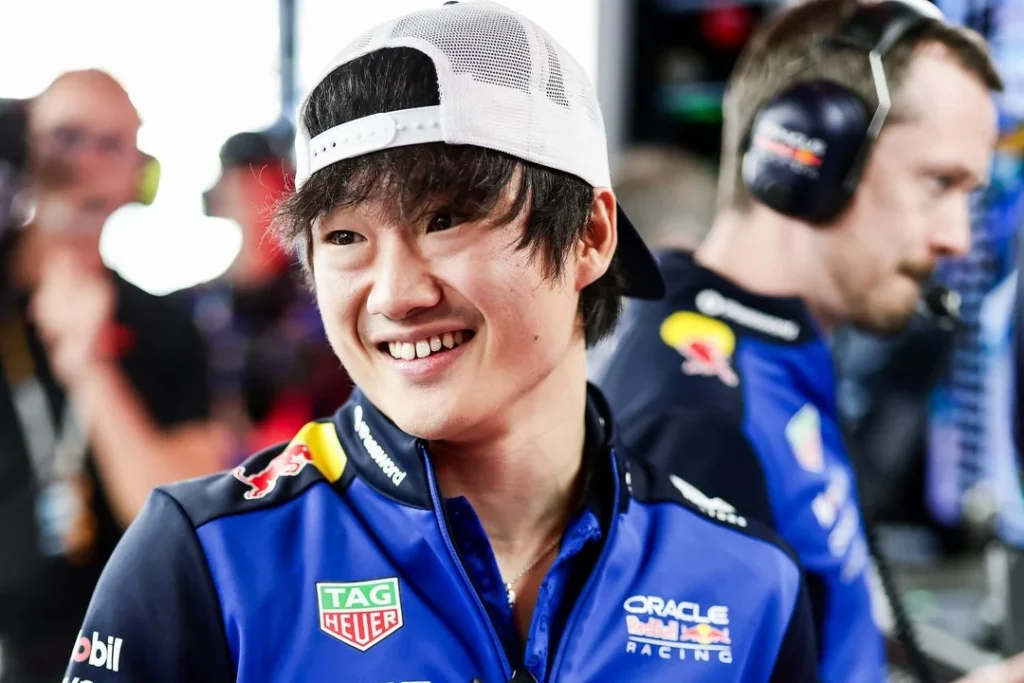
A rumor has linked Yuki Tsunoda to the No. 19 Dale Coyne Racing car in 2027 with Honda backing. On paper, the idea has some appeal. A high-profile Japanese driver with F1 experience, a big personality, and Honda connections would create attention immediately. Yuki in IndyCar would be fun, marketable, and easy to imagine from a fan-interest perspective.
But the rumor also deserves caution.
The source has been treated with skepticism, and the Honda angle is not straightforward. There has been discussion that Honda/HRC has taken a more hands-off approach with Yuki and that his priority remains staying in Formula 1. There is also the question of why Honda would back Yuki into IndyCar when Kaku Ohta has been seen as a more obvious Honda-linked candidate actively working toward that path.
The Coyne seat itself is complicated. Hauger currently occupies the No. 19, but if Andretti backing has dried up, his future becomes uncertain. Romain Grosjean also factors into Dale Coyne’s situation, and there is an argument that Grosjean remains safe because of sponsor and team preference. Yuki would bring publicity, but there is no guarantee he would be better placed to succeed in that equipment than Grosjean or Hauger.
So the Tsunoda rumor is possible in the way all silly-season rumors are possible. It passes just enough of a marketing smell test to be discussed. But it is far from solid.
Meanwhile, away from driver-market chaos, IndyCar’s Washington, D.C. race is creating its own kind of volatility.
FOX Sports CEO Eric Shanks described the event as a major two-day show, with the President waving the green flag and the race positioned as part of a larger celebration of America. The quote was clearly meant to hype the event. Instead, it underlined why the race is already so divisive.
The promotional framing makes politics impossible to separate from the event. For a series that often hears calls to “keep politics out of sports,” building the race around the President’s presence and national symbolism guarantees that the conversation will not be just about racing.
The green-flag image alone feels destined for meme territory. The more the event is sold as something people will talk about for generations, the more it invites the obvious question: will they talk about it because it was a great race, or because it became a spectacle for all the wrong reasons?
There is also skepticism over the “Freedom 250” branding and whether the event is truly about a broad America 250 celebration or something more politically branded. The state fair optics have not helped confidence either. If attendance, logistics, or the racing product disappoint, the event could become a public relations problem instead of a showcase.
That does not mean the race is doomed. A street race in Washington, D.C. has obvious visual and promotional potential. FOX clearly sees it as a major television event. IndyCar wants attention, and this will get attention.
But attention is not automatically good.
That is the theme running through the entire IndyCar news cycle right now.
McLaren can get attention by signing Dixon. Yuki can get attention by being linked to IndyCar. The D.C. race can get attention by turning the President waving the green flag into the centerpiece. Josh Pierson can get attention with funding. Hauger can earn attention with talent and still need money. Lundgaard can win races and still end up displaced.
IndyCar is not short on storylines.
The question is whether the series — and especially McLaren — can tell the difference between a headline and a plan.