

The 2026 Sonsio Grand Prix weekend has turned into far more than just another IndyCar race weekend. Between the controversy surrounding Alexander Rossi’s stranded car on the front stretch, confusion over a non-existent full course caution, mounting frustration with IndyCar officiating, and broader debates about driver performance and the series’ direction, the event has exposed a growing sense of unease around the paddock and fanbase alike.
What should have been a routine caution sequence instead became one of the most heavily scrutinized race control moments in recent IndyCar memory.
The Rossi Incident That Sent IndyCar Into Chaos
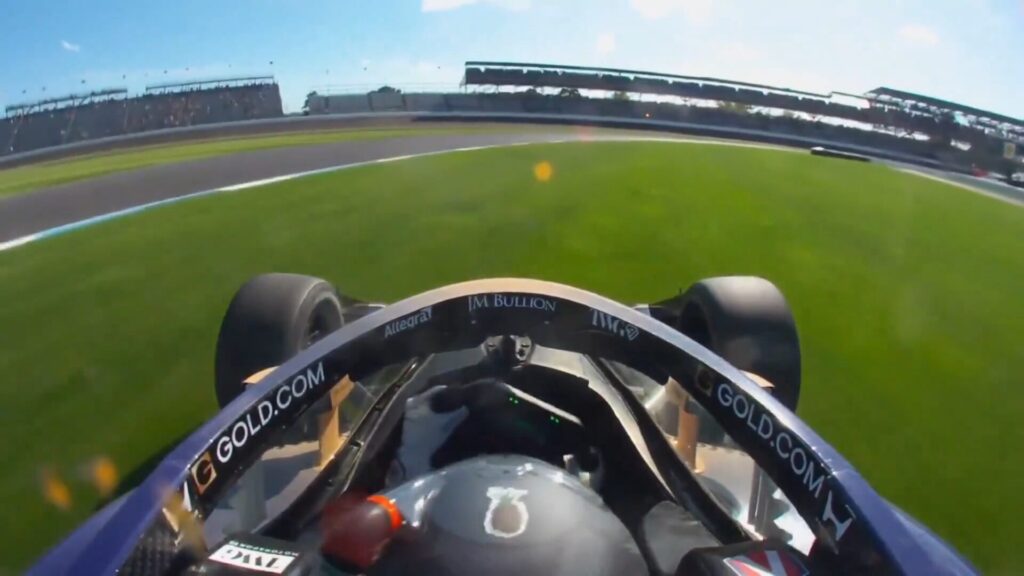
The defining controversy came on Lap 21 when Alexander Rossi slowed to a stop on the front stretch. What followed immediately descended into confusion.
FOX briefly displayed a full course caution graphic on the broadcast despite race control only issuing a local yellow. That graphic reportedly remained on screen for roughly 28 seconds before being removed. During that window, several teams reacted as though a full course yellow had officially been declared.
Kyle Kirkwood was already entering pit lane when his team informed him of a full course caution. He abruptly cut through the grass to avoid committing to pit lane under yellow conditions. Scott Dixon slowed dramatically after receiving similar information, triggering chaotic three-wide action behind him shortly after the field passed Rossi’s stranded car. Álex Palou also reportedly stayed out because his team believed a caution had been called.
Bryan Herta later publicly apologized to Kirkwood for the “bad pit call.”
The incident quickly evolved from a simple broadcast mistake into a much larger discussion about why teams appeared to trust television graphics over IndyCar’s official race control systems.
Several observers pointed out that drivers do, in fact, receive steering wheel alerts for full course cautions, while teams simultaneously receive official communication from race control. That only intensified the confusion over why some teams reacted to the FOX graphic instead.
Others argued the situation revealed a deeper issue: nearly everyone assumed Rossi stopping on the front stretch would automatically trigger a full course caution because historically, a stranded car in that location would have immediately neutralized the race.
Instead, IndyCar attempted to keep the race green.
Safety Concerns Overshadow Everything Else
The strongest reaction throughout the weekend centered around safety.
Many viewed the decision to continue under local yellow conditions as indefensible given Rossi’s location on the oval portion of the circuit. Critics argued that allowing cars to continue racing at speed past a stranded car on the front stretch crossed a line that should never even be debated.
The optics alone were alarming. Drivers blasted through the area at speed while confusion spread across pit lane and on timing stands. Fans noted that local yellows effectively became meaningless because drivers naturally continued pushing to avoid losing time.
That concern became one of the dominant themes surrounding the incident. The broader consensus emerging from the discussion was that local yellows simply cannot function properly in those kinds of high-speed situations because drivers are conditioned to keep pushing unless the entire field is neutralized.
The situation only appeared worse after replays showed multiple cars still racing aggressively near Rossi’s stopped machine. Some observers noted how little visibility drivers actually had approaching the scene, especially with Rossi stopped off-line in a relatively dark section of the front stretch.
The incident revived comparisons to previous officiating controversies, particularly Laguna Seca last season. Others referenced historic examples from IndyCar and Formula 1 where delayed cautions or insufficient neutralizations created dangerous situations.
The Jules Bianchi comparison surfaced repeatedly throughout the fallout discussion, with many pointing to Formula 1’s introduction of the Virtual Safety Car after Bianchi’s fatal accident as proof that motorsport learned long ago that local yellows are not enough when stranded cars and safety workers are exposed near active racing lines.
That naturally led to growing calls for IndyCar to modernize its own procedures.
Growing Calls For IndyCar To Adopt An F1-Style System
One of the clearest takeaways from the controversy was how many fans and observers now want IndyCar to fundamentally rethink its caution philosophy.
The current system — delaying a full course caution to allow pit cycles to complete while closing pit lane once yellow conditions are officially declared — came under enormous criticism throughout the weekend.
Many argued IndyCar is prioritizing strategy fairness over immediate safety intervention. Others bluntly stated that if a situation requires race control to debate whether to throw a caution, then the caution should already be out.
A recurring argument throughout the discussion was simple: strategy should never override safety.
That led to widespread calls for IndyCar to move closer to Formula 1’s road and street course procedures. Suggestions included:
- Permanently open pit lanes under cautions
- A Virtual Safety Car or slow-zone system
- Eliminating delayed caution procedures entirely
- More immediate FCY deployment regardless of pit cycles
- Clearer pit-entry warning systems
- Revising commitment line rules that forced Kirkwood into driving through the grass
Many pointed out the irony that IndyCar has spent years attempting to preserve fairness by delaying cautions, only to create far greater chaos and controversy in the process.
The broader feeling emerging afterward was that the series has now experienced enough caution-related incidents that the existing philosophy is becoming increasingly difficult to defend.
Race Control Under Heavy Fire
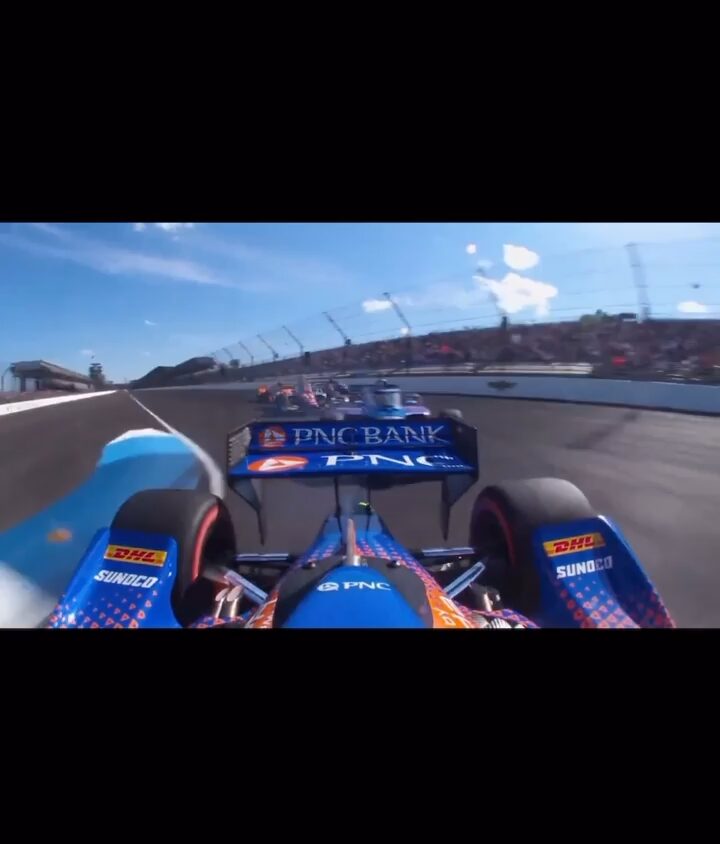
By the end of the weekend, criticism of race control itself had become unavoidable.
The Rossi incident sparked open questioning about whether IndyCar’s officiating standards are keeping pace with the modern series. Some fans argued the series has become too willing to gamble with local yellows in situations where previous eras would have immediately neutralized the race.
Others argued the problem goes beyond one decision and instead reflects a pattern.
Several observers pointed out that virtually everyone involved — drivers, teams, broadcasters, and viewers — initially assumed a full course caution had been deployed. The fact race control stood alone in treating the incident as merely a local yellow became one of the defining talking points afterward.
The confusion surrounding the FOX graphic only amplified that perception. Even though some correctly pointed out that teams should never rely on television broadcasts for official race control information, the fact that so many immediately believed the caution was coming underscored how unusual the decision felt in real time.
The broader reaction afterward bordered on disbelief. Many described the sequence as one of the most chaotic and poorly managed caution situations IndyCar has seen in years.
Will Power’s Andretti Future Already Becoming A Talking Point
Away from the officiating drama, another major topic emerging from the weekend was the growing scrutiny surrounding Will Power’s difficult start with Andretti.
Despite flashes of obvious pace, Power’s results have failed to match expectations so far in 2026. That has sparked increasingly early speculation about how long the partnership could realistically last.
Still, much of the discussion surrounding Power was notably more nuanced than simple criticism.
Many pointed out that Power’s raw speed remains evident. Others argued his season has been undermined equally by team execution issues, pit stop mistakes, mechanical problems, and a handful of uncharacteristic driver errors.
The Indy GP itself became central to that debate. Some argued Power potentially threw away a victory with his pit exit mistake, while others countered that one mistake should not overshadow how strong the overall drive actually was.
There was also growing recognition that transitioning away from Penske after nearly two decades was never going to be seamless. Several observers compared the situation to Lewis Hamilton’s ongoing Ferrari adjustment in Formula 1, arguing that even elite drivers can require significant adaptation time when changing organizations after long tenures.
At the same time, many believe Power is already improving Andretti internally through his experience alone. Both Marcus Ericsson and Kyle Kirkwood have reportedly credited Power’s Penske knowledge with helping elevate the overall program.
Ironically, despite the inconsistent results, some believe Power actually looks happier at Andretti than he did during his final years at Penske. The perception emerging from Andretti’s social content is that Power appears noticeably more relaxed and energized in his new environment.
That has led many to believe retirement is unlikely unless Power personally stops enjoying racing altogether.
Questions Continue Around Rasmussen, McLaughlin, And Other Underperformers
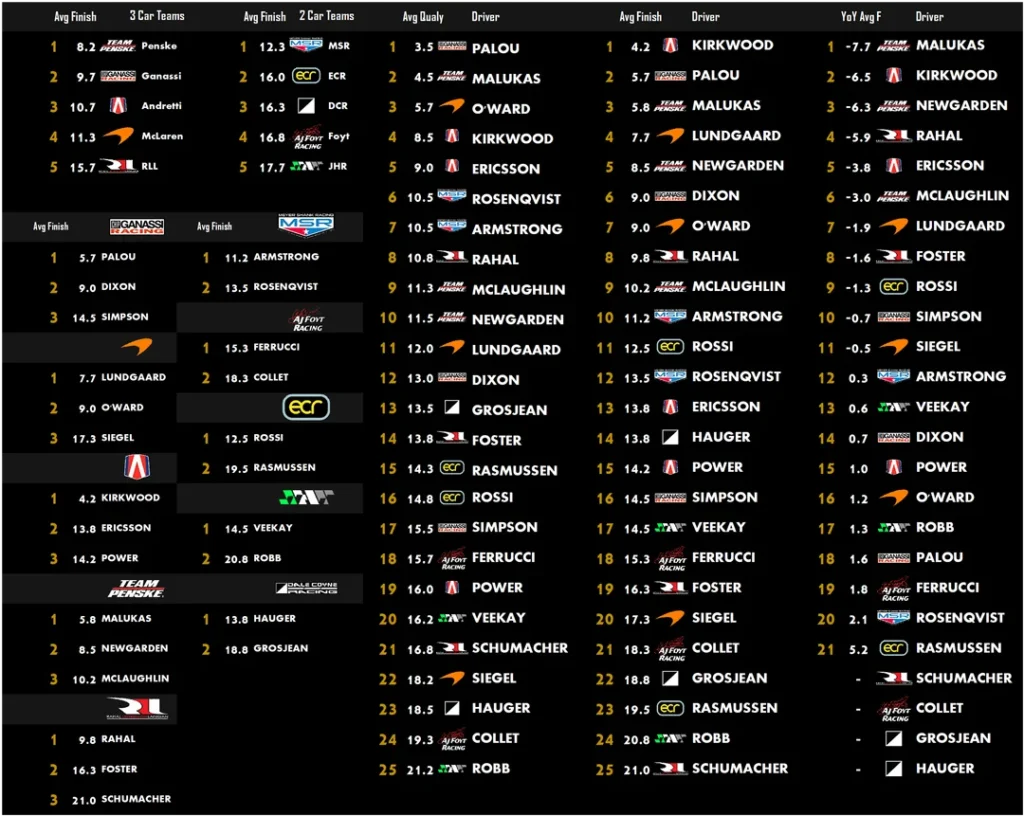
The broader IndyCar conversation this week also extended into growing debates about underperforming drivers throughout the field.
Christian Rasmussen became one of the most discussed names after another inconsistent weekend. While many acknowledged his oval potential and aggressive raw speed, others argued his inability to consistently manage races and avoid mistakes is becoming a concern.
Phoenix remained the defining example. Rasmussen’s pace there impressed many, but his overaggressive move on Power became symbolic of a driver who still struggles to balance speed with restraint.
Scott McLaughlin also came under increasing scrutiny.
After entering previous seasons viewed as a rising championship-level Penske star, questions are now emerging about whether he has plateaued. Some observers argued Penske’s internal hierarchy discussions during the offseason now look premature given Josef Newgarden and David Malukas have arguably overshadowed him so far this season.
Others pushed back strongly, noting McLaughlin still sits comfortably inside the top ten in points while Penske’s overall non-oval form has not looked dominant compared to previous years.
Even so, there is a growing feeling that McLaughlin’s road and street course form has regressed since the introduction of the hybrid package.
Meanwhile, Nolan Siegel, Marcus Ericsson, and Mick Schumacher also became frequent discussion points throughout the weekend as fans debated which drivers are genuinely underperforming versus simply suffering through difficult circumstances.
Indy 500 Qualifying Changes Divide Opinion
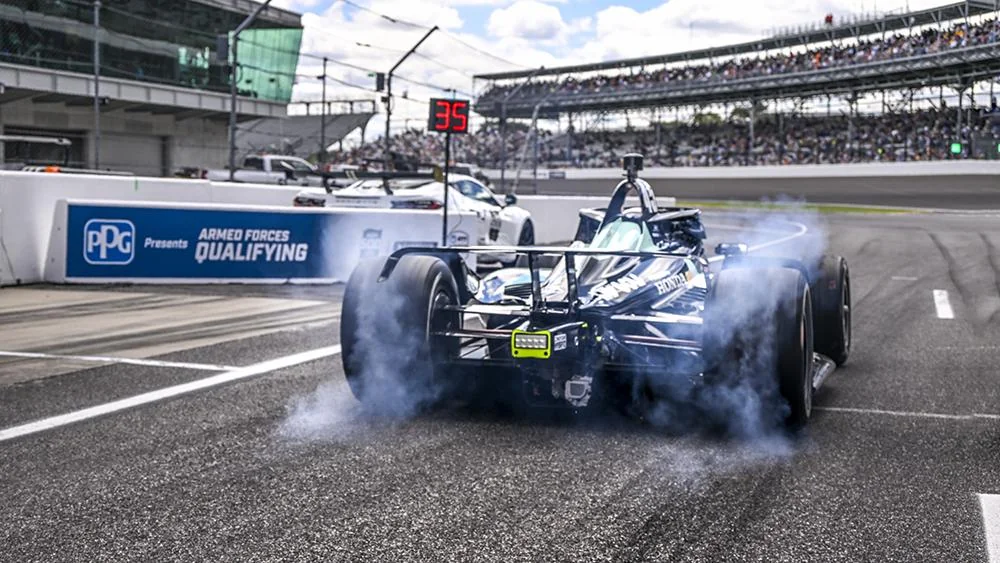
The weekend also brought confirmation of a revised qualifying format for the 2026 Indianapolis 500.
Under the new system, positions 10 through 15 from Saturday qualifying will compete Sunday for the final three spots in the Top 12 shootout before the Fast Six pole session later in the day.
The reaction was mixed almost immediately.
Some welcomed the extra drama and additional qualifying runs, arguing that more on-track action is always beneficial. Others viewed the change as a transparent attempt to recreate the tension of traditional Bump Day despite the field no longer exceeding 33 entries.
That perception became one of the dominant themes surrounding the announcement. Many believe the revised format exists primarily to create television drama after FOX likely anticipated a larger qualifying spectacle than the current entry list realistically provides.
Still, others argued the format could genuinely add intrigue by encouraging more aggressive Saturday qualifying strategies as teams attempt to secure automatic advancement positions.
The debate ultimately reflected a larger identity question currently surrounding IndyCar: how much should the series modernize its presentation without losing the traditions and authenticity that make events like Indianapolis qualifying unique in the first place?
That question now feels increasingly central to the sport as a whole.
Because after the chaos of the Sonsio Grand Prix weekend, IndyCar suddenly finds itself defending far more than just one controversial caution call.