

Formula 1’s on-track drama may define championships, but it’s often the off-track moments that capture the sport’s personality—and this past stretch delivered exactly that. From a lighthearted exchange between drivers about video games, to a viral photo moment in Istanbul, to a full-blown street spectacle building momentum in Argentina, the conversation around F1 has once again blurred the line between sport, culture, and pure internet chaos.
“I’ll Be Honored”: When F1 Drivers Enter Their Own Career Mode
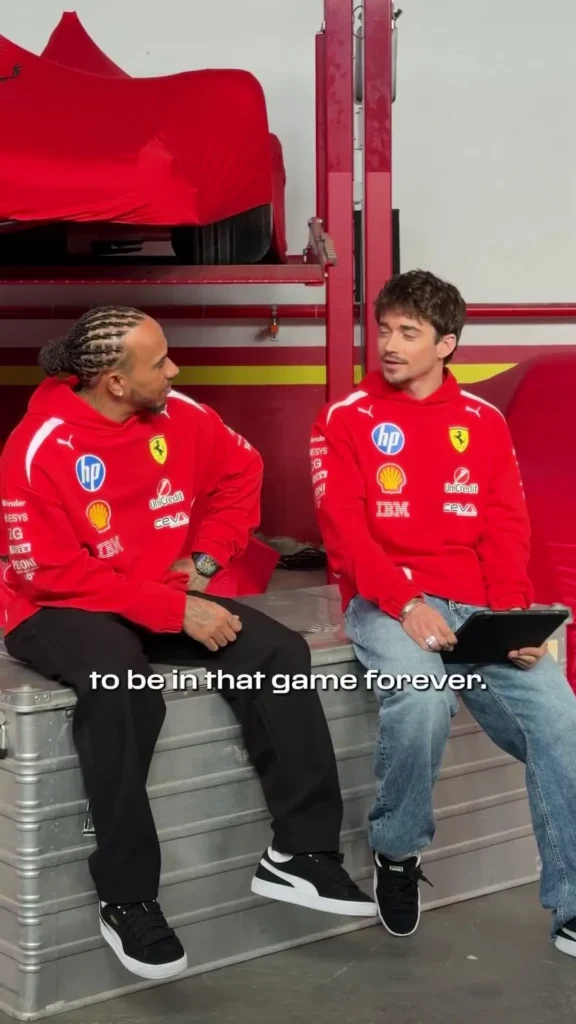
A simple question—whether drivers play as themselves in the official F1 game—spiraled into something far more revealing. One driver admitted he had always dreamed of being in the game and naturally plays as himself. Another, despite a lifetime in the sport, confessed he never actually chooses his own character—prompting a joking offer from his counterpart: “You can pick me—I’ll be honored.”
That exchange alone was enough to ignite fan imagination. The idea of one driver selecting another in-game quickly became the focal point, with the conversation drifting into playful territory and fanfiction-style humor. What followed wasn’t just commentary—it was a full-blown example of how F1 fandom thrives on exaggeration, reinterpretation, and inside jokes.
But beneath the chaos, there was a more grounded observation: many found it inherently funny that F1 drivers even engage with career mode at all. After all, their real lives are essentially the ultimate version of that exact progression system. As one take neatly put it, there’s something surreal about a driver “playing career mode when their real life is literally career mode.”
The discussion also exposed a broader dynamic: unlike other sports, F1 drivers don’t necessarily gravitate toward the official game as a primary outlet. The consensus leaned toward the idea that while games like FIFA dominate among athletes in other disciplines, racing drivers often prefer more advanced simulators—or simply don’t find the official titles compelling compared to the real thing. The reasoning is straightforward: when your day job involves operating machinery at the absolute limit, the “game version” can feel like a downgrade rather than an escape.
At the same time, fans acknowledged that the accessibility of the F1 games serves a different audience entirely. Most players aren’t using full racing setups, and for controller-based gameplay, the experience is considered “good enough.” That gap—between professional-grade simulation and consumer-friendly design—helps explain why the relationship between drivers and the official game feels fundamentally different from athletes in other sports.
Yuki Tsunoda, Height Discourse, and the Internet Doing What It Does Best
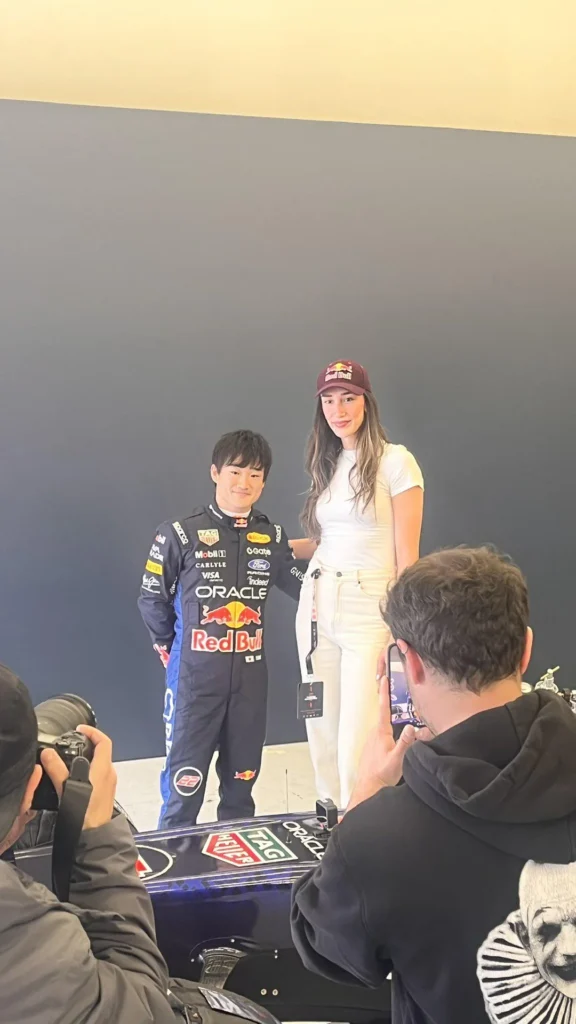
If the gaming discussion showed F1’s playful side, a single image from Istanbul demonstrated how quickly things can spiral into full meme territory.
A photo of Yuki Tsunoda alongside national volleyball player Hande Baladın became instant viral fuel—not because of anything dramatic, but because of the stark height contrast. The image triggered an avalanche of commentary, much of it centered on the now-familiar “short king” narrative.
Fans leaned all the way in. What started as a simple observation quickly escalated into mock declarations about shorter drivers “inheriting the earth,” “colonizing Mars,” and even dominating the galaxy due to efficiency advantages in space travel. The joke snowballed into pseudo-scientific arguments about resource consumption, gravity, and physiology—none of it serious, all of it very on-brand for how F1 discourse evolves online.
At the same time, the image sparked another parallel thread: intense scrutiny over Tsunoda’s hand placement in the photo. What might have been an entirely normal pose became a point of comedic investigation, with fans debating whether it was a “hover hand,” a carefully calculated position, or simply “the best placement possible with plausible deniability.” The tone never strayed far from playful, but the sheer volume of analysis highlighted how even the smallest visual details can become headline material in the F1 ecosystem.
Ultimately, the moment wasn’t about controversy—it was about amplification. A routine photo became a cultural flashpoint because F1 fans don’t just consume content; they reinterpret it, exaggerate it, and turn it into a running narrative.
Colapinto, 300 km/h Streets, and Argentina’s F1 Fever
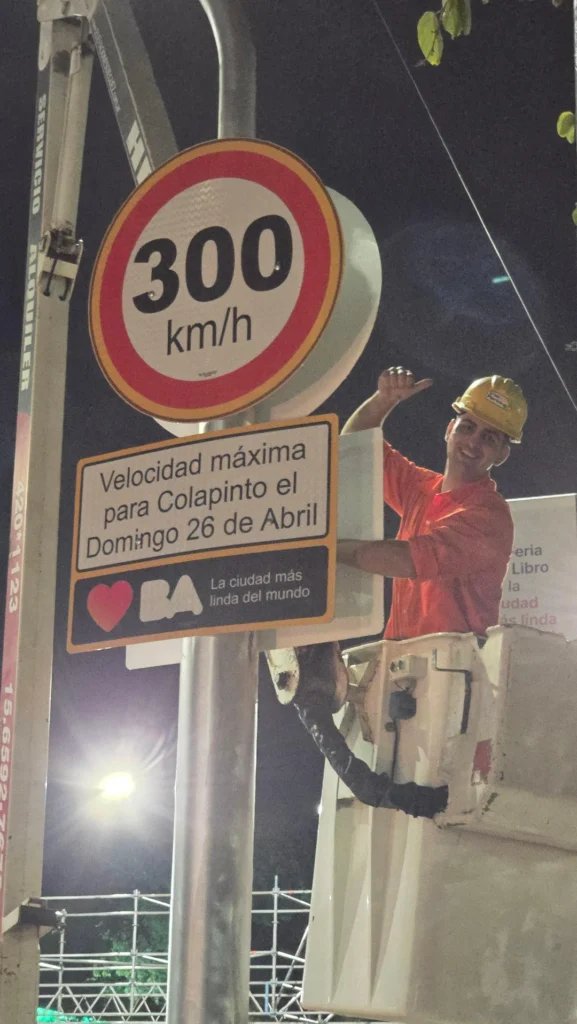
While memes dominated some corners of the conversation, elsewhere the focus shifted to something far more tangible: the growing momentum behind Formula 1’s presence in Argentina.
A planned roadshow in Buenos Aires—featuring Franco Colapinto driving on public roads—immediately raised eyebrows due to one detail in particular: a 300 km/h speed limit being implemented specifically for the event. That alone was enough to trigger waves of humor, with fans coining phrases like “Colapinto-and-go” penalties and joking about what would happen if the limit were exceeded—ranging from instant penalties to exaggerated “straight to jail” scenarios.
But beyond the jokes, the scale of the event is what truly stood out.
Estimates suggest the roadshow could draw anywhere between 500,000 and 750,000 spectators, combining paid grandstands with extensive free-access areas along major avenues. That figure alone sparked comparisons to historic F1 attendance records, with some noting that it would exceed even the largest Grand Prix crowds—though others were quick to point out the structural differences between a free, open city event and a ticketed race weekend with logistical constraints.
Still, the takeaway was clear: the appetite for Formula 1 in Argentina is enormous.
The roadshow itself is designed as more than just a driving demonstration. Plans include multiple runs in historic machinery, concerts, fan zones, and a full broadcast component. In other words, it’s being treated as a large-scale activation—part showcase, part proof of concept.
And that’s where the conversation becomes more strategic.
There is a clear push to bring Formula 1 back to Argentina, with infrastructure upgrades already underway at the Autódromo Oscar Gálvez to meet top-tier standards. The roadshow, in that context, feels less like a standalone event and more like a statement: a demonstration of demand, organization, and cultural relevance.
Naturally, questions remain about feasibility. Some observers pointed out that Grand Prix economics are fundamentally different from exhibition events, particularly when it comes to pricing, logistics, and long-term sustainability. Others highlighted that traditional race weekends attract international travel and multi-day engagement, factors that inflate both attendance ceilings and costs.
But even with those caveats, the enthusiasm is undeniable. As one sentiment summarized, regardless of comparisons or constraints, “a hell of a lot of people are keen.”
The Bigger Picture: F1 as Culture, Not Just Competition
Taken together, these moments highlight something increasingly central to Formula 1’s identity: the sport doesn’t operate in isolation anymore. It exists simultaneously as competition, entertainment, and internet culture.
A casual gaming comment turns into a viral discussion about how drivers interact with their own sport. A simple photograph evolves into a multi-layered meme ecosystem. A roadshow becomes a litmus test for a nation’s return to the calendar.
None of these moments change championship standings—but all of them shape how Formula 1 is experienced, discussed, and ultimately valued by its audience.
And in a landscape where engagement matters as much as ever, that might be just as important.