

Formula 1’s future has become the sport’s present. Across the latest wave of discussion around the 2026 rules, one theme keeps surfacing: nobody is really arguing about abstract regulations anymore. Teams, drivers, and fans are already treating the next cycle as a live political battle, where every technical clarification, every mid-season adjustment, and every interpretation of fairness could tilt the competitive order.
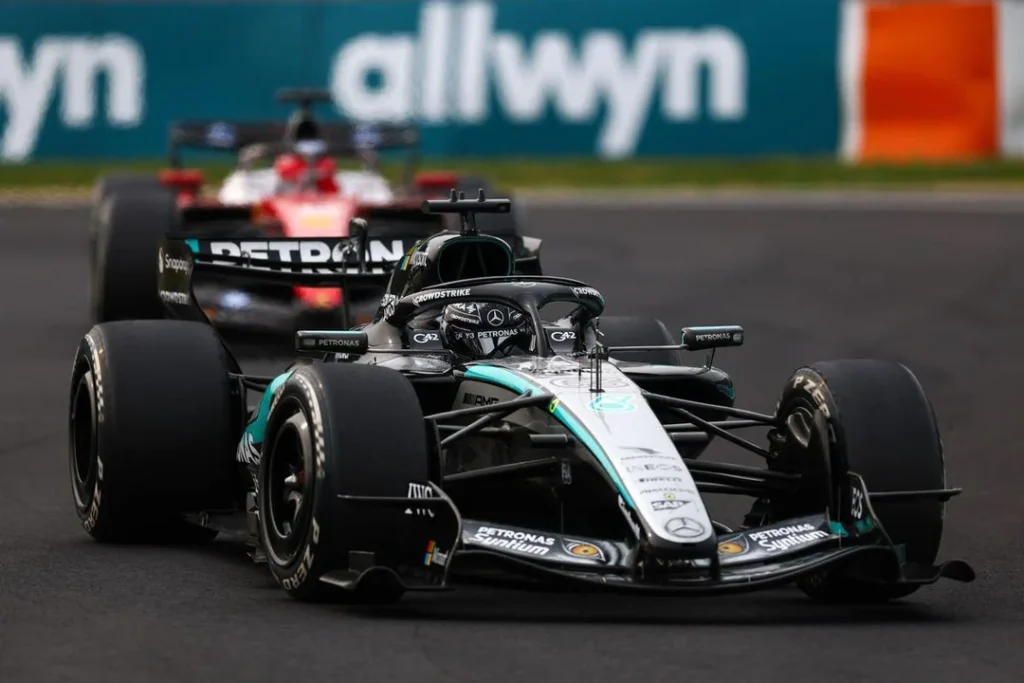
That was the underlying tension in Toto Wolff’s latest comments on the 2026 engine situation. His position was framed around the idea that any imminent FIA decision must not alter the pecking order, with the Mercedes boss insisting, “We need to make sure that nothing changes with these changes.” But the reaction to that line was immediate, and predictably skeptical. The dominant reading was not that Mercedes was protecting sporting purity, but that the team currently in front was trying to ensure everyone else stayed there behind it.
A major part of that argument centers on ADUO. The reaction around Wolff’s comments made clear that this is where much of the paddock anxiety now sits. The distinction many drew was important: the looming FIA call is not about rewriting the much-debated 2026 rules from scratch, but about whether ADUO should be awarded under the existing framework. From that perspective, Mercedes’ stance was read less as opposition to rule chaos and more as resistance to rivals receiving legitimate catch-up tools under rules already on the books. The harshest interpretation was simple: Mercedes won the development race and now does not want the regulations to function in a way that could threaten that advantage.
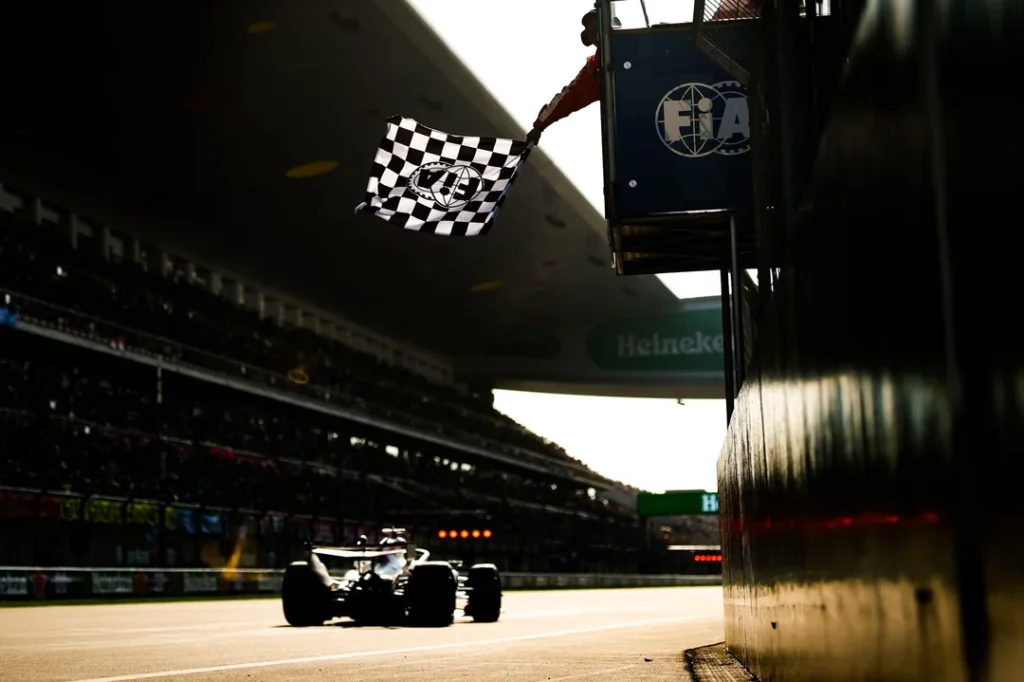
That, in turn, has opened up a broader philosophical split over what ADUO is supposed to do. One side sees it as a necessary equalization mechanism designed to stop a manufacturer from being trapped hopelessly behind, the kind of scenario that would lock the grid into a frozen hierarchy for years. The other accepts catch-up assistance in principle, but only up to the point of parity. The argument there is that if ADUO ever overshoots and gives a trailing manufacturer a new outright edge, then the system ceases to be corrective and becomes distortive. That is where the phrase “competitive imbalance” started to loom over the conversation, because even people sympathetic to catch-up measures were drawing a line at a scenario where a team jumps from behind to decisively ahead while the current benchmark has no immediate response available.
Still, the reaction to Mercedes’ rhetoric was largely unsympathetic. There was a strong sense that this is simply what every frontrunner does: defend its edge, talk up principle, and call it fairness. Yet Mercedes drew extra criticism because of the tone. The phrase “no place for gamesmanship” landed badly with many observers who saw that very statement as gamesmanship in itself. The backlash was not really about whether teams should act in self-interest; most people plainly accepted that they always do. It was about the attempt to present that self-interest as something loftier. In that reading, Mercedes was not being singled out for protecting its advantage, but for sounding sanctimonious while doing it.
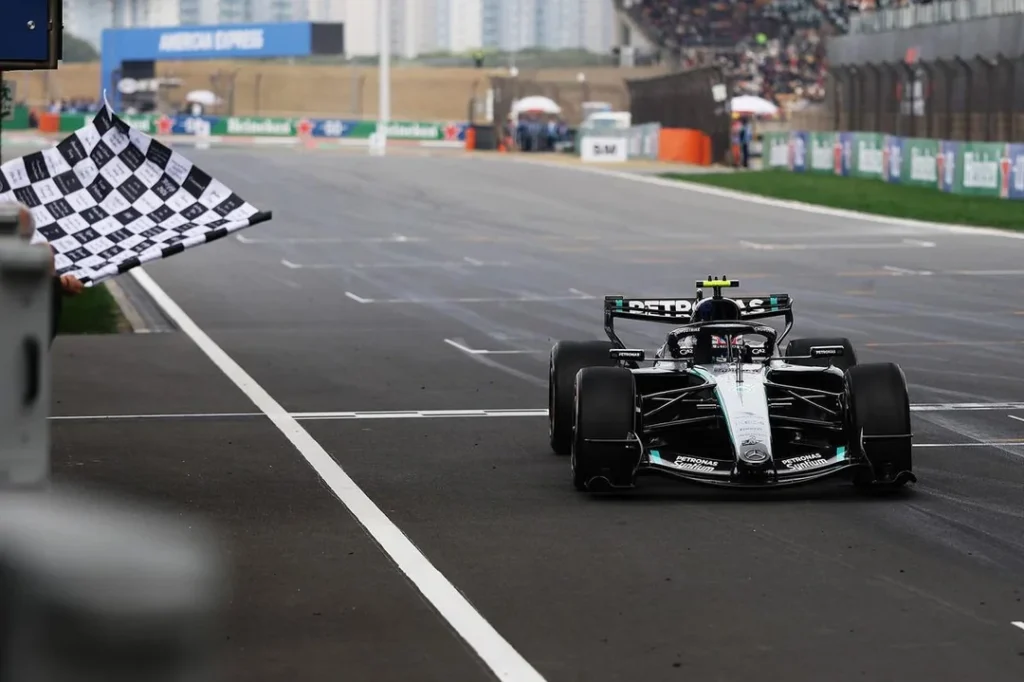
That perception was sharpened by the memory of earlier fights. The porpoising row was brought up repeatedly, as was Mercedes’ unhappiness over Ferrari’s launch advantage this season. Whether or not those comparisons are perfectly aligned, they fed the same larger story: when Mercedes is disadvantaged, it is willing to press for change; when Mercedes is advantaged, it warns against destabilizing the sport. That does not make the team unique, but it does make its current language easy to attack.
At the same time, the FIA and the teams have not stood still. A package of refinements to the 2026 Formula 1 regulations has now been agreed by all stakeholders, and the response to that announcement captured the strange place the sport is in. On one hand, there was genuine approval that action is being taken at all. On the other, the fixes were described less like a fundamental rethink and more like software patch notes for a live-service game that shipped with balance problems.
That joke gained traction because the changes really do read like a balance update. The list includes a reduction in maximum recharge per lap from 8MJ to 7MJ in qualifying, an increase in peak super clipping recharge allowance from 250kW to 350kW, a new low-power start detection system, reduced MGU-K deployment to 250kW outside key acceleration zones, adjustments to boost limits to avoid dangerous closing speeds, simplified rear light cues, and increased intermediate tyre blanket temperatures. It is an undeniably interventionist package, but also one that feels very much like targeted number-tweaking rather than conceptual redesign.
That is why the immediate reaction split in two directions. The more positive view was that these are the exact kinds of changes that can realistically be made mid-season: software-level mitigation, parameter shifts, and safety-oriented corrections rather than expensive hardware upheaval. In that reading, the sport is doing what it can without pretending a full solution is feasible right now. Several observers saw the package as an attempt to steer the ship back on course rather than rebuild it at sea.
The more pessimistic view was that this remains lipstick on a pig. Those critics did not necessarily deny that the tweaks are improvements; they just questioned whether the changes are large enough to address the underlying flaws in the 2026 concept. That sentiment came through especially strongly around super clipping and energy usage. For many, the truly important changes are the reduced recharge ceiling and the higher super clipping power allowance, because those are the ones most likely to alter how much of the lap is spent doing unnatural energy management. But even then, there was a recurring sense that the adjustments are cautious to the point of timidity, the result of compromise between manufacturers rather than a clean technical answer.
The new start procedure changes produced one of the clearest micro-debates. The FIA’s “low power detection” system, designed to trigger automatic MGU-K deployment to guarantee a minimum level of acceleration, was broadly understood as a safety tool aimed at preventing dangerously slow launches. That explanation was accepted by a lot of people, especially when compared with obvious crawling-off-the-line situations that create hazards behind. In that reading, a bad start remains a bad start; the system simply stops it becoming an oil tanker scenario.
But not everyone bought the “no sporting advantage” language attached to it. Some argued that if a car leaves the line quicker than it otherwise would have, that is by definition a sporting advantage, however small or safety-motivated the intervention may be. Others pushed back by pointing out that any energy spent rescuing the launch has to come from somewhere, which could leave those cars vulnerable later in the lap. That turned the debate away from absolutes and into trade-offs: perhaps the system helps prevent disaster at the start, but at the cost of battery flexibility and deployment strength later on.
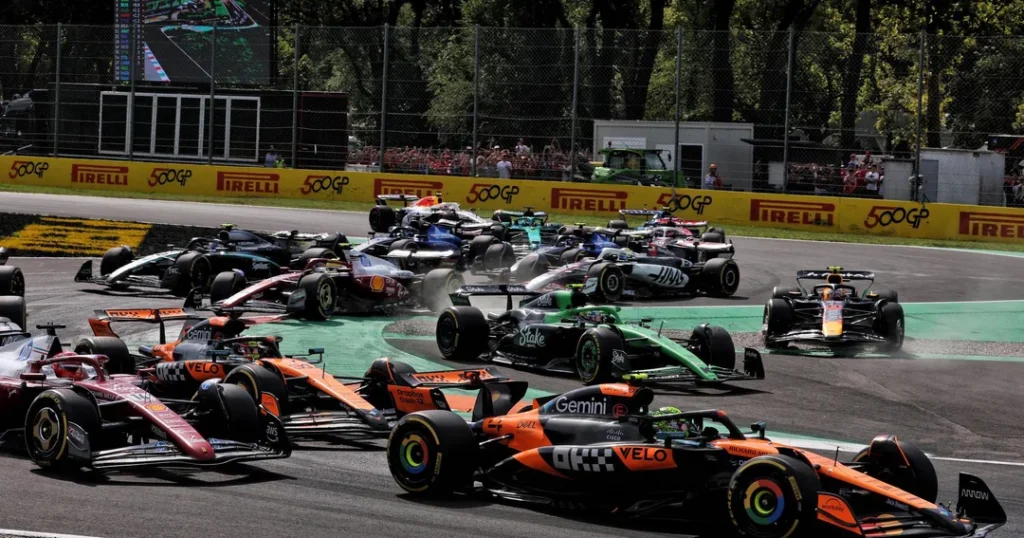
Ferrari sat right at the center of that argument. Because Ferrari’s launch performance has stood out, there was immediate suspicion that the new start logic functioned as a Ferrari nerf. Yet even that interpretation drew counterarguments. Some believed it might actually benefit weaker starters more than it harms strong ones, effectively raising the floor rather than lowering the ceiling. Others noted that Ferrari agreeing to the changes undercuts the idea that the team viewed them as a direct attack. The broader point was that while Ferrari’s starts became the shorthand example, the measure seems primarily intended to remove the most dangerous edge cases rather than erase legitimate execution advantages.
Elsewhere in the regulations package, the deployment cap changes during races drew support for a more straightforward reason: reducing the risk of severe closing speeds in awkward places. That was viewed as one of the most sensible parts of the package, particularly because the new split between 350kW in straight-line zones and 250kW elsewhere offers a direct attempt to manage where speed differentials are created. It may also reduce some of the energy burn that fuels super clipping later in the lap. But even here, there is uncertainty. Without detailed track maps, it remains hard to know exactly where the restrictions will bite and how much they will truly change the flow of races.
That uncertainty has become the defining mood around the entire 2026 conversation. Everyone can identify what the FIA is trying to solve. Fewer are convinced that the current refinements go far enough. And almost nobody seems to think the debate is over. If anything, the unanimity behind these changes was taken as evidence that they are the most modest adjustments possible, the sort of safety-oriented tweaks that nobody can publicly reject, rather than proof that the regulations are now in a healthy place.

Alongside that technical and political wrangling, Formula 1 also had a lighter headline: Lando Norris was named Breakthrough of the Year at the Laureus Sports Awards 2026. Even that produced a surprisingly revealing reaction, because it became less about the award itself and more about what “breakthrough” is supposed to mean.
On the surface, it is a major recognition. Norris became the ninth F1 driver nominated in the category and the sixth to win it. Yet the response quickly turned into an audit of the Laureus definition. The main objection was obvious enough: Norris is not a newcomer. He is deep into his Formula 1 career, already an established front-runner, and had been in title conversations before. To many, calling this a breakthrough felt strange for a driver in his eighth season.
But others argued that this misunderstands the award. The counterpoint was that breakthrough in this context does not mean rookie emergence; it means a significant leap into a new tier. Under that interpretation, winning a first world title absolutely qualifies, especially for a driver who had spent years being good and then finally became decisive at the very top. That reading also lines up with the category’s history, which has often rewarded not just young newcomers but athletes whose careers suddenly elevate through a defining achievement.
In that sense, the Norris debate was really a debate about narrative timing. Is a first championship automatically a breakthrough if the driver had already been a contender? Does the scale of the achievement matter more than how long it took to arrive? The discussion never fully settled those questions, but it did reveal that Norris’ status has changed. Even the people skeptical of the label were, in their own way, acknowledging the size of what he accomplished.
And then there is the newest off-track issue threatening to become a very Formula 1 kind of story: the prospect of Italian authorities clamping down on how drivers are taxed. That discussion immediately spiraled into a familiar tangle of athlete taxation, Monaco residency, companies behind personal earnings, bilateral treaties, and the practical difference between where money is paid and where it is earned.
The dominant view to emerge was that for labor income, location matters. It does not really matter whether the money is structured as salary, bonuses, or other forms of race-related compensation; if the work that generated the income happened in Italy, then Italy is likely to claim a right to tax it. That was the central pushback against the more optimistic theories about drivers simply routing everything through companies, tax havens, or carefully timed payments. The counterargument to those schemes was blunt: tax avoidance is not magic, and income from labor is far harder to make disappear than people like to imagine.
That did not mean everyone agreed on the mechanics. Some argued that contract structure still matters, especially if much of a driver’s compensation is tied up in non-race-specific bonuses rather than a clean per-race salary. Others maintained that tax treaties and employment tests make it much harder to reclassify what is obviously race income into something else. There was also a recurring distinction between avoiding double taxation and avoiding taxation entirely. For drivers based in Monaco, the usual protection of being taxed somewhere else first becomes much less comforting, because zero tax at home leaves foreign authorities with a clearer case to pursue what was earned on their soil.
What makes this story especially interesting in Formula 1 is that it touches the sport’s entire structure. Drivers are globally mobile, many live in low-tax jurisdictions, and their work is performed in short bursts across multiple countries. That makes F1 feel like an extreme version of the “jock tax” problem familiar from American sports, where athletes owe tax based on where they compete rather than who pays them. The difference is that Formula 1’s lifestyle and compensation arrangements often encourage the fantasy that the whole thing can be engineered away. The reaction here suggested a growing skepticism toward that fantasy.
There was also little public sympathy for aggressive avoidance. A notable portion of the response was simply that governments should enforce the tax laws they already have, especially against a class of earners who are perceived as already doing very well within systems built to accommodate wealth. At the same time, there was some recognition that everyone in this ecosystem will try to minimize liability if they can, and that part of the coming fight will be less about morality than about how hard Italy is really willing to push and how robust the existing treaties and formulas prove to be.
Taken together, these six developments paint a revealing picture of Formula 1 right now. The sport is not just racing through a season; it is arguing through its future in real time. Mercedes wants the rules interpreted in a way that preserves the merit it believes it earned. Rivals and observers hear that as the classic language of a frontrunner defending its turf. The FIA is trying to soften the sharpest edges of the 2026 package without admitting the design needs deeper surgery. Ferrari’s launch advantage has become the perfect test case for how far “safety” interventions can go before they feel competitive. Norris is being honored in a way that reflects how dramatically perceptions of his career have shifted. And even taxation is now part of the wider F1 conversation, another reminder that in this sport, nothing stays purely technical for long.
The 2026 era may not be fully here yet, but Formula 1 is already behaving like it is. And if the current storm around ADUO, deployment, starts, fairness, and unintended consequences is any indication, the next phase of the championship will be fought just as hard in meeting rooms, legal language, and interpretation battles as it will be on track.