

Max Verstappen’s latest outing away from Formula 1 should have been a straightforward headline: a dominant charge, sharp overtakes, and valuable preparation for next month’s Nürburgring 24 Hours. Instead, it became something far more chaotic—and, in many ways, more revealing about the current state of the sport and its audience.
A Glimpse of Racing Fans Are Craving
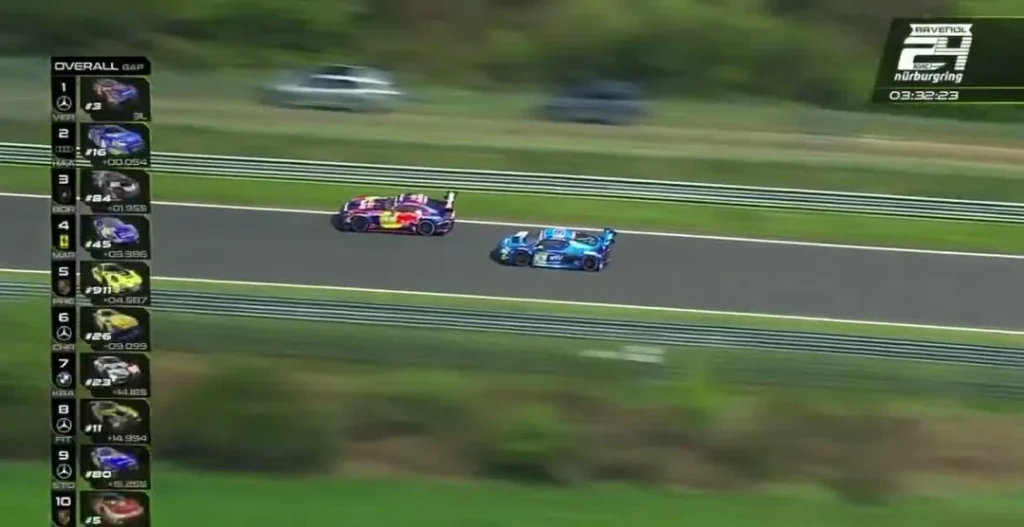
For a brief stretch, Verstappen delivered exactly what fans have been missing. Starting fifth and slicing his way forward, he climbed into contention with a series of aggressive, opportunistic moves—most notably a standout overtake that had viewers fixated on the action.
The battle itself became the focal point. The intensity, the closing speed, and the willingness to commit in wheel-to-wheel combat created a level of engagement that many felt has been absent elsewhere. That short burst of racing—roughly half an hour of sustained fighting—was widely seen as “incredibly intense” and worth tuning in for on its own.
There was a noticeable contrast in how fans framed the experience. Some openly admitted they were enjoying this more than recent Formula 1 races, pointing to the unpredictability and raw competition. Others pushed back, describing endurance racing as a fundamentally different product—a “slow burn” where flashes of brilliance are separated by long stretches of strategy-driven quiet.
That divide is telling. It’s not just about which format is “better,” but about what fans feel they’re currently lacking. When even a short sequence of battles in another category triggers comparisons, it highlights a growing appetite for sustained on-track action.
From Control to Chaos
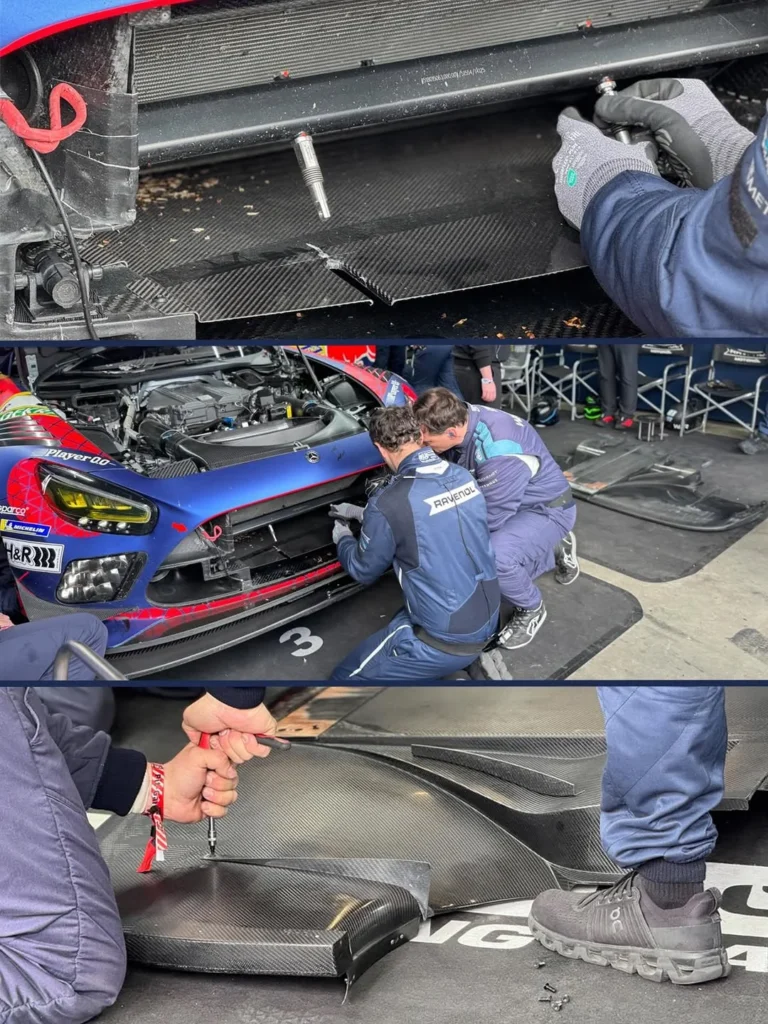
Verstappen’s race itself mirrored that broader emotional swing. After climbing into the lead, the trajectory flipped abruptly.
A sudden issue—felt initially as heavy vibrations—was traced to a loose splitter. With no contact to explain the damage, the problem appeared both unexpected and costly. The result was a pit stop lasting nearly 30 minutes, instantly dropping the car from the front to deep in the order.
From leading the race to falling as low as the back half of the field, it was the kind of reversal that endurance racing can produce without warning. Even as the car returned to the track and continued circulating, the outcome was effectively decided.
There was still a layer of optimism around the bigger picture. The run was framed as valuable preparation for the Nürburgring 24 Hours, and despite the setback, the underlying pace—and even flashes like setting competitive lap times—suggested the potential remains intact.
But the tone around Verstappen’s misfortune quickly shifted into something more narrative-driven.
The “Number 3” Narrative Takes Hold
Rather than focusing solely on the mechanical issue, much of the reaction leaned into a familiar motorsport trope: luck, superstition, and the idea of a curse.
The number 3 became the centerpiece of that discussion. The pattern of misfortune, real or perceived, fed into a growing belief that the number itself might be working against him. Suggestions ranged from abandoning it entirely to jokingly “passing the curse” to another driver, echoing how narratives in motorsport often build mythology around coincidence.
At the same time, there was a counterpoint grounded in reality: this may simply be regression to the mean. After years of relatively clean runs free from major mechanical setbacks, this kind of issue could be interpreted not as bad luck—but as normal variance catching up.
That tension between superstition and statistical reality is a recurring theme in racing discourse. And here, it unfolded in real time, layered over a race that had already swung from dominance to damage.
A Broader Frustration With Formula 1
Running parallel to Verstappen’s Nürburgring story was a separate but equally revealing development: a statement from FIA President Mohammed Ben Sulayem regarding discussions with drivers ahead of further meetings on the 2026 regulations.
On paper, the message signaled progress—“constructive and collaborative discussion” with more to come. In practice, the reaction was overwhelmingly focused on how it was communicated.
Fans dissected the tone, structure, and delivery of the statement itself. The use of all caps, the length, and the density of language led to widespread criticism that it said very little despite using a lot of words. Descriptions of it as “word salad” captured the sentiment succinctly: a communication style that feels overly formal, overly vague, and disconnected from what audiences actually want to hear.
The critique extended beyond just one statement. It tapped into a broader perception that Formula 1’s leadership often communicates in a way that lacks clarity or decisiveness—discussing meetings about discussions, rather than delivering tangible outcomes.
There was, however, a minority view pushing for context: different stakeholder groups require separate conversations, and this step-by-step approach may be necessary to gather meaningful input. But even that more measured perspective didn’t fully counter the dominant frustration.
The Long Break—and What It’s Revealing
Overlaying everything is timing. The current stretch without Formula 1 racing has amplified scrutiny on both the on-track product and off-track communication.
A five-week gap—followed by additional breaks—has left fans searching for alternatives. Many have turned to endurance racing, IMSA, and other series, often discovering elements they find more engaging in the process.
That shift is subtle but important. It’s not just that fans are watching other categories—it’s that they’re actively comparing them. Moments like Verstappen’s Nürburgring battle don’t exist in isolation; they’re being evaluated against recent Formula 1 races, sometimes unfavorably.
For some, the break has gone almost unnoticed, a sign of disengagement. For others, it has been a reminder of how much they miss Formula 1—while simultaneously exposing what they feel is missing when it returns.
A Snapshot of a Pivotal Moment
Taken together, these threads form a clear picture of where Formula 1 currently stands in the eyes of its most engaged audience.
- A driver delivering standout racing—but outside the championship itself
- A mechanical failure turning performance into narrative
- A governing body communicating progress—but failing to convince
- A calendar break giving fans time to question the product
None of these elements alone define the sport. But combined, they create a moment of reflection.
Verstappen’s Nürburgring run showed that the appetite for intense, unpredictable racing remains strong. The reaction to the FIA’s statement showed that fans expect clarity, not abstraction. And the broader conversation showed that comparisons—fair or not—are becoming harder for Formula 1 to avoid.
For now, the sport sits in that tension: capable of brilliance, but increasingly challenged on how consistently it delivers it.