

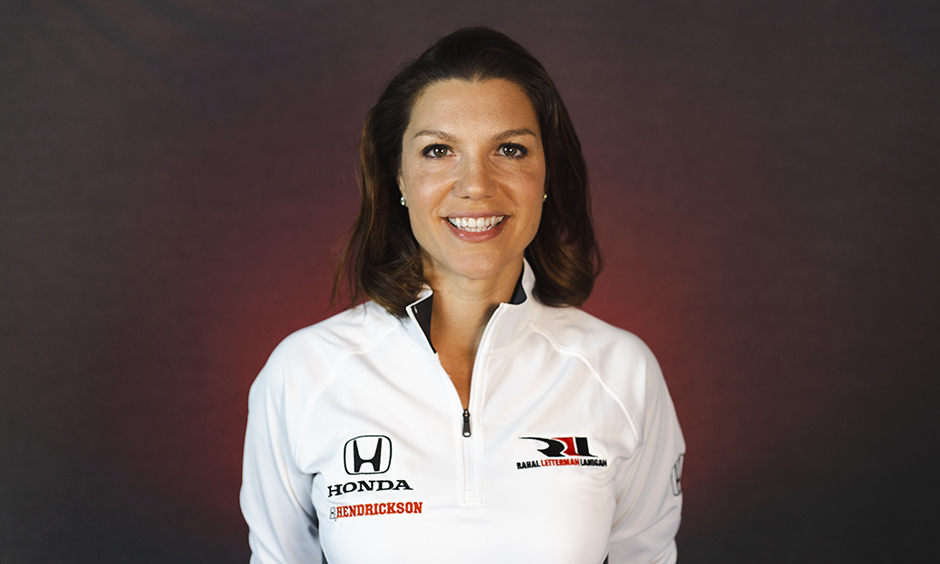
Katherine Legge’s potential return to the Indianapolis 500 with AJ Foyt Racing has sparked a wave of enthusiasm that goes far beyond a single entry announcement. The report that she is being tipped for a seat immediately ignited discussion not just about her credentials, but about what her presence represents—for the series, for fans, and for the broader pipeline of women in motorsport.
At the center of that excitement is the expected involvement of e.l.f. Cosmetics, a brand that has already proven its ability to activate meaningfully around the Indy 500. Their past presence wasn’t just visible—it was impactful. The combination of strong on-site activations and consumer engagement has turned them into a rare example of a sponsor that fans feel personally connected to. That connection matters. It translates into fans actively buying products to show support, into brand loyalty that extends beyond race weekend, and into a tangible sense that backing a driver like Legge is something audiences can participate in.
There’s also precedent. When Legge competed in 2023, demand for her merchandise reportedly outpaced supply before the race had even begun. That level of interest underscores something important: this isn’t a novelty story being forced into relevance—it’s one that already has proven traction. If anything, the expectation now is that lessons will be learned, inventory will scale, and the commercial side will match the audience appetite.
But the story isn’t just commercial—it’s also deeply competitive and structural.
Legge’s name continues to surface in top-tier opportunities not by accident, but because she occupies a unique position in the current landscape. She is widely viewed as one of the few women consistently trusted with opportunities in the fastest and most demanding categories, including both IndyCar’s marquee event and NASCAR’s top level. That reputation—earned through persistence and versatility—has made her something of a default flagbearer, even as others attempt to break through.
And yet, her path also highlights the systemic friction that still exists. Just a year ago, she was reportedly ready to compete in the 500 with an engine deal in place, only to be left without a car. That kind of near-miss reinforces a recurring theme: opportunity, not talent, remains the primary bottleneck.
The conversation naturally expands from there.
There’s a clear appetite for more women in the field—something fans openly call for—but the pathways remain inconsistent. Promising names across different ladders continue to stall before reaching the top tier, whether due to funding limitations, structural gaps in development systems, or the physical demands of modern IndyCar machinery. The introduction of heavier hybrid systems has only intensified that challenge, raising the bar for strength and endurance at a time when accessibility is already under scrutiny.
Even so, there’s cautious optimism embedded in the discourse. Some point to a growing pool of capable female drivers, particularly in the U.S., while others highlight how talent is often diverted into stock car racing pipelines that may not fully align with driver strengths. There’s also recognition that the development ecosystem itself—especially for single-seaters—lacks the depth and accessibility seen in other disciplines, making progression more difficult at key transition points.
Against that backdrop, Legge’s potential entry carries disproportionate weight.
It’s not just about adding a name to the grid—it’s about visibility, continuity, and signaling. For younger fans, especially those who grew up scanning Indy 500 spotter guides looking for drivers they could identify with, her presence matters. Representation at this level isn’t abstract; it’s immediate and personal.
There’s also an undercurrent of ambition shaping the conversation. Some are already looking beyond Indy, floating the idea of a full “Double” attempt—running both the Indy 500 and NASCAR’s Coca-Cola 600 on the same day. While logistical and regulatory hurdles make that scenario complex, the mere fact it’s being discussed speaks to the scale of narrative potential surrounding her return. The idea of completing all 1,100 miles remains a benchmark few have achieved, and even entertaining that possibility places Legge within a rarefied conversation.
Of course, not all reactions are unconditionally optimistic. There are pragmatic concerns about the competitiveness of the machinery she may have at her disposal. AJ Foyt Racing entries haven’t historically been front-runners, and some skepticism remains about how much performance can realistically be extracted regardless of driver capability. That tension—between opportunity and equipment—is a familiar one in IndyCar, and it will inevitably shape expectations.
Still, the broader tone is unmistakably positive.
There’s a sense that this is the kind of story the Indy 500 benefits from: a credible driver, a meaningful sponsor, a built-in fanbase, and a narrative that extends beyond the race itself. Even in a year where discussions around field size and bump day drama continue, the idea of Legge occupying a spot on the grid feels like a net gain.
In that sense, this isn’t just about filling the 33rd entry. It’s about what that entry represents—and why, for many, it feels like a step forward.