

Formula 1’s global ambitions and cultural reach were on full display this week—but in two very different ways. On one hand, renewed speculation around a return to India has been firmly shut down for the near term. On the other, Lewis Hamilton found himself at the center of a completely different kind of conversation—this time driven by a hat, a music festival, and an avalanche of fan interpretation.
India’s F1 Return: Ambition Meets Structural Reality
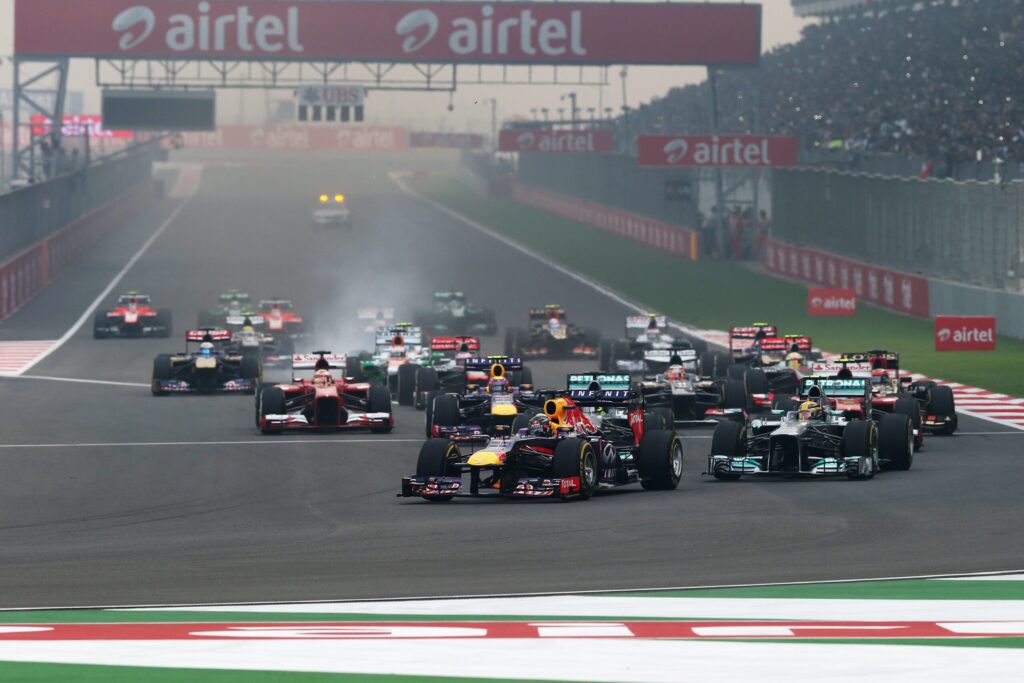
Despite reports suggesting a potential comeback as early as next year, India will not feature on the 2027 Formula 1 calendar. And if fan analysis is anything to go by, this isn’t a surprising outcome—it’s the continuation of long-standing systemic issues that have yet to be resolved.
At the core of the discussion is a familiar theme: classification and taxation. The previous Indian Grand Prix era was heavily impacted by the Uttar Pradesh government’s refusal to classify Formula 1 as a sport. Instead, it was treated as entertainment—triggering significantly higher tax burdens on teams importing millions of dollars’ worth of equipment. The resulting financial strain made the event commercially unviable, and ultimately unsustainable.
From a fan perspective, the logic—or lack thereof—still resonates. The idea that a global motorsport could be taxed as entertainment while other sports receive exemptions remains a sticking point, and many point to this as the single most decisive factor behind F1’s withdrawal.
But taxation is only one piece of a broader operational puzzle. Administrative friction, particularly around visas, continues to define India’s reputation as a challenging destination for global sporting events. The recent MotoGP experience is repeatedly cited as a case study: widespread visa delays, last-minute approvals, and a process so chaotic that it nearly derailed the event entirely. While some accounts defend the eventual outcome—highlighting the extraordinary effort required to process thousands of visas in time—the underlying takeaway is consistent: execution risk remains high.
Even beyond logistics, the commercial and environmental context raises additional concerns. Fans point to poor air quality, extreme weather conditions during proposed race windows, and subpar fan experiences at recent events. In particular, the combination of high heat, humidity, and pollution has been framed as a serious deterrent—not just for fans, but for teams and personnel as well. Comparisons to physically demanding races like Singapore only reinforce the point: India, in its current state, could push those limits even further.
There is also a clear tension between public and private capability. While government-led efforts have historically struggled, some believe a privately backed model—potentially involving major corporate players—could offer a more viable path forward. However, even that possibility is clouded by ongoing ownership disputes and legal battles, suggesting that structural instability extends beyond governance into the commercial ecosystem itself.
Crucially, while there are indications that policy perspectives may be shifting—such as efforts to reclassify motorsport as a sport rather than entertainment—these changes are still theoretical. For now, the gap between ambition and execution remains significant enough to keep India off the calendar.
And in a crowded global schedule, that matters. With multiple circuits competing for limited slots—ranging from Istanbul to Bangkok—Formula 1 has little incentive to take on additional risk when more stable alternatives exist. As some observers note, even if India re-enters the conversation, the realistic timeline is now pushed to 2028 or beyond, when existing contracts begin to expire.
Hamilton at Coachella: A Hat, A Joke, and a Cultural Snapshot

While the India situation highlights Formula 1’s operational constraints, Hamilton’s appearance at Coachella underscores something entirely different: the sport’s cultural footprint.
Spotted wearing a Toronto Maple Leafs hat, Hamilton unintentionally triggered a wave of cross-sport comparisons—most notably between Toronto Maple Leafs and Scuderia Ferrari. The analogy quickly took on a life of its own.
The central joke is simple but effective: both teams are iconic, globally recognized, and historically successful—yet defined in recent decades by frustration rather than fulfillment. For many, the comparison lands because it blends legacy with underperformance, a dynamic that feels particularly relevant given Ferrari’s ongoing struggles relative to expectations.
But fans didn’t stop there. The discussion quickly evolved into a layered critique of both teams’ identities. Some pushed back, noting that Ferrari, unlike the Leafs, has at least delivered championships within living memory. Others leaned into the comparison, arguing that the emotional experience—hope, disappointment, and cyclical optimism—is what truly connects the two.
There’s also a regional and cultural layer at play. Hamilton wearing Leafs gear—particularly while associated with Ferrari—was interpreted by some as a subtle provocation, especially in contexts like Montreal where hockey allegiances run deep. Whether intentional or not, it added another dimension to what would otherwise be a throwaway fashion choice.
Beyond the sports analogy, the moment also became a canvas for humor and meme culture. References ranged from gaming nostalgia to self-deprecating fandom, reinforcing a broader truth about Formula 1’s audience: it is increasingly digital-native, cross-cultural, and fluent in blending serious analysis with irreverent commentary.
Two Stories, One Sport
Taken together, these two threads—India’s absence and Hamilton’s Coachella moment—highlight the dual nature of modern Formula 1.
On one side, it remains a highly complex global operation, where regulatory frameworks, government alignment, and logistical execution determine viability. India’s situation is a reminder that market potential alone isn’t enough; structural readiness is non-negotiable.
On the other, Formula 1 has evolved into a cultural entity that extends far beyond the racetrack. A single off-track appearance by one of its drivers can generate as much conversation as a calendar decision—albeit for very different reasons.
Both matter. One defines where the sport can go. The other defines how it connects when it gets there.