

IndyCar’s arrival at Long Beach has delivered a familiar combination of sharp design and sharper debate. Two headline liveries—Mick Schumacher’s #47 Liquid Death entry for Rahal Letterman Lanigan Racing and Alex Palou’s No. 10 OpenAI Honda for Chip Ganassi Racing—have captured attention for very different reasons, exposing a growing tension between aesthetics, sponsorship strategy, and fan sentiment.
Schumacher’s Liquid Death Livery: Style That Sells
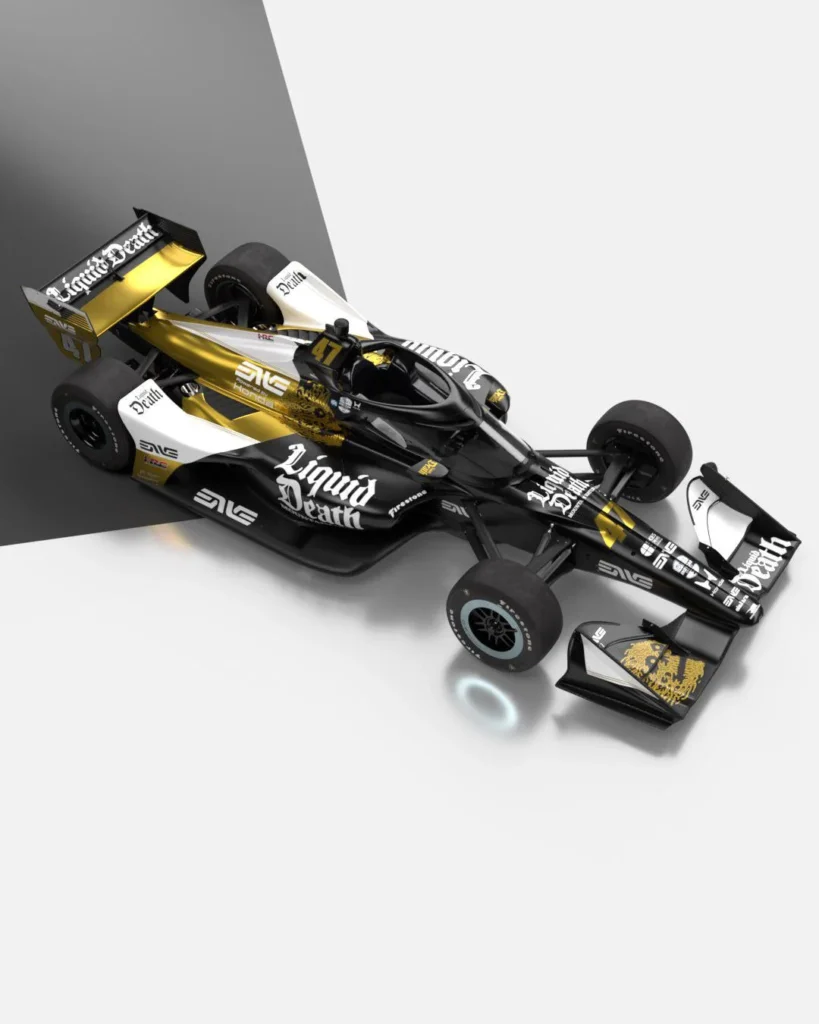
Mick Schumacher’s Long Beach livery landed immediately with fans, driven by a striking black-and-gold scheme that many felt echoed iconic designs of the past. The visual identity did most of the talking: clean, aggressive, and instantly recognizable. For many, it was simply “one of the best liveries” in the field—good enough to spark immediate demand for diecasts and merch.
But beyond aesthetics, the reaction reveals something more structural about Rahal Letterman Lanigan Racing. The team continues to earn recognition for its commercial strength, consistently landing notable partners and presenting polished branding packages. There’s a clear sense that, from a business standpoint, RLL is operating at a high level—“pulling good sponsors” and delivering cars that look every bit like front-running entries.
At the same time, that praise comes with an asterisk. There’s an undercurrent of frustration that the on-track results haven’t kept pace with the off-track execution. The gap between investment and performance remains a talking point, reinforcing the idea that while the team excels commercially, competitive returns still lag behind expectations.
Liquid Death as a sponsor also highlights a broader truth about motorsport growth. Consumer-facing brands resonate. Fans immediately recognize the product, connect with it, and, in some cases, adopt drivers purely through sponsor affinity. The logic is straightforward: if a viewer already has a relationship with the brand, the driver becomes an extension of that connection. It’s a dynamic that many feel the sport has lost since the decline of legacy categories like tobacco and alcohol sponsorship—and one that entries like Schumacher’s actively restore.
Even the humor around the livery—comparisons to past black-and-gold controversies or jokes about former team affiliations—ultimately reinforces its impact. The design is memorable, conversation-driving, and commercially effective. From a marketing standpoint, it does exactly what it needs to do.
Palou’s OpenAI Car: Clean Design, Complicated Reaction
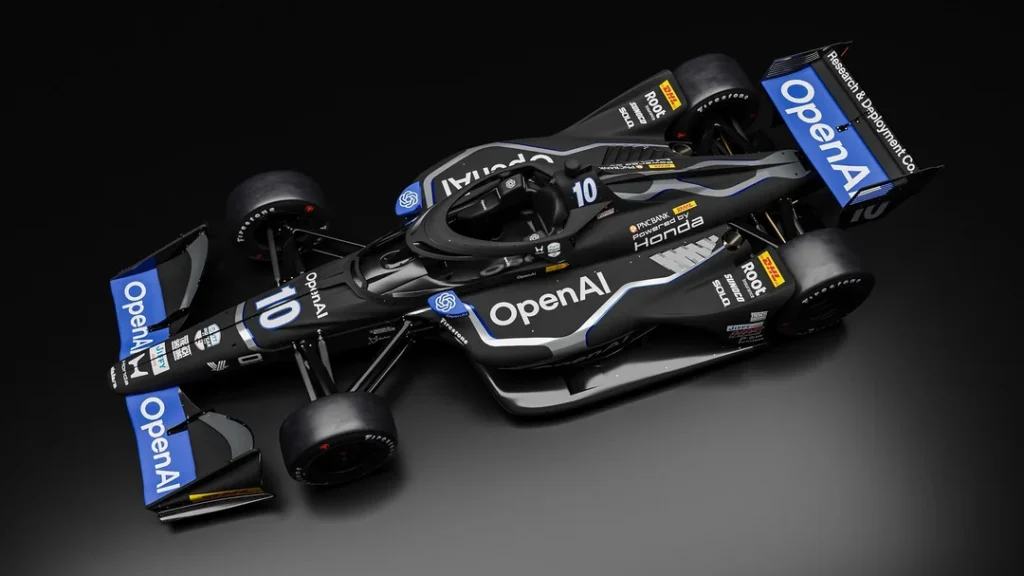
If Schumacher’s car represents alignment between design and fan reception, Alex Palou’s OpenAI Honda sits at the opposite end of the spectrum.
On pure visuals, the car has its supporters. The look is described as “clean,” even “foreboding,” with a minimalist, modern aesthetic that fits the identity of a tech-driven sponsor. There’s little debate that, as a piece of design, it works.
The issue is everything around it.
Fan reaction to the OpenAI partnership has been notably polarized, and in some cases outright hostile. The most visible signal of that tension is operational: comments disabled across social posts announcing the livery. That decision alone became part of the story, reinforcing the perception that the team anticipated backlash—and chose to avoid it rather than engage.
The criticism itself spans multiple angles. At a surface level, there’s skepticism toward AI as an industry, with some fans expressing outright rejection of its role in society and, by extension, in racing sponsorship. At a deeper level, the reaction taps into a longer-standing distrust of emerging industries entering motorsport. Comparisons quickly surface—to crypto, to controversial legacy sponsors, to a broader history of “scams, con artists, and bad actors” funding teams. Whether fair or not, the pattern recognition is immediate: new money arrives, and fans question its legitimacy.
There’s also a tonal disconnect. Where Liquid Death’s branding leans into humor and accessibility, OpenAI’s presence feels abstract, even dystopian to some. That contrast matters. One invites fans in; the other creates distance.
And yet, even within the criticism, there’s a pragmatic counterpoint. Motorsport has always been funded by whoever is willing to spend. From that perspective, the source of the money is secondary to its effect: keeping teams competitive and the series viable. For some fans, the calculation is simple—if tech money sustains the grid, it’s worth accepting, regardless of personal views on the sponsor itself.
A Tale of Two Strategies
Taken together, these two liveries highlight a broader strategic divide in modern IndyCar sponsorship.
On one side, Schumacher’s entry demonstrates the power of consumer alignment: recognizable product, emotional connection, immediate fan buy-in. It’s accessible, tangible, and easy to rally around.
On the other, Palou’s car represents the influx of high-value, future-facing industries—less tangible, more polarizing, but increasingly essential to the financial ecosystem of the sport.
Both approaches are effective in their own way. One drives affinity; the other drives funding.
The Bigger Picture
Long Beach hasn’t just delivered visually compelling cars—it’s exposed a shifting sponsorship landscape.
Fans are still drawn to what they recognize and can relate to. That hasn’t changed. But the sport itself is evolving, increasingly reliant on industries that don’t offer that same immediate connection. The result is friction: between nostalgia and necessity, between brand familiarity and financial reality.
In that sense, the reaction to these liveries isn’t really about paint schemes at all. It’s about what fans want IndyCar to be—and what it needs to become to sustain itself.
At Long Beach, both versions are on full display.