

Formula 1 rarely needs much encouragement to spiral into a full-blown narrative cycle, but the past week has delivered a perfect storm: a tense media standoff, technical controversy, design ridicule, and a familiar mix of driver ambition and veteran defiance. What ties it all together is not just the incidents themselves—but how quickly the conversation around them has taken on a life of its own.
Verstappen vs. the Media: A Story That Refused to Stay Quiet
The most explosive moment came from a reported exchange between Max Verstappen and a journalist, where Verstappen refused to engage until the reporter left the room—stemming from a question about the 2025 Spanish Grand Prix incident with George Russell that ultimately cost him points in a tightly contested championship.
What stands out is not just the confrontation itself, but how disproportionate the reaction appears relative to the question. By all accounts, it was a standard retrospective: in a title fight decided by just two points, does a driver regret a costly moment earlier in the season?
That kind of question is not only expected—it’s inevitable.
Instead, the response has reframed the narrative entirely. Rather than burying the Spain incident in the past, the reaction has dragged it back into the spotlight. In trying to shut down the conversation, Verstappen has effectively ensured it dominates the discourse again—an outcome that feels strategically counterproductive.
There’s also a broader tension here around media dynamics. While drivers often deflect or decline questions, actively removing a journalist crosses into murkier territory. The expectation, fairly or not, is that difficult questions are part of the job. Refusal is one thing—control is another.
The irony is unavoidable: what might have been a routine press conference question has now become a far more compelling story than the answer ever would have been.
The Persona Question: “Doesn’t Care” vs. Clearly Cares
The incident has reignited a long-running debate about Verstappen’s public persona. He has often positioned himself as indifferent—unbothered by results, criticism, or perception. But moments like this complicate that narrative.
You don’t halt a press conference if you truly don’t care.
Instead, what emerges is a more familiar pattern: calm dominance when winning, sharper edges when challenged. That duality isn’t unique in elite sport—but it becomes more visible when the margins tighten and the car is no longer comfortably ahead.
Some observers have pointed out that the perception of “maturity” during dominant seasons may have been less about evolution and more about circumstance. When the pressure returns, so too do the old traits—frustration, defensiveness, and flashes of volatility.
And in that sense, the Spain incident—and the reaction to it—feels less like an isolated moment and more like part of a consistent behavioral profile.
The Streisand Effect in Full Force
If there is one universal takeaway from the situation, it’s how effectively it has amplified itself.
The Spain incident had largely faded from active discussion. But by drawing a line around it, Verstappen has ensured it becomes the central talking point again—especially with a multi-week gap in the calendar.
Instead of closing the chapter, the response has reopened it.
And now, rather than one question from one journalist, it becomes dozens of variations from every outlet.
Mercedes’ Front Wing: “Miscalculation” or Missed Enforcement?
While the Verstappen situation dominated headlines, a quieter but equally contentious debate has been brewing around Mercedes’ front wing behavior in China.
Footage suggested the wing’s transition between modes may not have complied with the 0.4-second regulatory requirement. The explanation? A miscalculation in hydraulic pressure meant the wing did not return to position as intended under load.
The FIA accepted this explanation. Case closed.
Except it hasn’t been.
The core issue isn’t the technical explanation—it’s the precedent. Formula 1 has a long history of punishing “miscalculations,” whether in fuel loads, plank wear, or other compliance breaches. The idea that intent—or lack thereof—could influence enforcement sits uneasily with many.
A miscalculation is still a breach.
What complicates matters further is enforcement methodology. Unlike plank wear or fuel checks, this behavior isn’t easily measurable in static parc fermé conditions. It exists in dynamic airflow, making it harder to regulate with traditional inspection tools.
That gray area creates a perception problem: if something is visible on track but difficult to formally measure, where does accountability lie?
For many, the inconsistency—not the incident itself—is the real issue.
Ferrari, Bearman, and the Waiting Game
Amid the controversy, Ollie Bearman’s declaration that he’s ready for Ferrari has sparked a different kind of debate—one centered on timing, opportunity, and the realities of driver development.
There’s little disagreement about his talent. His debut performance and subsequent progression have positioned him as one of the more promising young drivers on the grid. But readiness isn’t just about speed—it’s about context.
A single standout performance under low expectation is not the same as leading a team across a full season.
That distinction matters, especially at Ferrari, where pressure operates at a different scale. Some see another year or two outside the spotlight as essential refinement; others argue that his trajectory suggests he’ll outgrow a junior seat quickly.
Complicating matters further is Ferrari’s own state. The team is perceived as stable—but not necessarily decisive. Strong starts, yes—but beyond that, questions linger about execution and long-term direction.
In that sense, the bigger uncertainty may not be whether Bearman is ready—but whether Ferrari is.
Hamilton’s Mindset: Motivation vs. Machinery
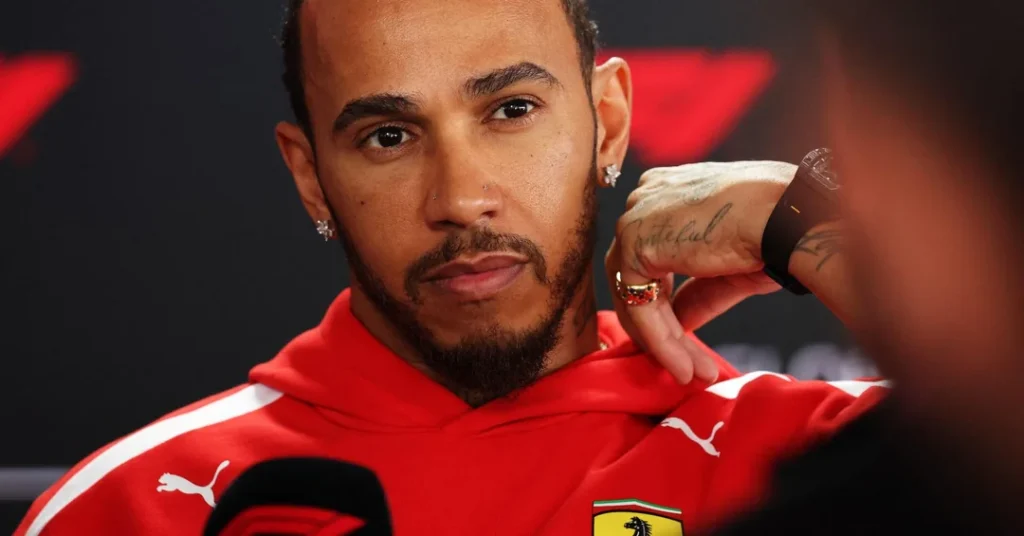
Lewis Hamilton, meanwhile, finds himself in a familiar position: motivated, engaged, and still capable—but constrained by the machinery beneath him.
The discussion around his mindset highlights a broader truth in Formula 1: performance is not purely psychological, but psychology still matters. A “broken” driver in a competitive car can underperform; a motivated driver in a midfield car can only do so much.
At this stage of his career, the dynamic shifts. After more than a decade of championship fights, motivation is inevitably tied to competitiveness. Fighting for third place week after week is a different challenge entirely.
Still, the underlying point remains—his baseline is so high that even a “down” season exceeds what most drivers achieve in their best years.
Aesthetic Misses and Paddock Humor
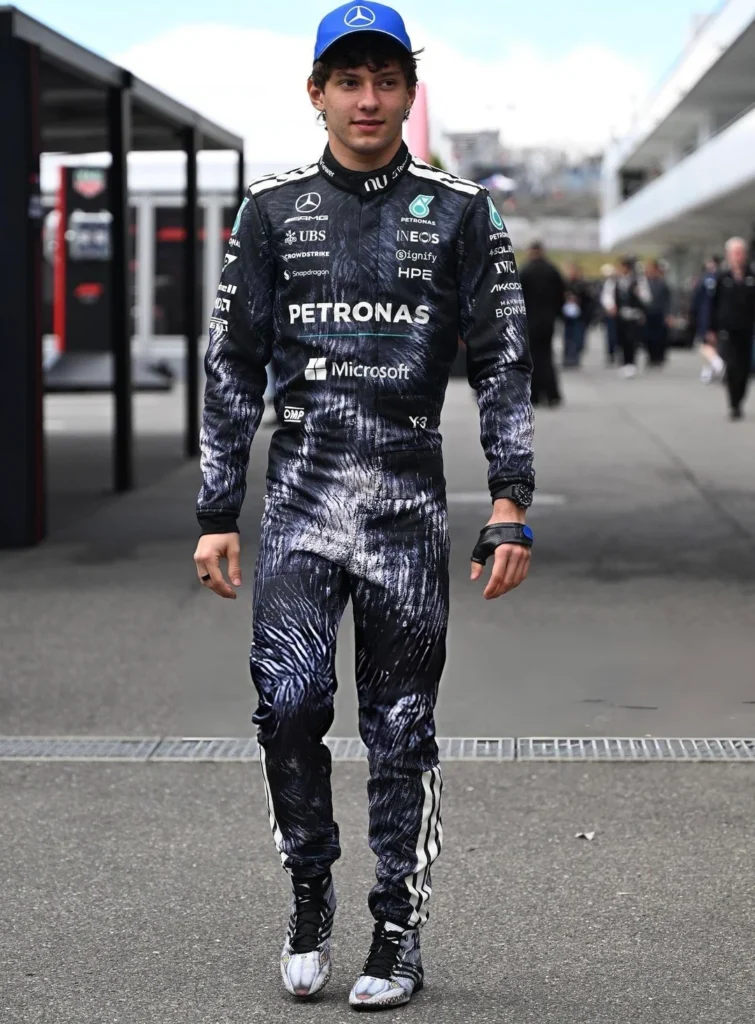
Not every storyline is high-stakes. Mercedes’ latest race suit has become an unexpected talking point—not for performance, but for design.
Intended to reflect a wolf-inspired theme, the execution has… not landed.
From comparisons to paint spills to outright confusion about what the design is supposed to represent, the reaction has been overwhelmingly negative. If anything, it underscores how even minor aesthetic choices can become part of the broader narrative ecosystem.
In Formula 1, nothing goes unnoticed—and very little goes unmocked.
Checo, Cadillac, and Managing Expectations
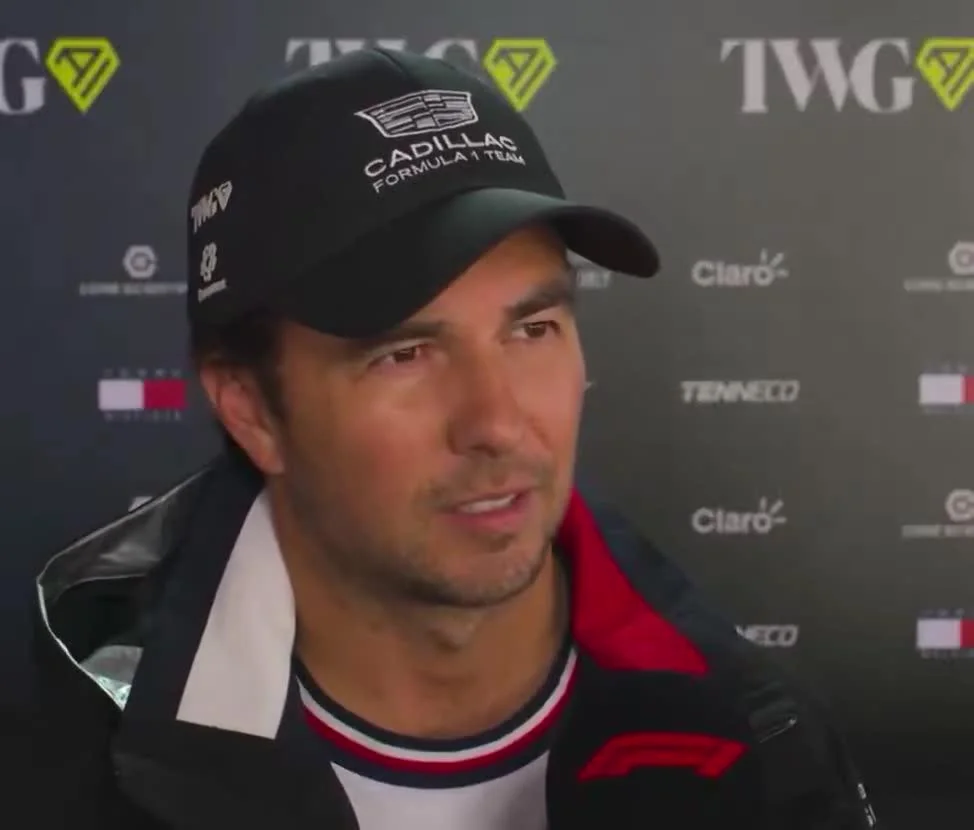
Finally, Sergio Pérez’s remarks about his return—and the relative lack of speed—offer a more grounded perspective.
“It’s not like we’re going that fast at the moment.”
Whether interpreted as a light jab at the regulations or a simple acknowledgment of Cadillac’s current position, the tone is notably pragmatic. There’s no illusion of immediate competitiveness—only an understanding of the process.
That realism stands in contrast to some of the more reactive narratives elsewhere in the paddock. Not every comment is a complaint; sometimes it’s just an honest assessment of where things stand.
Conclusion: Narrative Is the Real Battleground
Across all these threads—Verstappen’s confrontation, Mercedes’ technical scrutiny, Ferrari’s future planning, Hamilton’s mindset—the common theme is narrative control.
Who defines the story? Who escalates it? Who unintentionally amplifies it?
In modern Formula 1, performance on track is only part of the equation. The rest plays out in press rooms, comment sections, and the collective interpretation of every word and action.
And as this past week has shown, sometimes the biggest battles aren’t fought at 300 km/h—but in how the story is told afterward.