

IndyCar’s future and its traditions are being debated in equal measure this week, as fresh reports of a potential return to Brazil contrast sharply with familiar conversations around the Indianapolis 500 grid—and who belongs on it.
Brazil Push Gains Momentum—But Questions Follow
A renewed push to bring IndyCar back to Brazil is beginning to take shape, with Brazilian broadcaster Band reportedly working toward hosting a race as early as 2027. Two cities have already stepped forward, with Goiânia emerging as a leading candidate, while the second location remains undisclosed.
The prospect of a return after more than a decade has naturally generated excitement—but also scrutiny. Much of the discussion has centered less on the ambition itself and more on the details surrounding it.
There is cautious optimism around the credibility of the report. While the journalist behind the news is not known for motorsports coverage, the fact that the information originates from a television insider has led many to believe there is at least some substance behind the scenes. In other words, even if the racing specifics are thin, the broadcast intent may be very real.
At the same time, fans were quick to challenge some of the framing around IndyCar’s international footprint. Claims that the series has only raced outside the United States in Brazil and Canada were immediately pushed back on, with reminders that IndyCar has also held events in Japan and Australia. That reaction highlights a broader theme: if Brazil is to return, it won’t just be a novelty—it will be measured against a deeper international history.
Goiânia: Opportunity or Risk?
Goiânia’s candidacy has sparked the most debate, particularly following its recent MotoGP event. On paper, the circuit has appeal—some even noting its layout translates well in simulation and has benefited from recent upgrades.
But concerns about infrastructure and track quality quickly surfaced.
The MotoGP weekend exposed significant issues, with reports of deteriorating tarmac, a race shortened due to surface conditions, and even emergency fixes like filling a sinkhole with concrete on a main straight. While some contextualized these problems—pointing to recent flooding and a rushed preparation timeline—others see them as red flags that can’t be ignored.
There is a split in how those issues are interpreted. One side views the problems as temporary, arguing that with proper lead time, the circuit can be brought up to standard. The other side is more skeptical, suggesting that if the surface struggled with motorcycles, the added load and downforce of IndyCars could expose even greater weaknesses.
Even beyond durability, there are sporting concerns. Some question whether the circuit layout would actually produce quality racing, particularly with the aerodynamic demands of modern IndyCars potentially limiting overtaking opportunities.
In short, Goiânia represents both promise and uncertainty—a track that could benefit from investment, but one that will require significant confidence from the series before any deal is finalized.
The Shadow of Interlagos
An equally telling part of the conversation is what hasn’t been confirmed.
The absence of Interlagos from early discussions has raised eyebrows, with many noting that when a proven venue isn’t mentioned, it often suggests a lack of interest or feasibility from one side of the equation. Whether that’s due to financial, logistical, or political constraints remains unclear—but it adds another layer of complexity to any Brazilian return.
Indy 500: Tradition vs. Progress
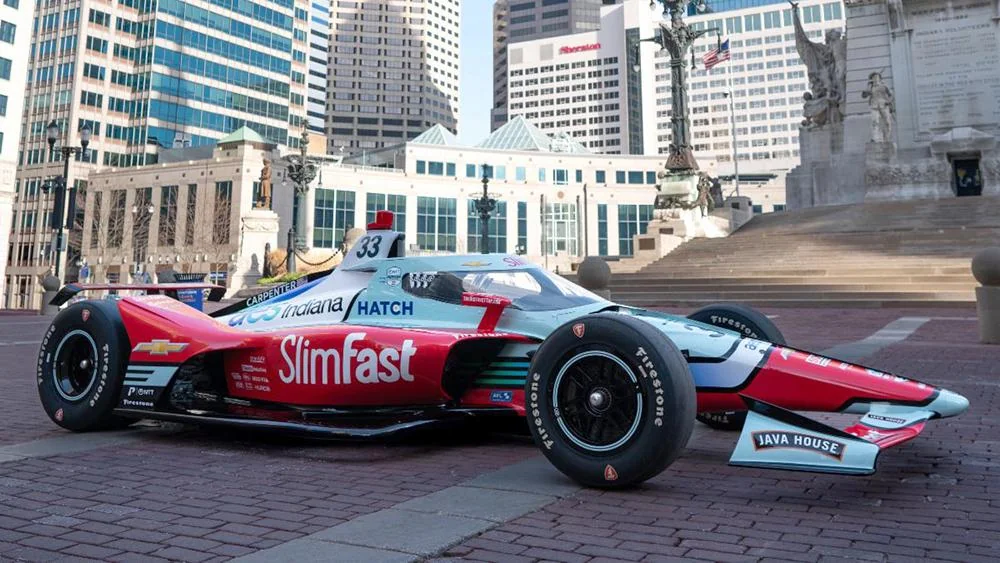
While the Brazil story looks ahead, discussion around Ed Carpenter Racing’s Indy 500 entry brings the focus back to one of IndyCar’s most enduring debates: the balance between opportunity and competitiveness at the sport’s biggest event.
The unveiling of Ed Carpenter’s Indy 500 car quickly turned into a broader reflection on his continued presence in the field. Some see his participation as increasingly symbolic—another year of a familiar name occupying a seat that could go to a newer driver. That sentiment is often framed bluntly: if he weren’t there, the entry might not exist at all.
But that’s precisely where the counterargument comes in.
There remains strong appreciation for drivers who show up to the Indy 500 regardless of their odds. The event has always embraced a mix of contenders and long shots, and for many, that unpredictability is part of its identity. Carpenter’s presence, in that sense, isn’t an anomaly—it’s tradition.
Performance Expectations and Legacy
Expectations for Carpenter himself remain measured. There is acknowledgment that while he may not be a championship-caliber driver, his team has shown credible pace this season, offering at least some hope that he could be competitive—particularly in qualifying.
Still, the narrative around his race performance is well established. Strong starts followed by fading results have become something of a pattern, reinforcing skepticism about his ability to contend over a full race distance.
Yet reducing his role to results alone misses the broader picture.
There is clear respect for what Carpenter has built as an owner. The evolution from Vision Racing into a stable and competitive organization is frequently cited as a success story, particularly given the number of teams that have struggled to survive in IndyCar. Investment and leadership have transformed the outfit into a legitimate presence in the paddock, even if its driver lineup continues to evolve.
The Value of Familiarity
Another notable point of discussion around Carpenter’s entry has nothing to do with performance at all—it’s branding.
Fans have responded positively to the presence of recognizable consumer brands on ECR cars, a contrast to the increasingly common mix of tech, crypto, and B2B sponsors across the grid. That familiarity adds a layer of accessibility, reinforcing a connection between the sport and everyday audiences.
It’s a small detail, but one that speaks to a broader desire for authenticity in how teams present themselves.
A Series at a Crossroads
Taken together, these two storylines—Brazil’s potential return and the ongoing Indy 500 debate—highlight where IndyCar currently sits.
On one hand, there is a clear push to expand, to reestablish an international presence, and to tap into markets with deep motorsport heritage. On the other, there is an equally strong pull toward tradition, toward preserving the unique character of events like the Indy 500 and the diverse grid it brings.
Neither direction is inherently right or wrong. But the tension between them is shaping how the series evolves.
If Brazil does return, it will signal ambition. If entries like Carpenter’s continue to define the Indy 500 grid, it will signal continuity.
IndyCar, as always, is trying to do both at once—and the conversation around it suggests that balancing those priorities will remain one of its defining challenges.