

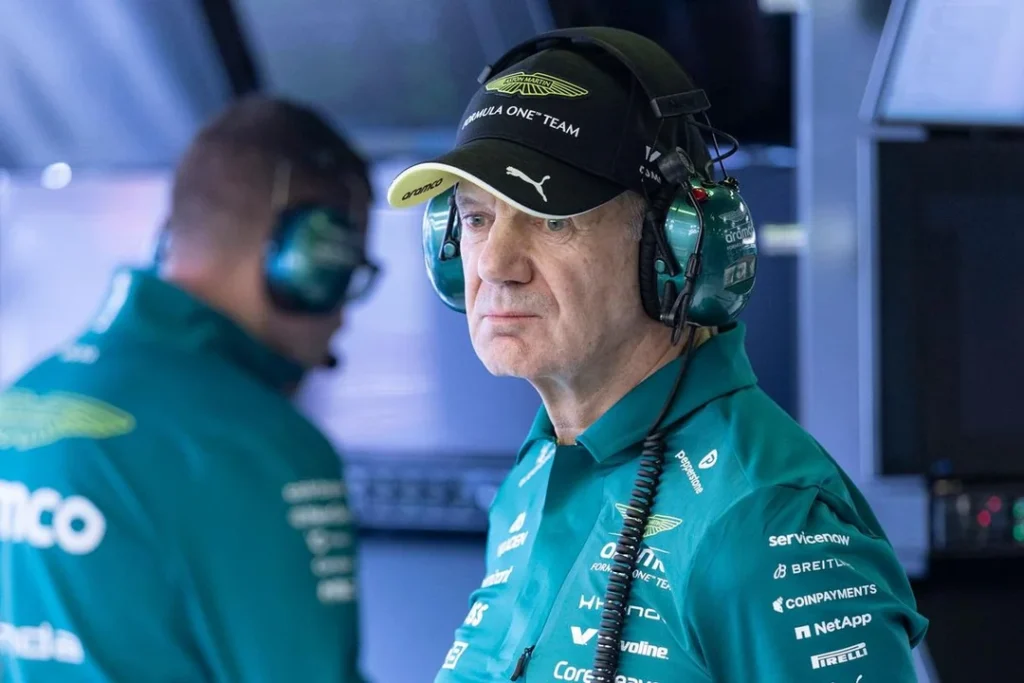
Aston Martin’s evolving leadership structure has rapidly become one of the most scrutinized storylines in Formula 1, with Adrian Newey’s unexpected tenure as team principal appearing increasingly transitional—and Jonathan Wheatley emerging as the central figure in a potential reshuffle that could redefine the team’s trajectory.
At the core of the discussion is a growing sense that Newey’s current position is less a long-term solution and more a stopgap born out of necessity. While Aston Martin’s official stance remains firm—publicly reiterating that Newey continues to lead the team and that they “will not be engaging in media speculation”—the broader reaction suggests few are taking that at face value. The timing and tone of such statements have been widely interpreted as a familiar prelude to change, particularly given the unusual dynamic of a team principal seemingly involved in identifying his own successor.
This perception is reinforced by the structure itself. Newey, widely regarded as the sport’s foremost aerodynamic mind, is currently tasked not only with technical leadership but also operational oversight and political navigation—responsibilities that many view as misaligned with his strengths. The consensus emerging from fan and paddock discourse is clear: placing a specialist of Newey’s caliber into a role dominated by management and media obligations risks diluting his impact where it matters most—car performance.
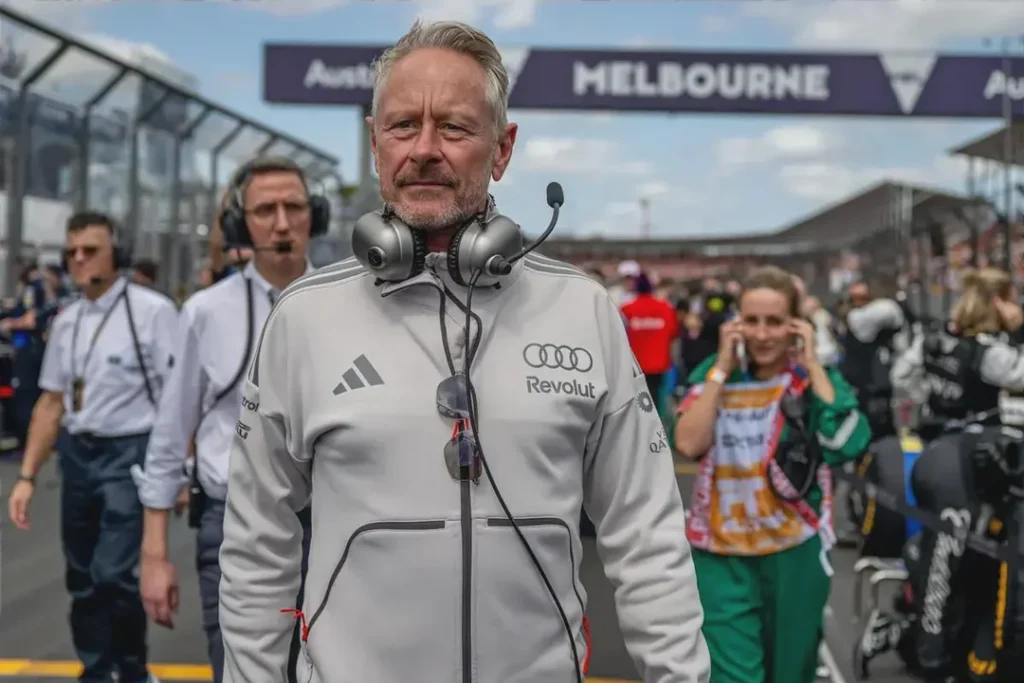
That reality appears to underpin Aston Martin’s pursuit of Jonathan Wheatley. Reports consistently indicate that Newey is keen on bringing in Wheatley, a long-time collaborator from their Red Bull days, as a more suitable figure to handle the demands of a modern team principal role. However, the situation is far from straightforward.
Wheatley’s current position within Audi’s F1 project complicates any potential move. By most accounts, he is professionally content and playing a key role in a program that is still in its formative phase. This has led to widespread skepticism about why he would leave what is perceived as a stable, long-term project for what many describe as a volatile environment at Aston Martin.
The dominant explanation centers on a combination of financial incentives and personal considerations. The assumption that Aston Martin is prepared to offer a significantly larger financial package is nearly universal, with many framing the decision as one driven by “a lot of money”—though not exclusively so. Relocation also appears to be a critical factor, with suggestions that a return to the UK, closer to family and familiar surroundings, could be as influential as any contractual terms.
Even so, doubts remain about the strategic wisdom of such a move. Audi is widely viewed as a project built on long-term stability, backed by manufacturer-level resources and a structured leadership approach under Mattia Binotto. In contrast, Aston Martin is perceived as a team still searching for identity, despite heavy investment in infrastructure and personnel. The gap between resources and results has led to persistent questions about whether the organization’s issues are structural rather than technical.
This skepticism extends to leadership culture. While some argue that Aston Martin’s aggressive hiring and state-of-the-art facilities position it well for future success, others point to a pattern of high turnover and pressure-driven decision-making. The idea that the team is attempting to “solve problems by throwing money at them” has become a recurring theme, raising concerns about long-term sustainability.
At the same time, there is acknowledgment that the opportunity itself carries upside. Taking charge of a struggling but well-funded team presents a unique chance to build reputation through recovery. Even incremental progress—such as moving the team into consistent midfield competitiveness—could be framed as a success under the right leadership narrative.
Parallel to the Wheatley situation, Aston Martin’s internal dynamics are further complicated by alternative leadership considerations. Christian Horner’s name has surfaced repeatedly, particularly following reports of recent meetings with Lawrence Stroll. However, this pathway appears unlikely, with strong indications that Newey is opposed to such a move. This effectively narrows the field and reinforces Wheatley’s position as the preferred candidate, despite the obstacles.
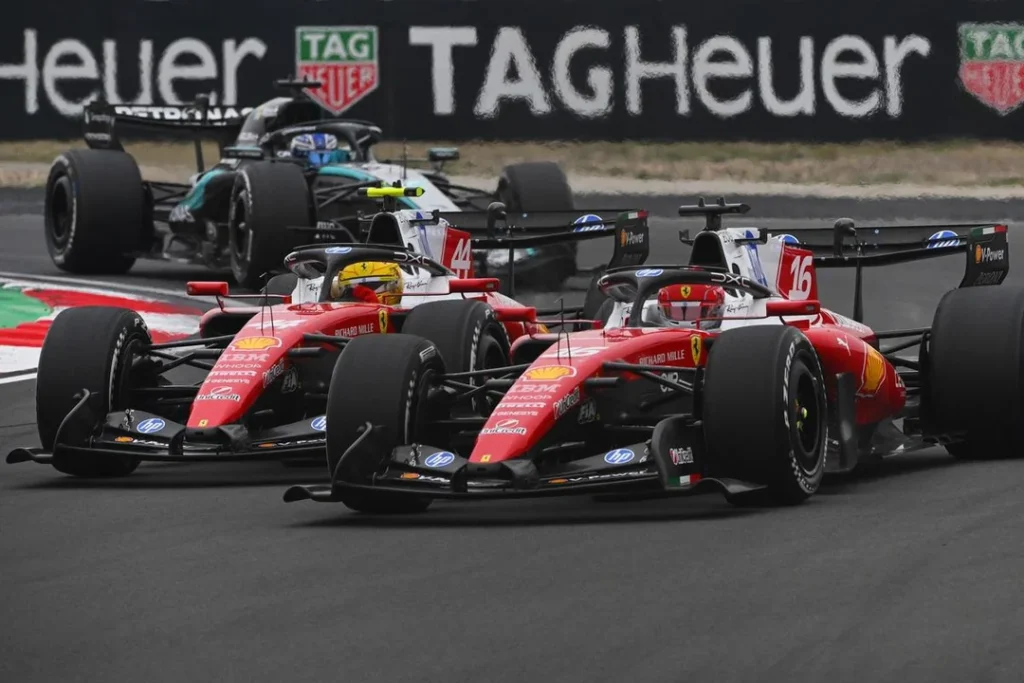
Beyond Aston Martin, these developments are unfolding against a broader backdrop of regulatory and competitive tension across Formula 1. Discussions among team principals following the Chinese Grand Prix highlighted a notable contrast: while races under the new regulations have been widely praised for their on-track action, qualifying has emerged as a key area of concern.
The inability for drivers to push flat-out due to energy management constraints—particularly battery deployment limitations—has become a focal point. The current system, with relatively small energy stores and an imbalance between deployment and regeneration rates, forces drivers into lift-and-coast scenarios even during qualifying laps. This has been widely criticized as counterintuitive to the essence of F1, where peak performance over a single lap is expected to be unrestricted.
Proposed solutions vary, but the underlying objective is consistent: restore full-throttle qualifying without compromising race dynamics. Suggestions range from adjusting battery deployment rates to modifying energy harvesting limits, with the FIA now tasked with evaluating potential changes during the upcoming break in the calendar.
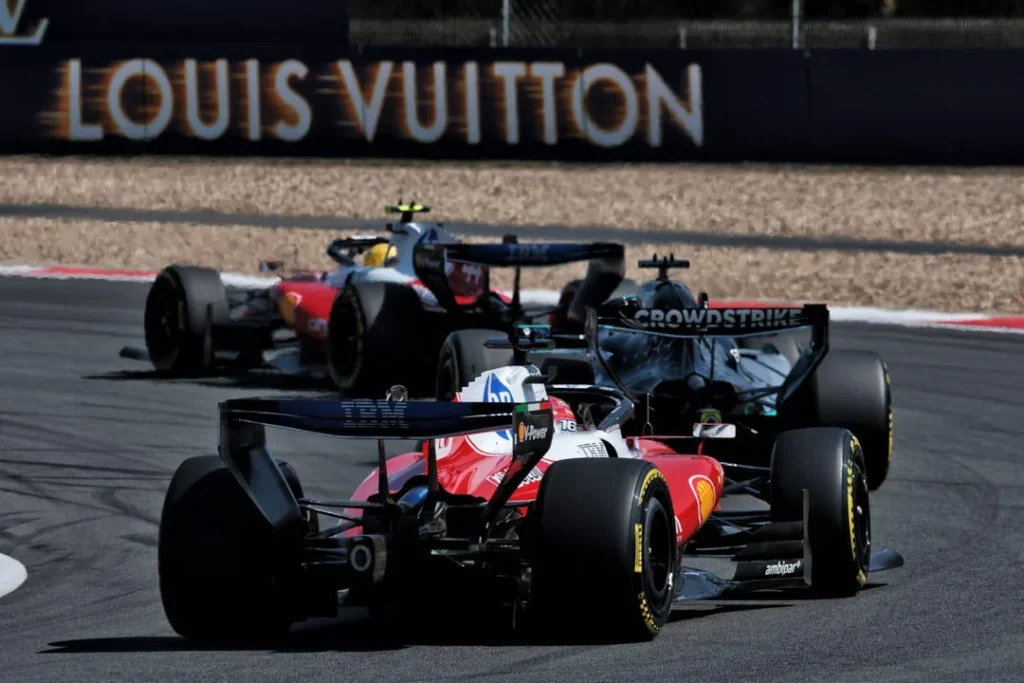
This technical debate intersects with another layer of competitive intrigue—engine performance disparities and the mechanisms designed to address them. The Additional Development and Upgrade Opportunities (ADUO) system has introduced new strategic considerations, with some teams potentially qualifying for in-season upgrades based on performance deficits.
Within this context, speculation around Mercedes’ true engine performance has intensified. The possibility that teams could manipulate perceived output to influence upgrade eligibility has been raised, though counterarguments emphasize that ADUO assessments are based on controlled measurements rather than race performance, limiting the scope for such tactics.
Amid all of this, individual driver narratives continue to evolve. Lewis Hamilton’s resurgence in 2026 has been framed as a return to form following a period of visible frustration. Observers note a marked shift in demeanor, attributing it to improved competitiveness and a car that better aligns with his driving style. Confidence, often overlooked, is being highlighted as a critical performance factor—reinforcing how quickly fortunes can change when underlying conditions improve.
Taken together, these threads paint a picture of a sport in transition—technically, competitively, and organizationally. Aston Martin sits at the center of that transition, embodying both the ambition and uncertainty that define this new era.
Whether the team’s next move solidifies its long-term direction or deepens existing questions will depend largely on how it resolves its leadership puzzle. For now, the signals are clear: change is coming—it’s just a matter of when, and whether the right pieces fall into place.