

IndyCar discourse produced two very different stories today.
On one side, a NASCAR controversy spilled directly into the IndyCar conversation after Daniel Dye was indefinitely suspended and ordered to complete sensitivity training following comments about David Malukas on a livestream. What followed was not just condemnation, but a full-scale backlash in which Dye became the punchline and Malukas emerged with even more goodwill than before.
On the other, fans got a much easier story to enjoy: Helio Castroneves returning with Meyer Shank Racing for May at Indianapolis, a move that felt less like a surprise than a tradition the paddock is happy to keep alive for as long as possible.
Taken together, the contrast was stark. One story reminded everyone how quickly disrespect can collapse into self-inflicted embarrassment. The other showed how much affection still exists for veterans who have earned their place in IndyCar history.
Daniel Dye tries to mock David Malukas, and only damages himself
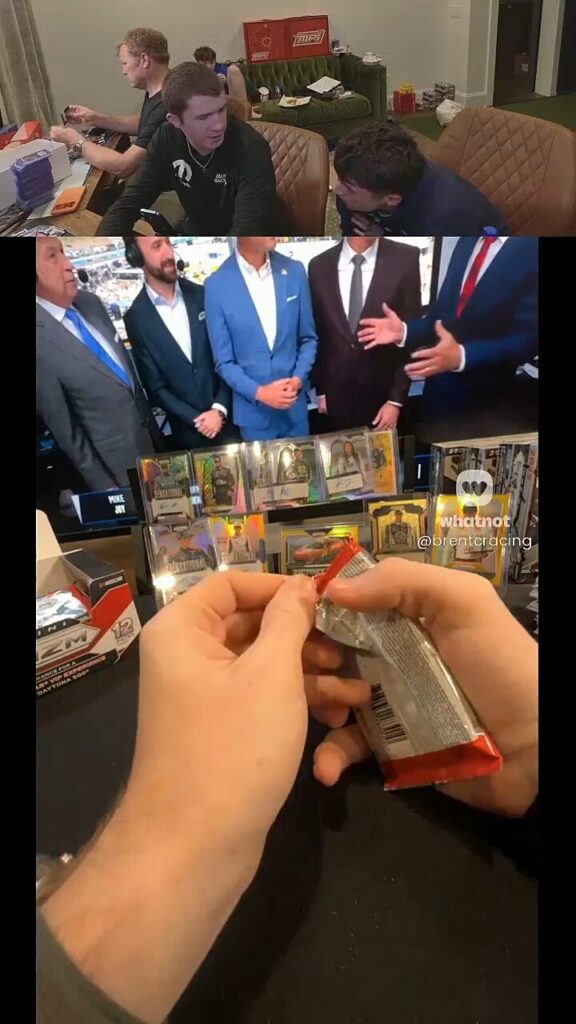
The biggest throughline in the reaction to Dye’s comments was simple: fans did not see this as a serious shot landed on David Malukas. They saw it as a failed attempt by a lesser-known NASCAR driver to take aim at an IndyCar driver with a much stronger standing in the open-wheel world.
That was the energy behind many of the harshest reactions. The prevailing sentiment was that Dye had “talked dumb and watched his career implode,” with some fans describing the episode as little more than public self-destruction. The suspension only accelerated that framing. Rather than the controversy becoming a debate about Malukas, it became a story about Dye humiliating himself.
A big reason for that is that many fans could not get past the basic absurdity of Dye choosing Malukas as the target in the first place. Multiple reactions focused on the fact that Malukas is not some random or marginal figure to clown on casually. Fans pointed out that he has finished second in the Indy 500, scored a podium at Phoenix, and has some of his best results on ovals, making the stream comments look not just offensive, but uninformed. The ridicule only intensified around the idea of a professional driver asking an IndyCar driver whether he races on ovals, as if Malukas’ résumé on that kind of track were not already one of the more obvious parts of his profile.
That is really what made the backlash so severe. In fan eyes, this was not just offensive behavior. It was ignorant behavior wrapped in overconfidence. And that combination tends to get punished quickly in motorsport spaces.
The reaction quickly turned into a referendum on Dye himself
Once the clip circulated, the conversation moved beyond the original comments and became a broader judgment on Dye’s reputation, relevance, and standing in the sport.
A lot of the commentary leaned into the gap between the two drivers’ perceived positions. Fans mocked the idea of a mid-level NASCAR Truck Series name trying to belittle an IndyCar driver racing for a top team. Some reduced the whole situation to a broke-to-rich joke in motorsport terms: a driver with limited profile trying to diminish someone far more established. Others made the same point more bluntly, arguing that many people, including Malukas himself, likely had no idea who Dye even was before this story surfaced.
That imbalance drove a lot of the memes. Fans repeatedly framed Dye as the one chasing attention, while Malukas barely needed to engage at all. In that sense, the controversy functioned less as an attack on Malukas and more as an accidental endorsement of his stature. The fan response effectively said: if you are going after someone like Malukas, you had better bring more than bitterness, ignorance, and a livestream audience.
There was also a noticeable sense that Dye had badly misread the IndyCar community. Malukas already carries strong support among fans, and several reactions explicitly pushed back against the idea that he should be an easy target. Some acknowledged that he has taken unfair heat from certain corners of the fanbase, especially given his seat situation, but the larger picture here was that many fans view him as personable, talented, and easy to root for. That made Dye’s choice of target look even worse.
NASCAR’s swift action became part of the story
The suspension itself drew a strong response, and most of it centered on speed.
A number of fans said they were genuinely surprised, and pleasantly so, by how quickly NASCAR moved. Others were less impressed, arguing that acting fast costs little when the driver in question is not important enough to create a major competitive headache. That became one of the recurring themes in the aftermath: whether swift accountability reflected principle, convenience, sponsor pressure, or some mix of all three.
Fans also contextualized the punishment through previous NASCAR cases, bringing up names like Kyle Larson, Hailie Deegan, Noah Gragson, Denny Hamlin, Jeremy Clements, and Kyle Busch. The underlying point was that NASCAR has established a precedent for forcing sensitivity training or taking disciplinary action when public comments create reputational risk. Some commenters argued the sanctioning body “doesn’t mess around” with this kind of issue. Others argued it is ultimately about money and sponsor relationships more than moral clarity.
That split matters because it reveals two ways fans interpreted the suspension. One view was that NASCAR responded appropriately and decisively. The other was that NASCAR acted because this was easy business: suspend a driver without major leverage, avoid prolonged backlash, and move on.
Even with those differing interpretations, the practical conclusion was similar. Very few people thought Dye had much of a leg to stand on. The dominant mood was that this was deserved, overdue, and entirely self-inflicted.
The Whatnot stream angle made the whole episode feel even stranger
An unusual but persistent secondary thread in the discussion was the actual environment where this happened: a Whatnot stream tied to card-breaking culture.
For a lot of fans, this added a layer of absurdity. Instead of the controversy happening in a conventional interview or even on standard social media, it unfolded inside a livestream ecosystem many commenters described as bizarre, exploitative, or indistinguishable from gambling. There was a lot of disdain for the culture around virtual pack ripping, live auctions, and the gamified resale economy that surrounds trading cards online. Some described it as gambling in all but name. Others compared it to loot boxes or gacha-style monetization. Either way, the consensus was that the setting already felt unserious before Dye made himself the main spectacle.
That mattered because it made the incident look even more juvenile. Fans were not just reacting to the substance of the comments; they were reacting to the optics of a driver embarrassing himself in an online environment many already viewed as brainrot-adjacent. The setting made the controversy feel less like a meaningful feud and more like a self-own broadcast live in the middle of a digital carnival.
Fan commentary turned Malukas into the winner of the entire exchange
The more the discussion evolved, the more it became clear that Malukas was emerging with the better side of the story.
Fans celebrated the fact that the attempted insult had effectively boosted him instead. There was talk of wearing Malukas gear to races. There was praise for his ability, especially on ovals. There was also a broader appreciation for the fact that he never really needed to dignify the moment with much response. In the eyes of many fans, the best possible outcome had happened: the bad actor got suspended, the target came out looking better, and the fanbase united around him.
That is why so many of the jokes landed the way they did. They were not really about elevating Dye into a rival worth debating. They were about shrinking the entire affair down to its proper size. Fans treated it like something beneath Malukas and beneath IndyCar, and in doing so, they made Dye look smaller and smaller.
There was one additional wrinkle in the wider discourse: some fans revisited Dye’s earlier comments around St. Pete about Truck racing being potentially “more exciting” to watch than IndyCar. That spawned a side argument. Some viewed those remarks as another example of him needlessly taking shots at IndyCar. Others thought that specific quote was being overread and that comparing the physical nature of trucks versus open-wheel cars on a street course was not inherently disrespectful.
But once the livestream comments surfaced, that nuance largely stopped mattering. Any benefit of the doubt around Dye’s previous remarks evaporated. The newer controversy overwhelmed the older one and recast everything through a harsher lens.
A cautionary example in how not to cross over into IndyCar discourse
The reason this story hit so hard is that it touched several nerves at once.
It involved casual bigotry. It targeted a well-liked IndyCar driver. It came from someone fans did not feel had earned the right to talk down to anyone. And it unfolded in a livestream format that already felt unserious and off-putting to a lot of observers. Add in the immediate suspension, and the result was almost total consensus: Dye turned himself into the story for all the wrong reasons.
For IndyCar fans, it also reinforced something else. This is a fanbase that will absolutely argue among itself about drivers, teams, owners, and series direction. But when the attack comes from outside, especially in a way that feels dumb, lazy, or mean-spirited, the community can close ranks fast. That is exactly what happened here. Malukas was defended not just because of who he is, but because fans saw the attack itself as cheap and unserious.
In that sense, the episode said less about Malukas than it did about the culture around him. Fans know who he is. They know what he has done. And they were not about to let a sloppy livestream jab rewrite that.
Then IndyCar got a far more pleasant conversation: Helio for May
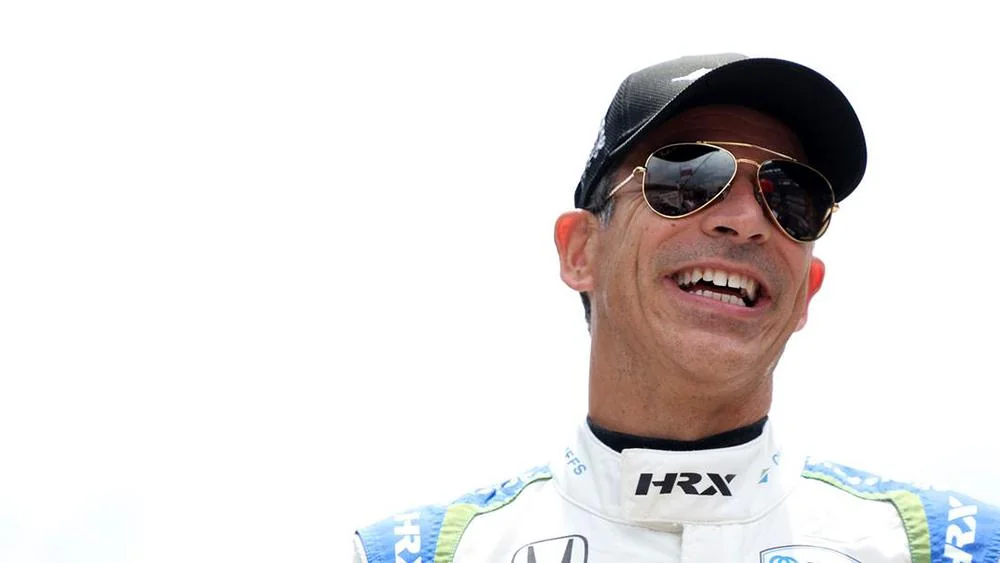
After all of that, the news that Helio Castroneves will drive for Meyer Shank Racing in May at Indianapolis landed like a palate cleanser.
The dominant reaction was joy. Not debate, not outrage, not cynicism, just joy. Fans described it as one of those developments everyone loves to see. Even among those who do not count themselves as Helio diehards, there was broad admiration for what his presence still represents at the Speedway.
That affection runs in several directions at once. Some simply love Helio himself: the energy, the enthusiasm, the fitness, the sense that even at 51 on race day he still brings a spark few others can match. Others focused on the history in front of him. A fifth Indy 500 win would not only be monumental on its own, it would also make him the oldest winner in race history. That possibility, however difficult, is enough to keep the imagination running.
And then there is the enduring appeal of Helio at Indianapolis specifically. Fans pointed to his longevity, his continued competitiveness, and the idea that he may simply be one of the greatest Speedway drivers ever. Even among the four-time winners, he is seen as someone whose relationship with Indy stretches across eras. He has top-10 pace deep into the later stages of his career, and there remains a lingering sense that counting him out there is simply bad practice.
Meyer Shank Racing got its share of praise too
This was not just a Helio lovefest. Meyer Shank Racing also came out of the news looking strong.
Several fan reactions framed the team as one of the more admirable operations in the paddock, a genuine Cinderella story that has built itself through partnerships, smart leverage, and relentless work rather than a giant safety net. There was appreciation for the way Michael Shank has turned opportunities with pay drivers and manufacturer relationships into something durable and credible. That sort of praise is not handed out lightly in motorsport, especially not in a business where fans are often quick to spot fragility, overreach, or political cover.
The implication was clear: Helio returning with MSR does not feel like a nostalgia stunt thrown together for headlines. It feels like a credible pairing with real emotional equity behind it. Fans know the team. They know the history. And they know what the month of May can do for combinations that make sense, even when the rest of the season looks very different.
The 500 field conversation is still bubbling underneath
Even in a celebratory Helio thread, IndyCar fans could not resist zooming out to the bigger Indianapolis picture.
There was immediate attention on the field count, with the Castroneves entry pushing the confirmed total to 30 by one fan’s count. From there, the discussion moved to who else could join, whether Andretti and RLL might add cars again, whether PREMA could appear in some form, and which Chevy-powered teams might be best positioned to expand if needed.
That conversation also turned into a small debate over how realistic any extra entries are given staffing, funding, and future grid limits. Some fans argued PREMA or any successor entity would struggle to show up meaningfully without a sale or major structural change. Others suggested single-entry approaches would make more sense than trying to jump in with multiple cars and risk being bumped. There were also references to the broader cap on non-500 fields and the long-term pressure created by charter-related logistics.
None of that changes the core mood around Helio’s announcement, but it does show how IndyCar fans think. Even in a feel-good moment, they are already mapping the competitive implications of the field, the business side of team growth, and the ever-present question of who gets to show up in May.
Why these two stories felt so different
Placed side by side, these stories almost read like a snapshot of two opposite poles of motorsport culture.
The Dye-Malukas story was driven by performative nonsense, poor judgment, and instant consequences. It became a feeding frenzy because it felt petty, ugly, and stupid, and because the target happened to be someone fans were more than willing to defend.
The Helio story, by contrast, was rooted in earned affection. It brought out conversations about longevity, history, team-building, and what makes Indy so special in the first place. Even the side debates around field counts and age records felt like part of the natural seasonal rhythm of the series.
One story made fans feel like they were watching someone torch his own reputation in real time. The other reminded them why they love this sport’s ability to keep certain legends relevant long after most careers would have faded into memory.
That is the full contrast. In one corner, a livestream controversy that turned into a public own goal. In the other, Helio Castroneves once again arriving in May with the chance to add another chapter to one of the greatest Speedway legacies the sport has ever seen.
And if this week proved anything, it is that IndyCar fans still know exactly which kind of story they would rather spend their energy celebrating.