

Formula 1 is bracing for a dramatically reshaped early season as the Bahrain and Saudi Arabian Grands Prix are expected to be cancelled amid escalating conflict in the Middle East, while a separate technical controversy continues to swirl around Mercedes’ dominant start to the year.
Multiple reports indicate that the two races are set to be officially dropped from the calendar, reducing the 2026 season to 22 races and creating a sizable gap in the early championship schedule. The decision, while widely viewed as unavoidable given the security situation in the region, is already sending ripple effects through the sport, from the competitive balance at the front of the grid to the disrupted schedules of Formula 2 and Formula 3.
A disrupted calendar and a strange early season
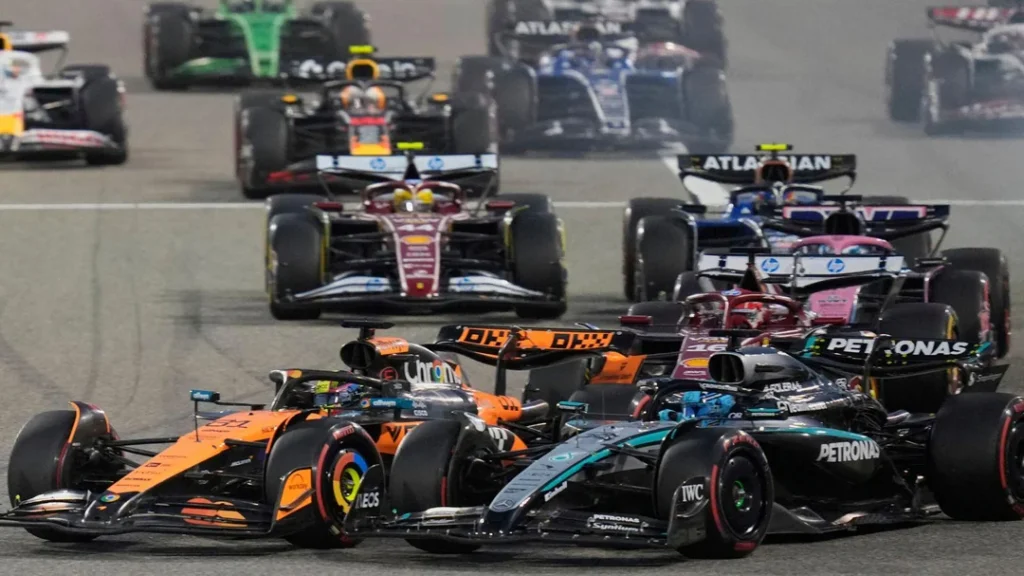
The removal of Bahrain and Saudi Arabia creates an unusual lull in the opening phase of the championship. Instead of the tightly packed early-season rhythm that has become standard in recent years, the calendar now features a prolonged break between races.
The gap has led to a sense that the season will unfold in two phases. With so few rounds taking place early on, the championship’s true competitive order may not become clear until late spring or early summer. Teams are likely to spend the unexpected downtime refining development programs rather than racing week after week.
Logistics appear to be a major factor in the decision not to replace the events with alternative races. Organizing a Formula 1 weekend on short notice—complete with international travel, freight logistics, local infrastructure, and hundreds of thousands of spectators—is a monumental undertaking. During the pandemic-era seasons Formula 1 was able to assemble substitute events quickly, but that was largely possible because races were run without fans and with simplified operations.
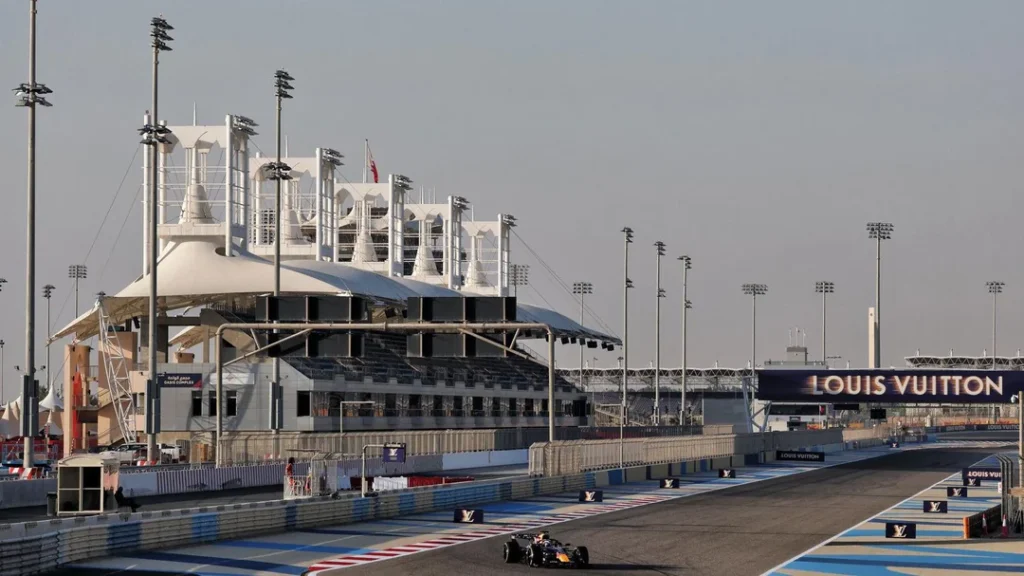
Under normal conditions, replacing a Grand Prix at short notice is far more difficult. Many circuits are already booked months in advance, and the weather window for suitable venues early in the year is limited.
Another factor is contractual obligations. With the calendar still containing more than twenty races, Formula One Management is understood to remain comfortably within its television commitments. Without the pressure of meeting broadcast quotas, the urgency to insert replacement races is significantly reduced.
The decision also appears to reflect concerns about the workload on team personnel. Mechanics and engineers had already been traveling continuously through testing and the opening rounds of the season. Adding additional races to replace the cancelled events would have extended that stretch even further.
For once, the series seems to have accepted that fewer races may be the more practical solution.
A major ripple effect for F2 and F3
The calendar shake-up is particularly disruptive for the junior ladder.
Formula 2 and Formula 3 typically follow the Formula 1 calendar closely, and losing two race weekends early in the season leaves a massive gap in their schedules. Without replacements, those championships face the prospect of going nearly three months between race weekends before returning in Monaco.
Such a break would be unusually long for series built around driver development. Teams and drivers rely on consistent race weekends to maintain momentum and visibility, and a prolonged hiatus risks disrupting the competitive narrative of the championship.
There is already speculation that alternative venues could host standalone rounds for the junior categories. Circuits such as Jerez, Imola, Portimão, or Mugello have been mentioned as possible options, though organizing replacement events still presents logistical hurdles.
For the moment, however, the junior categories appear to be in a holding pattern while the sport evaluates possible solutions.
A break that may benefit struggling teams
While fans may lament the absence of racing, several teams may quietly welcome the unexpected pause.
The opening races have already exposed major performance gaps across the grid. Some manufacturers are believed to be struggling to extract performance from their new power units, while others are dealing with reliability concerns or drivability issues.
The extra development window could allow teams to refine upgrades before the championship resumes at full speed. Engineers now have time to analyze data, test components, and implement solutions without the relentless pressure of back-to-back race weekends.
In that sense, the gap could act almost like an additional testing phase embedded within the early season.
Mercedes at the center of a technical storm
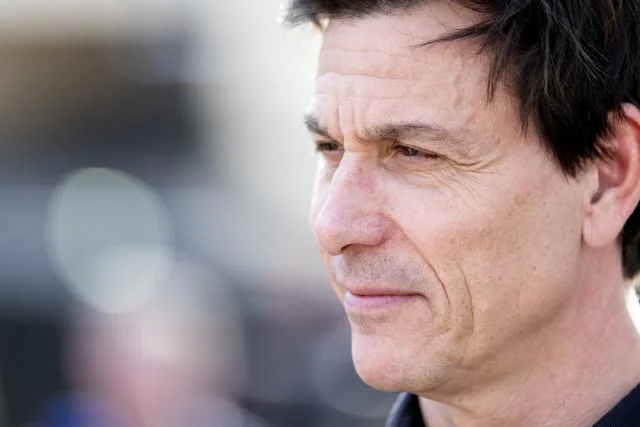
While the calendar debate unfolds, another storyline continues to dominate paddock conversations: the early performance of the Mercedes power unit.
Toto Wolff has pushed back strongly against accusations that Mercedes has discovered an illegal advantage.
“They kept going to the FIA to complain, but the FIA told them everything was legal,” Wolff said when addressing the controversy. “The FIA told them a second time, even a third, and finally they said they would look into it, even though the president himself was stating everything was 100% legal. Our fuel is perfectly legal. You don’t find 10 horsepower in fuel.”
The comments were directed at rival teams that have repeatedly questioned the legality of the Mercedes package. According to Wolff, the governing body has already reviewed the matter multiple times and found no regulatory breaches.
The situation highlights one of Formula 1’s perennial tensions: the fine line between ingenious engineering and accusations of rule-bending. In Wolff’s view, an innovative idea that complies with the regulations and is validated by the FIA is simply part of the competitive nature of the sport.
At the same time, he acknowledged that political maneuvering is inevitable in Formula 1.
“I’ve been in Formula 1 too long not to know that this sport is also about politics and how to make the rules advantageous to your team,” he said.
Despite Mercedes’ impressive early results, Wolff also rejected the notion that the team has already secured a dominant position in the championship.
“We aren’t crushing everyone,” he said. “You know me, I’m a pessimist and I always prepare for the worst.”
Rumors of hidden performance
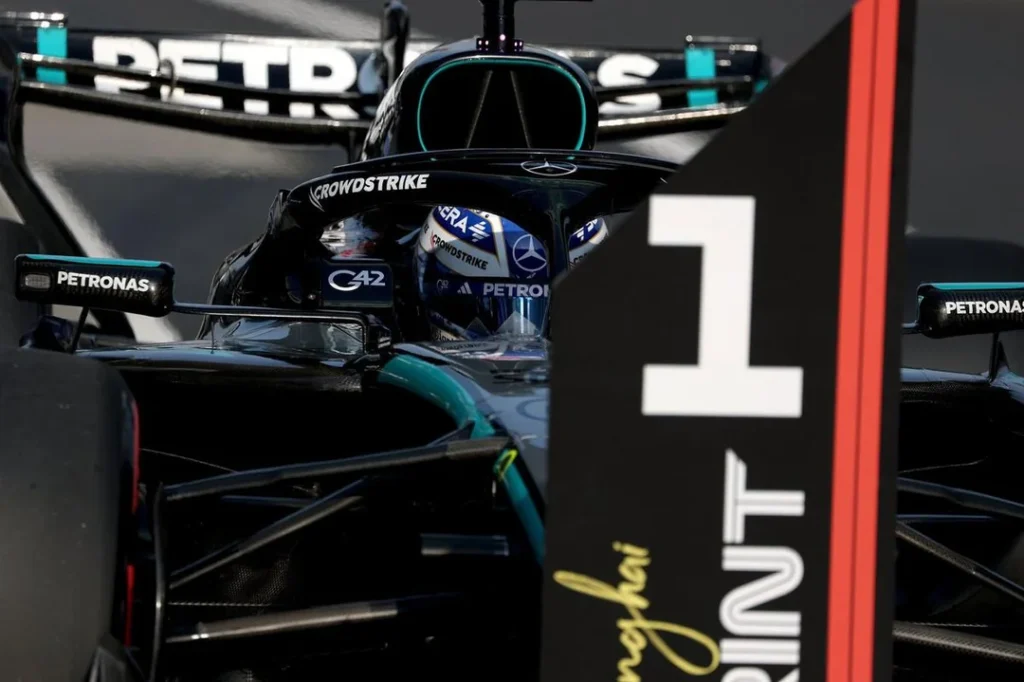
Fueling the debate is a separate claim circulating in the paddock: that Mercedes may not even be running its engine at full capacity yet.
According to reports emerging from Italy, the Brixworth-built power unit may currently be operating on a mapping level of roughly 3.5 on a scale capable of reaching 5.0. The implication is that Mercedes still has significant performance in reserve.
If accurate, the strategy would make sense from a technical perspective. Teams often detune engines early in the season to preserve reliability and protect components. Holding performance in reserve also prevents attracting unnecessary scrutiny from regulators.
Another advantage of this approach is strategic flexibility. If rivals begin to close the gap later in the season, the team can gradually unlock additional performance without introducing major hardware upgrades.
The rumors have also sparked discussion about the relationship between factory teams and their customer outfits. While regulations require engine suppliers to provide identical hardware and software to all customers, operational choices—such as when certain calibrations are deployed—can still create subtle differences in performance.
Political tension across the paddock
The engine debate has inevitably spilled into broader paddock politics.
One topic raised during Wolff’s interview was speculation that Mercedes might acquire a stake in Alpine and effectively operate a “B team.” Wolff dismissed the idea emphatically.
“No. And I’m telling you this in capital letters: NO. We don’t want a junior team,” he said.
The statement reflects Mercedes’ long-standing position that it prefers independent customer relationships rather than controlling a second team outright.
Nevertheless, speculation persists about strategic alliances and influence within the sport—an enduring feature of Formula 1’s competitive ecosystem.
An unpredictable season ahead
Between the calendar upheaval and the technical intrigue surrounding Mercedes, the 2026 season has already taken an unusual turn.
The cancellation of two major races has created a fragmented early schedule and introduced a development window that could reshape the competitive landscape. At the same time, questions surrounding engine performance and regulatory interpretation continue to dominate discussions behind the scenes.
When the championship resumes after its unexpected pause, the grid may look very different. Some teams will arrive with upgrades and improved reliability. Others may still be chasing the benchmark.
And if the rumors are correct that Mercedes has yet to unleash the full potential of its power unit, the real battle at the front of the field may not have even begun.