

The 2026 Australian Grand Prix weekend has barely gotten underway, and already Albert Park feels like it is carrying the emotional weight of a month’s worth of storylines. On one side of the paddock, Aston Martin’s Honda partnership is being dissected in public with a level of bluntness that borders on self-sabotage. On another, Ferrari’s Charles Leclerc is openly admitting Mercedes looks “very impressive,” which is about the fastest way to make the entire grid start having 2014 flashbacks. And around all of that, Formula 1 is still doing what it does best: producing the kind of strange, funny, and unexpectedly wholesome moments that make the sport feel alive.
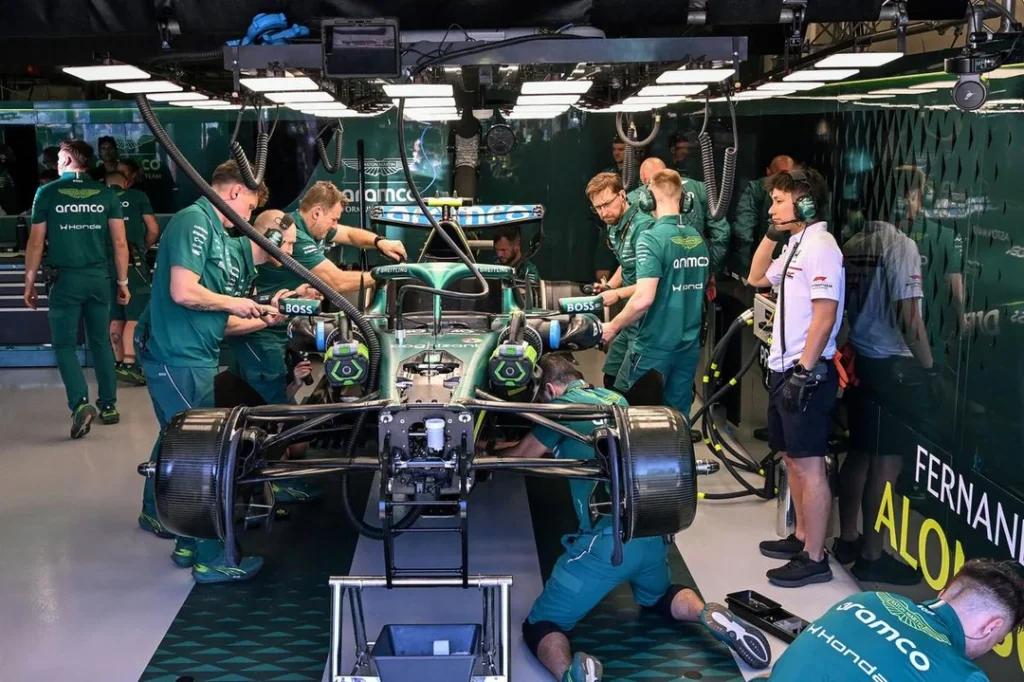
That contrast has defined the early mood in Melbourne. The sport’s biggest structural story is also its ugliest one. Aston Martin’s situation no longer looks like a simple case of a difficult new project finding its feet. The picture painted by the team’s own comments, plus the reaction around them, is of a program that may have underestimated almost every important part of becoming a works operation. The loudest criticism has centered on one extraordinary detail: the suggestion that Aston Martin only fully grasped the scale of Honda’s staffing and performance issues after a November visit prompted by rumors. In a sport built on relentless supplier integration, that does not sound like a minor oversight. It sounds like a failure of basic diligence.
That is why so much of the reaction has focused less on the raw weakness of the Honda package and more on the management structure around it. The recurring theme is not just that Honda appears underprepared, but that Aston Martin behaved as if a works deal could be managed like a customer relationship. That difference matters. A customer team can bolt on a finished product. A works team is supposed to live in constant collaboration with its power unit partner. If Aston Martin truly only got a clear picture this late, then the problem is not merely an underpowered engine. It is a breakdown in how the entire project was governed.
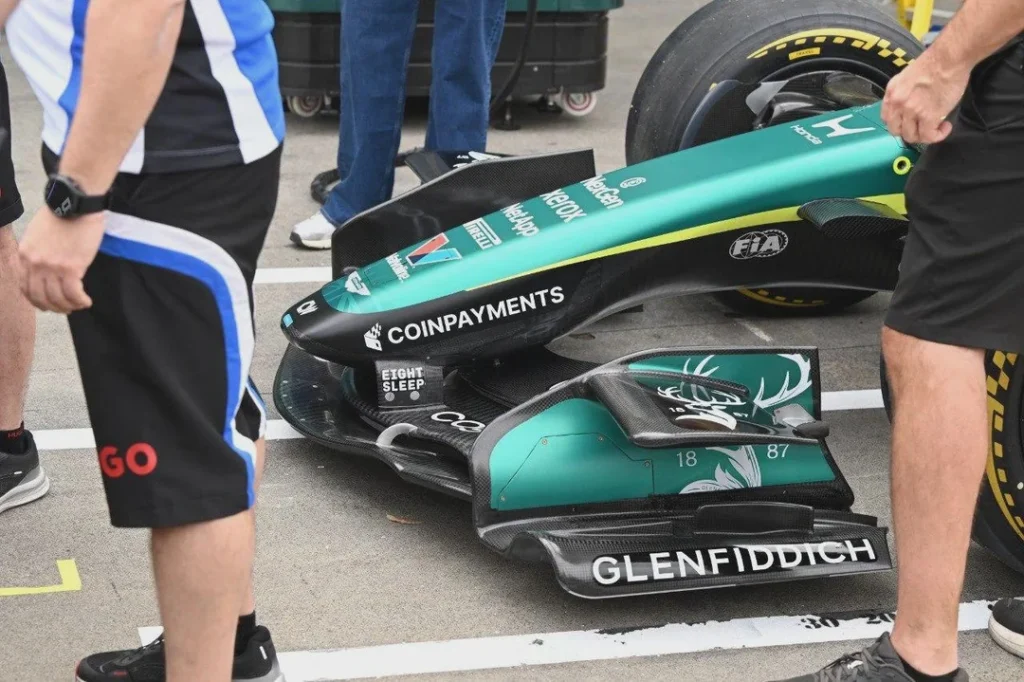
And yet, even with that, Aston Martin’s public messaging has made the situation look even worse. Adrian Newey laying bare Honda’s lack of experienced Formula 1 personnel may be honest, but it also reads like a team trying to move the spotlight away from its own role in the mess. That is why so much of the analysis around the issue has landed on the same conclusion: no one is covering themselves in glory here. Honda looks under-resourced and slow to respond, Aston Martin looks negligent at best, and the attempt to flatten the crisis into a one-sided supplier failure is not especially convincing.
Fernando Alonso’s answer about whether Aston Martin will even be able to race on Sunday only deepened that sense of instability. Saying the team is ready “but it’s more of a question if Honda have the stock” is not the kind of comment that calms anyone down. It tells you the issue is no longer theoretical. The anxiety is not just about ultimate pace, or even reliability in the traditional sense. It is about whether there are enough parts to survive the opening phase of the season without the situation snowballing immediately. Once that becomes the conversation, the rest of the paddock starts treating you less like a contender going through teething pains and more like a project on the brink.
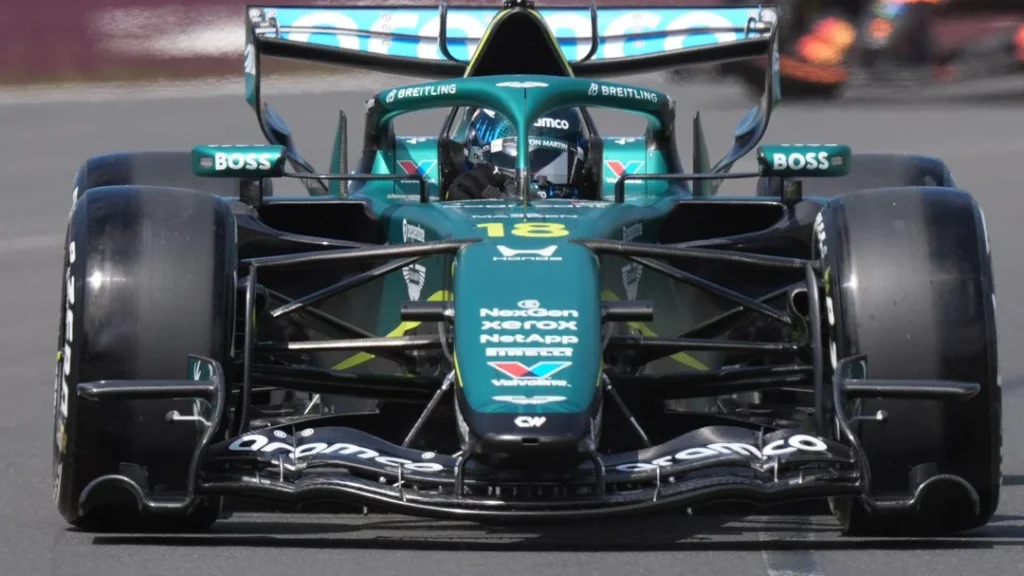
That is also why the reaction to Aston Martin’s claimed driver discomfort has been so cynical. The descriptions of the vibrations have been severe, with the most memorable language comparing the experience to being electrocuted. There has been some fair nuance around that, especially regarding Lance Stroll’s past hand injury and the possibility that vibrations genuinely hit him differently. But there is also a clear feeling that Aston Martin has leaned hard into the health-and-safety framing because it is one of the few pressure points capable of forcing intervention. The suspicion is not just that the problem is real, but that it may have been emphasized in a way that would make the FIA impossible to ignore.
One regulatory story added another layer of confusion. Earlier in the weekend the FIA removed the straight-line mode section between Turns 6 and 9 at Albert Park after drivers raised safety concerns about sliding at high speed through the sequence. That decision immediately triggered pushback from both teams and drivers who argued the change was unnecessary and would compromise energy recovery strategies through one of the circuit’s longest full-throttle sections. The backlash was strong enough that the FIA quickly reversed course, reinstating the zone in a rare regulatory U-turn that left teams scrambling to re-evaluate data and setups yet again.
For teams already wrestling with unpredictable systems and energy deployment, the episode only reinforced how experimental the early phase of the season feels. Even small procedural changes ripple through everything from battery management to aero configuration. For a team like Aston Martin, already fighting to keep its power unit alive long enough to reach Sunday, every variable added to the equation only increases the sense of instability.
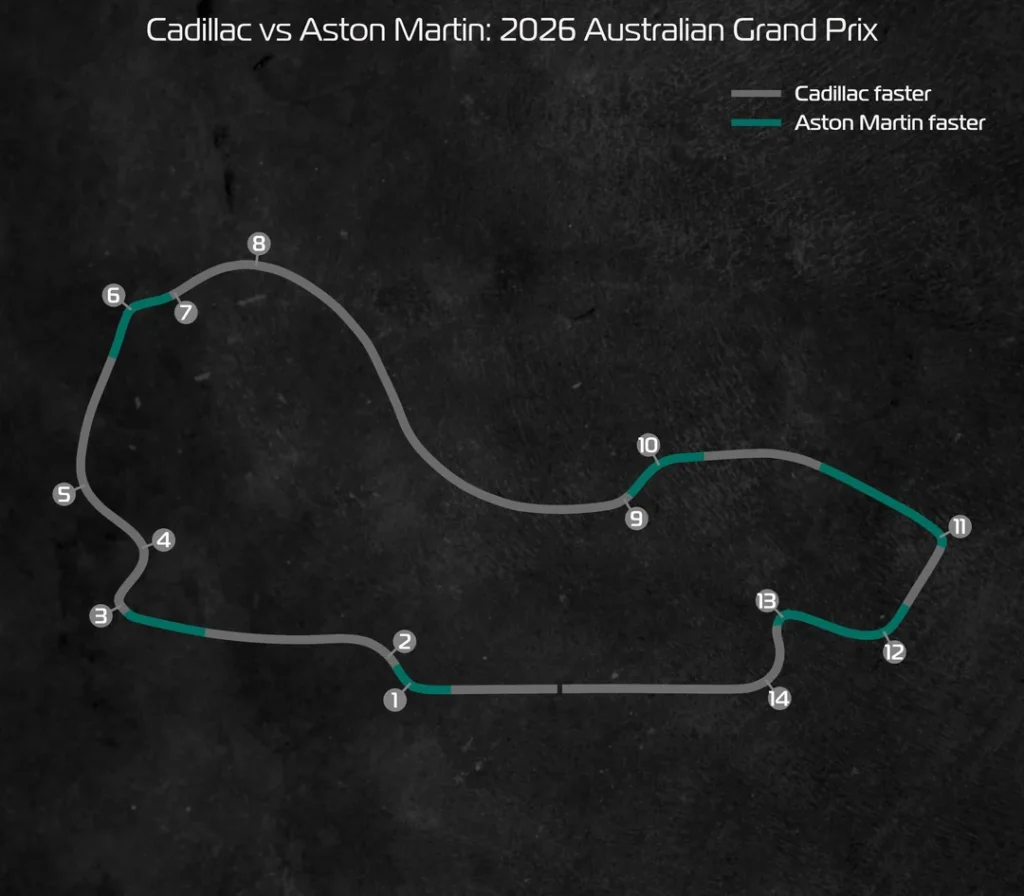
That same theme carried into another strand of conversation around a performance comparison graphic contrasting Aston Martin and Cadillac. The underlying read from that discussion was brutally simple. If Aston is quicker where braking and cornering matter, but Cadillac is stronger through the sections where power tells the story, the implication is hard to miss. Aston Martin may have a car that at least functions in the corners, but one chained to an engine problem severe enough to drag the whole package toward the back. That is hardly a flattering benchmark either, because Cadillac is new. Aston Martin is not supposed to be measuring itself against the grid’s newest arrival and feeling grateful it is not definitively last.
While Aston Martin tries to explain how a high-budget, high-profile works project became this fragile, a completely different fear is building elsewhere in the paddock. Leclerc describing Mercedes as “very impressive” and not sandbagging anymore has fed the dread of a familiar storyline: Mercedes discovering another decisive engine edge just as a new era begins. That alone would already be enough to make rivals uneasy, but the anxiety is being amplified by the contrast with Honda’s struggles. One camp is being talked about as though it is carefully managing how much pace to reveal. The other is being discussed like it is trying to make enough batteries last to reach Sunday.
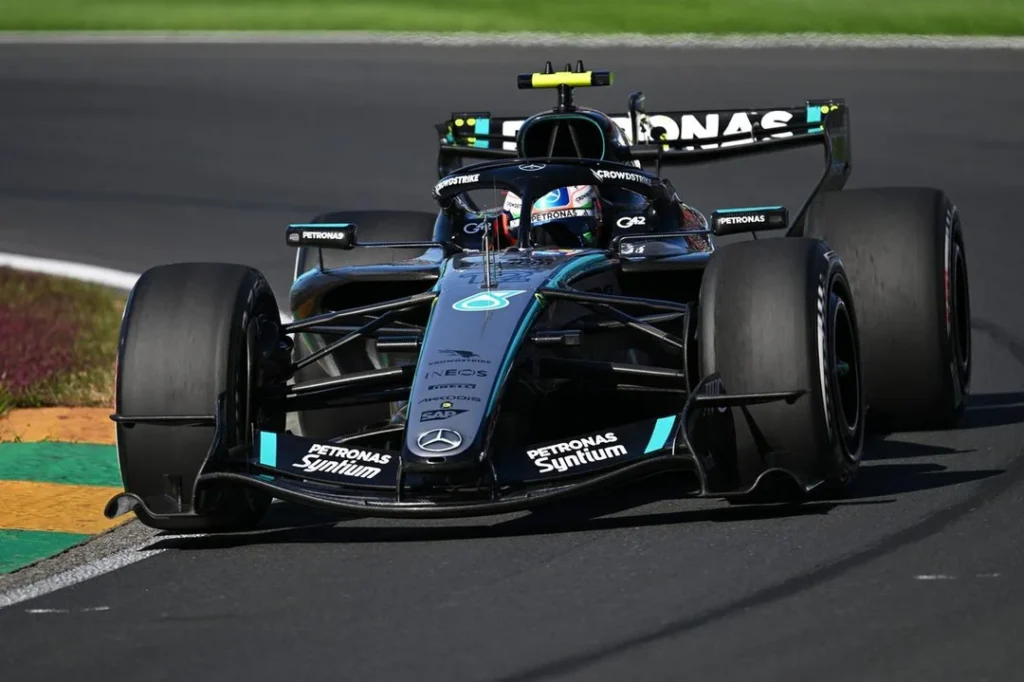
That gap in perception is what makes the Mercedes talk feel so ominous. When rivals start speaking in those terms, the fear is not just that Mercedes will be quick. It is that the entire competitive shape of the regulation cycle could be determined before the season has properly started. The comparisons to 2014 are not subtle, and they are not coming from nowhere. They reflect a concern that Formula 1 may once again be drifting toward an engine-defined hierarchy, with the stronger organizations able to translate a power advantage into sustained control while the rest scramble to contain the damage.

And then, because Formula 1 never lets itself become just one thing, the weekend has also delivered a few moments that pull the mood back toward something lighter. Oscar Piastri’s grandmother making lamingtons for the McLaren team for the third straight year has become one of those small traditions that instantly gives a race weekend texture. It is the kind of story that reminds you how much national identity still matters in a sport otherwise dominated by industrial-scale engineering language. The reaction around it said everything: people swapping lamington experiences, arguing about the best versions, joking about McLaren’s catering budget and whether grandma belongs among the top earners exempt from the cap. It is silly, affectionate, and exactly the sort of local detail a race weekend needs.
Isack Hadjar delivered another memorable paddock moment in a very different way. During his arrival at Albert Park he greeted photographer Kym Illman with a blunt middle finger, a gesture that immediately lit up social media. The response was split between amusement and approval, with many treating it less as a random act of defiance and more as a reflection of growing frustration with the tabloid-style coverage that increasingly surrounds the paddock. What might have been a quick throwaway interaction quickly became a larger commentary on how Formula 1’s personalities are covered off track.
There is one more shadow hanging over all of this, and it stretches beyond Melbourne. The possibility that Bahrain and Saudi Arabia could be cancelled without replacement has introduced another layer of instability into the start of the season. The practical reading is straightforward: replacing those races on short notice appears unrealistic. But the emotional effect is bigger than the calendar math. A five-week gap that early in a new regulation cycle would be a momentum killer. It would be bad for fans trying to latch onto the season, awkward for broadcasters and marketing teams trying to keep the buzz alive, and perversely useful for teams like Aston Martin that look desperate for time.
That may be the strangest early verdict on the 2026 season so far. Melbourne has opened with the kind of technical and political turbulence that can define a championship before it properly begins. Aston Martin and Honda look like a case study in how not to launch a works partnership. Mercedes is being talked about like the possible architect of the next era. The FIA is already reversing operational decisions after pushback. And yet the weekend has still found room for lamingtons, blunt driver gestures, and the kind of absurd fan humor that only motorsport seems able to produce in the middle of a full-blown paddock crisis.
That is Albert Park right now: one part panic, one part prophecy, one part dessert tray.y of the questions raised during the first two practice sessions were still waiting for answers.