

The 2026 Formula 1 season has not even begun in earnest, yet Aston Martin already finds itself at the center of the paddock’s most uncomfortable storyline. Across testing, technical briefings, and early race weekend updates in Australia, the picture that has emerged is one of a team struggling with reliability, communication, and fundamental engineering issues, all at once.
What was once billed as the start of a new era for the Silverstone-based team has instead turned into a cascade of problems that continues to deepen by the day.
A Difficult Start for the New Aston Martin-Honda Partnership
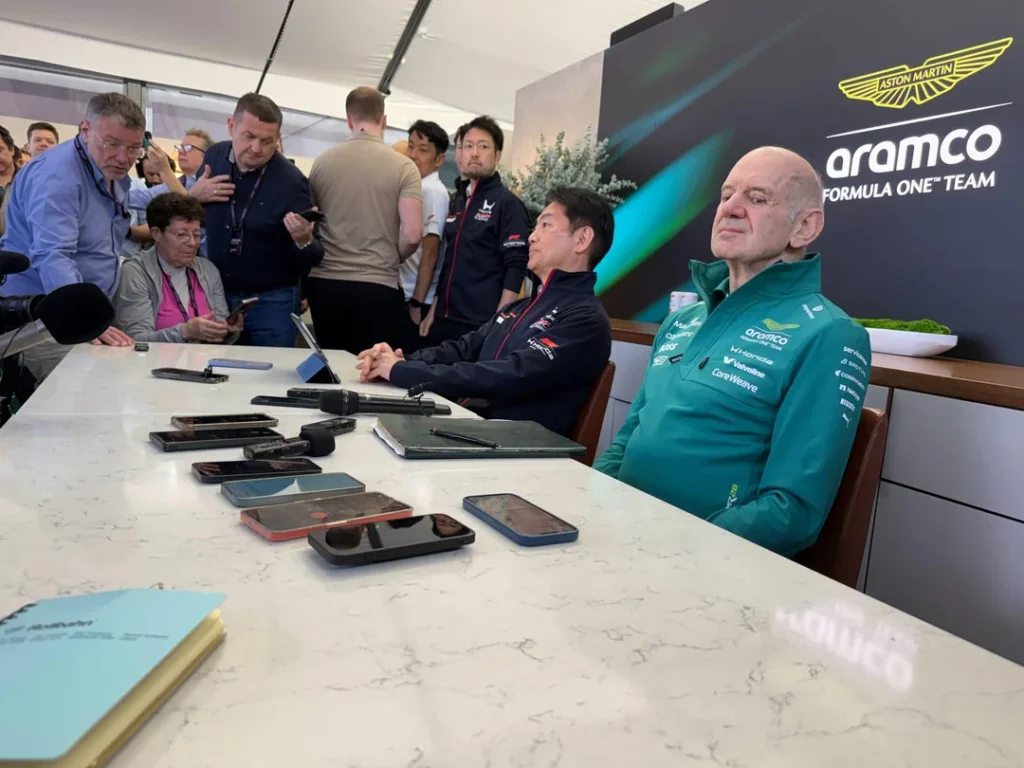
At the heart of the issue lies Aston Martin’s new works partnership with Honda. During a press conference, Adrian Newey explained that the scale of the challenge became clear only after a visit to Tokyo in November alongside Lawrence Stroll and Andy Cowell.
According to Newey, the group discovered that Honda’s power unit program had far fewer experienced staff than expected.
He explained that when Honda exited Formula 1 at the end of 2021 and later returned, much of the original workforce had dispersed. As a result, the revived program reportedly began the new era with only a fraction of the team that had previously delivered championship-winning engines.
Newey summarized the situation bluntly: Honda had re-entered Formula 1 “with only, I’m guessing, 30% of their original team,” while other manufacturers continued developing with continuity through 2021 and 2022. Entering the budget cap era under those circumstances, he suggested, put Honda immediately on the back foot.
The fact that Aston Martin only fully understood the scope of the situation during that November visit raised eyebrows across the paddock. Observers questioned how a partnership announced years earlier could reach such a critical stage before leadership realized the true status of the project.
Some saw it as a failure of oversight. Others suggested that Honda’s internal progress reports may not have conveyed the severity of the situation until the site visit forced the issue into the open.
Either way, the relationship already appears strained before the season has properly begun.
A Car That May Not Even Finish the Race
If the organizational concerns were troubling, the technical issues appear even more alarming.
During the Australian Grand Prix weekend, Newey revealed that Aston Martin has only two batteries available, the ones currently installed in the two race cars. Should either fail, the team would have no replacement.
More concerning still are the vibrations being transmitted through the car.
Newey said Fernando Alonso believes he can only drive around 25 laps consecutively before risking permanent nerve damage to his hands. Lance Stroll estimated his own threshold to be closer to 15 laps.
Stroll described the sensation bluntly:
“I guess just like electrocute yourself in a chair or something like that, and it’s not far off. It’s a very uncomfortable vibration. It’s bad for the engine but it’s also bad for the human inside the car.”
In a sport that routinely pushes drivers to the limit, the idea that the car itself could physically harm them simply by completing race distance is extraordinary.
Porpoising once dominated discussions about driver discomfort in Formula 1, but that issue could at least be mitigated by adjusting ride height. This situation appears fundamentally different: a mechanical vibration issue severe enough that drivers are calculating how many laps they can safely complete.
Even the Positives Come With Asterisks
Amid the chaos, Newey offered one limited piece of optimism: the chassis itself may not be fundamentally flawed.
He suggested the AMR26 could be “kind of in that middle group” from a chassis performance perspective, potentially around fifth best on the grid, though still roughly three-quarters of a second to a second behind the leaders.
However, even that cautious assessment came with caveats. Aston Martin already has an aggressive development plan in place, but many upgrades were not ready in time for Melbourne.
For a team that has spent heavily in recent years on facilities, personnel, and technical leadership, describing the car as “fifth best” at best hardly sounds like a victory.
And even if the chassis eventually proves competitive, that advantage will mean little if the power unit and reliability issues prevent the car from finishing races.
The Wider 2026 Power Unit Concerns
Aston Martin’s problems are not entirely isolated. Across the paddock, teams have raised concerns about vibration issues affecting the new generation of 2026 power units.
Red Bull Powertrains reportedly had to detune its engine during testing due to vibration concerns, while Mercedes engineers are also monitoring reliability risks.
One explanation lies in the architecture of the new hybrid systems. Under the latest regulations, the internal combustion engine, battery, and MGU-K are mounted together as a rigid unit. That configuration can transmit vibrations far more directly through the drivetrain and chassis than in previous generations.
If resonance frequencies emerge under certain conditions, they can propagate through multiple components, from the engine to the battery and even into the steering system.
That may explain why Aston Martin’s issue has manifested not just as a reliability concern but as a physical vibration experienced directly by the drivers.
Regulation Changes and a Complex New Era
Technical complexity has also increased across other aspects of the sport.
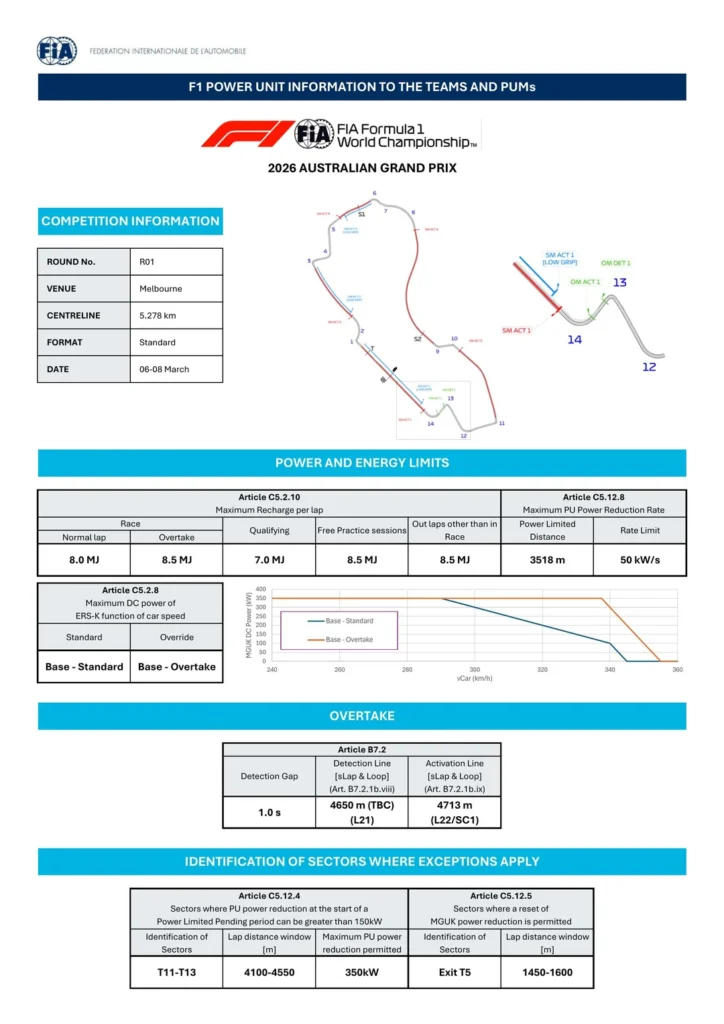
For example, the FIA has introduced new procedures for race starts. After the formation lap, blue lights will flash for five seconds before the traditional start sequence begins. Additionally, driver-adjustable bodywork, known as straight mode, will only be enabled after Turn 1.
The 2026 regulations also introduce track-specific energy management rules that limit power deployment and regeneration at different points of the circuit. In Melbourne, certain zones allow extended deployment while others restrict it, creating a complicated balance between energy harvesting and acceleration.
These detailed restrictions illustrate how heavily regulated the hybrid era has become, with power delivery, aero configuration, and energy recovery all tightly managed by the rules.
Whether that complexity ultimately improves racing remains to be seen.
Even Off-Track Issues Are Under Scrutiny
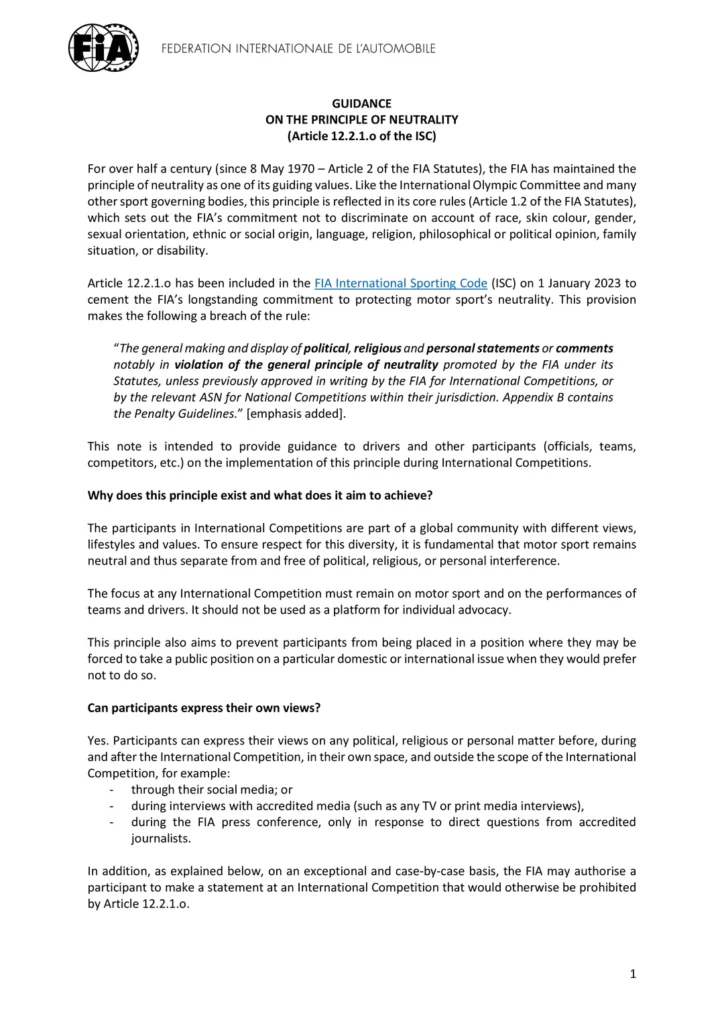
Beyond technical changes, the FIA also released updated guidance on its “Principle of Neutrality.” Drivers and team members are allowed to express personal political or religious views in interviews or on social media outside official competition activities.
However, such statements are restricted during FIA press conferences, podium ceremonies, and other official race procedures unless directly answering a journalist’s question.
The policy reflects the FIA’s attempt to maintain neutrality during official sporting events while still allowing individuals to express personal views elsewhere.
A Team Under the Microscope
Taken together, the early signs from Melbourne paint a troubling picture for Aston Martin.
A partnership already under strain.
A power unit program playing catch-up.
A car that may not safely complete race distance.
And a chassis that, even in the best-case scenario, is only projected to sit in the midfield.
It is a remarkable contrast to the expectations surrounding the team just months ago. With major investment, the arrival of Adrian Newey, and a works engine partnership, Aston Martin was widely seen as one of the projects most likely to challenge the established order under the new regulations.
Instead, the opening weekend of 2026 has raised a far more uncomfortable question: how long it will take before Aston Martin can simply run a full race distance without issue.