

Formula 1’s 2026 season launch came wrapped in a familiar line: “Anything can happen… and usually does.” For many, that Murray Walker nod was the moment the campaign landed. Some heard Murray and were instantly sold. The cut from Charles Leclerc’s “Anything can happen” to footage of a Ferrari crash was read as either playful jinx or outright doing him dirty, an edit that leaned into the sport’s chaotic theatre rather than away from it.
The launch also blurred the line between sport and spectacle. Viewers initially wondered whether it was a setup for an F2 movie announcement. With Damson involved in the season launch and Jerry Bruckheimer signaling development activity, speculation grew that a sequel-style confirmation could arrive later this year, especially if Formula One Management again grants the kind of access it previously did. Others half-joked about titles like “2 F 2 1” or “F1:2 – Electric Bugaloo,” while some floated Fernando Alonso as a narrator—imagining him punctuating a protagonist’s crash with a blunt “KARMA!”
Not everyone saw the launch as aimed at the hardcore audience. Some argued it was clearly designed for viewers who discovered the sport through the F1 movie or streaming platforms, not for those deeply embedded in subreddit discourse. That distinction triggered a wider reflection: attempts to broaden appeal are often criticized as “slop” or overly commercial, but dismissing casual entry points risks gatekeeping. As some noted, many so-called “real fans” entered the sport through family influence anyway. Expanding access, whether via film, Apple TV, or hype videos, doesn’t dilute fandom; it widens it.
At the same time, optimism around the coming season is fragile. One view is that hype will persist only until a clear dominant team emerges, particularly amid concerns that the on-track product could look “real bad” under new regulations. For now, though, the launch achieved its purpose: it generated energy, debate, and a renewed appetite for unpredictability, hopium intact.
A Corner for Laura Mueller and Hannah Schmitz
At the 2026 Australian Grand Prix, Turn 6 at Albert Park will be dedicated to Laura Mueller (TGR Haas F1 Team Race Engineer) and Hannah Schmitz (Oracle Red Bull Racing Head of Race Strategy), making them the first women honored in this way at the circuit.
The reaction has been layered. Some immediately tried to coin hybrid names, “Mueller-Schmitz,” “The MuellerSchmitz,” even tongue-in-cheek sponsor mashups, while others jokingly asked whether it would be the “LH corner.” More practically, fans noted Turn 6 is a right-hander, the corner before the gravel trap at the start of the back straight—better known recently as the “Russell red flag corner.”
There’s also confusion around whether the corner is permanently renamed or simply dedicated for the event. The official clarification: it is dedicated in their honour, with broader “In Her Corner” activities celebrating Women in Motorsport.
The bigger debate centers on precedent. Some argue circuits traditionally name corners after drivers, not engineers or team personnel. Others counter that non-drivers are honored too, Hugenholtz at Zandvoort, Antony Noghès at Monaco, Haug at Nürburgring, Cooper at Brands Hatch, so recognizing influential engineers isn’t unprecedented.
Then comes the question of selection. Critics suggest that if the goal were to recognize historical trailblazers, figures such as Monisha Kaltenborn or Claire Williams might have been more obvious choices, given their roles as pioneering Team Principals. Others note Maria Teresa de Filippis, Lella Lombardi, Ruth Buscombe, and Bernie Collins as worthy names.
Supporters respond that this initiative appears engineering-focused, likely driven by Engineers Australia, and prioritizes women currently active in technical roles within the paddock. Under that lens, the selections align with the campaign’s stated emphasis: visible, present-day engineers operating at the highest level. Highlighting elite strategists and race engineers, rather than only drivers, signals that technical leadership is central to modern F1 success.
There is skepticism about performative gestures, concerns that such recognition risks being a photo opportunity rather than lasting change. Yet many see it as a positive step regardless, arguing that spotlighting talented engineers sets a strong example. The naming tradition itself may be driver-heavy, but the industry’s influence has never been driver-exclusive.
Honda, Aston Martin, and the Six-Lap Step
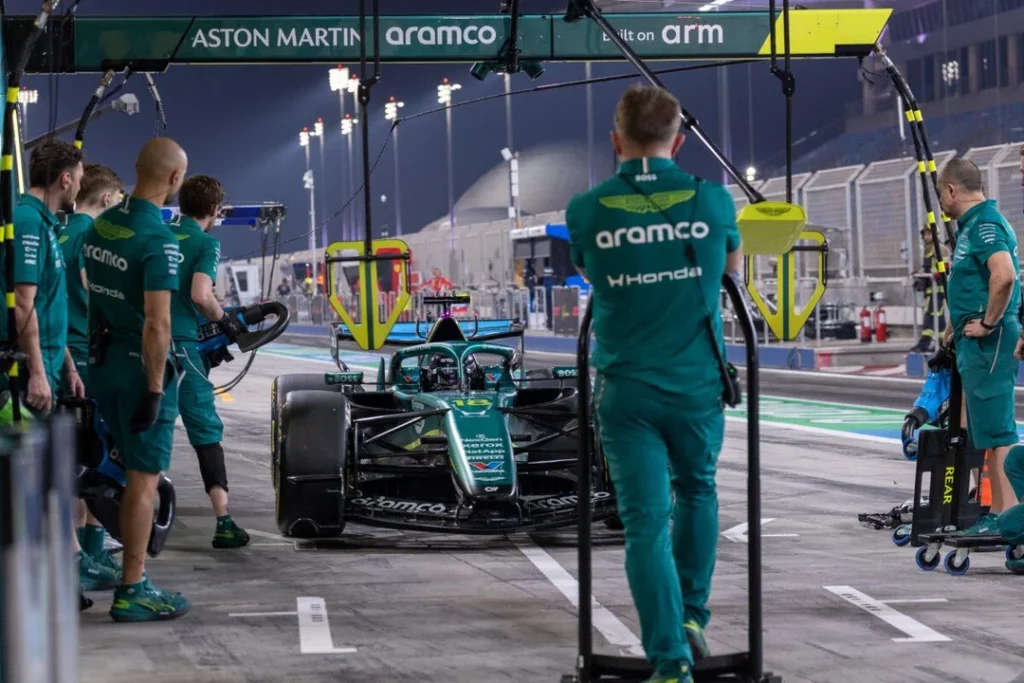
While marketing campaigns and symbolic gestures shaped the off-track narrative, Aston Martin’s early 2026 technical story has been more grounded. Honda has reportedly told the team it expects to resolve major power unit and gearbox issues identified during pre-season work by the Chinese Grand Prix.
Battery-related limitations curtailed running in testing, prompting intensive collaboration between Honda and its HRC Sakura facilities in Milton Keynes and Japan. The focus: bench simulations, validation work, and staged reliability improvements. Internally, leadership is described as cautiously optimistic. Root causes have reportedly been identified; recovery plans are underway.
Friday’s progress? Lance Stroll completed six laps before the car was disassembled. Officially described as “small steps,” the phrasing did not go unnoticed. The reaction ranged from dry amusement, six laps being technically a step, albeit a tiny one, to arithmetic humor (32,472,000 millimeters is not small), to Apollo-esque parody: “One tiny step for Aston Martin, one giant leap for Honda.”
Beyond the jokes lies a serious technical interpretation. If engineers know the precise failure trigger, “the battery fails when we do X,” then a limited, controlled run can validate replication, test a temporary fix, and confirm the issue’s containment before returning to the factory to implement a permanent solution. In that light, six purposeful laps may be more valuable than extended detuned running without diagnostic clarity.
Still, skepticism lingers. Some point out the wording gap between “resolved” and “expects to find a solution,” questioning whether headlines oversell progress. Others recall similar assurances from Honda’s 2015 era and note the coincidence of another six-lap episode. There’s cautious realism that a relatively complete package may not arrive until rounds 10 or 11, rather than immediately.
Encouragement does exist. Adrian Newey reportedly believes the chassis could rank among the strongest on the grid by the 11th race. That long-term vision tempers short-term pain. Observers note that mid-season turnarounds are not impossible, McLaren’s 2023 trajectory being one example, though they also stress that early struggles of that scale are rarely this stark.
There’s humor in imagining dramatic reversals by summer break. There’s fear of a Williams-2020-style slide. There’s even playful conspiracy about sandbagging or hiding something “questionable.” But beneath the sarcasm is a simple preference: better a competitive Aston Martin than one locked into 19th-22nd every weekend.
Across these three threads, cinematic hype, symbolic recognition, and painstaking technical recovery, the 2026 season already feels layered. Murray’s line still applies. Anything can happen. And usually does.