

Formula 1 hasn’t turned a wheel in anger yet, and already the 2026 season feels volatile.
Across testing, social media and paddock whispers, three themes have emerged: Ferrari’s familiar pre-season optimism, start-line regulation rewrites, and early tremors in the Aston Martin-Honda project. Add Lewis Hamilton’s emotional reset and a flaming RB7 in San Francisco, and the narrative tension is already thick.
Ferrari: Fastest Again… and Now Under Scrutiny
Ferrari has now set the fastest time in pre-season testing six times in the past decade: 2016, 2017, 2018, 2019, 2024 and now 2026. No team has done it more often. None of those seasons produced a title.
That stat alone is enough to split opinion.
There’s the cautious camp, tifosi who’ve learned to expect nothing, even when testing looks strong. The memory bank is full:
- 2016: Ferrari topped the sheets, but Mercedes were just three tenths back on softer compounds and miles clear on race pace.
- 2017-18: Testing aligned more closely with reality, but 2017 slipped on strategy timing in Barcelona and 2018 unraveled internally mid-season.
- 2019: The infamous Melbourne shock. A stable, promising Ferrari in testing, then Mercedes arrived with a different concept and dominated. Race sims already hinted Ferrari lacked downforce and consistency.
- 2024-25: Ferrari grabbed headline laps, but Red Bull and McLaren looked stronger in long runs.
So the skepticism is earned.
And yet, 2026 feels different, at least on race pace, according to much of the early analysis. Some see genuine encouragement in Ferrari’s longer stints. Others point out Mercedes still hasn’t revealed full power deployment, making all conclusions provisional.
There’s also internal debate over 2024’s narrative rewrite. Ferrari won five races. Some argue that reflects driver excellence more than car superiority, citing Monaco as an example where Leclerc maximized a machine that may not have been the outright fastest. Others insist that finishing second consistently and fighting for titles is a mark of strength, not failure.
The larger tension is philosophical: is Ferrari judged by relative competitiveness, or by its own mythology? In a team that often frames itself as singular, anything short of titles becomes framed as crisis.
Testing fastest again only amplifies that pressure.
The 2026 Start Controversy: Engineering vs Intervention
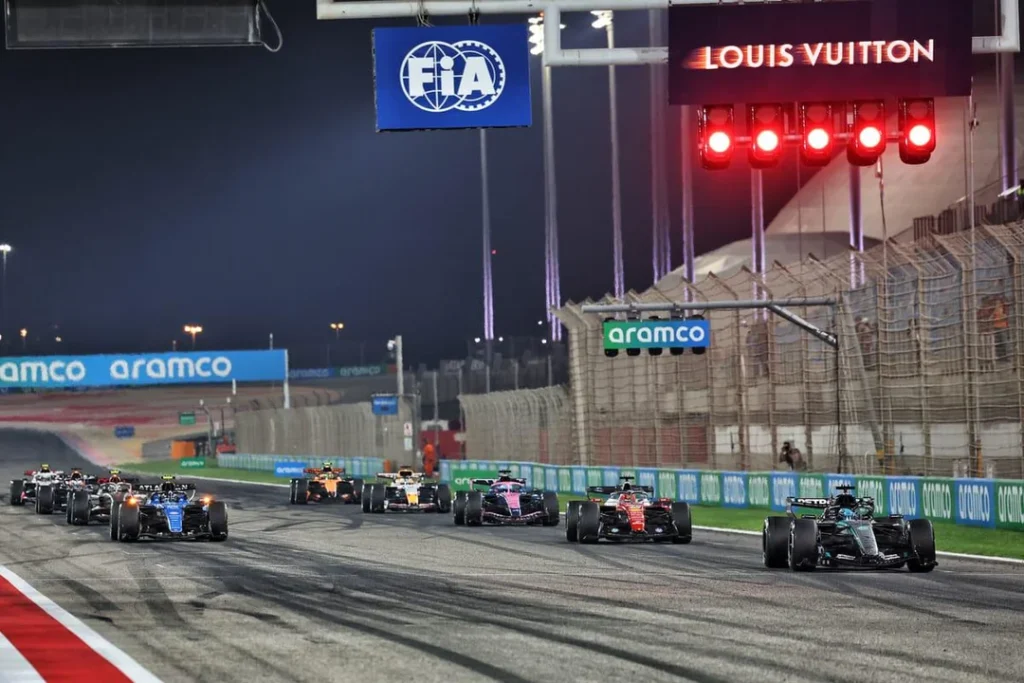
Before the first race, the FIA has already adjusted the start procedure.
Two separate concerns triggered it:
1. Turbo Spool & the 5-Second Delay
With the MGU-H removed, turbos can no longer be kept spinning electrically before launch. Some teams struggled to spool sufficiently under the existing sequence.
Ferrari anticipated this. They opted for a smaller turbo, sacrificing some potential peak performance to ensure stronger launches.
Other manufacturers struggled. The FIA responded by adding five extra seconds to the start procedure, allowing more time for exhaust gases to spin up the turbo.
The consequence? Ferrari’s proactive design choice may now be partially neutralized.
The criticism is sharp: if teams were warned and chose different philosophies, should regulations be bent to accommodate those who didn’t optimize around it?
Others frame it as safety, citing cars stalling or failing to launch properly.
2. Active Aero at the Start
2026 replaces DRS with full active aero, including front and rear elements.
Originally, straight-line mode (low downforce) was allowed at the start. That raised concerns about reduced grip and chaotic pack dynamics entering Turn 1.
The FIA has now banned low-downforce mode at launch, requiring high-downforce configuration until after the first corner.
Many see this as a no-brainer, reducing risk during the most unpredictable phase of the race. Others argue it’s over-regulation before a single competitive session has occurred.
The broader unease is clear: are teams meant to engineer within a fixed rule set and live with consequences, or can lobbying retroactively reshape the competitive landscape?
Either way, Ferrari’s early launch clips, where Hamilton and even Haas appeared to leap forward, now exist under a different regulatory context.
Hamilton’s Reset: Confidence Returns
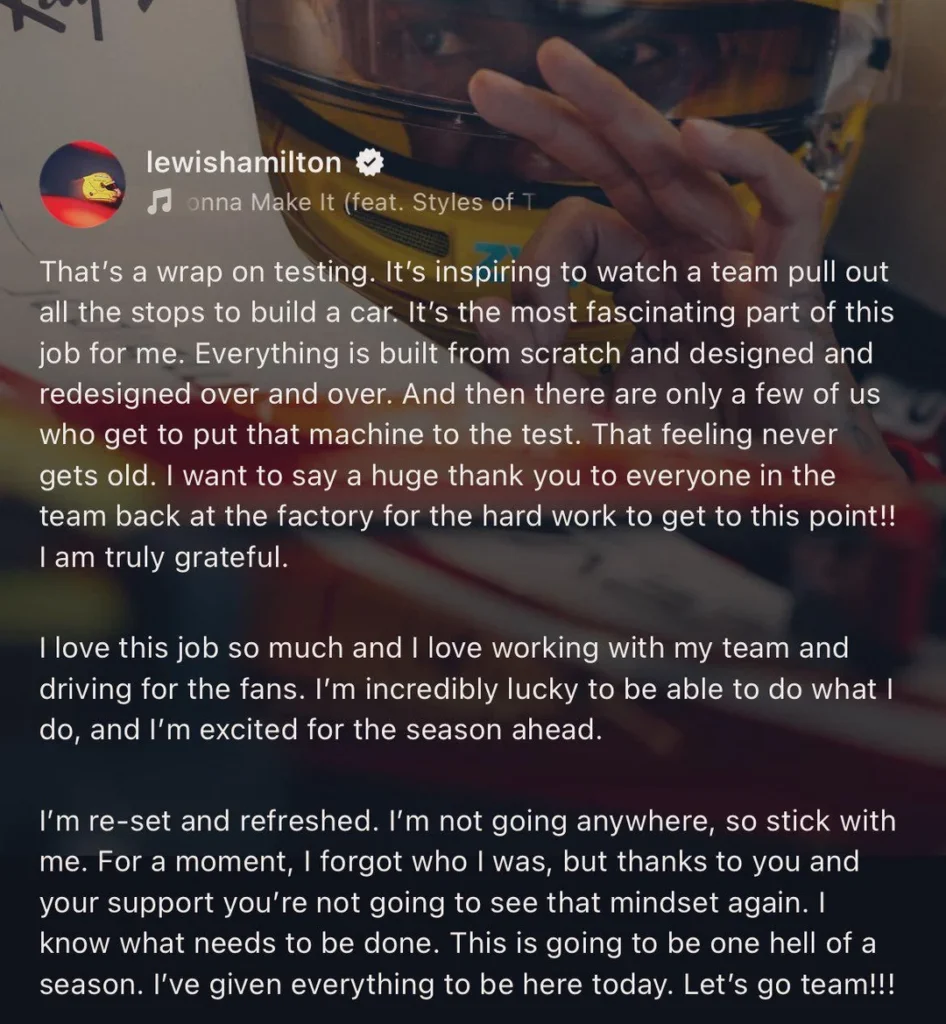
Lewis Hamilton’s post-testing message was emotionally charged.
He spoke of rediscovering who he is. Of being reset and refreshed. Of gratitude to the factory. Of knowing what needs to be done.
The tone wasn’t nostalgic, it was resolute.
That energy triggered immediate overdrive:
- The return of “Hammertime.”
- The revival of the factory rallying cry.
- The familiar “THIS IS THE YEAR™.”
- Speculation about an eighth world title.
- And, inevitably, layered curse mathematics, Ferrari curse plus celebrity curse equals positive energy.
There’s humor in it, but also something more grounded: observers noted he hasn’t seemed this genuinely excited about a car in years.
The emotional swing risk is obvious. When a team radiates belief, the eventual disappointment, if it comes, hits harder.
But the early competitive framing suggests Ferrari, Red Bull, McLaren and Mercedes form a clear top four, separated by a significant margin from the midfield. If that holds, Hamilton is at least starting with a podium-capable machine.
Silverstone and Monza loom large in the imagination. Records are within reach. So is legacy consolidation.
For now, optimism outweighs trauma, barely.
Yuki, the RB7 Fire, and the Red Bull Second Seat Narrative
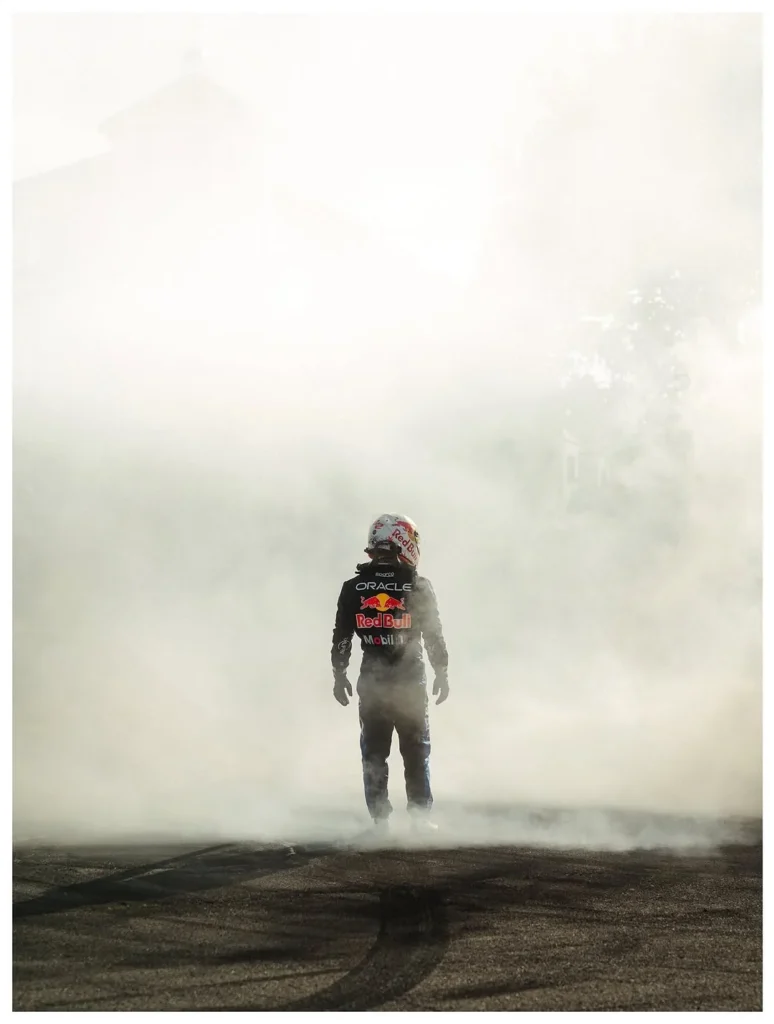
At Red Bull’s San Francisco show run, Yuki Tsunoda’s RB7 caught fire.
The imagery was cinematic, instantly described as poster-worthy, album-cover material, Hollywood-ready. The metaphor wrote itself.
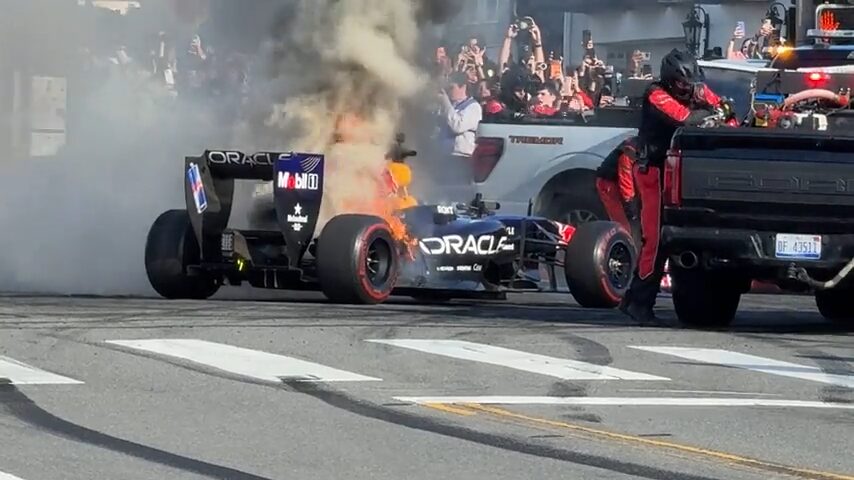
Some saw it as a summary of his Red Bull tenure. Others pushed back, he surpassed 100 race starts before 25, hardly the résumé of a failure.
The broader Red Bull “second seat” debate reignited. The argument isn’t about raw talent; it’s about environment. Since Ricciardo, the seat has chewed through drivers. Some blame team culture. Some blame internal dynamics around a dominant number one. Others reject that entirely, insisting cars are built to be fastest, not to suit personalities.
The fire itself sparked technical curiosity too.
The RB7 show cars still run original Renault V8s with factory support. They’re detuned via software, not mechanically modified. Cooling fans are added to sidepods. Demo-spec Pirellis are used for durability, not ultimate grip. The engines are rebuilt regularly and supported by Renault engineers at events.
The showrun fleet is essentially a maintained museum that still breathes fire, occasionally literally.
Aston Martin-Honda: Cooperation or Collision?
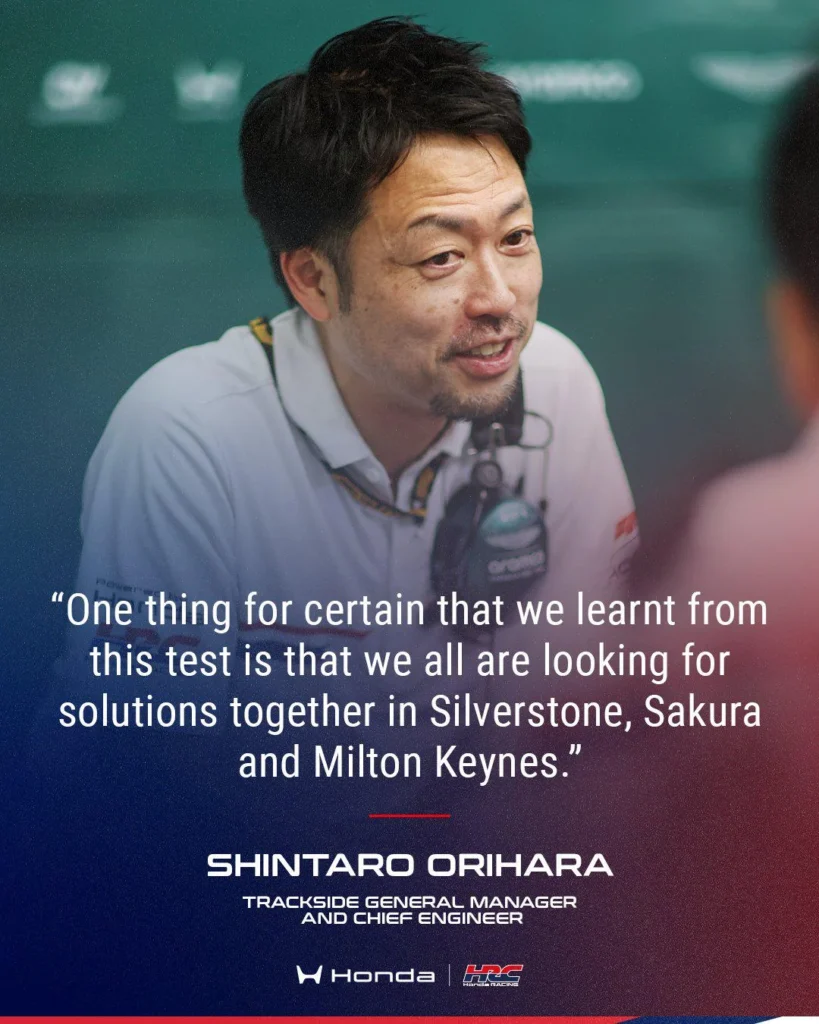
At Bahrain testing, Honda’s Shintaro Orihara emphasized collective problem-solving between Silverstone, Sakura and Milton Keynes.
That unity messaging landed awkwardly.
There’s visible anxiety around the project:
- Concerns over reliability.
- Speculation about internal friction.
- Debate over Andy Cowell’s role and influence.
- Questions about component lead times and whether early struggles can be reversed quickly.
- Historical flashbacks to McLaren–Honda’s painful split.
Some argue that without a competitive power unit, even top-tier aerodynamic minds can’t unlock performance. Others point out that chassis development is inherently constrained by engine architecture, meaning blame is rarely binary.
There’s also infrastructure nuance: Honda operates a Milton Keynes facility (originally built in 2014, sold when they exited, and repurchased in 2024). Post-race assembly and testing are done there; manufacturing remains in Sakura.
The mood is cautious at best. Optimistic timelines stretch years. Pessimistic takes predict early DNFs.
The phrase “we are doomed” surfaced more than once, sometimes jokingly, sometimes not.
Mercedes: Prank Wars and Perspective
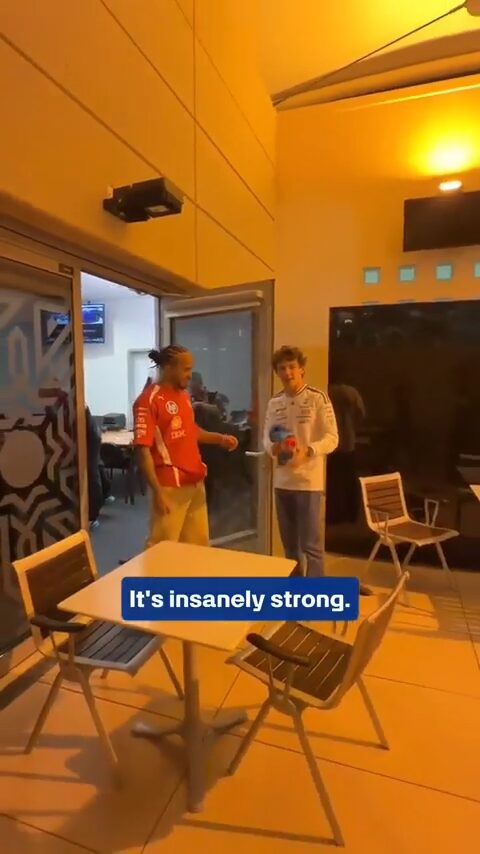
Amid the technical tension, Mercedes offered levity: a birthday prank escalation involving Bono and Kimi Antonelli.
The paddock camaraderie was visible, including Hamilton still interacting warmly with former colleagues.
There’s irony in that too. His departure may be business, but the emotional threads remain intact.
The humor extended into imagined mid-race prank radio calls, exaggerated pit commands, and classic “you will not have the drink” riffs. It’s lighthearted, but it also reflects how embedded team culture is in fan identity.
The Pattern Problem
Ferrari fastest in testing. Regulation tweaks before Round 1. Honda searching for solutions. Red Bull’s second seat under a microscope. Hamilton reborn. Mercedes joking. Audi lurking in the political background.
The 2026 season hasn’t started, and yet the structural fault lines are visible:
- How much should the FIA intervene preemptively?
- Do proactive engineering choices deserve protection?
- Is Ferrari finally converting race pace, or repeating history?
- Can Honda accelerate reliability turnaround?
- Does Red Bull’s ecosystem inherently destabilize its second seat?
Pre-season testing rarely lies entirely. It rarely tells the whole truth either.
But one thing is certain: the stakes feel real again.
And that alone makes 2026 dangerous.