

Season: Pre-Season Testing Ends in Extremes
If you’re trying to build a pecking order after Week 2, Day 3 of testing, allow us to simplify it:
- You
- Can’t
- Predict
- The
- Pecking
- Order
- Yet
- It’s
- Only
- Testing
- Aston Martin
And that last entry isn’t hyperbole, it’s a reflection of how sharply the paddock mood has split between genuine optimism at the front and existential alarm in Silverstone.
Aston Martin and Honda: Six Laps, Serious Questions
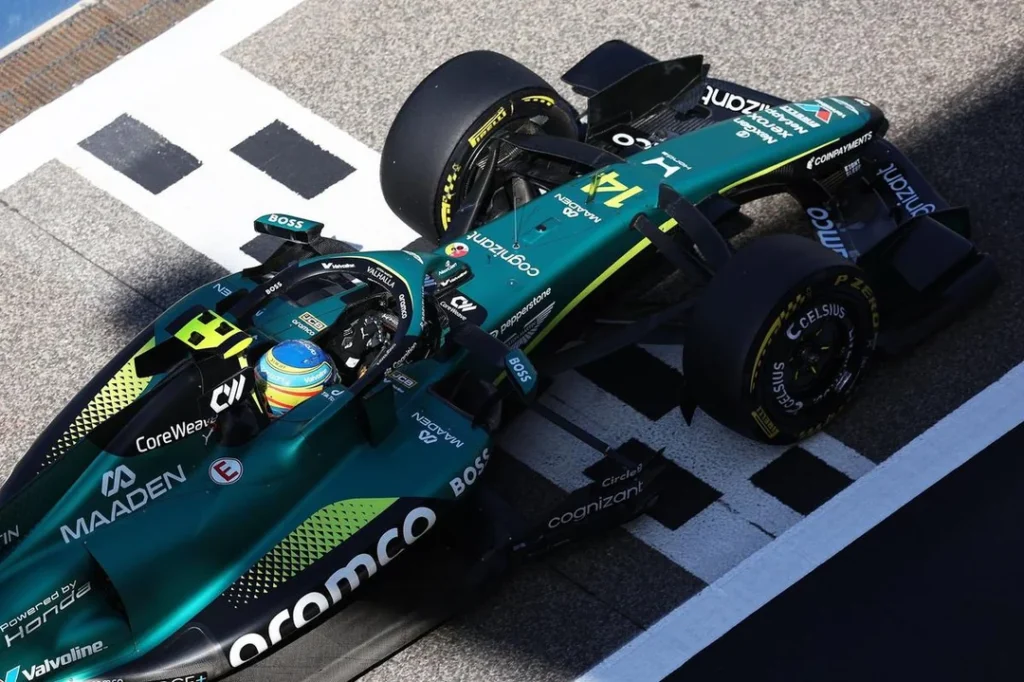
“The goal was six laps.”
That single line defined Aston Martin’s final day. Not a race simulation. Not a performance run. Six laps.
Other teams are logging 135-lap days, running full programs, and ironing out long-run deltas. Audi, a brand-new F1 engine manufacturer, is quietly stacking reliability. Red Bull Powertrains, a company that sells energy drinks, has a functioning power unit. Cadillac is completing runs. Meanwhile, Aston Martin cannot complete meaningful mileage.
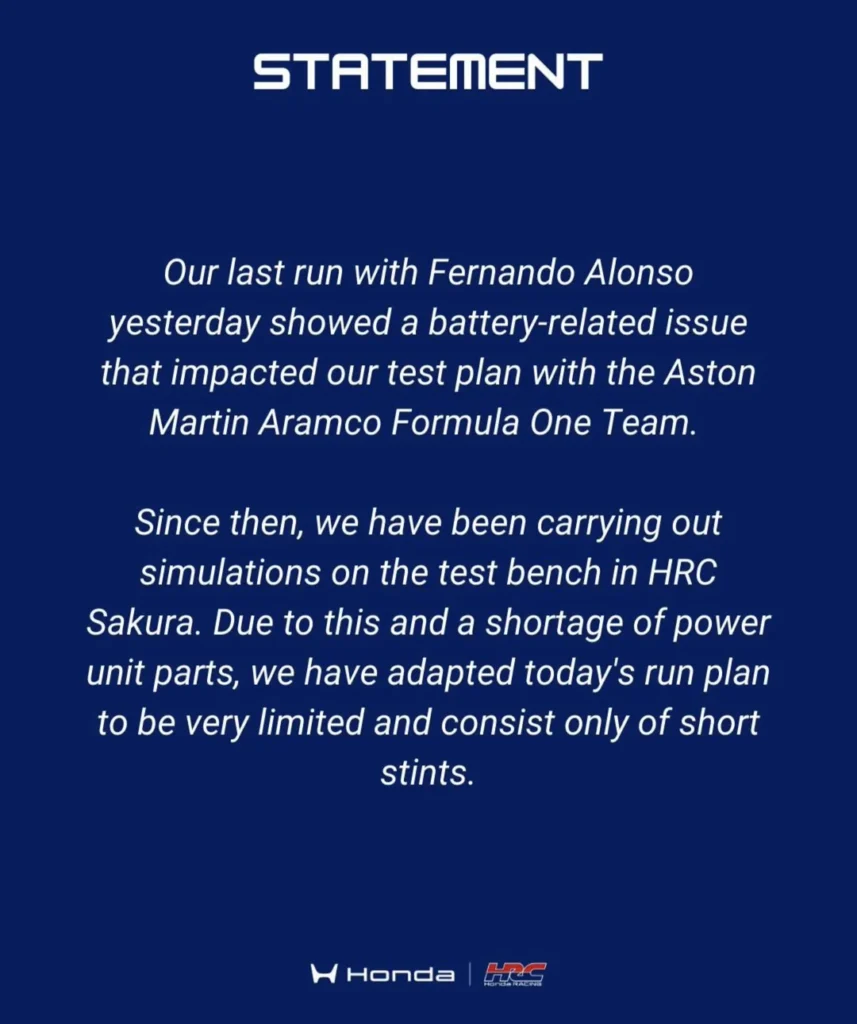
The issue, per Honda’s own statement, is battery-related. Bench simulations are ongoing in Sakura. There’s a shortage of power unit parts. The run plan was “very limited” and restricted to short stints to avoid further damage.
Translated: reliability is now the only priority. Performance is secondary.
More detail emerging from the paddock paints a stark picture: a localized battery problem that risks burning through limited allocation and cost cap constraints. The immediate objective is simply to reach Melbourne with a car capable of finishing the race. Not competing. Finishing.
That is an extraordinary shift in ambition for a team with:
- A works power unit program
- In-house gearbox and suspension
- State-of-the-art facilities
- Adrian Newey at the helm
Stacking a brand-new works engine, in-house transmission, and new regulations at the same time was always risk-on-risk. Right now, it looks like risk compounded.
The broader frustration isn’t just reliability, it’s timing. Honda stopped development for two years after previously announcing an exit, retained a skeleton crew, then reversed course. Experienced personnel moved elsewhere. Red Bull Powertrains started its 2026 project almost two years earlier. Audi committed fully from early 2022.
That lost runway matters in a cost-capped era where both teams and power unit suppliers are constrained. In a new regulation cycle where recovery curves are long, early deficits are punishing.
And the comparisons sting. Audi is running. Red Bull is running. Cadillac is running. Aston is not.
It’s not just the engine either. There are concerns about packaging, gearbox durability, and the broader organizational flow. Even among those urging patience, there’s acknowledgment that F1 teams move like oil tankers. Turning around systemic issues takes seasons, not weekends.
The harshest assessment may be the simplest: wanting a works engine is one thing. Having a working engine is another.
Ferrari: Reverse Wings and Rolling Hype Trains
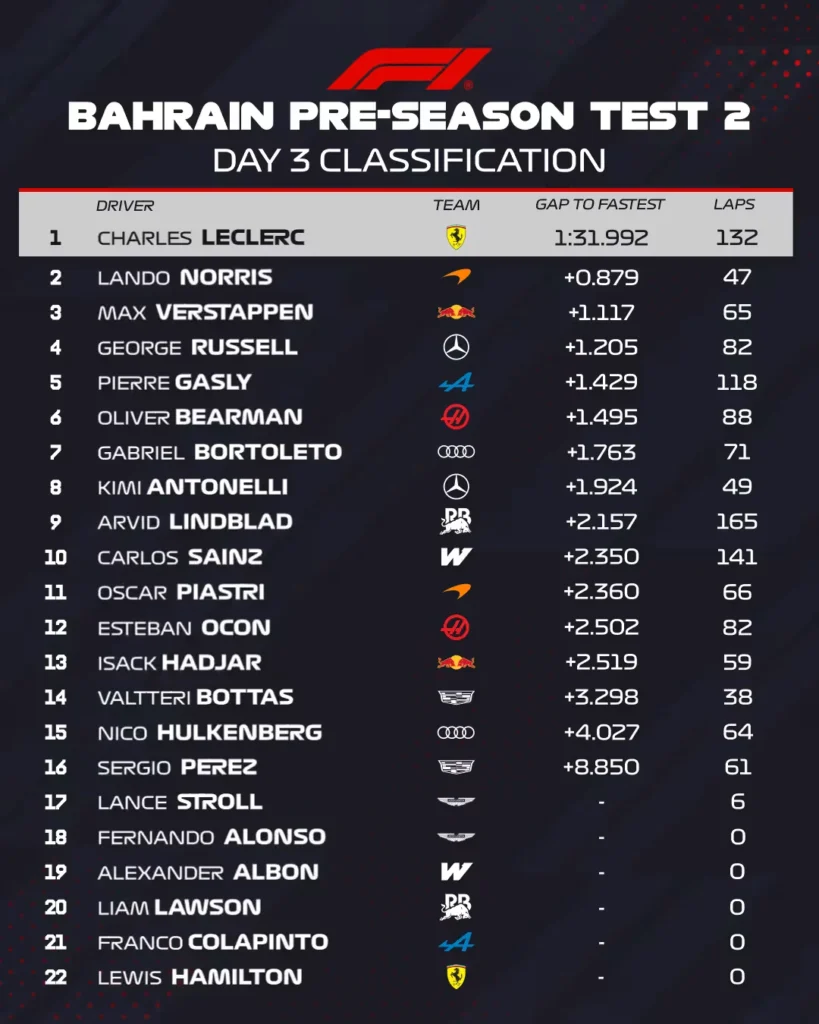
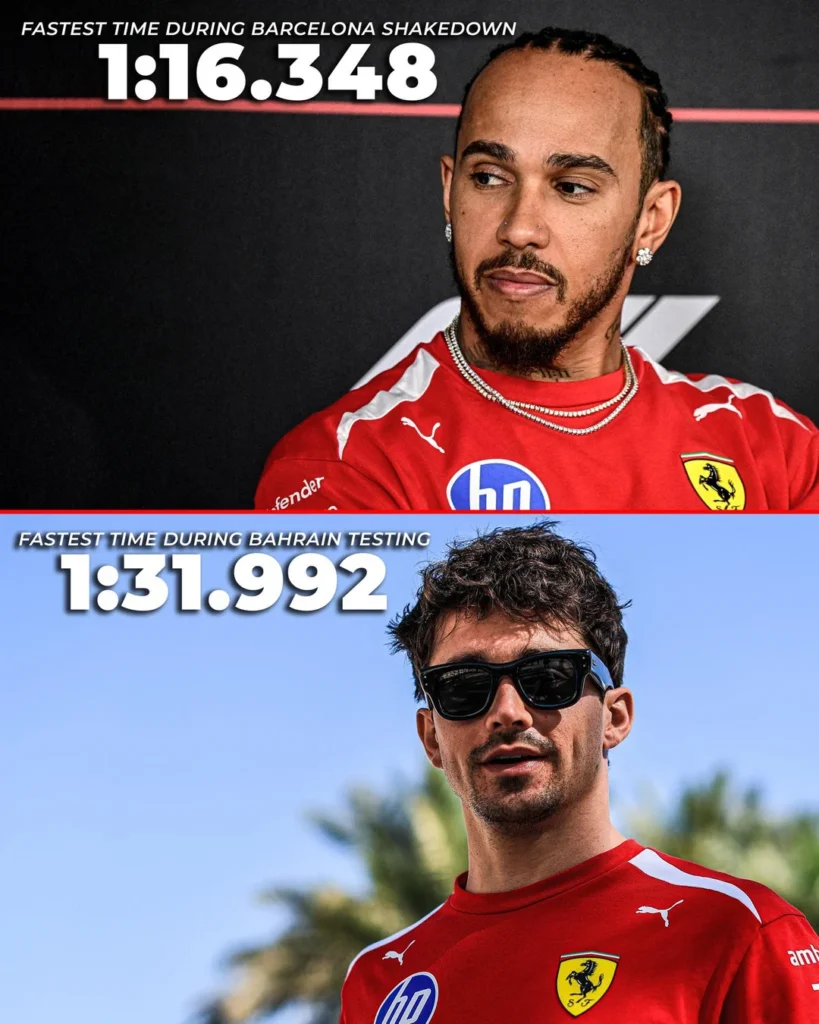
At the other end of the spectrum sits Ferrari, P1 in Bahrain testing, fastest time of the week (1:31.992), and visibly confident.
The raw times:
- Charles Leclerc: 1:31.992 (C4)
- Multiple laps in the low 1:32s
- Consistent engine mode behavior
- Minimal performance delta swings
Contrast that with Mercedes showing wider engine-mode and fuel-load deltas, suggesting either heavy sandbagging or more variable programs.
But the real conversation driver wasn’t just lap time.
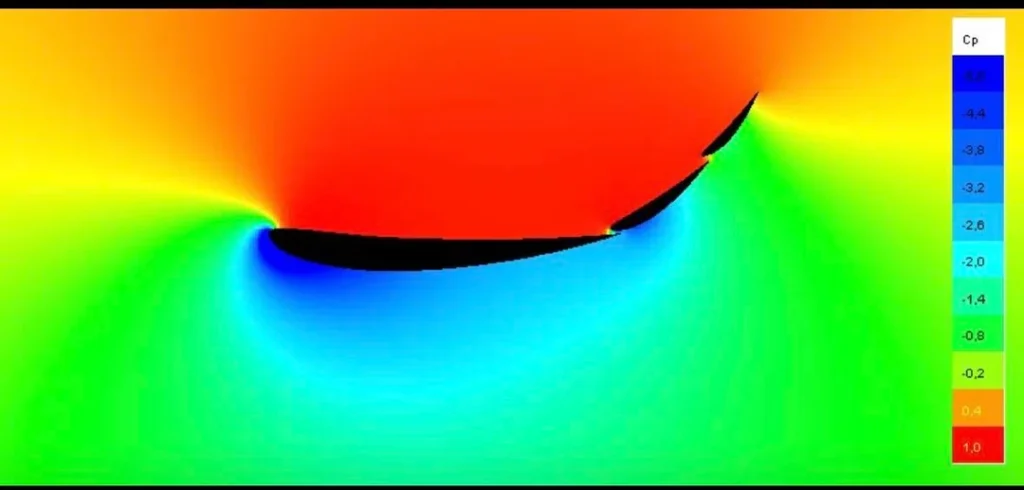
It was the reverse rear wing.
The representation circulating shows Ferrari flipping the wing to generate lift rather than downforce. In “straight-line mode,” lift lightens the rear axle load, reduces rolling resistance, potentially allows lower ride heights without excessive plank wear, and may stall or alter diffuser behavior to reduce drag.
Key mechanics discussed:
- Lift vs downforce pressure differentials
- Trailing-edge/leading-edge flow reversal
- Reduced contact patch = less rolling friction
- Potential diffuser airflow interaction via exhaust fin effect
- 400ms activation window limits braking exploitation
- Ride height benefits and plank wear mitigation
It is not simply “flip wing, go faster.” The aerodynamic profile fundamentally changes. The pressure zones shift. The low-pressure wake behaves differently. The diffuser interaction may be enhanced by the inverted profile drawing energized exhaust air upward.
If the up/downforce ratio is misjudged or an actuator fails at 320 km/h, consequences could be severe. But if executed correctly, the straight-line gain appears immediate and measurable, arguably more impactful than past innovations like DAS, which primarily addressed tire temperature management.
The mood around Ferrari is volatile, part belief, part trauma. “Stop the count.” “We are so back.” “I’m ready to be hurt again.” The 2022 parallels are being invoked preemptively.
The strategic gamble is clear: Ferrari changed 95% of the 2024 car for 2025. It missed, partly due to ride height sensitivity and plank wear disqualifications. Rather than chase a lost development battle against McLaren, they appear to have pivoted early toward 2026.
If that sacrifice pays off, the reverse wing may be remembered as the first public signal.
Mercedes, McLaren, and the Quiet Watchers
The underlying paddock belief is that Mercedes may still be sandbagging. Observers noted that George Russell never even engaged 8th gear during certain push laps. Fuel loads and engine modes fluctuated more than Ferrari’s. That could indicate concealment rather than weakness.
McLaren, meanwhile, has quietly put at least one car in the top five every session. Consistency is being flagged as their strength. If the title fight becomes a development war again, recent history suggests they are difficult to outpace.
The consensus? Everyone is sandbagging to some degree. The question is who is sandbagging the most.
Except Aston Martin. They are not sandbagging.
Lewis Hamilton: The Mood Shift

Lewis Hamilton left the track appearing noticeably happier than he did for much of 2025.
There is a narrative forming:
- The 2025 concept was a dead end.
- Plank wear and ride-height sensitivity compromised performance.
- Development focus shifted early to 2026.
- The new car feels fundamentally more stable.
There are debates about adaptation to ground effect, but the counterpoint is clear: he delivered strong seasons in 2023 and 2024 under imperfect circumstances.
Now, with a stable rear platform and a car seemingly aligned with his driving style, optimism is resurfacing.
Some frame this as statistical legacy territory. Others caution that Max Verstappen remains the benchmark in his prime. But the immediate takeaway is simpler: Hamilton looks comfortable. That hasn’t always been the case.
The Spectrum of Pre-Season
On one end:
- Six laps as a daily goal.
- Reliability before competitiveness.
- Organizational risk stacking.
On the other:
- Fastest lap of testing.
- Innovative aero exploitation.
- Visible driver confidence.
And in between:
- Sandbagging speculation.
- Development delta theories.
- Hopium cycles restarting on schedule.
Pre-season always produces exaggeration. But it also reveals fault lines.
Right now, the clearest one runs straight through Aston Martin’s garage. Whether that crack widens or seals itself by Melbourne may define not just a season, but the long-term viability of their works gamble.
Race 1 cannot come soon enough.