

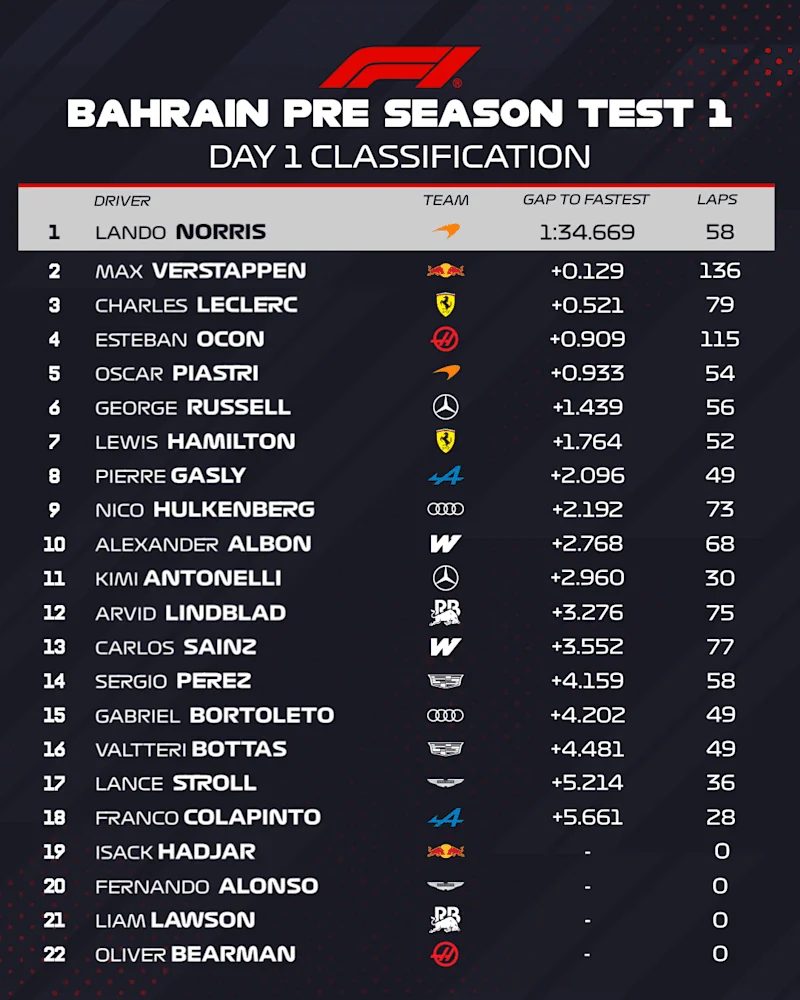
Pre-season testing rarely delivers clarity. It delivers narratives. And after Day 1 in Bahrain, 2026 already feels like a season built on RPM traces, political maneuvering, radical sidepods, and at least seven PowerPoint meetings.
Let’s unpack the chaos.
Red Bull’s Energy Deployment Is Turning Heads
On paper, it’s only testing. In practice, Red Bull’s numbers are raising eyebrows.
Verstappen’s RBPT Ford unit reportedly hit 12,086 RPM in eighth gear, while Stroll’s Honda only reached 10,277 RPM. More importantly, the data traces, not just headline lap times, appear ominous. Red Bull are said to be deploying significantly more energy on the straights, and doing so consistently over multiple laps.
That’s not a single quali burst. That’s regen efficiency.
Some are already cautioning that Mercedes are sandbagging, a familiar preseason refrain, but that explanation rang hollow in 2022, and it may again now. There is a very real possibility that Red Bull and Mercedes have both built excellent engines. There is also a world where Red Bull have simply nailed their first in-house power unit, and that would be staggering.
The more sober view? We are talking about nothing until qualifying in Melbourne.
But it’s still cool to speculate.
Mercedes, Compression Ratios and Regulatory Warfare
Toto Wolff has warned that potential changes to power unit measurement procedures would be “quite damaging” to Mercedes.
The heart of the debate centers around how compression ratio is measured, ambient vs. hot conditions, and whether altering the test method now would effectively outlaw something that was previously compliant.
One camp argues that if something is illegal, it’s illegal, inconvenience shouldn’t matter. The other counters that if the FIA approved development under one interpretation, moving the goalposts weeks before the first race would set a dangerous precedent.
There’s also the practical reality: engine development cycles are measured in years, not weeks. Changing measurement methodology close to the season start isn’t comparable to tweaking a flexi-wing test.
What’s clear is this: nobody actually knows the legality. Fans are arguing from team-aligned narratives. Some see PR positioning. Others see political gamesmanship. And as always in Formula 1, technical directives hover in the background like loaded weapons.
Meanwhile, Toto publicly calling Red Bull the benchmark has been met with equal parts respect and skepticism. He said similar things about Ferrari in 2017-2019. Sometimes it was accurate. Sometimes it was sandbag theatre.
Compliments in F1 are rarely neutral.
Aston Martin: From Off-Season Aura to Alarm Bells
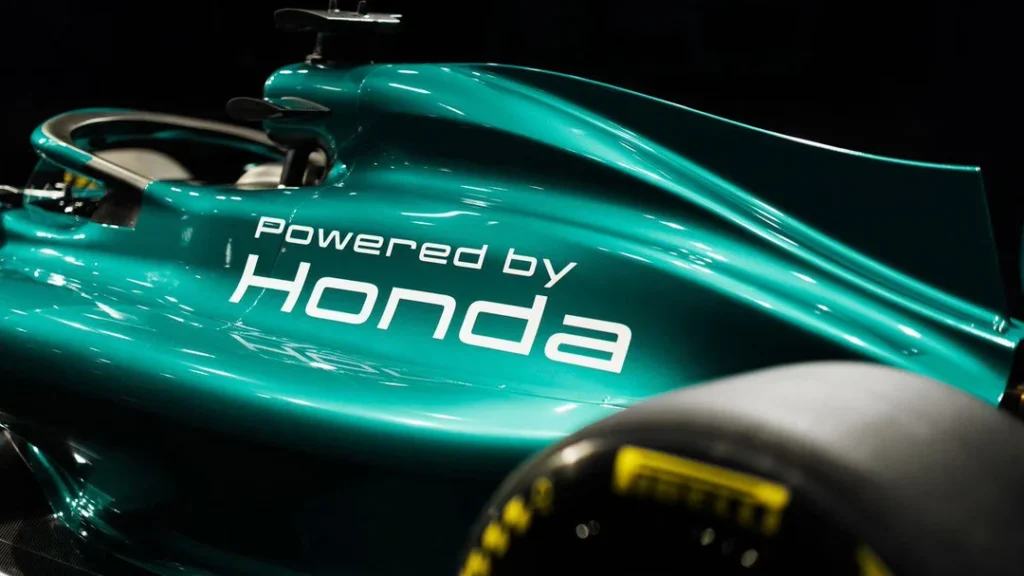
If Red Bull’s data is intriguing, Aston Martin’s situation is alarming.
After minimal mileage in Barcelona and only 36 laps there, Bahrain was supposed to stabilize things. Instead, the team reported detecting “an anomaly in the data” and halted running for preventative checks.
Top speeds reportedly stuck in the 290s km/h. Overheating concerns. Additional cooling vents opened.
The narrative has turned quickly.
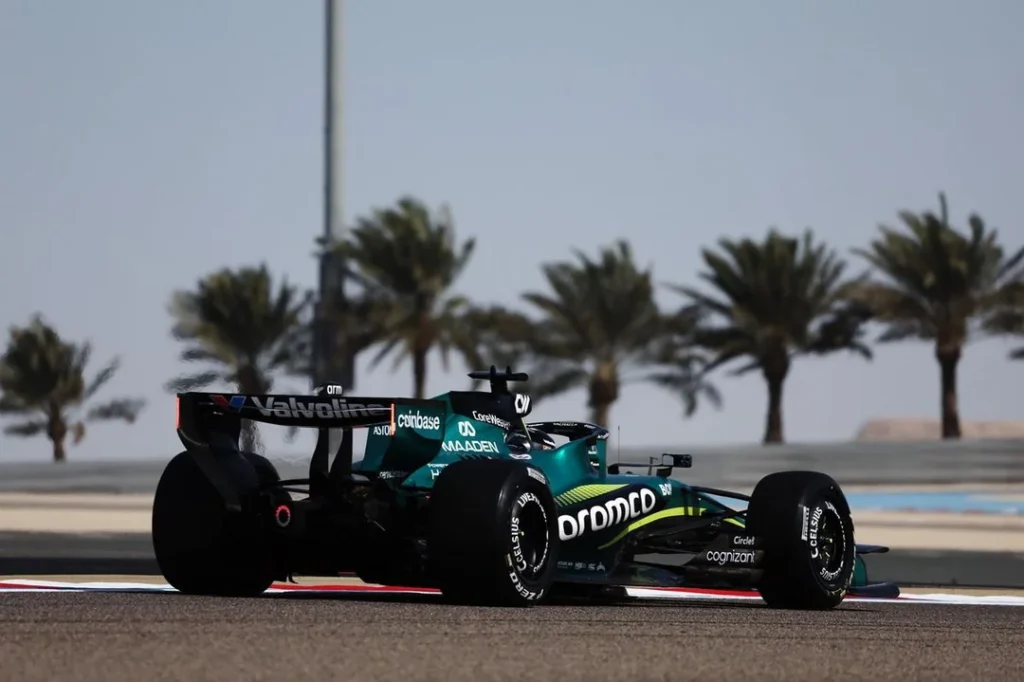
The off-season hype surrounding Newey, Honda, and a clean-sheet 2026 project has collided with the uncomfortable reality of integration, chassis, power unit, fuel, all new. Some argue Honda’s reset was always going to hurt continuity. Others point out that this is not the same Honda group that powered Red Bull’s titles.
There’s also the philosophical Newey debate: tight packaging vs. cooling margin. Is this another case of designing a rocket ship that runs too hot? Or simply a new collaboration that needs time?
The reasonable position is that the season ends in December. The emotional position is that this looks painfully on brand for Alonso.
Either way, Aston do not want to be the team losing this much time this early. Testing isn’t everything. But lost laps are never nothing.
Williams: Quietly Methodical
While some panicked over Williams missing Barcelona track time, the team’s decision to prioritize Bahrain now looks calculated rather than chaotic.
They completed virtual testing (VTT), filming days, and significant mileage before Bahrain began. The approach appears less like scrambling and more like resource allocation.
No one is crowning them contenders. But the doom narrative may have been premature.
Audi’s Radical Sidepods and the Convergence Cycle
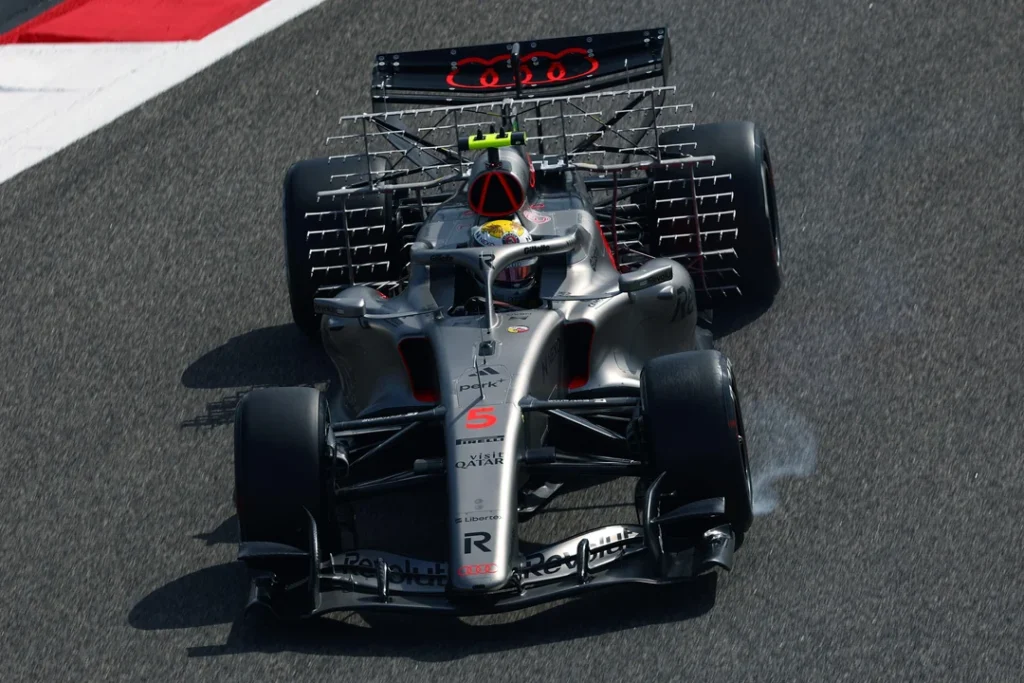
Audi’s new sidepods have sparked genuine intrigue. Not safe. Not conventional. Not subtle.
Testing equipment, pitot tubes, aero rakes, may confuse the visuals, but the design direction itself stands out. Early regulation cycles often produce this kind of experimentation before convergence settles the grid into a “correct” solution.
It’s reminiscent of the early F1-75 era, bold, distinctive shapes before technical directives and development paths pulled teams toward a common concept.
Whether Audi’s gamble works is another matter. Radical is not synonymous with fast.
But at least it’s interesting.
Livery Wars: A Surprisingly Strong Grid
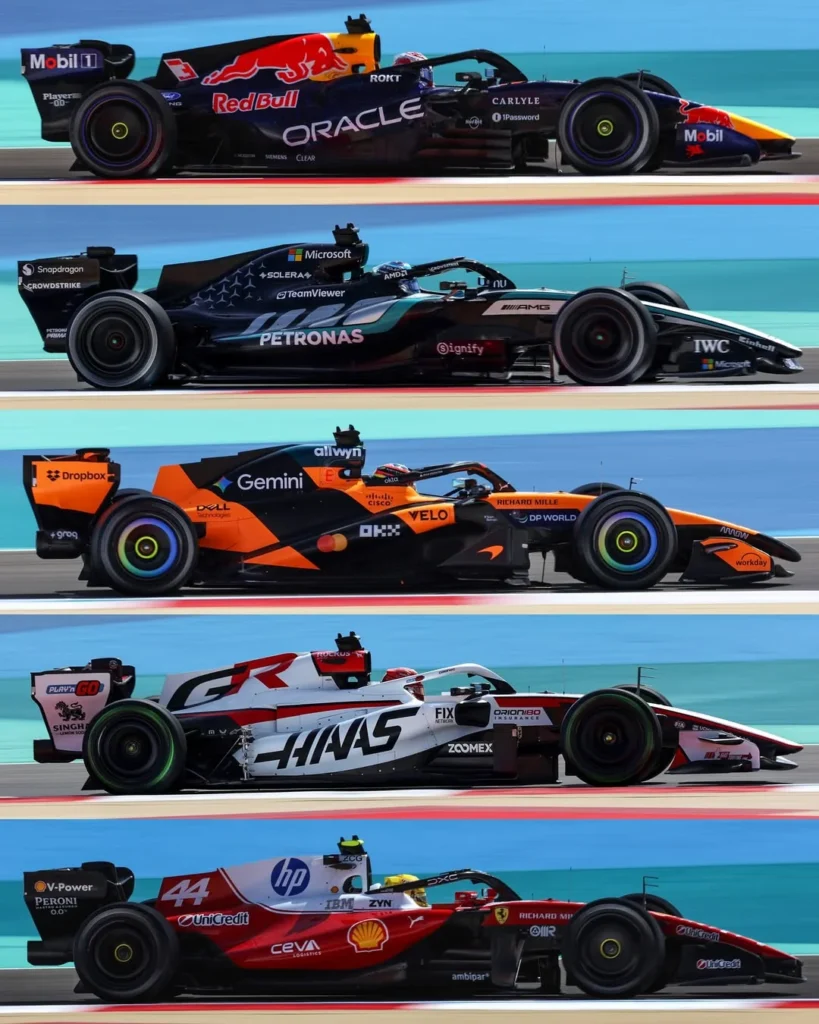
For once, aesthetics are getting near-universal praise.
Minimal exposed carbon. A mandated minimum painted surface percentage helping restore color. Haas popping. Even Alpine earning respect.
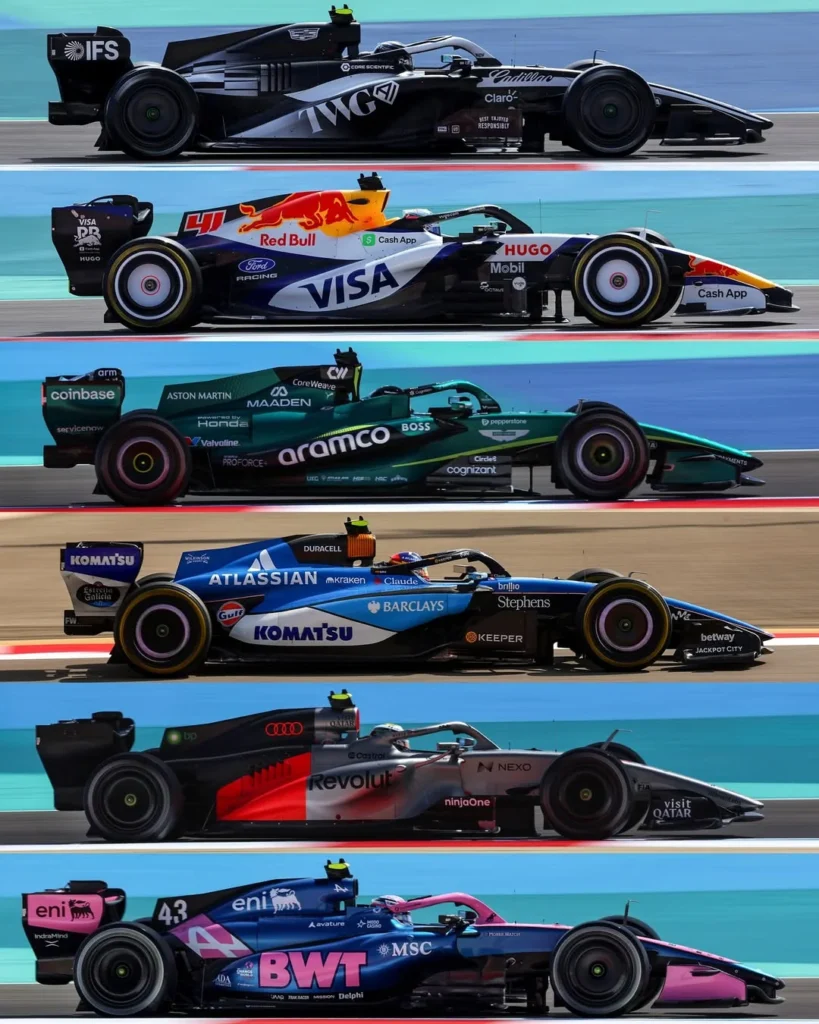
There’s even an argument that this is the best-looking grid in decades.
If only Cadillac had gone yellow.
Energy Management: “We Need a Degree”
Lewis Hamilton’s comment that drivers might need a degree to understand 2026 energy management struck a nerve.
Seven meetings in one day to break down deployment complexity.
Is Formula 1 now too technical? That debate has echoed for decades, from Lauda’s “put a monkey in the cockpit” era to Vettel calling the car a computer.
The reality is that complexity has always evolved. What changes is how visible it becomes.
Whether fans fully grasp the deployment maps or not, the data traces will tell the story. And in 2026, those traces may decide championships.
Cadillac and the Newcomer Curve
Cadillac’s early pace hasn’t impressed, but perspective matters. Every lost testing lap hurts a new team more than an established one.
Nobody serious believes they’ll be four seconds off in Australia. But expectations need calibration. Building a foundation matters more than chasing headlines in February.
Brad Pitt and the Cinematic Multiverse of F1
As if testing discourse wasn’t dramatic enough, news broke that a sequel to the F1 blockbuster is in development.
The fan base immediately jumped to chaos, F2 spin-offs, Crashgate plots, team principal arcs, and inevitable Hollywood exaggeration.
If the first film leaned on star power and access, the sequel may need sharper sporting substance.
Because if there’s one thing this preseason proves, Formula 1 doesn’t need fictional drama. It manufactures its own.
The Only Truth: Melbourne
There are plausible worlds where:
- Red Bull have cooked.
- Mercedes are hiding.
- McLaren are faster than both.
- Ferrari are quietly reliable.
- Aston recover.
- Or none of the above.
Nobody has truly turned up the wick yet.
The only useful data point will be qualifying in Australia.
Until then, we speculate. We overreact. We argue compression ratios and RPM traces.
And we pretend Day 1 already decided the championship.