

Before a single competitive lap of 2026 has been run, Formula 1 is already deep into its first major political and technical fight of the new era. What began as quiet paddock concern has escalated into a multi-manufacturer standoff over the legality of the Mercedes power unit, and whether the rules themselves were rewritten to accommodate it.
At the center of the storm is one deceptively simple line in the regulations: a maximum geometric compression ratio of 16.0, measured at ambient temperature. That final clause, added late in 2025, has become the fault line on which the entire dispute now rests.
From Clarification to Confrontation
The issue has moved well beyond rumor. Multiple Power Unit Advisory Committee (PUAC) meetings have taken place, and while no regulation changes have yet been approved, the political alignment has shifted dramatically.
What was once a three-manufacturer concern, Ferrari, Audi, and Honda, has now become a 4–1 split, with Red Bull Powertrains joining the opposition. That number matters. Four manufacturers represent the threshold required to propose immediate regulatory changes, even if final approval still rests with the FIA and Formula One Management.
Crucially, reports consistently state that:
- The FIA has not yet changed any rules or testing procedures.
- The existing compression test at ambient temperature remains in force.
- Any sudden reversal before Melbourne would be a major surprise.
Still, behind the scenes, efforts to force clarification, or intervention, are accelerating.
What Rivals Believe Mercedes Is Doing
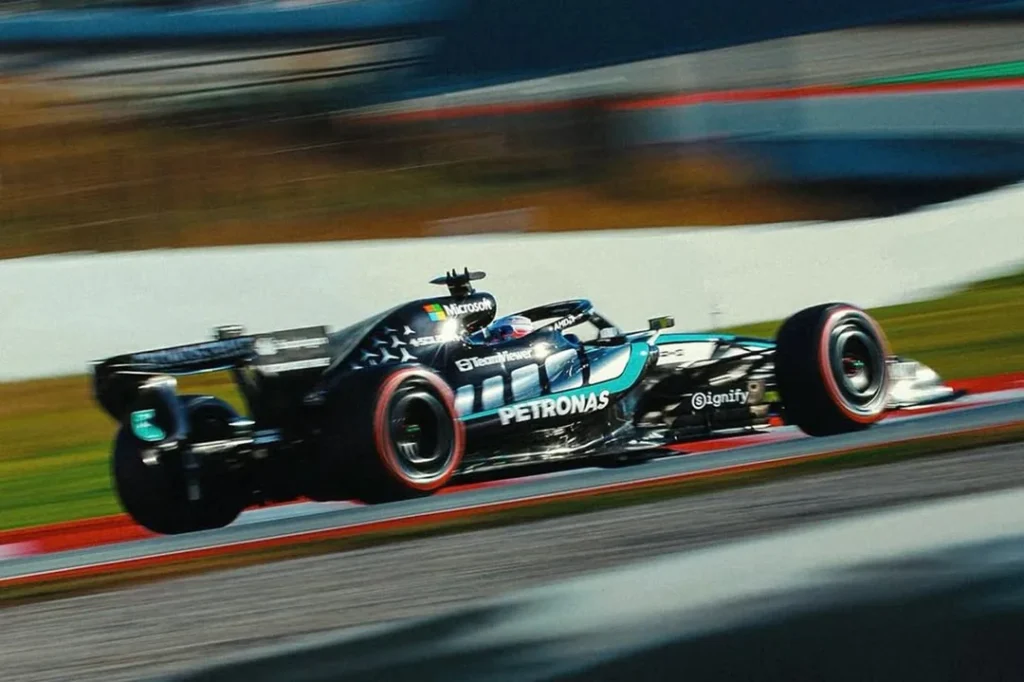
The allegation is not that Mercedes exceeds the compression limit when tested. It is that the engine geometry behaves differently at operating temperature, resulting in a higher effective compression ratio once the engine is hot, while remaining compliant during the mandated static test.
Theories raised across the discussion include:
- Thermal expansion being used not just incidentally, but directionally, to alter combustion chamber volume.
- The possibility of a small auxiliary volume or pocket that is open during cold testing and sealed during operation.
- Designs that exploit the fact that geometric compression is only ever measured cold, even though engines never run cold in competition.
What unites all sides is agreement on one point: thermal expansion alone cannot explain a jump from 16:1 toward 18:1. That gap is why the engine remains under scrutiny.
Why Red Bull’s Position Changed Everything
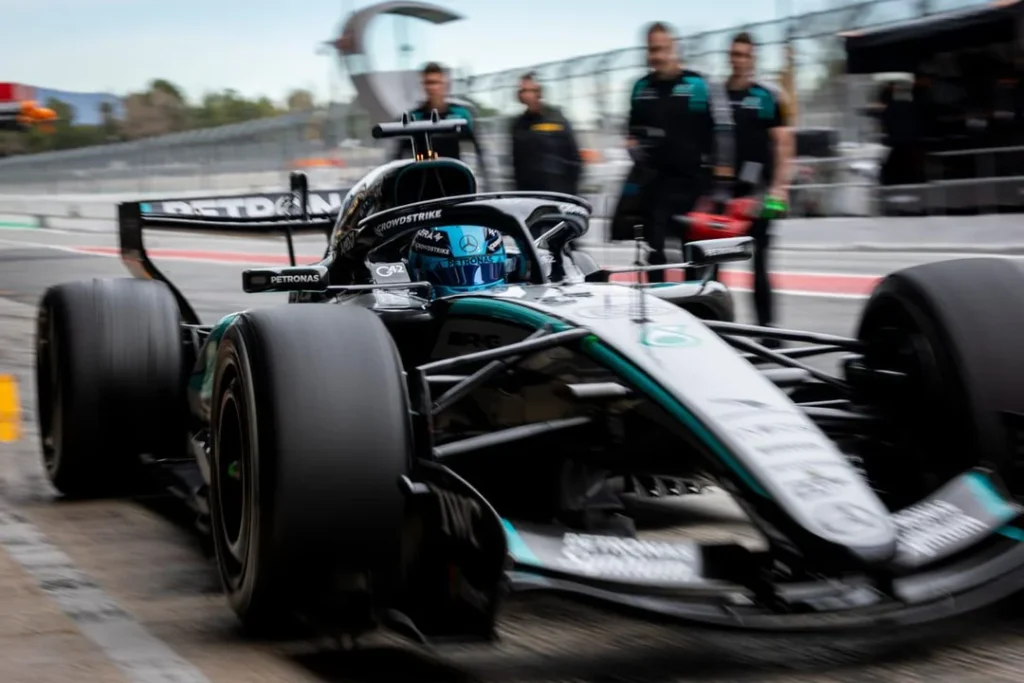
Red Bull’s reported shift from neutrality to opposition is the single most destabilizing development so far.
The dominant theory circulating is blunt: Red Bull became aware of the concept, attempted to replicate it, failed to do so in a viable way, and concluded that kneecapping Mercedes was preferable to finishing second, especially with customer teams potentially dominating the midfield.
Whether true or not, Red Bull’s alignment with Ferrari, Audi, and Honda transformed the issue from background noise into a full-scale governance problem.
The FIA’s Impossible Choice
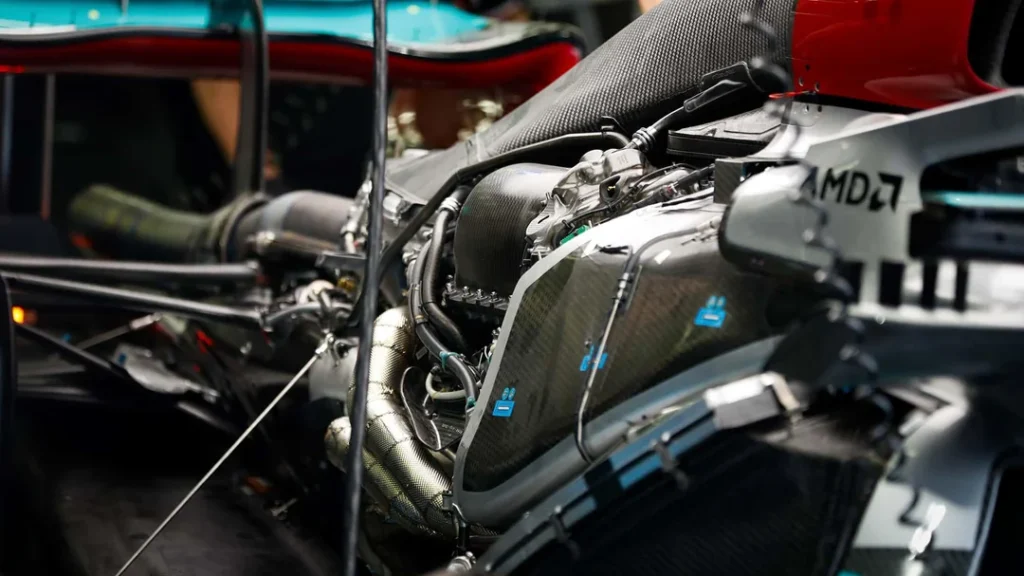
The governing body now faces three deeply unattractive outcomes, all raised directly in the discussion:
- Force a change before the season
- Risks sidelining up to eight cars powered by Mercedes.
- Requires an engine redesign that many argue would take months, not weeks.
- Risks a political and commercial crisis reminiscent of Indianapolis 2005.
- Allow the engine to run
- Leaves rivals convinced the regulations were bent, not enforced.
- Risks half the grid being uncompetitive at the start of a new engine era.
- Reinforces the perception that tests define legality more than intent.
- Kick the can to the future
- Introduce revised tests for later seasons.
- Accept that any advantage gained now cannot be clawed back.
- Acknowledge that the rule was, in practice, unenforceable.
None of these paths satisfy all parties, and all have precedent.
Innovation, Loopholes, and the Spirit of the Rules
The debate quickly moved beyond legality into philosophy.
Some argue this is no different from:
- Flexi-wings passing static tests
- DAS
- The double diffuser
- Designing around prescribed measurements
Others see it as closer to:
- Ferrari’s fuel flow controversy
- Emissions-style “beat the test, fail the rule” logic
- A deliberate bypass of an absolute limit
Both sides agree on one thing: Formula 1 is governed by tests, not vibes. If something passes the defined procedure, it is legal, until the procedure changes.
Whether that is engineering brilliance or regulatory failure depends entirely on perspective.
A New Era, Old Habits
What makes this dispute especially combustible is its timing. Audi and Honda returned to the sport under promises of fairness and convergence. Red Bull is fielding its first in-house power unit. Mercedes supplies nearly half the grid. Ferrari remains existentially critical to F1’s identity.
Against that backdrop, the compression ratio fight has become symbolic of a deeper question:
Is Formula 1 prepared to accept uncomfortable innovation, or will every edge discovered before rivals are ready be legislated away?
The Season Hasn’t Started, But the War Has
No engines have been banned. No tests rewritten. No protests filed.
And yet, the paddock already feels like it’s in mid-season form.
Whether this ends in a quiet technical clarification, a forced compromise, or another defining FIA intervention, one thing is already clear: the 2026 era has begun exactly as Formula 1 always does, with engineers pushing, rivals protesting, and governance struggling to keep up.
And Melbourne hasn’t even arrived yet.