

The 2026 NTT IndyCar Series begins where mistakes are punished instantly and reputations are tested immediately: the Firestone Grand Prix of St. Petersburg on March 1st. Set against the waterfront streets of Florida, the St. Petersburg circuit has become IndyCar’s annual reality check, tight, technical, and strategically unforgiving.
For an audience accustomed to Formula 1, St. Pete serves a similar role to Melbourne in years past. It strips away preseason optimism and exposes which teams, and drivers, actually arrive ready. That makes it the perfect stage for a season defined less by regulation churn and more by execution, with Alex Palou once again at the center of the narrative.
St. Petersburg: Where IndyCar Reveals the Truth
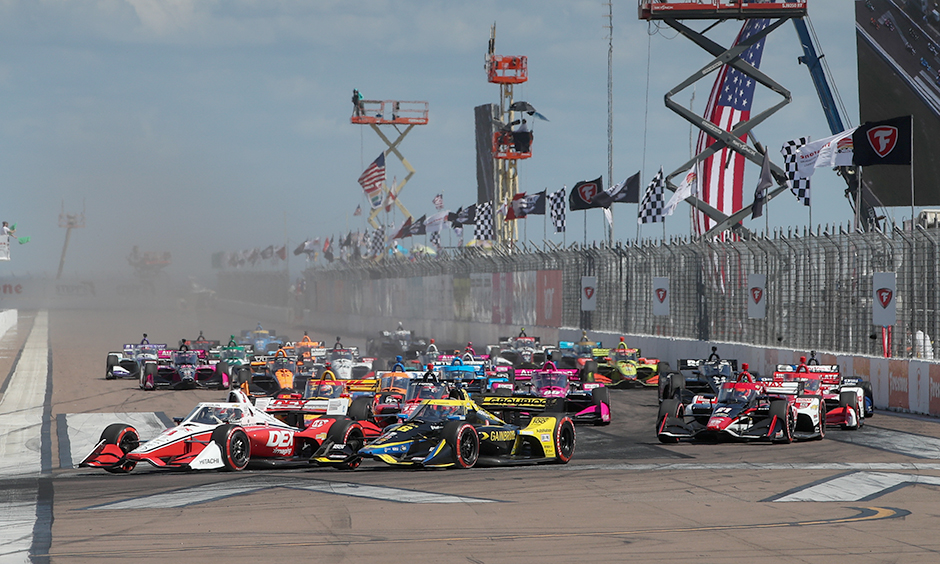
Street circuits exaggerate consequences. Track evolution is extreme, overtaking opportunities are scarce, and caution timing often matters more than outright pace. In IndyCar’s spec-heavy environment, that places overwhelming emphasis on driver judgment, pit execution, and race intelligence.
Where Formula 1 increasingly rewards long-term development trajectories, IndyCar demands immediate clarity. A flawed setup or a missed restart can define an entire weekend. That contrast is exactly why St. Petersburg remains such a compelling crossover reference point for F1 fans.
Alex Palou: The Benchmark, and the Case Study
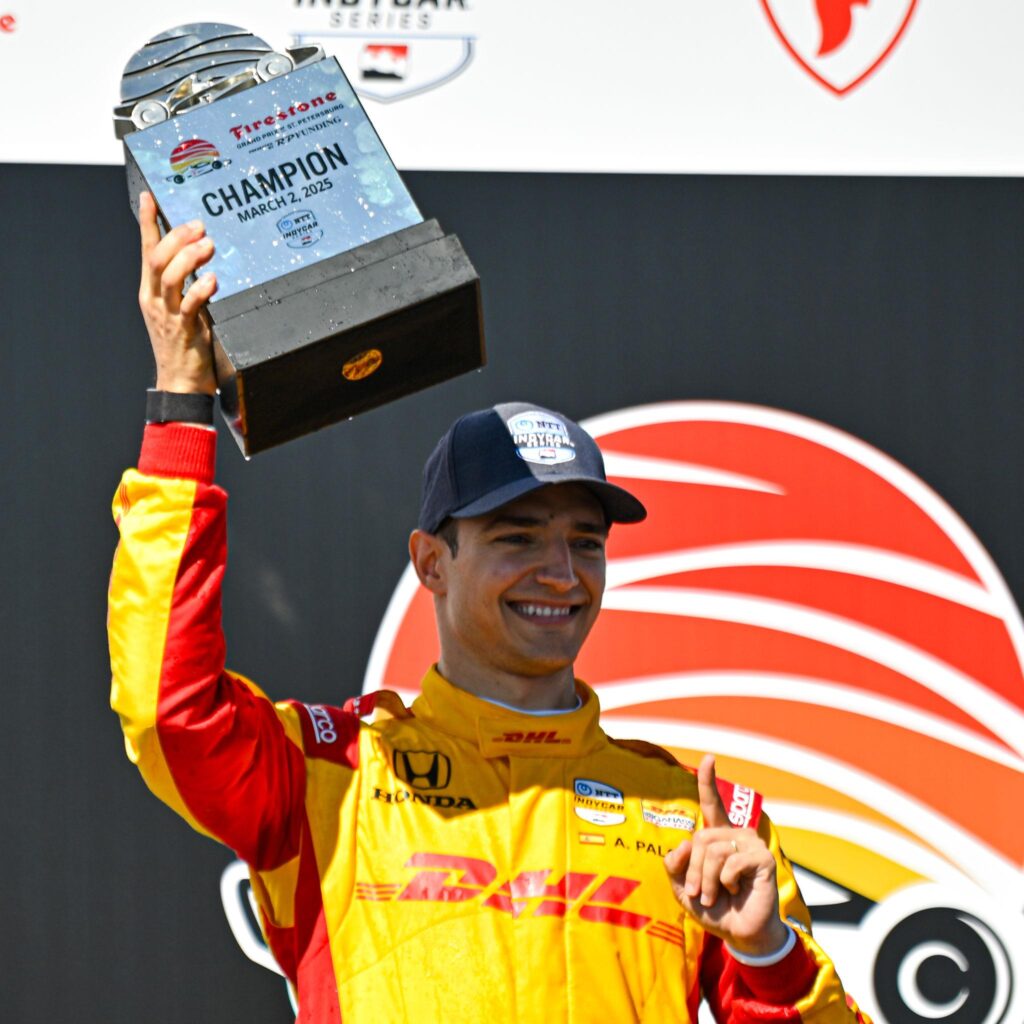
Palou enters 2026 as a four-time IndyCar champion and the defending St. Petersburg winner. His dominance has followed a consistent pattern: disciplined tire management, calm decision-making under caution, and an ability to control races without appearing to force them.
This season, however, his authority is paired with rare off-track gravity. Palou was recently ordered to pay $12 million following a breach-of-contract ruling connected to his failed move to McLaren’s IndyCar program. The case reverberated across both IndyCar and F1 paddocks, not because of the sum alone, but because it highlighted a fundamental difference between the series.
IndyCar contracts are rigid and enforceable. There are no quiet political exits, no convenient buyouts disguised as mutual agreements. The ruling effectively shut the door on Palou’s McLaren chapter while reinforcing his status as IndyCar’s defining figure, globally relevant, F1-adjacent, but fully anchored in a championship built on stability rather than speculation.
Former F1 Drivers: IndyCar’s Clearest Comparator
That stability becomes most visible through the drivers who have already crossed the F1 divide.
Marcus Ericsson now competes with Andretti Global, after spending years in Formula 1 with Caterham, Sauber, and Alfa Romeo Sauber. Once labeled conservative in F1’s midfield, Ericsson’s composure has become a defining strength in IndyCar, particularly on street circuits where patience often outperforms aggression.
Alexander Rossi, racing for Ed Carpenter Racing, experienced a far shorter F1 stint with Marussia and Manor Marussia. IndyCar offered him something Formula 1 never did: time. The result was immediate clarity, his racecraft and strategic aggression flourished once machinery parity removed political noise from the evaluation.
Mick Schumacher joins the grid with Rahal Letterman Lanigan Racing, carrying not just F1 experience with Uralkali Haas F1 Team and Haas F1 Team, but the weight of being the son of seven-time world champion Michael Schumacher. In IndyCar, that legacy matters less than execution. Street circuits like St. Petersburg offer an immediate, unfiltered assessment of where his ceiling truly lies.
The F1-Adjacent Grid: Not Just Alumni
IndyCar 2026 is also filled with drivers shaped by Formula 1’s modern talent pipeline, simulator roles, reserve duties, and test programs that never quite translated into race seats.
Santino Ferrucci (AJ Foyt Enterprises) served as a test, reserve, and development driver for Haas F1 Team, gaining early exposure to F1’s technical rigor.
Pato O’Ward continues to act as a reserve driver for McLaren while racing for Arrow McLaren, embodying the most direct two-way bridge between the series.
Christian Lundgaard, also with Arrow McLaren, previously served as a simulator driver for Alpine, bringing development-honed consistency into IndyCar’s pressure-heavy weekends.
Dennis Hauger arrives at Dale Coyne Racing after time as a reserve driver for Red Bull Racing, transitioning from a system built on hierarchy to one that demands adaptability.
Robert Shwartzman races for Prema Racing following multiple seasons embedded in Ferrari’s test and reserve structure, while Callum Ilott, also with Prema, brings experience from Ferrari and Alfa Romeo’s reserve programs.
Together, they form a living control group, drivers shaped by F1’s evaluation systems, now measured in an environment where parity removes insulation.
IndyCar 2026: Continuity as Pressure
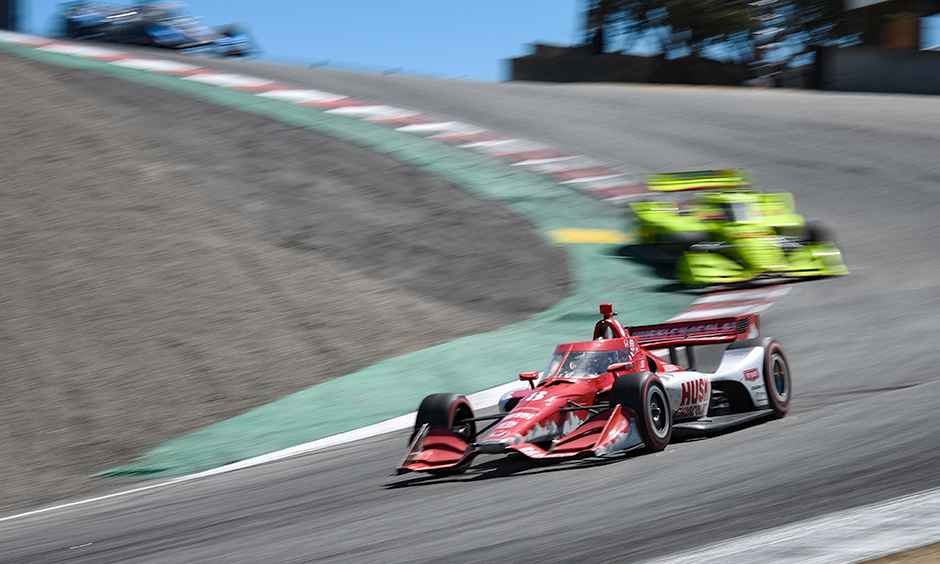
Unlike Formula 1’s constant reinvention, IndyCar 2026 is defined by continuity. The hybrid-assisted power units return in refined form, but the competitive framework remains unchanged. That stability compresses the field and magnifies driver performance. Mistakes are costly. Adaptability is mandatory. There is nowhere to hide.
Why St. Petersburg Sets the Season
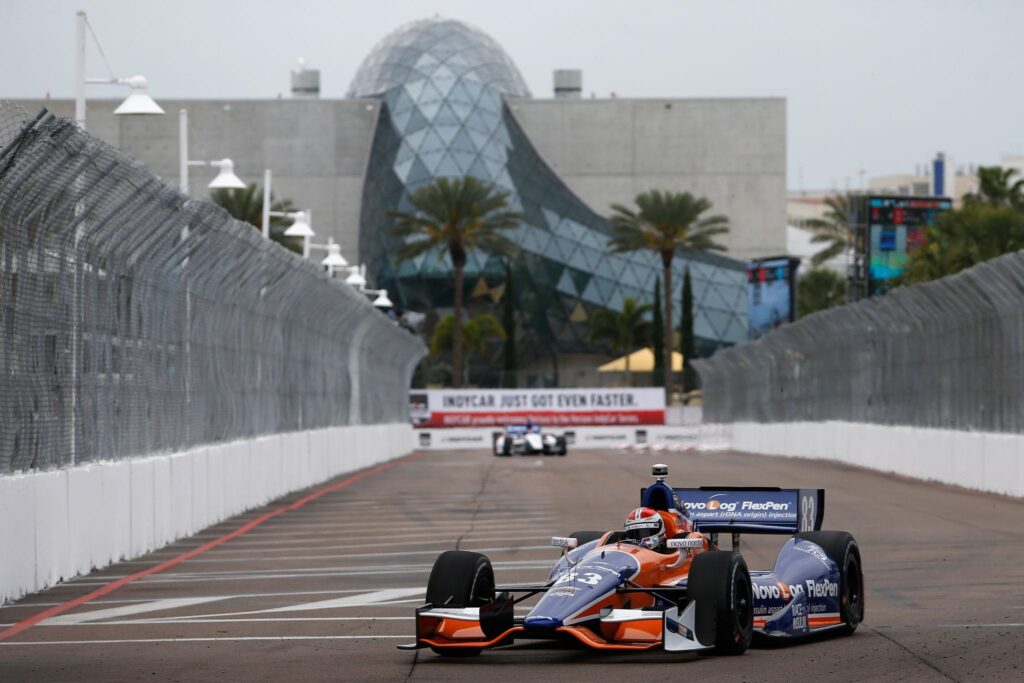
If Palou controls the St. Petersburg weekend again, it reinforces the idea that IndyCar’s current era has a fixed reference point, even without technical inequality. If he is beaten, particularly by a former or adjacent F1 driver, the season narrative pivots immediately toward parity and pressure.
For Formula 1 fans, the Firestone Grand Prix of St. Petersburg is more than an opener. It is a case study, of talent unfiltered by development curves, contracts enforced without politics, and a grid that increasingly asks an uncomfortable question: whether the clearest measure of elite open-wheel ability still lives exclusively in Formula 1.