

Five days. Hundreds of laps. Countless theories.
The Barcelona shakedown may not be called testing, but in every meaningful way, that’s exactly what it was. And by the time the final laps were completed, a clear picture had started to form, not of the final pecking order, but of who is ready, who is learning, and who is already daring to explore performance rather than survival.
This wasn’t about one headline lap. It was about patterns.
Mercedes Set the Baseline Early
From the paddock perspective, one theme cut through the noise quickly: Mercedes-AMG Petronas Formula One Team looked unusually comfortable.
The key signal wasn’t lap time, but phase. Mercedes appeared to move beyond pure reliability checks faster than most, transitioning into setup evaluation while other teams were still validating systems. High mileage days, consistent running, and a willingness to lean on the power unit suggested confidence, not bravado, but control.
That composure matters. Recent seasons saw Mercedes chasing correlation issues well into the year. Barcelona felt different. Smooth. Methodical. If wind tunnel and CFD data align with what they saw on track, this may be their cleanest pre-season in years.
That still doesn’t make them fastest. But it does make them dangerous.
Hamilton, Enjoyment, and the Most Misused Word of Testing: “Hint”
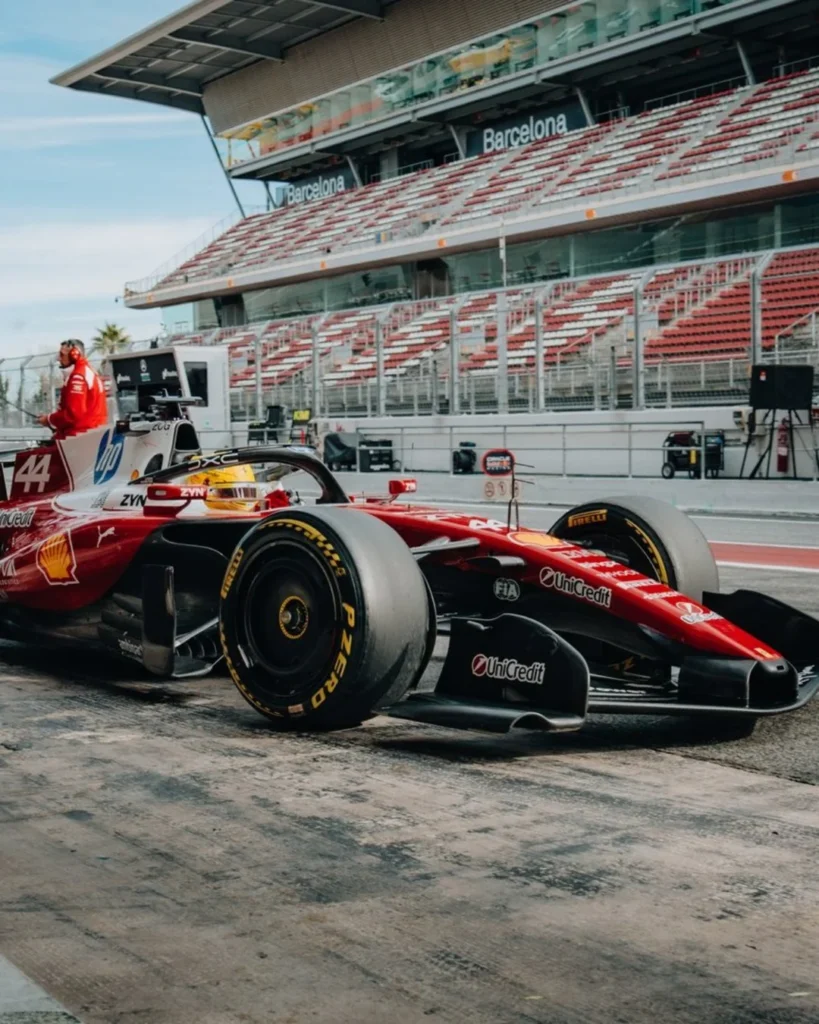
When Lewis Hamilton described the new generation of cars as oversteery, snappy, sliding, but easier to catch, the reaction was immediate. Some heard a warning. Others heard opportunity. One outlet framed it as a hint that the 2026 cars might suit him better.
That word did a lot of work.
In reality, Hamilton said the car felt more enjoyable and still unfinished, while praising the internal mindset of the team. That’s not a performance declaration. But it is a stylistic clue. Cars that move around, demand correction, and reward feel rather than stability have historically aligned with Hamilton’s strengths, once he’s had time to refine the setup.
Crucially, that same description fits drivers like Max Verstappen and Charles Leclerc just as well. This isn’t about destiny. It’s about possibility. And possibility is enough to fuel pre-season belief.
If Barcelona Was Qualifying (It Wasn’t)
Take every driver’s best lap across the five days and pretend Barcelona was a qualifying session. The hypothetical result was irresistible, and completely misleading.
Hamilton topped the imaginary order. George Russell followed closely. Norris, Leclerc, and Antonelli were all within striking distance. Further down, names like Bearman, Gasly, and Hadjar filled the midfield, while missing times for Williams drivers became their own subplot.
The exercise mattered not because it ranked drivers, but because it showed who was able to unlock representative laps at all. Context dominated everything: tyre compounds, engine modes, track evolution, moisture cycles, and wildly fluctuating temperatures meant identical run plans could differ by half a second day to day.
The conclusion was obvious, if inconvenient: anyone declaring winners from this is guessing.
Ferrari and the Inescapable Cycle
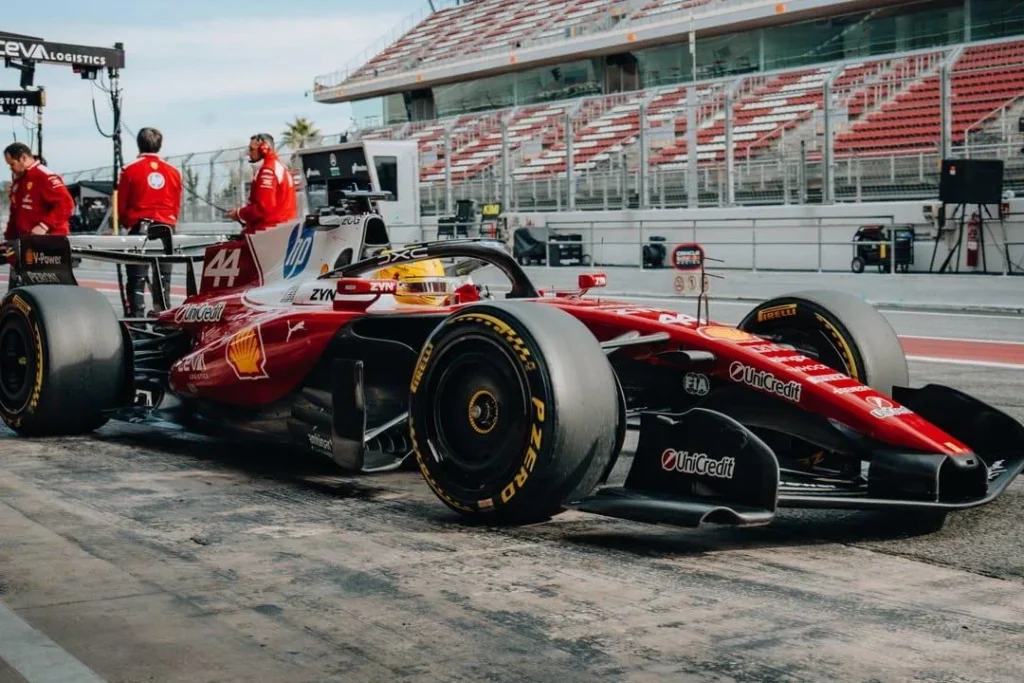
Ferrari didn’t need to be fastest to reignite the familiar loop. They only needed to be there.
Across Barcelona, Ferrari logged strong mileage, steadily improved lap times, and, once soft tires appeared, comfortably dipped into the 1:16s. Reports of Hamilton setting a 1:16.3 late in the test only intensified things. Suddenly, Mercedes dominance felt less definitive. The conversation shifted toward a two-team fight.
That shift matters. Not because it guarantees results, but because Ferrari’s testing history is more nuanced than the memes suggest. They did not look strong in every recent pre-season. The years they did, notably 2022, aligned with their most competitive seasons under the rules.
Hope returned. Fully self-aware. Fully resigned to pain.
Ferrari fans know the deal. You don’t hedge optimism, you embrace it, suffer through the disappointment, and repeat the process next year. Anything else is cowardice.
Mileage as Meaning: Gasly, Bearman, and Reliability as the New Weapon
If there was one universal positive across the grid, it was reliability.
Pierre Gasly completing 160 laps in a single day became the benchmark, more than two race distances without interruption. Oliver Bearman followed with a 105-lap marathon, compensating for lost time earlier in the week. Across manufacturers, multiple teams cleared 100+ laps on a single car.
That tells a bigger story. Modern F1 reliability isn’t just about engineering quality, it’s about regulation structure. Cost caps and component limits mean engines are no longer run at their true limits. The old “crank it to 11 and accept the DNF” philosophy is gone. Power units are conservative by design.
Some miss the chaos. But there’s no denying the execution level is extraordinary.
Audi: Quietly Laying the Foundations
For Audi, Barcelona was quietly encouraging. As a true new manufacturer, without the gradual transition advantages others have enjoyed, early stability matters more than pace.
Audi’s lap counts were strong. Their hybrid pedigree is unquestioned. If they can stabilize quickly and begin fighting for points, the long-term implications are serious. History suggests four to five seasons is a realistic runway for a manufacturer to become competitive. Audi’s stated ambitions fit that timeline.
They don’t need to impress now. They need to learn fast.
Aston Martin, the Blue Light, and Schrödinger’s Pace
Nothing captured the ambiguity of testing better than Aston Martin’s blue rear warning light.
Rather than signaling trouble, it signaled intent. The car was deliberately speed-limited on certain runs, and the blue light warned following drivers not to misjudge closing speeds. The reasoning was procedural, not defensive.
Speculation followed anyway, especially around the absence of fully active aero actuators and the presence of placeholder hardware. But that context matters. Many teams are running incomplete systems. Real-track data often beats perfect dyno assumptions.
The deeper debate centered on Aston Martin’s status as a Honda works team. Integration freedom offers massive upside, but only if the power unit is competitive. If it isn’t, no amount of chassis cleverness can fully compensate. The truth is unknowable right now.
What is knowable: the car ran. Repeatedly. Without drama. And that alone eased a lot of nerves.
Newey’s Aston: Ambitious, Recycled, or Both
Technical fascination around Aston Martin intensified thanks to Adrian Newey. Rear suspension geometry, wing-pylon interactions, and unconventional packaging drew immediate scrutiny.
Some pointed out similarities to older Red Bull concepts. They weren’t wrong. But recycled ideas under new regulations are not the same thing as copy-paste design. The execution is necessarily different, and in this case, visibly bold.
The real frustration wasn’t the speculation, it was the lack of concrete hypotheses from media analysis. Vague phrases like “flow management” only go so far. Still, even skeptics agreed on one thing: this is not a conservative car.
Bold doesn’t mean fast. But it does mean interesting.
Beyond the Grid: Doriane Pin and the Development Pipeline
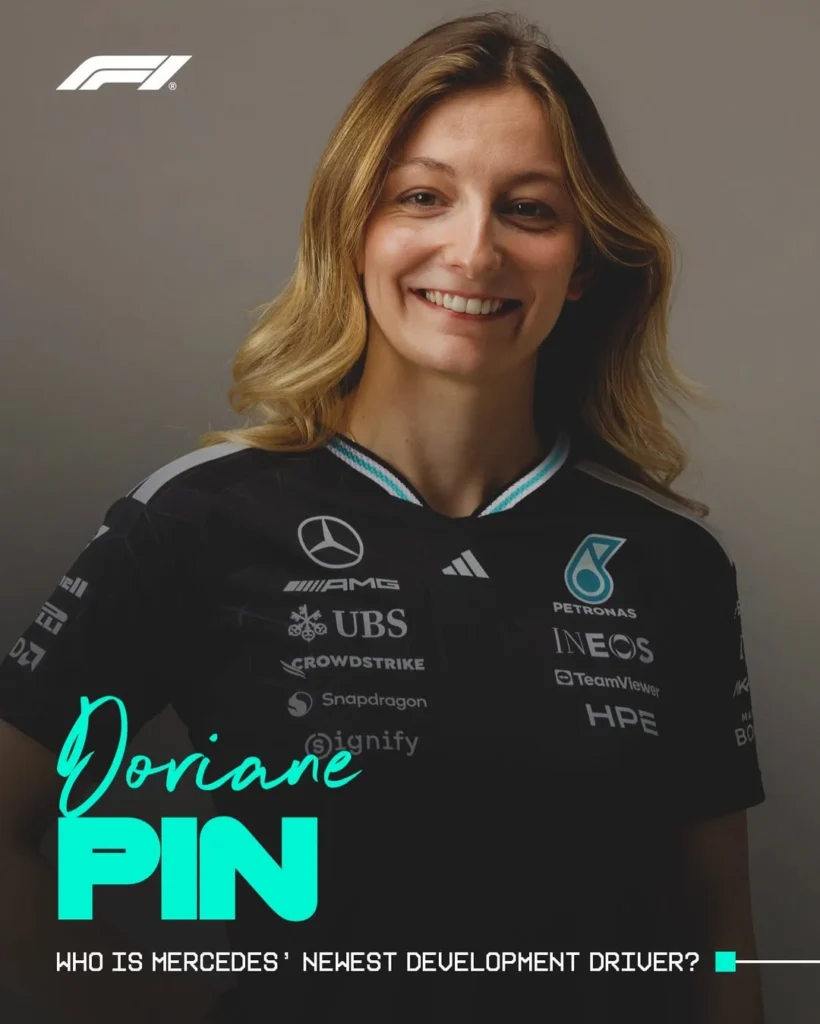
Amid all the performance noise, one announcement cut through cleanly: Doriane Pin joining Mercedes as a Development Driver.
Her path, from karting against Isack Hadjar, through endurance racing, into F1 Academy, felt organic, not manufactured. She nearly crossed paths with George Russell in Clio Cup machinery years ago. The ladder is smaller than it looks.
The reaction was overwhelmingly positive. This was talent recognition, not optics. A reminder that progress in motorsport is usually slow, interconnected, and earned long before the spotlight arrives.
So What Did We Actually Learn?
Not who will win. Not who will fail.
What Barcelona showed instead was structure:
- Mercedes look operationally ahead of where they’ve been in years
- Ferrari are credible enough to sustain belief
- Hamilton sounds engaged, not resigned
- Reliability is no longer the limiting factor
- Aston Martin are ambitious, cautious, and opaque by design
- Audi are building quietly, correctly
- The regulations are demanding adaptability, not perfection
The gaps will move. Concepts will be copied. Bahrain will reshuffle assumptions. Australia will reshape narratives again.
But Barcelona did one thing decisively: it made the questions interesting.
And at this stage of a regulation cycle, that’s the most dangerous, and exciting, place to be.