

While the championship battles are paused, the real F1 war zones, regulations, engine architecture, aerodynamics, junior-driver progression, and team restructuring, are in full motion. This week revealed a sport pulled simultaneously by legacy nostalgia, new-era technical upheaval, and the increasingly ruthless economics of talent selection.
The McLaren Legacy and the Disconnect Between Name Recognition and Modern Reality
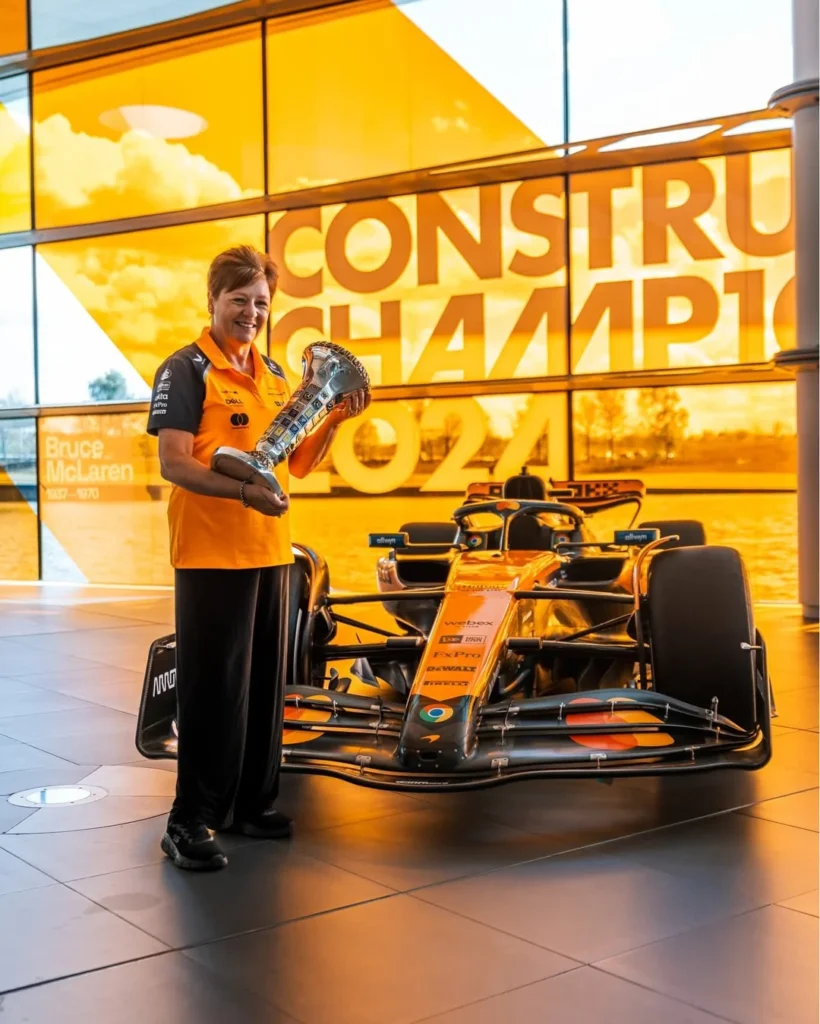
Amanda McLaren’s appearance at the McLaren Technology Centre triggered an unexpected examination of what a surname represents within modern Formula 1. Many fans realized, perhaps for the first time, that the McLaren family has not owned or directed the company for nearly half a century, and that bearing the McLaren name no longer equates to supercar ownership, corporate power, or extravagant wealth. The broader discussion revealed how easily motorsport mythology clouds present-day realities.
High-end British supercars, McLaren, Aston Martin, even storied marques like Lotus, carry reputations for performance and fragility, and even wealthy families have been known to avoid personal ownership for pragmatic, financial, or maintenance reasons. Meanwhile, fans reflected on how the emotional legacy of Bruce McLaren still resonates far more powerfully than the company’s current business structure. Observations about family resemblance and the enduring New Zealand pride only amplified the split between heritage identity and corporate truth. This entire moment functioned as a reminder: in F1, names endure long after the structures behind them have changed.
Cadillac’s Recruitment of Xavier Marcos Padros and How Public Narratives Distort Engineering Reality
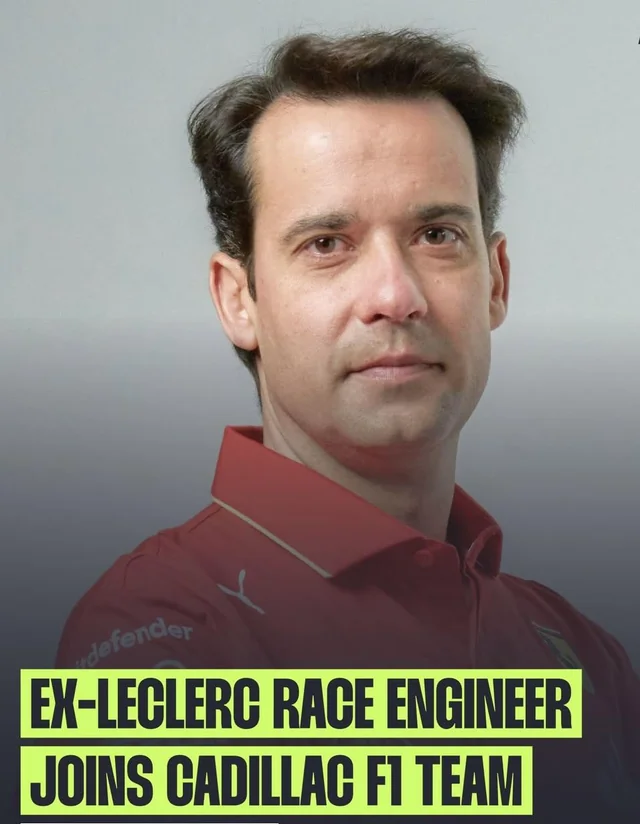
The confirmation that Xavier Marcos Padros has formally joined Cadillac’s F1 program prompted widespread reassessment of his Ferrari tenure. Public perception of race engineers is shaped almost entirely by selective radio clips, snapshots of high-pressure communication that are rarely representative of strategic ability or technical acumen. Marcos Padros’ move into a significantly elevated Cadillac role underscored that teams evaluate engineers on deep-domain expertise, not on their meme-ability.
His role in Cadillac’s hypercar and simulation projects, coupled with appearances in their early development media, suggests that GM views him as a foundational figure in establishing their operational model. This aligns with a broader pattern: engineers who were criticized or dismissed when working beneath Ferrari’s political and structural constraints often flourish elsewhere. Ferrari’s environment tends to isolate individuals and amplify single moments; teams like Cadillac see the long-term systems knowledge behind them.
This hiring also reinforced how active the 2026 arms race has become. Cadillac, Audi, Red Bull Powertrains, and Honda each posture differently, but all are aggressively absorbing institutional knowledge from rival operations. Marcos Padros’ transfer symbolizes a broader shift: the technical brain drain away from incumbents is real, and it is accelerating.
Secret Santa 2025 and the Unexpected Window Into the Grid’s Social Structure
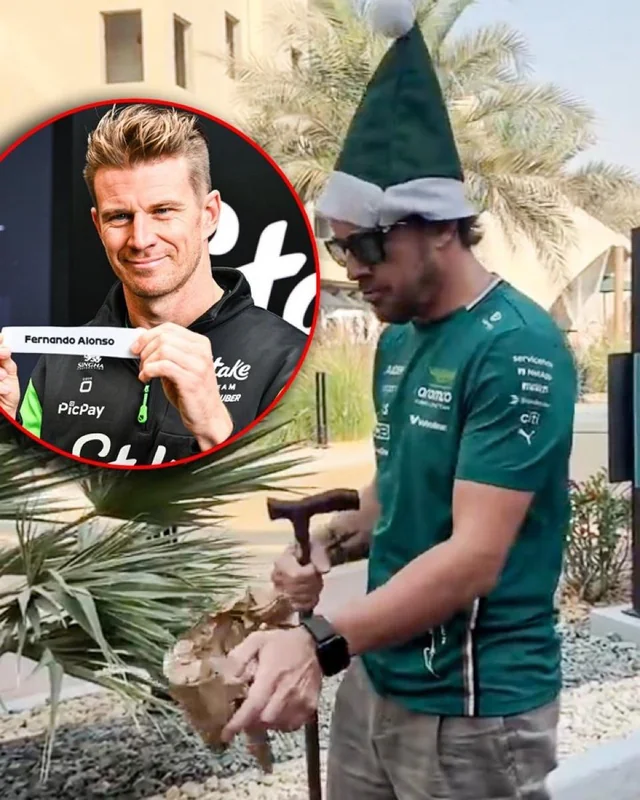
The annual Secret Santa list, complete with pairings across the entire grid, offered a rare snapshot of interpersonal dynamics that remain invisible during race weekends. The confirmed gifts demonstrated consistent patterns: veteran drivers tended toward humor with practical undertones, rookies gravitated toward personalized items, and certain drivers, especially Lance Stroll, continued to upend outdated stereotypes about personality and privilege.
Stroll’s reputation evolved meaningfully this week. While his public persona remains guarded and at times disinterested, widespread accounts from fans, paddock employees, and former colleagues described him as one of the most quietly generous individuals on the grid. His history of thoughtful, unexpected gifts, his preference for low-profile public life, and his tendency to engage earnestly when discussing racing rather than drama all resurfaced. These stories chipped away at the simplistic “billionaire’s son” caricature and revealed someone more grounded than widely understood.
The absence of certain champions from this year’s exchange reinforced how the culture around the grid is also evolving. The ritual still functions as a form of soft-power bonding inside an environment defined overwhelmingly by pressure and scrutiny. These moments matter: they help maintain the social fabric of a paddock built on underlying tension.
Aston Martin’s 2026 Ambitions, Honda Uncertainties, and the Collision Between Vision and Practical Constraints
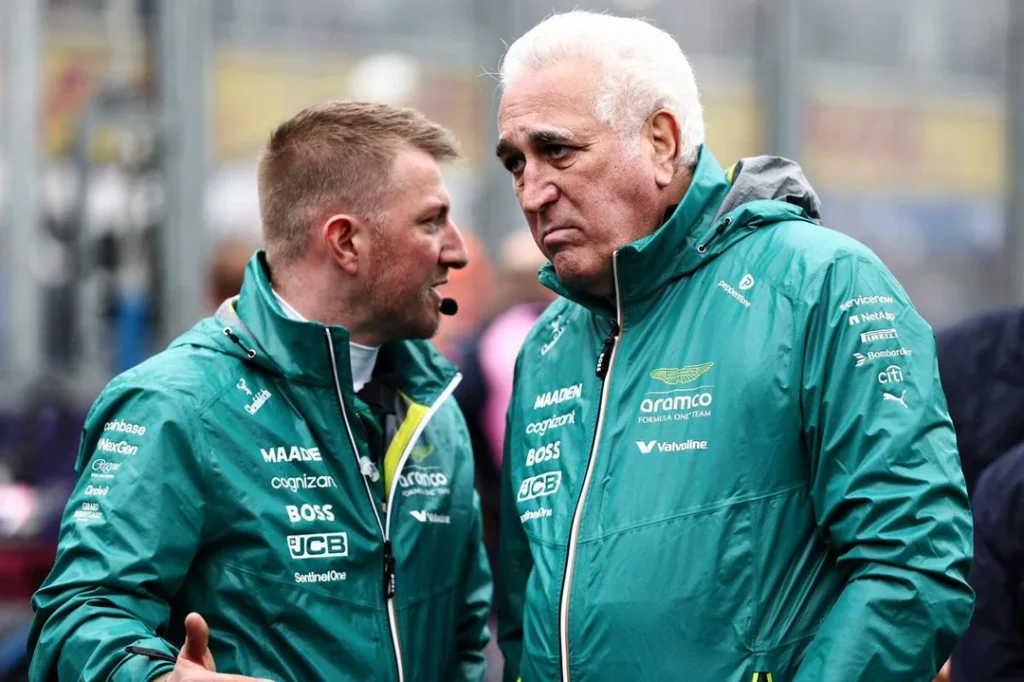
Aston Martin’s messaging this week captured a revealing contradiction: the team insists that expectations must remain high for 2026, even while acknowledging that patience will be essential as Honda reconstitutes a full engine program without the historical foundation of recent continuous development. The team’s structural ambitions, new campus, new wind tunnel, multi-year recruitment of technical leaders, contradict the instability inherent in adopting a regulation-reset power unit.
The competitive landscape highlights the challenge. Mercedes will possess a vastly richer telemetry dataset because of its multiple customer teams, accelerating its ability to refine its hybrid model. Red Bull Powertrains continues to mature rapidly with an integrated chassis-engine ecosystem. Ferrari and McLaren both enter 2026 with continuity advantages in concept, correlation, and staffing.
Aston Martin’s aspirations hinge not only on Honda’s execution but also on whether both drivers can maximize a potentially front-running package. Feedback from the analysis this week suggests that even a top-four power unit and competitive chassis may not be enough if the driver lineup yields asymmetric extraction of performance. This underscores why Aston Martin’s stated ambitions feel simultaneously bold and fragile.
Sustainable Fuels 2026: Technical Promise Overshadowed by Public Skepticism
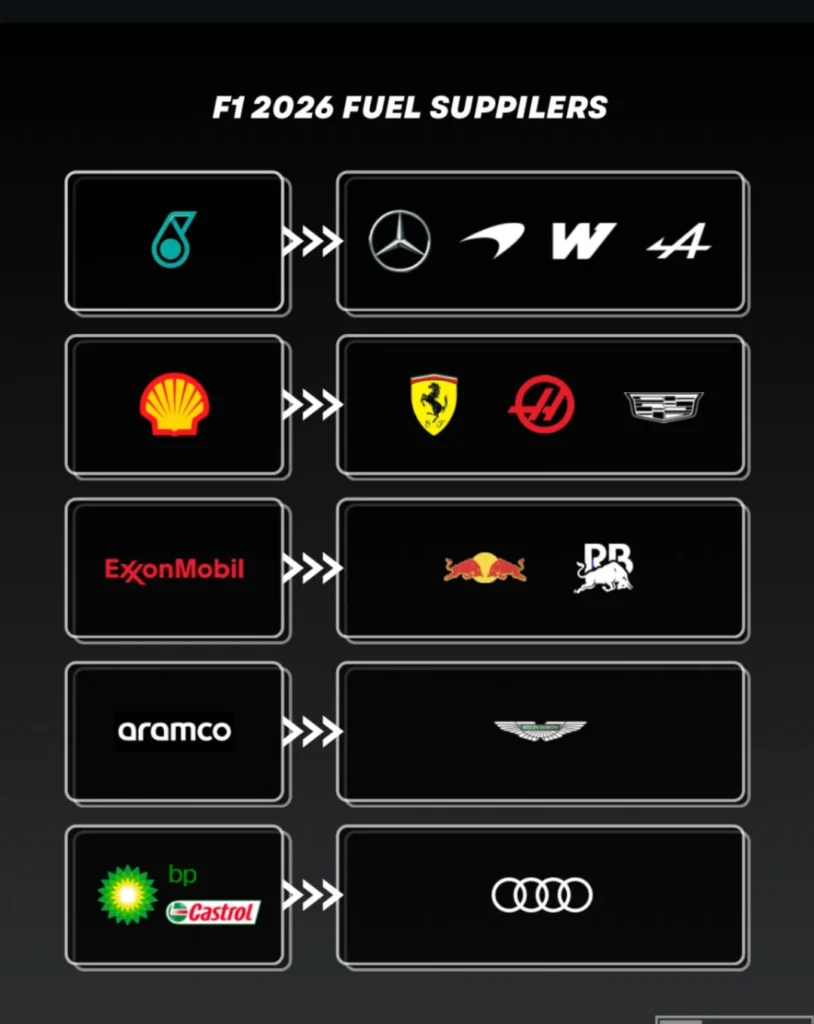
The confirmation of fuel suppliers for each team clarified the 2026 landscape, but the reveal did little to quiet concerns about what “100% sustainable” truly means. The term covers a broad spectrum: synthetic e-fuels generated from captured carbon and renewable electricity, bio-derived fuels from non-food biomass, waste-oil derivatives, and municipal-waste-based fuels. Each pathway carries different environmental impacts, and none eliminates the complex upstream emissions associated with production, refinement, and transport.
Practically, fuel development remains intimately tied to power unit design. Manufacturers tune combustion, pressure, timing, and knock-prevention around proprietary blends, making fuel suppliers integrated engineering partners rather than sponsors. The logistical side is similarly rooted in precision: teams ship standardized fuel drums worldwide, and consumption per car per race remains minor compared to aviation emissions necessary to run global events.
Despite this, the long-term value is real. F1’s ability to push synthetic fuel viability represents one of the few innovations with direct downstream consumer impact. While fans correctly noted that the overall environmental footprint of the sport remains dominated by logistics rather than combustion, the development of these fuels could determine whether internal combustion survives the transition to electrified mobility.
Theo Pourchaire and the Harsh Realities of the Modern F2-to-F1 Pyramid
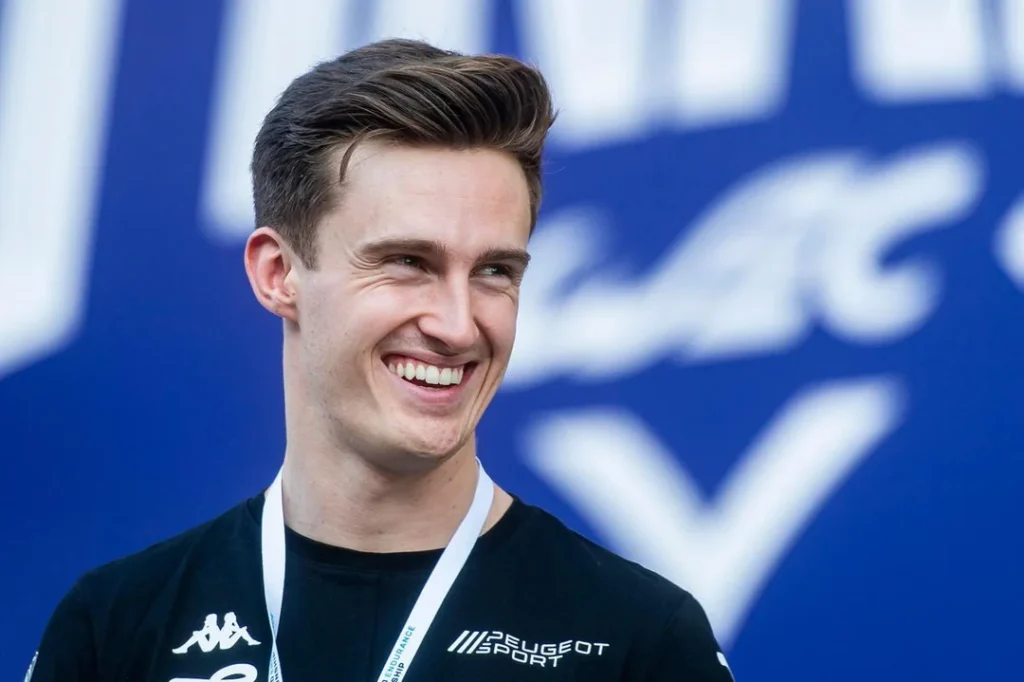
The detailed reflections this week on Theo Pourchaire’s path revealed how dramatically the feeder series landscape has shifted. His career trajectory, early promise, a strong but incomplete sophomore season, an attritional championship in year three, and limited follow-through into IndyCar, has become an emblematic case of how timing and affiliation matter more than raw results.
Three structural truths emerged:
1. Third-year champions face inherent distrust.
Teams increasingly interpret multi-season titles as signs of plateau rather than progression. Consistency is valued, but late peaking is not.
2. Academy affiliation dictates opportunity.
Sauber’s dependence on Zhou’s commercial backing closed the door regardless of Pourchaire’s results, and Alpine and Cadillac both prioritized either long-term internal prospects or drivers offering more immediate utility.
3. Cross-series performance now outweighs historical junior results.
Pourchaire’s uneven oval tests reduced his perceived adaptability. Against this backdrop, someone like Bortoleto, who delivered consecutive titles as a rookie across categories, becomes more attractive, even if their driving style points more naturally toward endurance racing.
The conclusion: WEC may be a better long-term home for Pourchaire than the volatile lower rungs of single-seater racing. The championship’s multi-driver format, manufacturer investment, and stability suit his skill profile and offer a clear path to a sustainable elite career.
Ferrari’s 678 Development Strategy, Internal Strain, and the Recurring Cycle of Preseason Hope

Ferrari’s disclosure of its 678-project priorities provided one of the most technically revealing insights of the week. The team invested heavily in front-end development, testing more than fifty front wing iterations, an admission that front-end weakness has undermined its cars for multiple seasons. The shift toward 2026 development as early as April 2025, however, imposed severe operational constraints. The drivers endured nearly an entire season with no aerodynamic upgrades, and the team confronted the psychological effects of racing without iterative improvement.
Internally, Ferrari believes early investment was necessary because the 2026 rules demand conceptual reinvention rather than evolutionary refinement. Externally, fans quickly reignited the familiar cycle of pre-season optimism, speculating on breakthroughs before any on-track validation exists.
Critically, the decision highlighted an asymmetry compared to Red Bull. While Ferrari paused aero investment to redirect resources into 2026, Red Bull continued to test structural and mechanical concepts that could theoretically inform both seasons. Ferrari risks entering the new era with improved correlation but without the iterative learning that its rivals preserved.
2026 Turbo Lag, Energy Deficits, and the New Behavior of Hybrid Powertrains
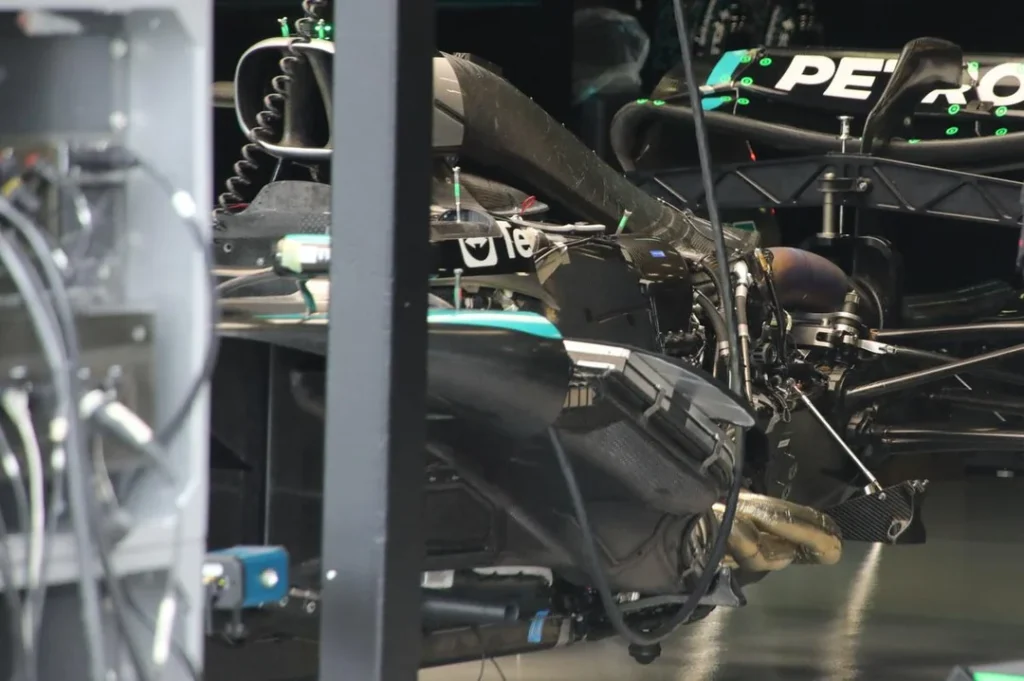
The loss of the MGU-H introduces one of the largest behavioral shifts in modern F1 powertrains. Without the turbine-generator stabilizing boost response and replenishing electrical energy, cars will increasingly rely on harvesting through the crankshaft at moments when the combustion engine is not being fully exploited. This means fans should expect engines sustaining higher RPMs during corner entry, partial lift, or throttle modulation, sounding counterintuitive compared to today’s hybrid systems.
The strategic implication is profound: teams must balance power deployment, energy recovery, and turbo behavior while minimizing lift-and-coast. Manufacturers may use harvesting as a torque-management tool, raising concerns about indirect traction-control behaviors. This gray area could become a policing challenge.
The volatility of competitive predictions adds tension. Mercedes, Honda, Audi, and Red Bull Powertrains have all been described, sometimes in the span of days, as either frontrunners or underdogs. Ferrari’s silence has only amplified uncertainty. No manufacturer appears fully confident, and yet every team believes someone will achieve a breakthrough that redefines the competitive order.
The Inwash-to-Outwash Loophole and the FIA’s Ongoing Struggle to Constrain Aerodynamic Ingenuity
A new wave of analysis showed that 2026 regulations still permit meaningful outwash generation through carefully sculpted floorboard geometry. While the rules heavily emphasize inwash to create cleaner wakes for following cars, computational and geometric modeling demonstrates that designers can redirect the wheel wake outward in ways the FIA likely hoped to suppress.
The situation is more nuanced than simply “loophole found.” Aero regimes are fluid, and some outwash may actually improve wake stability by displacing high-energy vortices away from the pursuing car’s critical control surfaces. The FIA may have allowed this intentionally, believing it a beneficial compromise.
Yet the risk remains: if teams aggressively exploit these allowances, the sport could drift back toward pre-2022 levels of turbulent air. Enforcement would be extraordinarily difficult. True airflow policing requires full-scale wind tunnel verification for every configuration, an impossible burden under cost cap constraints. Standardized CFD is equally fraught, as different numerical models produce different turbulence predictions.
This moment signaled, once again, that no matter how prescriptive the FIA becomes, the competitive imagination of a modern F1 aerodynamicist cannot be fully contained.
Compression Ratio Ambiguity and the Search for Thermal Expansion Advantages
The final controversy of the week centered on the interpretation of compression ratio rules that specify measurement “at ambient temperature.” Engineers quickly recognized the theoretical possibility of designing combustion chambers or reciprocating components that expand during operation to increase effective compression while remaining legal when cold.
The idea is elegant in theory but constrained in practice. Cylinder heads cannot expand without destabilizing valve timing or compromising bolt preload. Liners expanding outward reduce compression. The only realistically adjustable elements are piston crowns and connecting rod lengths, although even these require extreme thermal precision to avoid durability failures.
Still, the possibility exists that teams will explore controlled thermal expansion alloys, particularly given the efficiency penalty induced by the FIA’s mandated reduction from 18:1 to 16:1 compression. Whether this becomes a competitive battleground or simply an academic curiosity will depend on early dyno data and how quickly the FIA clarifies the scope of acceptable design.
Final Reflection: A Sport on the Edge of Reinvention
Across all ten developments, a single thread connects the week: Formula One is poised at a threshold where regulation, innovation, expectation, and reality are about to collide. Teams are racing to exploit ambiguities before the FIA tightens enforcement. Drivers are navigating career pathways more constrained than ever. Manufacturers are operating under unprecedented technical uncertainty. And fans, sensing the volatility, have already begun projecting entire narratives onto a season that has yet to turn a wheel.