

Ferrari, Williams, and the Shape of 2026: Hope, Chaos, and Active Aero Reality
The 2026 Formula 1 season hasn’t started yet, but it’s already following a familiar script. Bold technical resets. Nostalgia-fueled optimism. Operational cracks appearing earlier than anyone wanted. And, inevitably, Ferrari sitting at the center of all of it.
Across launches, shakedowns, statements, and speculation, the early picture of 2026 is less about lap times and more about how teams are choosing to reveal themselves, intentionally or otherwise.
Ferrari SF-26: Retro by Design, Not by Accident
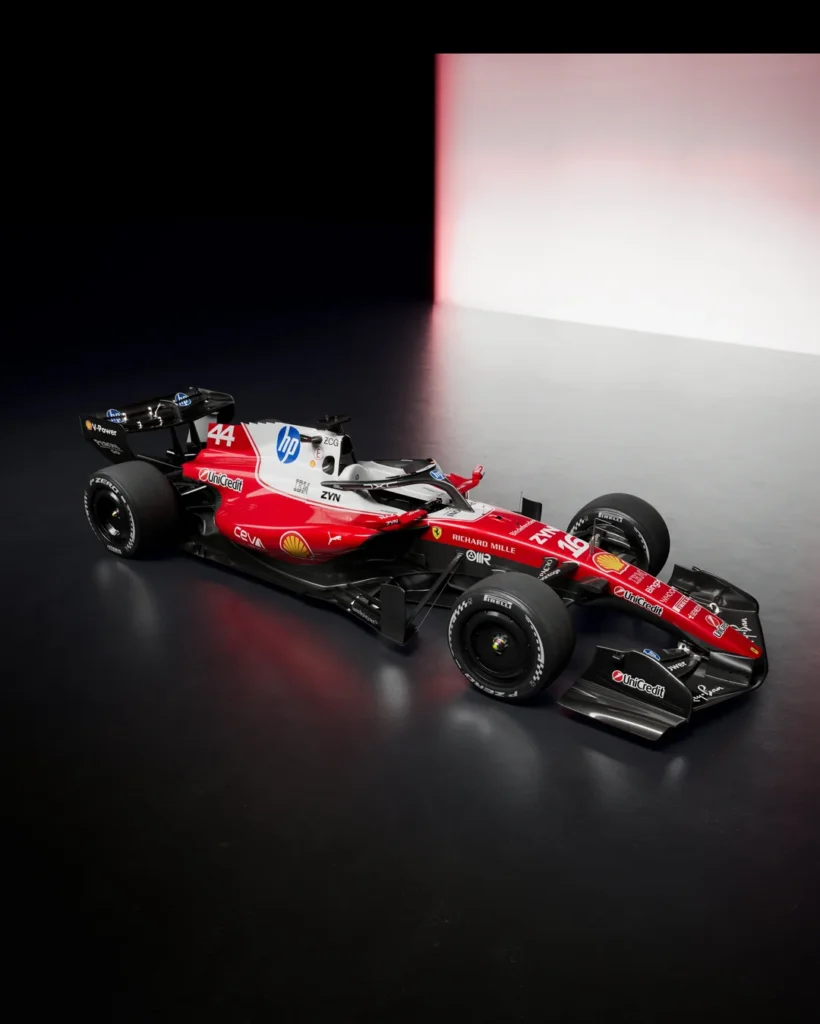
Ferrari’s SF-26 has sparked one dominant reaction: this feels like 2016.
From the overall proportions to the surface language, comparisons to the SF16-H arrived immediately. Some embraced it. Others winced. A few reminded everyone that Ferrari didn’t win a race in 2016, quickly countered by fans insisting they’re borrowing the vibes, not the results.
That nostalgia spiral didn’t stop there. Depending on who you ask, the SF-26 also echoes 1976, 1993, or even the F93A. What’s clear is that Ferrari are leaning into simpler, flatter visual language, something many fans are unexpectedly excited to see return.
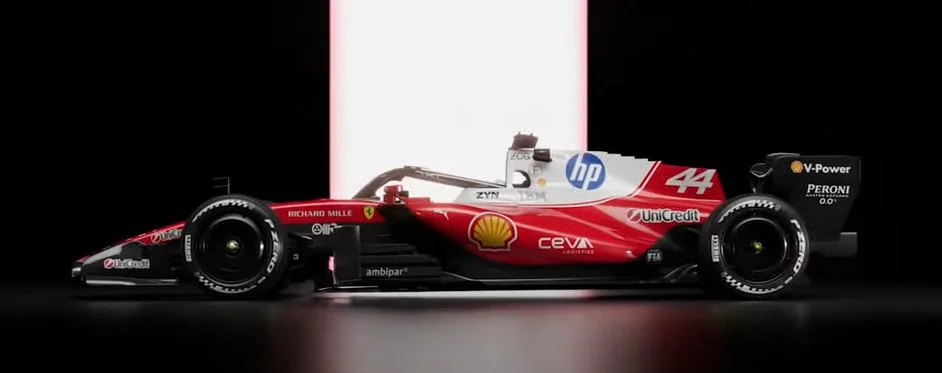
The stair-step shark fin became an instant fixation. At first glance, it looked like a rendering error, anti-aliasing turned off, graphics settings on low, aero designed in Paint. The jokes were relentless. Then it became clear: the jagged edge appears on the real shakedown car too. At that point, humour gave way to engineering logic. Nothing on a modern F1 car is accidental, and the prevailing belief is that this is a drag-reduction solution at the trailing edge, not an aesthetic flourish.
The Livery Debate: HP, White Space, and ZYN
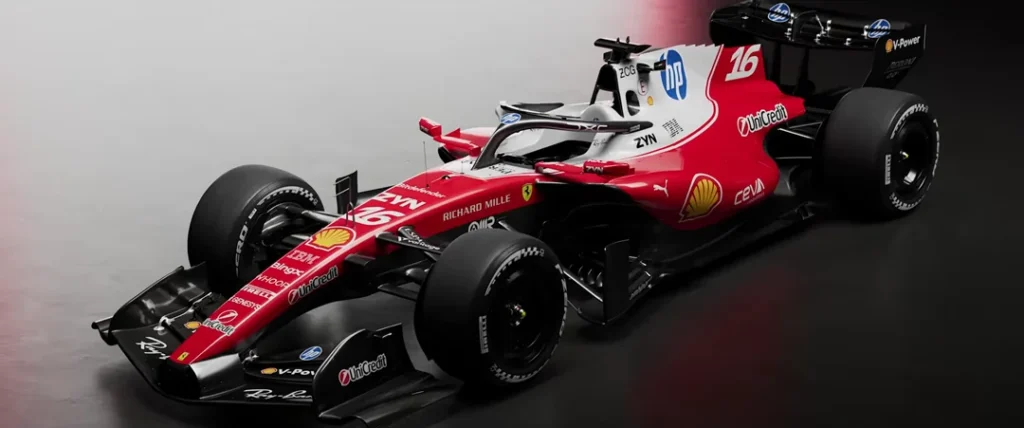
Ferrari’s 2026 livery has been dissected as aggressively as the car itself. The consensus, surprisingly, is that HP’s branding integrates better than before. Black wing backgrounds and central white sections do a better job of blending logos into the design rather than fighting it.
Still, the amount of white remains divisive. For some, it crosses the line into Haas or Sauber territory. Comparisons to the SF-16-H came up again, arguably more white overall, but better placed on wings rather than the chassis. The benchmark remains clear: SF-22 through early SF-24 (pre-HP), which many still regard as Ferrari’s strongest visual era in a decade.
Then came ZYN.
The appearance of ZYN branding immediately raised eyebrows before being contextualized as part of Ferrari’s long-standing relationship with Philip Morris International, effectively the modern evolution of Marlboro sponsorship. Reactions ranged from begrudging acceptance (“better than Mission Winnow”) to outright rejection (“it needs to disappear”). Some noted the irony of tobacco sponsorship returning under a new name; others simply counted logos.
Which brings us to the HP logo audit.
Nine? Ten? More?
By the end, the count settled somewhere north of ten once the halo, headrest, splitter, wings, and even behind the steering wheel were included. The jokes followed, horsepower per sticker, comparisons to the F2004’s 15 Vodafone logos, and the unavoidable conclusion: Ferrari have done worse before.
Onboard With Hamilton: Fog, Film Grain, and Ferrari Culture
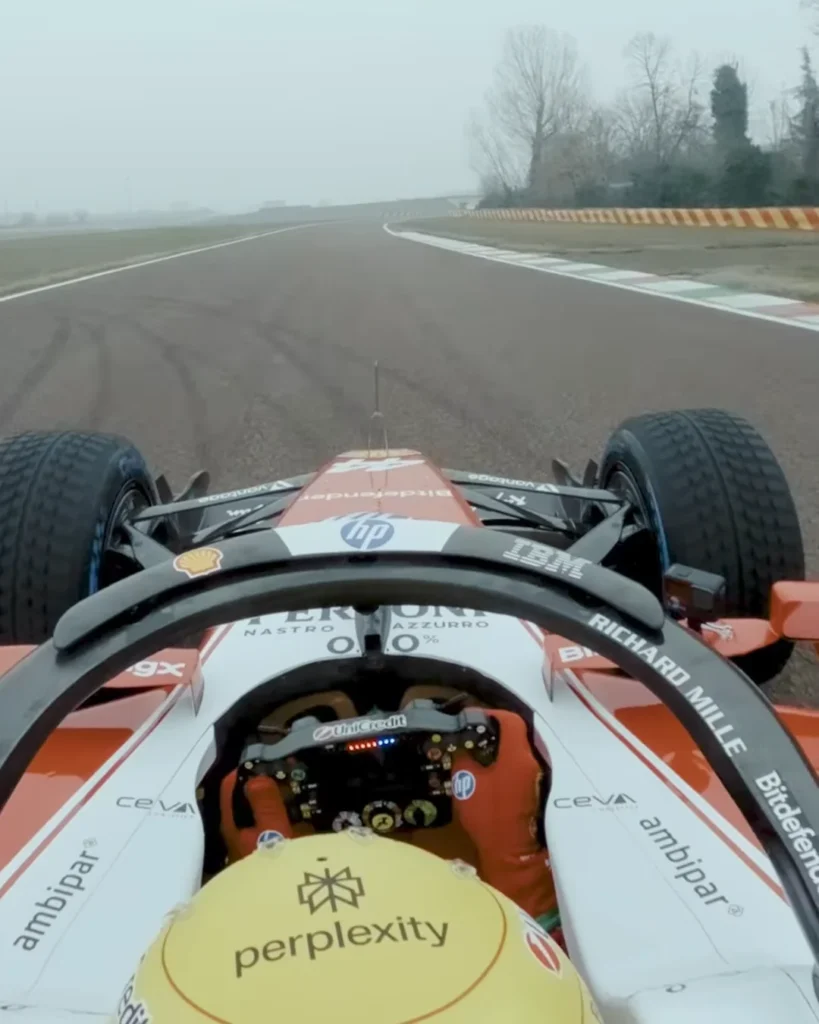
An onboard shot of Lewis Hamilton in the SF-26 reframed everything. Shot in foggy conditions, the car suddenly looked even more retro, muted colours, reduced saturation, and a grainy, almost film-like quality. Hamilton’s yellow helmet completed the illusion, prompting comparisons to Marlboro-era Ferraris, early-2000s Toyotas, and even McLaren-Honda throwbacks.
Beyond aesthetics, the footage highlighted Ferrari’s openness. Like Mercedes, Ferrari have been unusually relaxed about sharing test media, and fans don’t need invitations anyway. Maranello effectively turns into a holiday. People skip work or school just to see the car roll by. Dumpster fire jokes aside, this is where Ferrari remain untouchable: culture, passion, and emotional gravity.
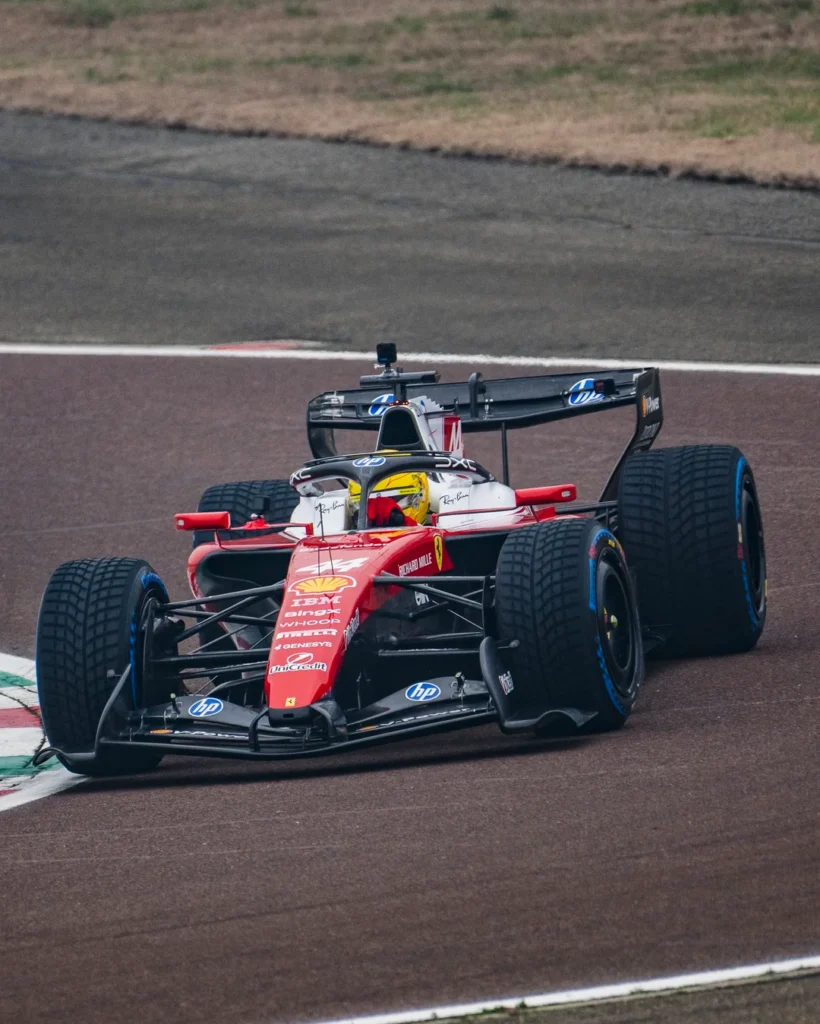
There’s also widespread acceptance that what we’re seeing now isn’t the final product. A B-spec is already expected for Bahrain, with further updates before Melbourne. The philosophy may stay, but the details, the real performance, will evolve fast.
Active Aero: The Wing That Blinked First
If the SF-26’s looks sparked debate, its active aero triggered genuine shock.
The front wing doesn’t gently adjust, it nearly disappears. The first reaction wasn’t curiosity, but disbelief. “My brain wasn’t ready for that” summed it up. Rather than individual flaps rotating, large sections move dramatically, creating an immediate visual disconnect, especially when the front and rear wings don’t move in sync.
That alone will take getting used to. More concerning is what comes next.
Active aero fundamentally changes damage tolerance. A front wing used to be something you could limp around with if it was cracked. Now? Moving parts, actuators, electronics, hydraulics, minor damage could be race-ending. The expectation is clear: front wing failures will happen, especially early on.
The regulations allow both electric and hydraulic actuation, which opens fascinating trade-offs. Electric systems promise weight savings but risk reliability. Hydraulics are heavier but brutally dependable. Most expect experimentation early, then convergence once teams learn what actually survives racing.
Front wing changes won’t be sacrificed, quick-connect systems are inevitable, but wings are about to get even more expensive, and mistakes far more punishing.
Ironically, the moving wing may be a marketing win. Your eyes track the motion, and when the wing snaps back, bam, the sponsor logo is unavoidable. Expect that space to get very valuable very quickly.
Ferrari Radio Returns to the Spotlight
Ferrari’s technical discussion took a sharp turn with the confirmation that Carlo Santi will serve as Hamilton’s interim race engineer.
For long-time fans, the name carries weight. Santi was Kimi Räikkönen’s race engineer in 2018, responsible for some of the most infamous radio moments in recent F1 history, most notably “Kimi, you will not have the drink.”
The appointment immediately raised questions. Why interim? Why so late? Why fire Adami without a permanent replacement? Some see this as a lack of planning; others argue Santi is already a proven race-winning engineer and an improvement by comparison.
Speculation about longer-term solutions followed, rumors of outside hires, language concerns given English-only radio rules, even wild hypotheticals involving Mercedes personnel. For now, though, this is classic Ferrari: functional, controversial, and anxiety-inducing all at once.
Williams: When the Plan Breaks First
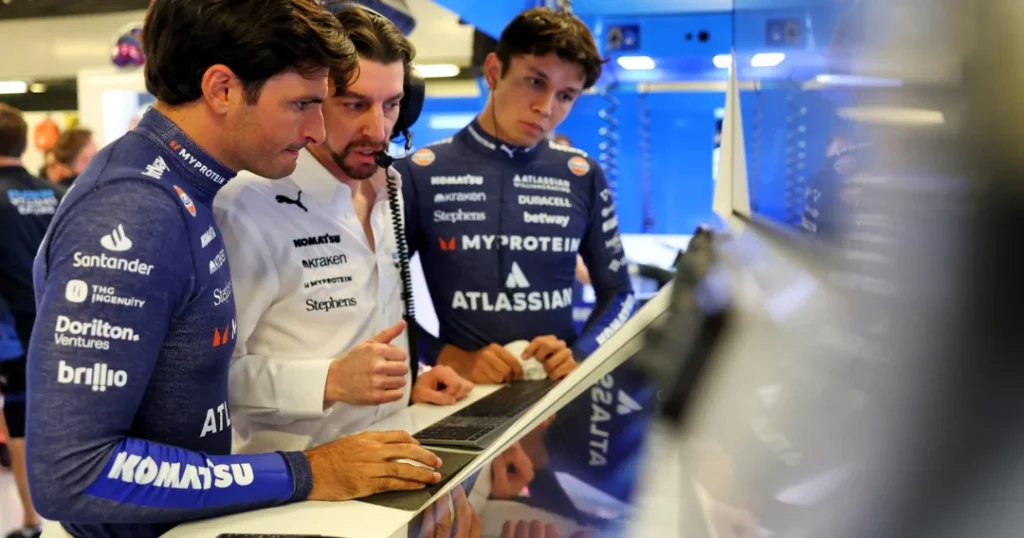
While Ferrari dominate attention, Atlassian Williams F1 Team quietly delivered one of the most worrying updates of the winter.
Williams confirmed they will not participate in the Barcelona shakedown, citing delays in the FW48 program while pushing for maximum performance. Instead, they’ll rely on VTT (Virtual Test Track) work, a full-car dyno simulating aero, suspension, brakes, and power unit together, before targeting Bahrain and Melbourne.
Technically impressive. Practically alarming.
This cuts directly against James Vowles’ stated strategy. Williams committed harder than almost anyone to 2026, sacrificing recent seasons to arrive ready. Missing early testing after all that feels suboptimal at best, ominous at worst.
The comparisons to 2018-19 Williams came fast, but the context is worse now. This team is better funded, better staffed, and supposedly better prepared. Even a brand-new operation like Cadillac has already completed a shakedown.
Leaks had warned this was coming. They were mocked. They were right.
At this point, Williams’ only hope is that the car delivers immediately when it finally runs. Possible, but a long shot.
The Shape of 2026 So Far
Before a single lap has counted, 2026 is already revealing its personality:
- Ferrari are nostalgic, loud, culturally unmatched, and technically ambitious
- Active aero will redefine risk, reliability, and racecraft
- Sponsorship visibility has entered a new era
- Williams’ long-term reset is wobbling at the first real test
Nothing here guarantees success or failure. But patterns are forming, and in Formula 1, how you start revealing yourself is often more honest than how you finish.
For now, 2026 looks like a season built on hope, humor, and very sharp edges, some of them intentionally jagged.