

The second week of 2026 pre-season testing has delivered something far more revealing than lap times.
It’s delivered tone.
And the tone is uneasy.
Across the paddock, from Aston Martin’s open frustration to Max Verstappen’s existential doubts and the sudden political choreography around Red Bull’s power unit, Formula 1’s most radical regulation shift in decades is already exposing winners, losers, and fault lines.
Verstappen: “This Is Unworthy of F1”

Max Verstappen has never filtered his thinking, and he didn’t start now.
He described the new cars as not feeling like racing, “mostly about managing,” and compared the experience to “Formula E on steroids.” In certain corners, drivers must go extremely slowly just to recover energy. For him, that fundamentally contradicts what Formula 1 should represent: driving as fast as possible.
He was explicit:
- He adapts, that’s not the issue.
- He doesn’t enjoy driving these cars.
- He doesn’t have to continue.
“When you’ve already won everything, there’s really no need to continue,” he said, adding that this doesn’t help him want to race for a long time.
This isn’t contract drama. He’s still tied to Red Bull through 2028. This is philosophical. If the sport drifts too far from his definition of racing, he won’t drift with it.
He also dismissed Toto Wolff’s claim that Red Bull gains a second per lap on the straights as political pressure-shifting, telling everyone to “wait until Melbourne.”
That phrase has become the unofficial slogan of 2026.
Sainz: Red Bull Is “Clearly Ahead”
Then came Carlos Sainz, who backed the idea that Red Bull-Ford Powertrains are already ahead.
“Not only a small step, a clear step. And it was mighty impressive.”
That language matters.
Because this comes during active power unit scrutiny, specifically around Mercedes’ engine interpretation and FIA clarifications.
Suddenly:
- Toto praises Red Bull.
- Sainz praises Red Bull.
- Engine rule clarifications are being drafted.
Coincidence? Maybe.
But in Formula 1, narrative framing is strategic. Publicly elevating a rival’s performance can reduce regulatory heat on your own program. F1 is half racing, half political positioning.
And right now, the engine chessboard is fully in play.
Mercedes, Homologation, and “Clarifications”
Reports suggest a new ruleset clarification will be signed before the season begins, resolving the Mercedes power unit dispute.
Important distinction: this likely isn’t a rule rewrite.
More likely:
- Clarification of testing procedures.
- Tightening of measurement methodology.
- Closing of a perceived compression ratio loophole.
Homologation is set for March 1. After that, engines are frozen except for reliability updates, though under Additional Upgrade & Development Opportunities (AUDO), power-deficient manufacturers can apply for performance catch-ups in defined windows.
Until official documentation is published, everything is interpretation.
But one thing is clear: the FIA wants resolution before Melbourne.
Aston Martin: 4.0… 4.5… or El Pain 2.0?
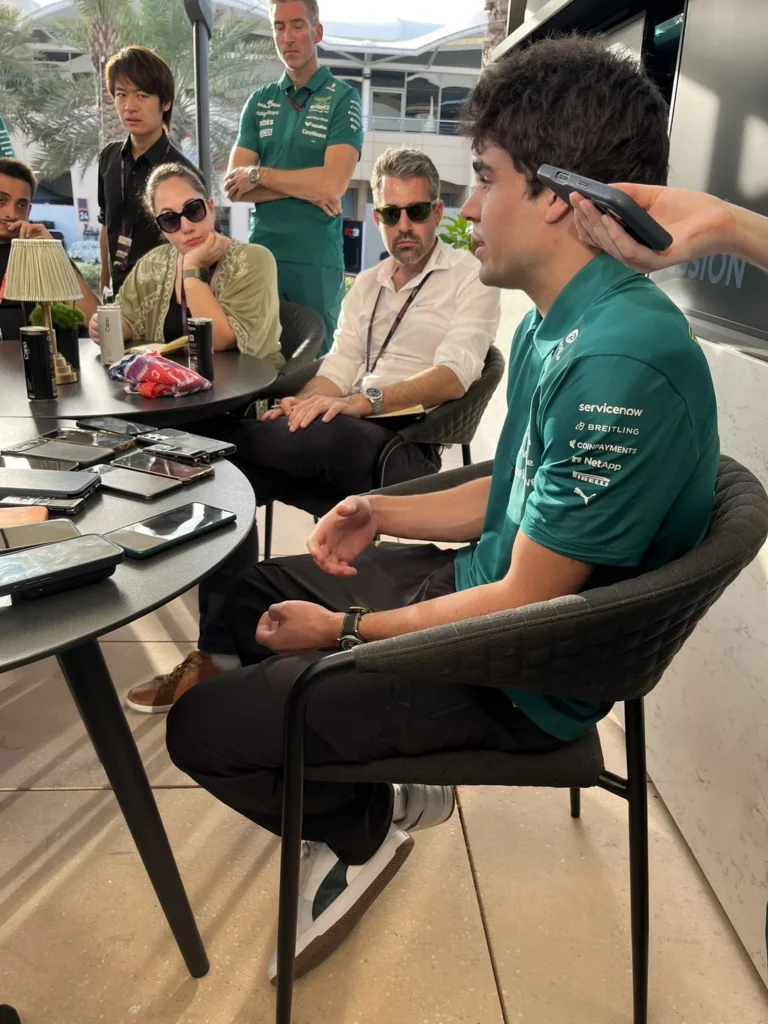
The most alarming tone, however, is coming from Aston Martin.
Lance Stroll openly admitted:
“We have engine problems, and not just engine problems… right now we look like we’re four seconds off. Four and a half seconds.”
That figure appears to reference the morning Bahrain test session gap (~4.6s), not a fuel-corrected race simulation. But publicly quoting that number is significant.
4.5 seconds in modern F1 is not a development delta. It’s structural.
Comparisons immediately went to:
- HRT (2010–2012 backmarker levels)
- Manor Racing territory
- 1990s grid spreads
Under today’s budget cap and technological convergence, being 4+ seconds off would represent a catastrophic misfire.
Some argue it’s sandbagging. Others believe it’s genuine.
What complicates matters further: reports suggest Honda may be running precautionary power reductions, potentially costing up to three seconds, due to reliability concerns.
If true, this isn’t just chassis imbalance.
It’s foundational.
Honda: The Cycle Narrative Returns
The commentary has been brutal.
Return to F1.
Struggle for years.
Spend billions.
Finally get competitive.
Exit.
Repeat.
The “power of dreams” slogan is being used ironically again.
Red Bull transitioned away from Honda operational control just as Honda-powered cars were winning championships. Red Bull Powertrains absorbed top Honda personnel and Mercedes engineers.
Now, as Aston struggles, the timing looks painfully convenient.
The institutional continuity question matters. Regulation resets reward stability. Staff churn magnifies vulnerability.
Alonso: Cursed or Just Unlucky?
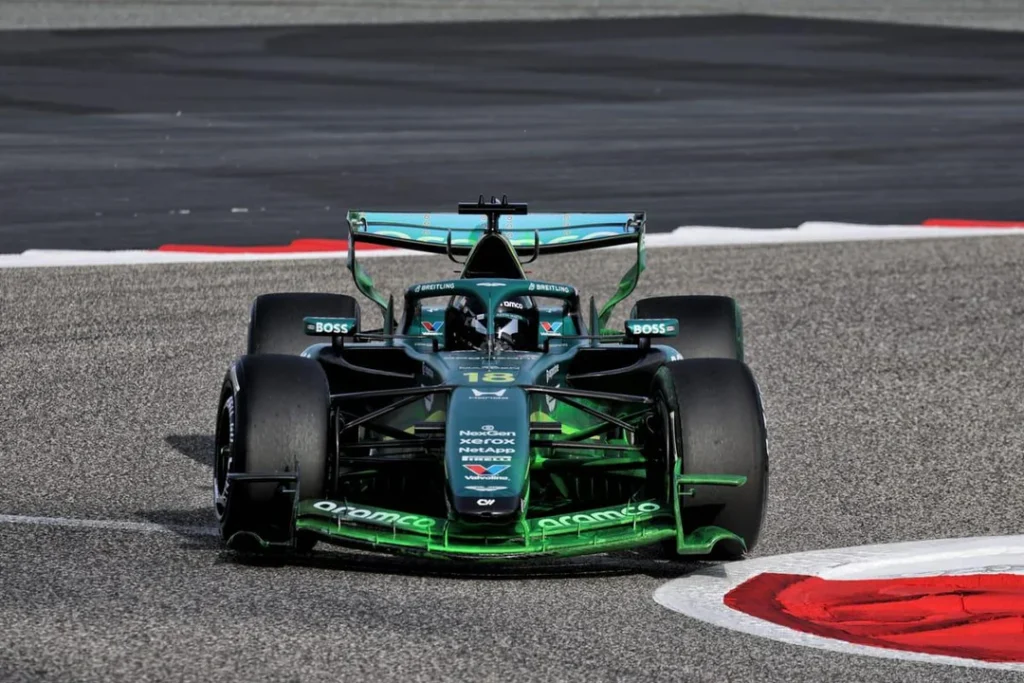
Fernando Alonso once delivered the infamous “GP2 engine” line.
The idea that he could face another Honda-era struggle in a different decade, for a different team, has taken on mythic overtones.
There’s dark humor about it.
There’s speculation he could walk away mid-season.
There’s even talk of Indy 500 pivots.
But beneath the jokes sits a real question: how much appetite does a veteran champion have for another rebuild?
He left McLaren long before Honda’s later resurgence. Now Honda is back, and the partnership appears turbulent again.
The 107% Rule Panic
Even the 107% rule has resurfaced in discussion.
Mathematically:
- Bahrain’s 107% margin would allow ~6+ seconds.
- A 4.5s gap wouldn’t exclude them.
And historically, modern F1 rarely enforces exclusion unless extreme.
But the fact that people are doing that math at all shows how dramatic the perception is.
The Bigger Picture: End of an Era?
Zoom out.
- Verstappen questioning his long-term future.
- Hamilton and Alonso voicing concerns about complexity.
- Red Bull possibly leading again.
- Aston potentially in crisis.
- Mercedes in regulatory crosshairs.
If Verstappen left early, alongside the natural retirements of Hamilton and Alonso, the grid would lose its defining generational anchors within a few seasons.
That would not be a small transition.
It would be the end of an era.
What Testing Has Actually Revealed
Testing often shows who the losers are before it clearly identifies winners.
Right now, the patterns look like this:
- Red Bull: Either genuinely strong, or expertly managing perception.
- Mercedes: Under scrutiny, but politically agile.
- Aston Martin-Honda: Facing legitimate performance and integration concerns.
- Drivers: Divided on whether 2026’s energy-heavy formula aligns with F1’s identity.
Melbourne will expose the stopwatch truth.
But testing has already exposed something more important:
This regulation cycle is not merely technical.
It’s emotional.
And if the balance between management and racing continues to frustrate the sport’s most accomplished drivers, 2026 may define more than just lap times.
It may define who decides to stay, and who decides they’ve had enough.