

Formula 1’s new era did not arrive quietly.
After the 2026 Australian Grand Prix, the paddock and fan reaction felt split between two competing truths. On one side, the opening race delivered a huge amount of action, repeated position changes, an unusually lively opening phase, and a level of strategic complexity that immediately changed how drivers attacked and defended. On the other, it also left plenty of people uneasy about what exactly they were watching when overtakes happened, why they happened, and whether this style of racing will still feel compelling once teams fully optimize it.
That tension sat at the center of almost every major post-race talking point. There was praise, skepticism, sarcasm, and a fair amount of concern about clipping, battery deployment, and cars slowing on the straights. There was also a sense that Australia may have shown both the best and worst of what these regulations can become.
A race that immediately changed the conversation
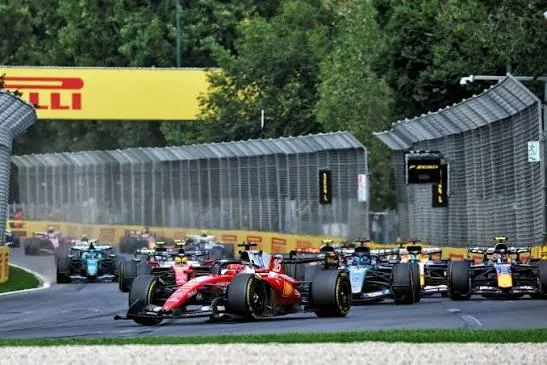
The raw headline number from Melbourne was hard to ignore: the most overtakes any race managed in 2025 was 60 in Abu Dhabi, and the 2026 Australian Grand Prix produced 120. That alone framed the opening round as something different.
The opening lap in particular appeared to validate the idea that this generation could produce a more dynamic race than the final year of the previous ruleset. Last year, the feeling was often that if a move was not done into Turn 1, it might never happen at all. This time, positions were changing all around the track. Instead of a field settling immediately into processional order, the race opened with repeated exchanges and an unusually unstable running order.
That created a real sense of spectacle. It also created the first major argument over whether the spectacle itself was enough.
For some, the new regulations restored something F1 had been missing. Rather than relying on a familiar pattern of DRS-assisted moves, the race seemed to demand that drivers manage tyres, battery state, electrical deployment and timing with far more intent. The early laps were described less as a simple slipstream-and-press-the-button exercise and more as a tactical contest that needed active driver input and constant strategic choices from the pit wall.
For others, the problem was that the action could be difficult to decode in real time. An overtake might be happening because one car had more battery available, because another was in regen, because boost mode had been deployed more effectively, or because two drivers had chosen entirely different points on the lap to spend and recover energy. The result was action on screen, but not always clarity. The racing was busy. The logic behind it was often opaque.
That disconnect ran through nearly every debate after the race.
Charles Leclerc, Lando Norris, Lewis Hamilton and the split over “artificial” racing
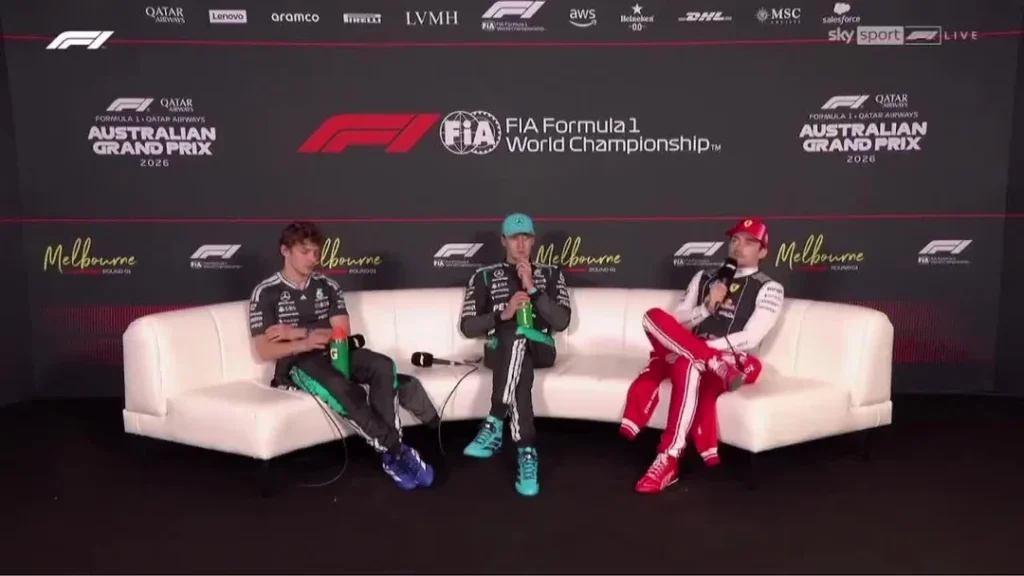
One of the clearest summaries of the new landscape came from Charles Leclerc, who acknowledged the criticism while also defining what had changed.
“I kind of agree,” Leclerc said of Lando Norris calling the racing artificial. “I think it will definitely change the way we go about racing & overtaking. Before, it was about who was the bravest in braking late, now there’s a bit more of a strategic mind behind every move you make.”
That line captured the fault line perfectly. The old image of overtaking as a last-of-the-late-brakers contest has, at least for now, given way to something more calculated. Drivers are no longer just asking whether they can force a move into a corner. They are also managing whether they can afford to make the move at all, whether the battery spend will leave them exposed later in the lap, and whether the pass will actually stick.
For some viewers, that was a feature rather than a bug. There was a clear appetite for a system that rewards smarter timing, varied deployment, and a more deliberate approach to racecraft. The repeated Leclerc-George Russell exchanges were widely seen through that lens: a battle that was not only about closing rate and bravery, but also about who spent energy where and who could best balance attack with the vulnerability that came afterward.
Others were far less convinced. A significant strand of reaction focused on the idea that overtakes now looked too dependent on battery states and too disconnected from visible driver skill. If the key variable is invisible or poorly communicated, then even a good battle can feel strangely flat. Some viewers argued that while broadcast graphics occasionally showed battery information later in the race, the TV presentation still lagged behind what the audience actually needed to understand the action.
That is where Lewis Hamilton’s reaction became especially notable, because it cut directly against some of the negativity.
“I personally loved it,” Hamilton said. “I thought the race was really fun to drive. I thought the car was really, really fun to drive. I watched the cars ahead and there was good battling back and forth. I thought it was awesome. With 20 cars ahead of you it may have seemed different. But from my position I thought it was great.”
Hamilton’s endorsement mattered because it came from a driver who finished off the podium but still came away enthusiastic about the cars and the style of racing. That said, even this praise came with caveats in the wider reaction. Some saw it as a sign that these cars suit Hamilton better than the ground-effect generation ever did. Others argued that drivers will always like a set of rules more when they feel competitive under them. The broader conclusion after Australia was not that the new regulations had won everyone over, but that they had opened a more complicated argument than the doomsday predictions before the weekend suggested.
The Leclerc-Russell fight showed both the appeal and the concern
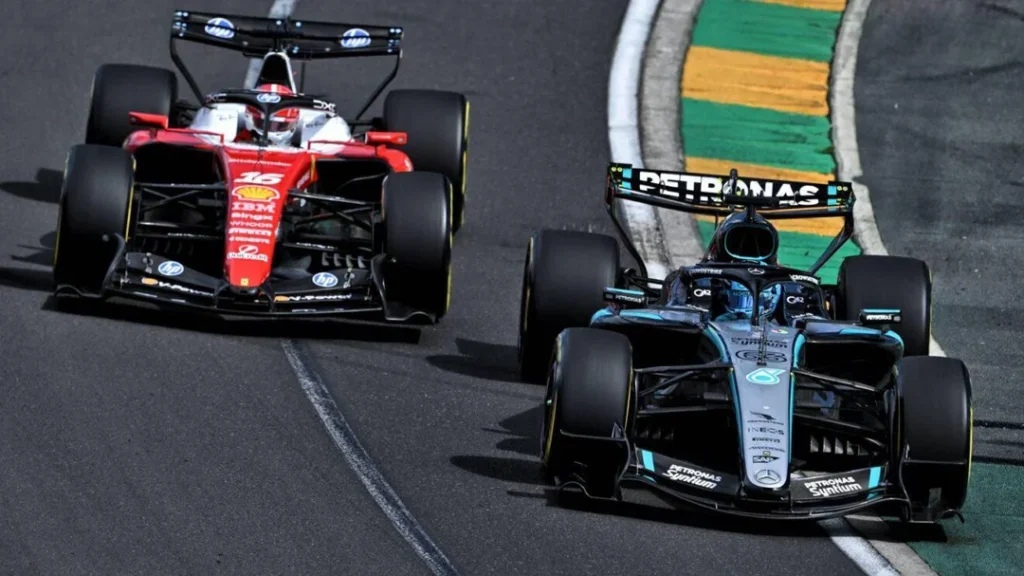
No on-track sequence seemed to crystallize the debate more than the battle between Leclerc and Russell.
It was not universally considered an all-time classic, but it was still viewed as one of the race’s most entertaining stretches. The two repeatedly exchanged places, stayed close together, and created a battle dynamic that was active enough to let Hamilton and Andrea Kimi Antonelli close in behind, threatening to turn it into something even bigger before strategy interrupted it.
The appeal was obvious. The cars could stay close. Neither driver vanished immediately after getting ahead. The fight had enough back-and-forth to feel live rather than predetermined, and it evoked early 2022 for some because of how quickly positions could change and how much the battle seemed to depend on timing and tactical energy use.
But the same fight also exposed the limits of the new formula. There was a repeated sense that the overtakes were becoming predictable precisely because of the battery cycle. One driver would use more to get ahead, then become vulnerable when the energy state swung the other way. That did not necessarily make the sequence bad to watch, but it did raise the question of whether the spectacle was being created by something too mechanical and too gameable.
There was also a belief that the fight may already have shown the path toward future optimization. If Russell himself admitted post-race that some of Leclerc’s moves only stuck because he forgot to activate boosts at certain moments, then the obvious next question is what happens when nobody forgets anymore. Several reactions circled the same concern: once drivers and engineers fully dial in deployment patterns, some of this apparent unpredictability could disappear.
That was the larger fear hanging over Melbourne. The first race may have been exciting because everyone was still learning. Once that learning curve flattens, the same system that produced action could also produce uniformity.
Ferrari’s strategy blunted a battle that looked ready to keep giving
If one thing drew almost as much discussion as the overtaking itself, it was Ferrari’s strategic decision-making.
There was a broad feeling that Ferrari’s choices robbed the race of several more laps of front-running action. The Leclerc-Russell fight looked set to continue deep into the first stint, and perhaps even grow into a four-way battle, until Ferrari’s strategic approach changed the shape of the race.
The core explanation offered after the race was that Ferrari did not think it could beat Mercedes on the same strategy. The team appeared to believe that Mercedes pitting early under VSC would commit them to a second stop later, allowing Ferrari to gain with fresher tyres if it extended the first stint. The theory, at least on paper, was understandable: keep track position, stretch the tyre life, and hope Mercedes’ earlier stop would force a later compromise.
The issue was that Ferrari did not split the strategy.
That became the central criticism. Even among those who could understand the logic of trying something different against Mercedes, there was frustration that Ferrari did not pit one car and leave the other out. Hamilton himself was framed as having wanted at least one Ferrari brought in, and the repeated complaint was simple: if Ferrari truly believed it needed to diverge from Mercedes, why commit both cars to the same gamble?
There was also a sense that Ferrari misread the tyre picture. Mercedes turned out to be far stronger on tyre preservation than Ferrari anticipated, and once the Mercedes cars got into clean air they were widely seen as having another level of pace. Some of the reaction suggested Ferrari had expected the early Mercedes stop to trigger tyre fall-off later, but that assumption did not hold.
Leclerc later indicated Ferrari had gambled on the likelihood of multiple neutralizations, expecting more than one safety interruption across the race. That was not an irrational idea, but when the second VSC came with the pit entry closed, Ferrari’s bet turned into a trap. Even those sympathetic to the original plan tended to come back to the same conclusion: not splitting the strategy left Ferrari with too little flexibility and turned a strategic swing into a team-wide commitment.
The overall impression was that Ferrari had enough race pace to make the front fight compelling, but not enough decisiveness to maximize the opportunity. The team’s call did not just hurt its result; it also cut short one of the most entertaining contests of the day.
Mercedes, clean air, and the other side of the race pace story
The Ferrari-versus-Mercedes comparison became more complicated as the race unfolded.
At one level, Ferrari’s ability to stay with Mercedes in race trim early on was taken as an encouraging sign. The two teams appeared capable of running close enough together to create a proper contest, at least before strategy split them. Some viewers focused on how neither Leclerc nor Russell could simply disappear from the other. Ferrari looked competitive in corners, Mercedes looked stronger in clean air, and the gap between them felt real enough to be interesting rather than hopeless.
At another level, the race also strengthened the suspicion that Mercedes had more in hand than the early battle suggested. Once the Mercedes cars got clean air, they were seen as preserving tyres impressively and controlling the race with more authority than the early wheel-to-wheel action had implied. Antonelli’s run back to Hamilton and Russell’s ability to stretch the stint without apparent panic both reinforced the sense that Mercedes may have had more control over proceedings than Ferrari did.
This matters because it ties back into the rules debate. Some of the “great race” narrative came from the density of the early battle, but a number of reactions argued that the battle itself was partly a function of circumstance: poor starts for Mercedes, strong early Ferrari track position, and a phase of the race in which nobody had fully optimized the energy game yet. If those circumstances change, the same regulations might not naturally produce the same kind of front-end drama.
The race was fun, but qualifying and clipping remain the biggest warning signs
Even among people who enjoyed Australia, there was little appetite to pretend everything looked healthy.
The strongest shared criticism centered on clipping and the visual ugliness of cars losing speed on long straights. That was the line where even otherwise positive reactions started to converge. The repeated argument was that Formula 1 cars slowing on the straight is not the right visual or technical direction for the category, even if the broader race product still has promise.
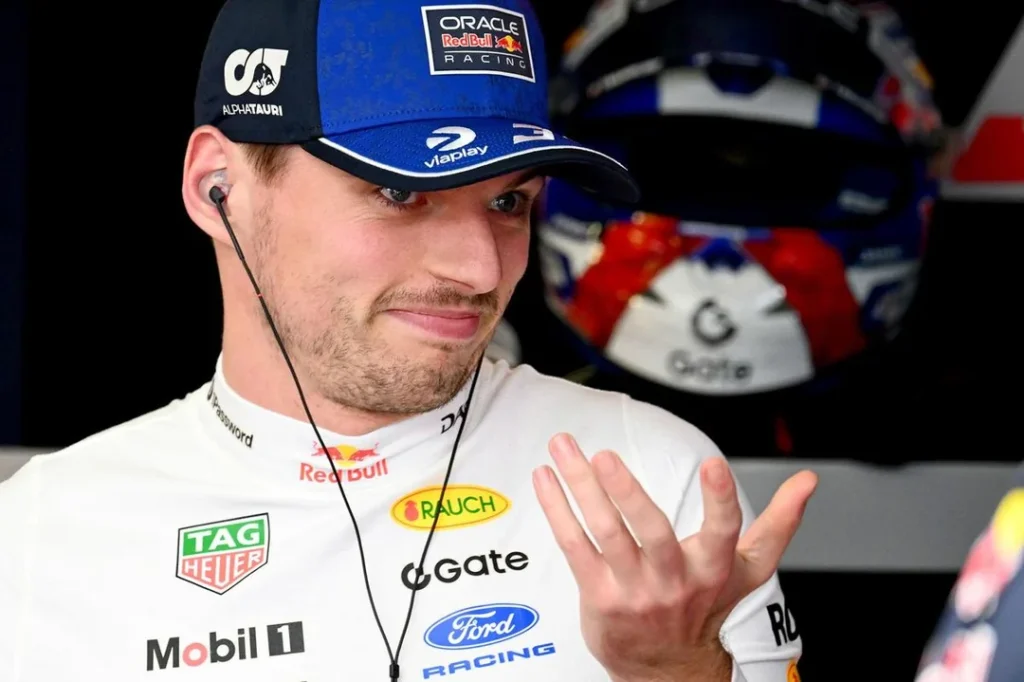
Max Verstappen wanting FIA rule changes only sharpened that conversation. The pushback to his position was not absolute. Many people felt Australia proved the regulations do not need to be scrapped, but could still benefit from targeted adjustment. Clipping was the most obvious candidate.
There was a particularly strong distinction made between race trim and qualifying trim. In the race, some were willing to accept lift-and-coast style energy behavior as part of the wider strategic framework, especially if it can create varied overtakes and different deployment windows. In qualifying, however, the reaction was much harsher. A full qualifying lap is supposed to represent a car and driver attacking at the limit. Watching cars manage a straight in order to preserve enough energy for the rest of the lap felt fundamentally wrong to many.
That is where the larger regulatory concern started to emerge. If battery behavior makes the racing interesting but the qualifying spectacle worse, then F1 may still need to adjust the balance rather than simply declaring the system a success or failure after one race.
A middle-ground view emerged from all that noise: the regulations are not a disaster, but the clipping problem is real, and the battery allocation may not yet be in the right place.
The start lights, the launch, and a race that seemed determined to begin with chaos
Even the start sequence became part of the post-race conversation.
The lights were noted as having gone out incredibly quickly, held for one frame of the 50fps broadcast, or 0.020 seconds. That made the launch feel bizarrely abrupt and immediately fed into the sense that this season’s opener had started in a state of controlled unpredictability.
Some reaction treated it humorously, almost as if F1 had wanted immediate carnage and was trying to catch the field off guard. Others pointed out that the new pre-start sequence had already given the drivers time to spool up before the red lights phase shown in the broadcast angle, which suggests the picture on TV may have exaggerated how sudden it looked. Still, the optics mattered. The start felt unusually sharp, and that fed directly into one of the race’s early incidents.
Liam Lawson, in particular, was seen as having been badly caught out, though technical explanations quickly followed. The strongest technical read from the discussion was that the issue may have involved harvesting not fully disengaging, effectively applying negative torque on launch and causing a stall-like getaway. That interpretation fit with reports that Lawson had already been dealing with harvesting issues on the formation lap and in the laps that followed.
The bigger point was that even before the race had settled, Australia looked like a weekend where new systems, unfamiliar rhythms, and half-understood behaviors were already shaping outcomes.
Lawson versus Perez became personal again, even if only one side seemed to see it that way
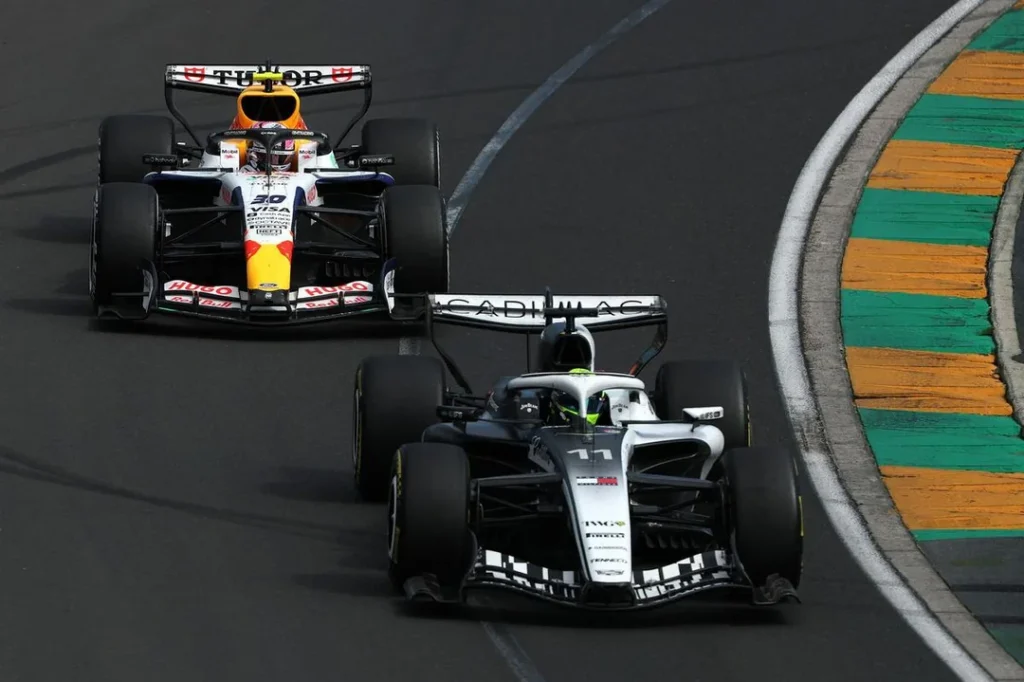
If the regulations debate was the race’s big technical argument, the most personal subplot was the renewed Liam Lawson-Sergio Perez tension.
Lawson’s view was blunt: “Two years later he’s not over it, so he’s fighting me like it’s for the world championship and we’re like P16. I mean, obviously I don’t really care too much, my race was already over at that point, so we’ll move on.”
Perez’s response was far cooler: “No, I mean, for me it was just racing. It was a bit of fun racing and that’s really it. I was in a much slower car, so I think it’s just fine to race.”
That contrast shaped almost all of the reaction. Lawson came across as someone still carrying a grievance; Perez came across as someone shrugging it off as ordinary wheel-to-wheel combat. The dominant reading was that this did not feel like a mutual rivalry so much as a one-sided fixation. Lawson’s insistence that Perez was treating the battle like a world championship fight only intensified the criticism, because many saw that as missing the point of Formula 1 entirely. If there is a position to fight for, drivers are expected to fight for it, whether it is P1 or P16.
That perspective was even stronger in Perez’s case because he was racing for a brand-new team in its first race. Every finishing position and every bit of data mattered. From that angle, Perez’s aggression was not bitterness but professionalism. He was doing exactly what he was supposed to do: race hard, learn, and maximize whatever was available.
Lawson, by contrast, was widely read as sounding rattled. His line about not caring too much only deepened that interpretation because it sounded like the kind of phrase drivers use when they clearly care a great deal. More broadly, there was a sense that Lawson is carrying pressure from all directions: his history with Perez, the memory of earlier flashpoints, the scrutiny around his behavior, and a wider fear that others around him are rising faster than he is.
None of that means Lawson’s frustration was baseless. There was still a thread of sympathy that tied his aggression back to the pressure he has lived under, especially within the Red Bull system. But after Australia, the balance of perception favored Perez heavily. Perez sounded like a driver enjoying a scrap. Lawson sounded like a driver still fighting ghosts.
George Russell leaned into the politics and the theater
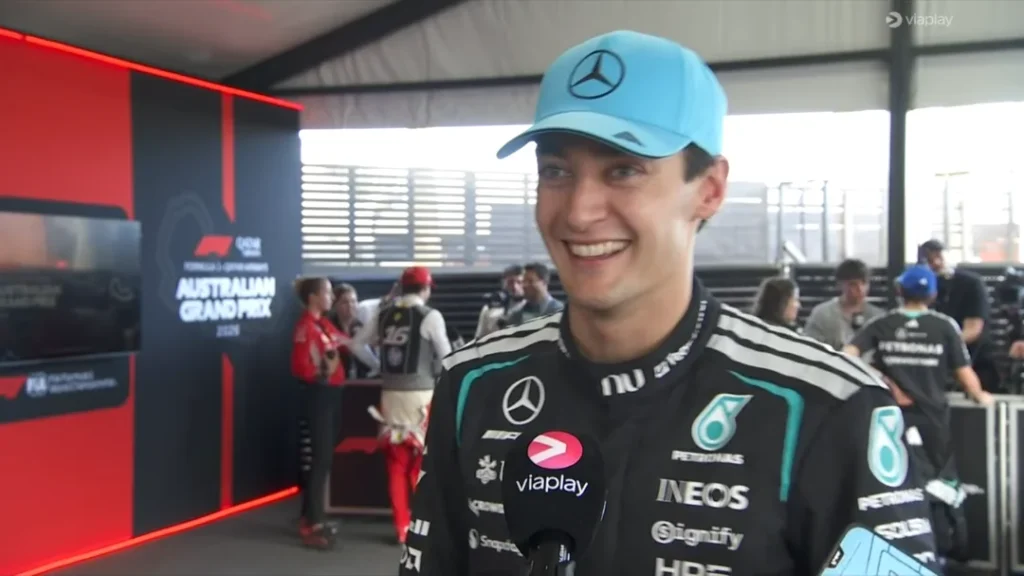
Russell, meanwhile, seemed entirely comfortable with the tone of the moment.
Speaking jokingly to Viaplay about flying with Hamilton, Russell said: “I’m flying with Lewis, so I’m sure I’m gonna hear about: ‘Your engine is so good, your compression ratio is illegal, and this, and that…’ So, yeah, I think I’ll just try and get to sleep quite early. I’ll just say: ‘Shut up and focus on your own stuff.’”
The reaction to that line was less about the quote itself and more about what it signaled. There was a clear sense that Russell is increasingly comfortable playing the sport’s political operator and occasional antagonist, and that he is no longer especially interested in softening that edge. He was described as leaning into a villain role, stirring the pot more openly, and embracing the kind of verbal needle that keeps Formula 1’s off-track drama running between race weekends.
That is not a new side of Russell, but Australia made it more visible. He was already being framed as one of the sport’s political players before the season started. Quotes like this only reinforced the idea that he is prepared to weaponize humor, poke at rivals, and keep a rivalry simmering even away from the track.
Aston Martin’s car is bad, and Lance Stroll was one of the funniest people in the paddock because of it
The bleakest assessment of a team after Australia may have belonged to Aston Martin, though it was delivered with the driest humor of the weekend.
Asked whether he had at least learned something by doing some racing, Lance Stroll replied: “Well, ‘racing’ is a strong word. We circulated.”
That line landed because it fit the broader mood around Aston Martin perfectly. Stroll and Fernando Alonso have increasingly become the paddock’s deadpan truth-tellers whenever Aston Martin underperforms, and Australia only strengthened that image. The car was described less like a racing machine than something the drivers were simply surviving in, and Stroll’s answer was treated as the latest example of a driver who has no interest in pretending otherwise.
There is a specific comic dynamic around the Aston pairing now. Alonso can say whatever he likes because he is Alonso. Stroll can say whatever he likes because he is Lance Stroll. One has long since stopped caring about the consequences, and the other never really had to. The result is a duo that keeps producing some of the sharpest accidental comedy in the sport.
But the humor only works because the underlying problem is so obvious. Aston Martin did not look like a team in the fight. It looked like a team coping.
Arvid Lindblad gave the weekend a rookie story F1 actually wants to follow
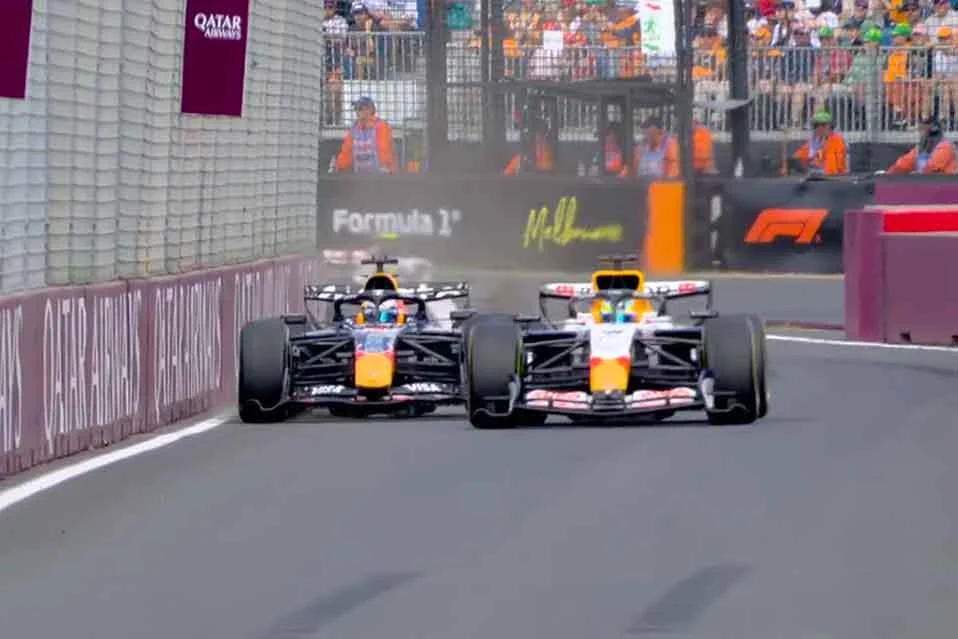
If Australia left Lawson under pressure, it did the opposite for Arvid Lindblad.
The rookie’s debut was one of the weekend’s strongest positive storylines. He was repeatedly described as aggressive without crossing into reckless territory, which is a meaningful distinction for a young driver trying to establish himself quickly. His approach was firm, assertive, and visible enough to stand out, but not so wild that it dominated the conversation for the wrong reasons.
That balance matters because it immediately separated him, in perception at least, from the kind of rookie aggression that can feel desperate or self-defeating. A lot of the reaction framed Lindblad as delivering the version of assertiveness people once hoped to see from other young Red Bull-linked drivers: forceful, confident, and unapologetic, but with more control.
He also benefited from the contrast with the way Lawson has often been discussed. Lawson’s earlier “I’m not here to make friends” reputation was re-litigated again after Australia, with several people arguing that the original quote had always been taken out of context. In full, Lawson’s line was much more reasonable than the meme version that followed him around. But perception matters, and Lindblad’s debut posture was still seen as cleaner and more self-contained. He came across less like someone trying to prove a point to everyone else, and more like someone simply driving the way he believes he belongs.
That was especially visible in the response to Verstappen accusing him of brake-checking in the pit lane. The actual incident was widely treated as overblown. The strongest counter to the headline was that Verstappen’s radio message was an adrenaline-spiked reaction to a rookie braking a bit too enthusiastically before the line, not some great act of pit-lane malice. In other words, it was a first-race rookie misjudgment, not a defining scandal.
That left the more important takeaway intact: Lindblad looked like a driver worth following. For a rookie at Melbourne, on new regulations, that is already a significant statement.
So was Australia a success or a warning?
The answer after one race is both.
Australia was successful in the most obvious way: it generated action, debate, uncertainty and real discussion about how racing is now supposed to work. It did not look like the death of Formula 1. It looked like Formula 1 wrestling with a genuinely different product.
It was also a warning because many of the race’s strengths may have been amplified by novelty. Drivers were still learning. Engineers were still calibrating. Broadcast tools were not yet keeping up with the logic of the racing. The field had not standardized its deployment patterns. The race may have been exciting partly because nobody had fully solved it yet.
That means Australia cannot settle the argument. It can only frame it.
What Melbourne did show is that the worst pre-race panic was overstated. There was real racing. There were genuine battles. Cars could follow each other more closely than many feared. Drivers had to think differently, and that produced moments of instability that made the opening phase compelling.
But Australia also showed the vulnerabilities clearly. Qualifying optics look awkward. Straight-line clipping looks wrong for Formula 1. Some battles already hinted that once the optimal patterns become standard, passing may become more constrained again. And if the audience cannot easily understand why a move happened, the sport risks producing action that feels intellectually remote even when it is visually busy.
For now, the fairest verdict is that the 2026 regulations delivered a race worth watching and a debate worth having.
And if that debate continues to produce 120 overtakes, front-running strategy mistakes, deadpan Aston Martin despair, a fresh Lawson-Perez feud, George Russell stirring the political pot, and a rookie debut that actually feels promising, Formula 1 will not be short of material while it figures out what this era really is.